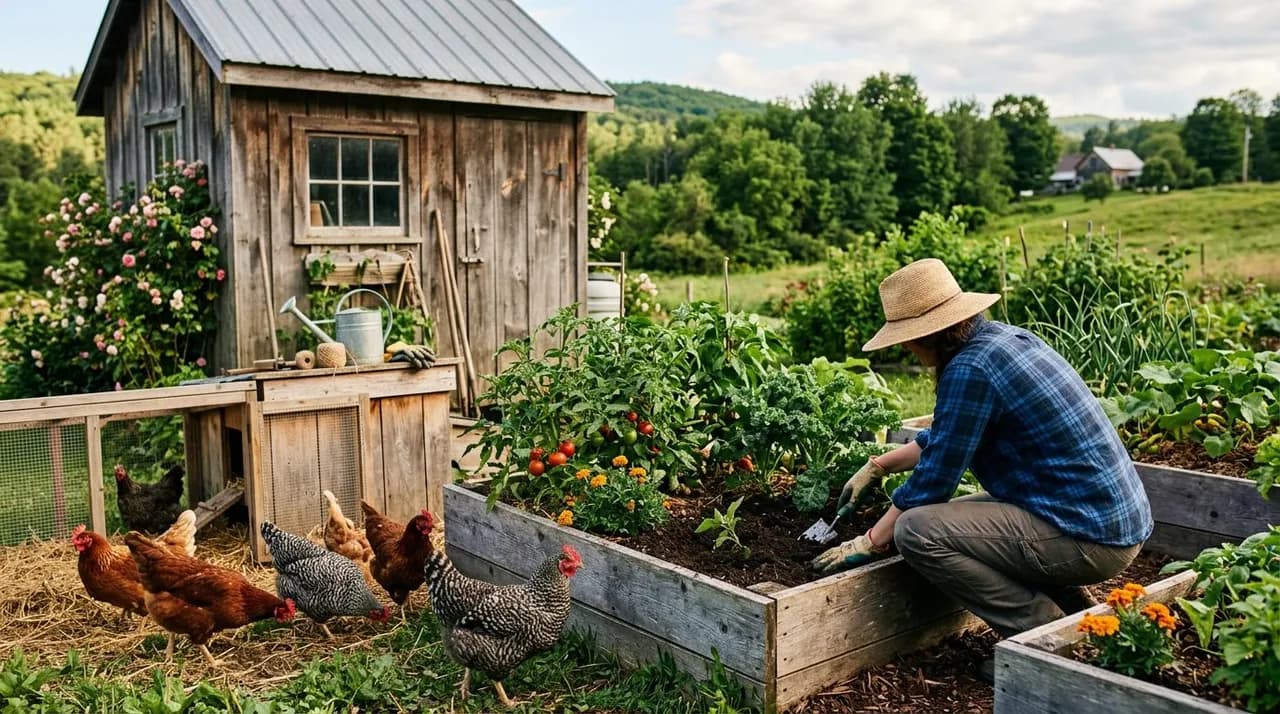
Key takeaways
- Homesteading is a mindset of self-reliance and producer habits, not a minimum acreage requirement.
- Beginner homesteaders succeed by mastering food preservation, scratch cooking, and soil building before buying land.
- A phased first-year plan prevents burnout by introducing one new enterprise at a time.
- Small livestock like laying hens and meat rabbits provide manageable entry points into animal husbandry.
- Establishing clear household budgets and debt-free habits ensures long-term homestead sustainability.
Quick answer: To start homesteading, begin where you currently live by developing core self-reliance skills such as vegetable gardening, home food preservation, composting, and basic carpentry. Once foundational skills are established, create a phased first-year plan to introduce backyard poultry, small livestock, or perennial fruit crops without taking on unmanageable debt.
Modern homesteading focuses on producing your household's essential needs directly, rather than needing large rural acreage or disconnecting from modern society.
Learning how to start homesteading begins in your current kitchen, backyard, or apartment balcony. By mastering home food preservation, scratch cooking, soil building, and energy efficiency, you build the practical capabilities needed to manage larger land parcels successfully in the future.
Whether your goal is to start a homestead with no money on a suburban lot or transition to rural acreage, following an orderly, step-by-step progression prevents financial strain and personal exhaustion.
How do you build essential skills before buying land?
The most common mistake prospective homesteaders make is purchasing rural property before acquiring basic self-reliance skills. Managing land, livestock, water systems, and crops simultaneously without prior experience often leads to overwhelm.
Focus on developing these foundational skills in your current home:
1. Kitchen and food preservation skills
- Scratch cooking: Prepare meals using whole grains, dry beans, raw dairy, and seasonal produce.
- Water bath and pressure canning: Learn safe home canning procedures for high-acid fruits, tomato sauces, and low-acid vegetables and meats.
- Fermentation and dehydration: Make sauerkraut, yogurt, sourdough bread, and dehydrated herbs and fruit slices.
2. Intensive gardening and soil building
- Grow nutrient-dense vegetables in containers, raised beds, or small garden plots.
- Learn to build thermal compost piles using kitchen scraps, dry leaves, and garden waste. Review our principles in sheet mulching for soil moisture to practice building organic topsoil without chemical fertilizers.
3. Practical tool use and repair
- Master hand and power tool basics for building simple garden trellises, cold frames, and compost bins.
- Learn basic plumbing repairs, electrical safety, and small engine maintenance.
To understand the core philosophy behind this lifestyle, read our foundational guide on what is homesteading and explore small-scale techniques in urban homesteading.
What is on the beginner homesteading checklist?
A practical beginner homesteading checklist helps you prioritize projects systematically:
How do you structure a realistic first year homestead plan?
When taking on new acreage or expanding your homestead operations, follow a disciplined first year homestead plan:
Months 1–3 (observation and infrastructure)
- Observe the land: Map sun patterns, wind directions, and water runoff during seasonal storms before digging or building.
- Establish clean water access: Secure reliable domestic and agricultural water lines or test well outputs.
- Secure access paths: Build all-weather gravel walkways or equipment paths to avoid tearing up wet soil.
Months 4–6 (soil preparation and first garden)
- Prepare garden beds: Use no-dig sheet mulching to establish planting beds for heavy-yielding annual vegetables like tomatoes, squash, beans, and greens.
- Install secure perimeter fencing: Fence garden areas to exclude deer, rabbits, and neighborhood pets.
Months 7–9 (first livestock and forage)
- Introduce starter poultry: Build a predator-proof coop and run before acquiring three to six laying hens. Chickens convert kitchen scraps into eggs and high-nitrogen manure for compost piles.
- Plant cover crops: Sow green manures across resting beds to suppress weeds and build organic fertility, as explained in cover crops for the home garden.
Months 10–12 (review and winterization)
- Evaluate harvest yields and labor: Note which crop varieties thrived and which demanded excessive pest control.
- Winterize outbuildings and water lines: Insulate exposed pipes, clean animal housing, and prepare cold frames for early spring planting.
What starter livestock are best for beginning homesteaders?
Introducing animals too quickly is a frequent cause of homesteader burnout. Start with small, manageable species before considering large livestock:
Laying hens
Chickens are the ideal gateway livestock. A small flock of four to six hens requires minimal daily chore time, fits in suburban backyards, provides fresh daily eggs, and produces excellent garden fertilizer.
Meat rabbits
Rabbits are quiet, space-efficient, and convert simple forage and hay into lean meat. Their manure is a "cold" fertilizer that can be applied directly to garden beds without prior composting.
Honeybees
A single top-bar or Langstroth hive boosts fruit and vegetable pollination across your neighborhood while yielding raw honey and beeswax with minimal land footprint.
Dairy goats or sheep (year two and beyond)
Wait until your second or third year before introducing ruminants like dairy goats or hair sheep. Ruminants require secure high-tensile fencing, dedicated pasture rotation, winter hay storage, and daily milking routines.
How do you start homesteading with no money or land?
Starting with limited financial capital requires leveraging resourcefulness, bartering, and sweat equity:
- Practice urban homesteading: Transform small rental patios or suburban yards into intensive micro-farms using container gardening and vertical trellises.
- Lease or borrow unused yard space: Many property owners are happy to let an experienced gardener cultivate an unused corner of their yard in exchange for a share of fresh garden produce.
- Work on established homesteads: Volunteer or work as a seasonal hand on local farms to gain hands-on experience with livestock birthing, tractor operation, and fencing without financial risk.
- Source recycled building materials: Collect free wooden shipping pallets, salvaged windows for cold frames, and arborist woodchip drops to build garden infrastructure at zero material cost.
How do you budget and avoid debt when starting a homestead?
Financial strain is one of the most common reasons new homesteading ventures fail within their first three years. Operating without heavy debt gives you the flexibility to withstand crop failures, unexpected veterinary bills, and seasonal market shifts:
- Avoid heavy machinery loans: Rent equipment for occasional earthworks rather than purchasing large tractors or excavators upfront. Hand tools, wheelbarrows, and walk-behind broadforks accomplish most tasks on small acreages with zero financing costs.
- Phase capital improvements: Distribute major infrastructure purchases, such as greenhouses, perimeter fencing, and livestock barns, over several years, funding each new project from household savings or farm revenue instead of high-interest credit lines.
- Track direct input costs: Record all expenditures on seeds, animal feed, amendments, and building supplies. Comparing actual expenses against grocery savings and farm-gate sales ensures your homesteading efforts genuinely reduce household living costs.
To explore financial sustainability and generate income from small acreages, proceed to our guide on how to make money homesteading, or learn how to optimize a single acre with homesteading on an acre.