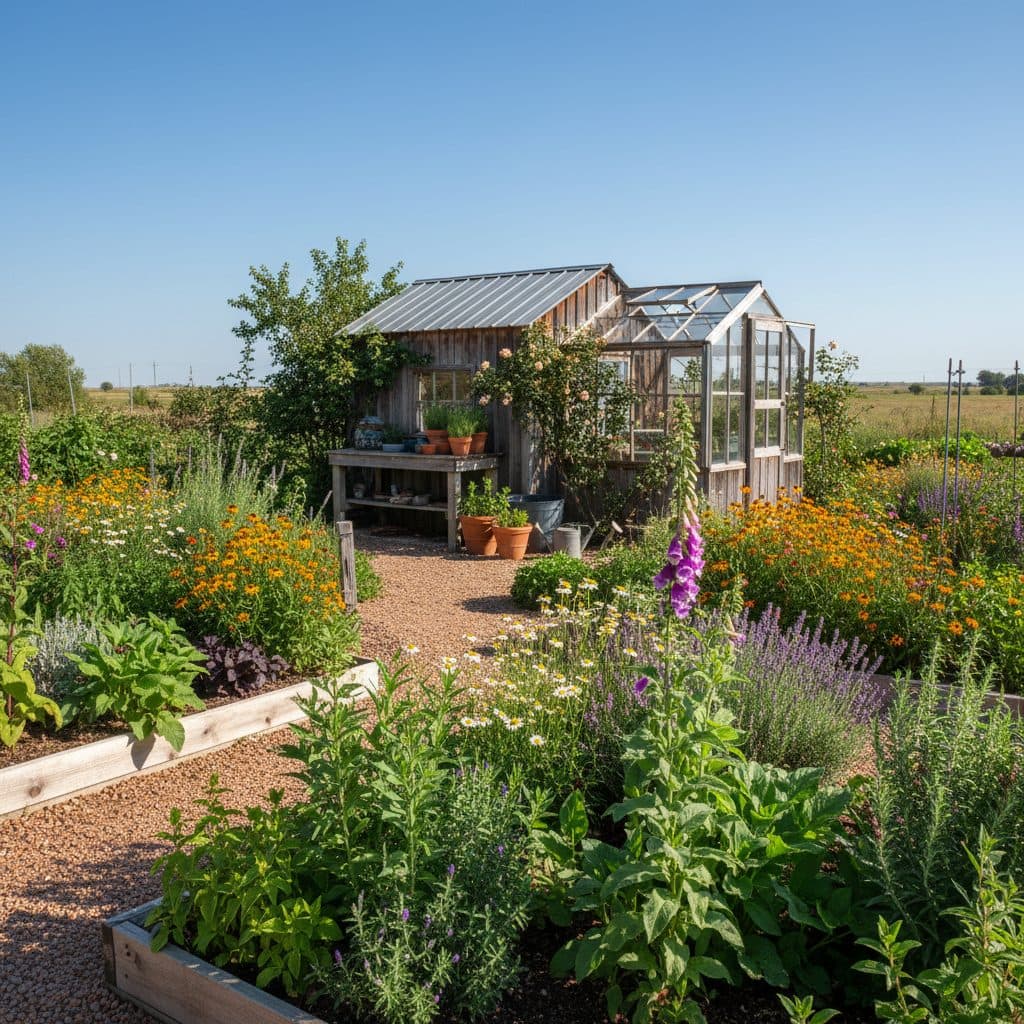
Key takeaways
- Start with a soil test to understand pH and nutrient needs for optimal herb growth, aiming for a pH between 6.0 and 7.0.
- Select medicinal herbs suited to your specific USDA zone, prioritizing perennials for long-term yield over five years.
- Implement companion planting and proper spacing, typically 6-12 inches apart, to manage pests and maximize harvests.
- Harvest herbs at their peak potency, often before flowering, to ensure the best medicinal quality and active compound concentration.
- Dry or preserve harvested herbs correctly, such as air-drying at 70°F, to build a functional home apothecary for up to 12 months.
Quick answer: To grow a backyard medicinal herb garden, start with a soil test, select herbs suited to your USDA zone, ensure proper spacing, and harvest at peak potency for preservation.
In the humid summers of Tennessee, a well-planned backyard medicinal herb garden can thrive, offering a continuous supply of botanicals for a home apothecary. Growers across the United States, from USDA zone 4 to zone 9 and beyond, can cultivate a variety of useful plants with careful consideration of their local climate and soil conditions. This guide will walk you through the practical steps of establishing and maintaining a productive herb garden, so you can harvest quality plants for years to come.
Cultivating medicinal herbs is a rewarding endeavor that connects you directly to the plants that support wellness. With roughly 30% of modern medicines derived from plants, understanding how to grow and prepare these botanicals offers a tangible benefit for any household. We will cover everything from initial site assessment and soil preparation to specific plant choices for different regions, and finally, harvesting and preserving your valuable yield.
Understanding your site and soil (USDA zone by zone)
Before planting any seeds or starts, take a careful look at your backyard. Garden planning, according to research, should consider sun exposure, water availability, and soil type for optimal plant growth [1]. Most medicinal herbs require at least six hours of direct sunlight daily, especially in northern states like Michigan (USDA zone 5) where growing seasons are shorter. In hotter climates, such as Arizona (USDA zone 9), some herbs benefit from afternoon shade to prevent scorching, particularly when temperatures exceed 90°F.
soil testing and preparation
A soil test is the first practical step, providing important information about your soil’s pH and nutrient levels. Most herbs prefer well-drained soil with a pH between 6.0 and 7.0, which is slightly acidic to neutral [2]. You can purchase a 3-in-1 soil pH, moisture, and fertility meter to get a quick reading, or send a sample to your local extension office for a more detailed analysis, typically costing around $15-25. If your soil is heavy clay, common in parts of Texas, amend it with 2-3 inches of organic matter like compost to improve drainage and aeration. Sandy soils, prevalent in Florida, benefit from similar amendments to increase water retention and nutrient holding capacity.
- Assess sun exposure: Identify areas receiving six to eight hours of direct sunlight daily.
- Check water source: Ensure easy access to water, as many herbs require consistent moisture, especially during establishment.
- Test soil pH: Aim for a range of 6.0 to 7.0 for optimal herb growth.
- Improve drainage: Amend heavy soils with compost or sand, roughly 2-3 inches deep.
- Consider wind protection: Shield delicate herbs from strong winds with taller plants or structures.
Selecting medicinal herbs for your climate
Choosing the right herbs for your USDA zone is paramount for success. Perennial herbs, which return year after year, are a wise investment for a long-term apothecary garden. For instance, in USDA zone 5, plants like Echinacea purpurea (purple coneflower) and Monarda didyma (bee balm) are hardy and will reliably return for five to ten years. In contrast, annuals such as Calendula officinalis (calendula) or Ocimum basilicum (basil) will need to be replanted each spring, though they offer continuous harvests throughout the growing season.
zone-specific recommendations
For colder climates, such as USDA zones 4-5 in states like Minnesota or Vermont, consider robust perennials like Siberian ginseng (Eleuthero), which can tolerate temperatures down to -30°F. In temperate zones like USDA 6-7, found across the Mid-Atlantic, you have a broader selection, including Valeriana officinalis (valerian) and Hypericum perforatum (St. John’s wort). Warmer zones, such as USDA 8-9 in California or the Gulf Coast, can support more tender perennials like Rosmarinus officinalis (rosemary) and Lavandula angustifolia (lavender), which might struggle with winter cold elsewhere. Many of these low-maintenance perennials can be found in our guide on low maintenance perennials.
- USDA Zones 4-5: Echinacea, Bee Balm, Valerian, Peppermint, Siberian Ginseng.
- USDA Zones 6-7: St. John’s Wort, Lemon Balm, Thyme, Sage, Chamomile.
- USDA Zones 8-9: Rosemary, Lavender, Aloe Vera, Calendula (often grown as annual), Hyssop.
- Annuals for all zones: Basil, Cilantro, Dill, German Chamomile, Calendula.
- Consider native species: These are often best adapted to local conditions and require less intervention.
Planting and establishing your herb garden
Once your site is prepared and you have selected your herbs, it is time to plant. For many herbs, starting from seed indoors roughly six to eight weeks before the last frost date, typically in mid-April in USDA zone 6, can give you a head start. Alternatively, purchasing young plants from a local nursery saves time and increases initial success rates. When planting, ensure proper spacing; most herbs require 6-12 inches between plants to allow for adequate air circulation and growth, preventing fungal diseases that can reduce yield by 10-20%.
planting techniques and initial care
Dig a hole twice as wide as the root ball and just as deep. Gently remove the plant from its container, loosen any circling roots, and place it in the hole so the top of the root ball is level with the soil surface. Backfill with soil, lightly firming it around the base of the plant. Water thoroughly immediately after planting, providing about one gallon of water per plant to help settle the soil and reduce transplant shock. For new plantings, consistent moisture matters most for the first two to three weeks. You can monitor soil moisture levels with a soil moisture meter to avoid over or under-watering, which can stress young plants and reduce survival rates by up to 25%.
- Start seeds indoors: Begin six to eight weeks before the last frost for a head start.
- Space plants correctly: Allow 6-12 inches between plants for optimal growth and air circulation.
- Plant at correct depth: Ensure the top of the root ball is level with the soil surface.
- Water immediately: Provide about one gallon of water per plant after planting.
- Mulch around plants: Apply a 2-inch layer of organic mulch to conserve moisture and suppress weeds.
Nurturing growth: water, nutrients, and pest management
Consistent care is vital for a thriving medicinal herb garden. While many herbs are drought-tolerant once established, young plants and those in containers require regular watering, especially during dry spells. In hot climates like southern California (USDA zone 10), watering two to three times a week might be necessary, while in cooler, rainier regions like the Pacific Northwest (USDA zone 8), once a week or less could suffice. Proper plant nutrition is critical for healthy plant development, but most herbs do not require heavy feeding [3]. A balanced organic fertilizer applied at half strength once or twice during the growing season is usually sufficient.
organic pest and disease control
Regular monitoring for pests and diseases is essential for maintaining plant health and preventing significant crop loss [4]. Inspect your plants weekly for signs of trouble, such as discolored leaves or small insects. For common pests like aphids or spider mites, a strong spray of water or an insecticidal soap solution (one teaspoon soap per gallon of water) can be effective. Companion planting can also deter pests; for example, planting marigolds near basil can reduce nematode populations by up to 70%. Ensure good air circulation by proper spacing and pruning to prevent fungal issues, especially in humid environments like the Southeast, where diseases can spread quickly.
- Water consistently: Provide one to two inches of water per week, adjusting for rainfall and temperature.
- Fertilize sparingly: Use a balanced organic fertilizer at half strength once or twice per season.
- Monitor for pests: Inspect plants weekly for early signs of insects or disease.
- Use organic pest control: Employ insecticidal soap or neem oil for infestations.
- Practice companion planting: Utilize beneficial plant pairings to deter pests naturally.
Harvesting for potency and building your home apothecary
The timing of your harvest significantly impacts the medicinal potency of your herbs. Generally, leaves are best harvested in the morning after the dew has dried but before the sun is intense, typically between 8 AM and 10 AM, when essential oil content is highest. Flowers should be picked just as they open, and roots are usually harvested in the fall after the plant has died back, concentrating its energy underground. For many herbs, regular harvesting encourages bushier growth and a larger overall yield, sometimes increasing production by 20% over the season.
drying and storage for long-term use
Proper preservation makes a functional home apothecary possible. Air-drying is a common method: gather small bundles of herbs and hang them upside down in a warm, dark, well-ventilated area with temperatures around 70°F and humidity below 60%. This process can take one to three weeks. Once completely dry, leaves should crumble easily. Store dried herbs in airtight glass jars away from direct light and heat. Label each jar with the herb name and date of harvest; most dried herbs retain their potency for 6-12 months. Some medicinal plants, like Platycodon grandiflorum, can accumulate heavy metals from contaminated soil, so ensuring a clean growing environment is critical for safety [6].
- Harvest leaves: Pick in the morning, after dew, before intense sun.
- Harvest flowers: Collect just as they open for peak potency.
- Harvest roots: Dig in the fall after the plant’s energy has returned to the root.
- Air-dry herbs: Hang small bundles in a warm, dark, well-ventilated space.
- Store properly: Use airtight glass jars, away from light and heat, for up to one year.
Ideal Soil pH: A well-drained soil with a pH between 6.0 and 7.0 is ideal for most medicinal herbs, supporting optimal nutrient uptake.
Perennial Lifespan: Many perennial medicinal herbs can produce for five to ten years or more with proper care, offering sustained harvests.
Frequently asked questions
What is the best soil for growing medicinal herbs?
The best soil for medicinal herbs is well-drained and rich in organic matter. Most herbs thrive in a pH range of 6.0 to 7.0, which is slightly acidic to neutral. Adding 2-3 inches of compost annually can significantly improve soil structure and nutrient availability, supporting robust plant growth.
How much sun do medicinal herbs need?
Most medicinal herbs require at least six hours of direct sunlight per day to grow vigorously and produce potent medicinal compounds. In very hot climates, like USDA zone 9 in Florida, some herbs may benefit from partial afternoon shade to prevent scorching when temperatures exceed 90°F.
When is the best time to harvest medicinal herbs?
The optimal time to harvest most medicinal herbs is in the morning, after the dew has dried but before the intense midday sun, usually between 8 AM and 10 AM. This timing ensures the highest concentration of essential oils and active compounds, maximizing potency for your home apothecary.
How do I preserve medicinal herbs for long-term use?
To preserve medicinal herbs, air-drying is a common and effective method. Hang small bundles upside down in a warm, dark, well-ventilated room with temperatures around 70°F and humidity below 60%. Once completely dry, store them in airtight glass jars away from light and heat, where they can maintain potency for 6-12 months.
What are some easy medicinal herbs for beginners to grow?
For beginners, easy-to-grow medicinal herbs include peppermint, lemon balm, calendula, and chamomile. These plants are generally forgiving, adapt well to various conditions, and offer reliable harvests. Many can be successfully grown in USDA zones 4-9 with minimal effort, providing a great starting point for a home apothecary.
References
- Backyard Vegetables: The Tennessee Vegetable Garden – Garden Planning, Plant Preparation and Planting (2016). Backyard Vegetables: The Tennessee Vegetable Garden – Garden Planning, Plant Preparation and Planting.
- Growing Your Own Herb Garden (2025). Growing Your Own Herb Garden.
- Backyard Vegetables: The Tennessee Vegetable Garden – Managing Plant Nutrition (2016). Backyard Vegetables: The Tennessee Vegetable Garden – Managing Plant Nutrition.
- Backyard Vegetables: The Tennessee Vegetable Garden – Plant Management Practices (2016). Backyard Vegetables: The Tennessee Vegetable Garden – Plant Management Practices.
- Designing the Medicinal Herb Garden (2007). Designing the Medicinal Herb Garden.
- Uptake and Distribution Characteristic and Health Risk Assessment of Heavy Metal(loid)s in Platycodon Grandiflorum (Jacq.) A.DC. with Growth from a Medicinal He (2020). Uptake and Distribution Characteristic and Health Risk Assessment of Heavy Metal(loid)s in Platycodon Grandiflorum (Jacq.) A.DC. with Growth from a Medicinal He.