Key takeaways
- Midsummer sowing in July and August extends your harvest, providing fresh vegetables into late fall and early winter.
- Brassicas like broccoli and kale thrive with a second sowing, maturing in 60-90 days before hard freezes in USDA zones 4-9.
- Carrots and beets require consistent moisture for germination and loose soil, with optimal soil temperatures between 55-75°F.
- Effective midsummer strategies include using shade cloth to reduce soil temperatures by 10-15°F and applying 2-4 inches of mulch.
- Practicing crop rotation and incorporating cover crops maintains soil health, preventing disease buildup over a three-year cycle.
- Selecting appropriate varieties for your USDA zone, such as ‘Waltham 29’ broccoli for cooler climates, is critical for success.
Quick answer: Midsummer sowing in July and August extends your harvest by planting fall brassicas, carrots, and beets. This strategy utilizes decreasing day length and cooler temperatures, allowing crops to mature before hard freezes in USDA zones 4-9.
Across the United States, from the cooler climates of USDA zone 4 to the warmer stretches of zone 9, midsummer presents an opportunity for gardeners to extend their harvest. While many gardeners focus on spring planting, a second round of sowing in July and August can yield a bounty of fall and early winter vegetables, particularly brassicas, carrots, and beets. This strategy capitalizes on the decreasing day length and cooler temperatures of late summer and autumn, often bypassing the peak pest pressure of early summer.
Today, this period, typically from July 1 to August 31, is ideal for establishing crops that prefer cooler growing conditions but need sufficient time to mature before the first hard frost. With careful planning and attention to soil moisture, growers can achieve a successful second harvest, potentially increasing garden productivity by 25% or more in a typical growing season.
The advantages of midsummer sowing for fall harvests
Midsummer sowing, typically performed between July 15 and August 30 in many regions, offers distinct benefits for maximizing garden output. It allows for succession planting, which keeps fresh vegetables coming well into the cooler months. For instance, after harvesting early summer crops like peas or garlic, the vacated beds can be immediately prepared for fall brassicas or root vegetables, effectively doubling the use of your garden space. This practice can meaningfully increase what a 100 square foot garden produces over a year.
extending the growing season and managing pests
By planting later in the season, many crops avoid the most intense heat and pest cycles that challenge spring plantings. Flea beetles that devastate young brassica seedlings in May and June do not disappear, though: a summer generation of adults emerges to feed on late-sown brassicas, so cover fall seedlings from the day they are sown. Furthermore, the cooler soil temperatures of late summer and early fall, typically dropping from 85°F to 70°F, are more conducive to the germination of cool-season crops like carrots and beets. This gives seedlings a stronger start, leading to healthier plants and a more substantial fall harvest. In USDA zone 6, for example, a mid-August planting of ‘Danvers Half Long’ carrots can mature in 75 days, ready for harvest by late October.
- Extends fresh vegetable availability by 6-8 weeks.
- Reduces exposure to the peak summer pest populations that hit spring plantings.
- Utilizes garden space more efficiently through crop rotation.
- Capitalizes on more favorable late-season growing conditions.
- Provides a second opportunity for crops that failed in spring.
Brassicas for a robust autumn yield
Brassicas, including broccoli, cabbage, kale, and collards, are excellent candidates for midsummer sowing, especially in USDA zones 4 through 9. These cool-season crops thrive as temperatures begin to drop, developing a sweeter flavor after a few light frosts. For instance, ‘Waltham 29’ broccoli needs about 85 days from transplant, not from seed. In USDA zone 5 that means starting it indoors in late June and setting transplants out in mid-July for an October harvest — direct-sown in August it would still be heading well after the first hard freeze. Similarly, ‘Red Russian’ kale sown in late July can provide continuous harvests until hard freezes of 20°F or lower.
successful brassica planting strategies
When sowing brassicas in midsummer, consider starting seeds indoors for 3-4 weeks before transplanting. This gives seedlings a head start, protecting them from intense July heat for stronger plants. Use seed-starting trays with cells at least 1.5 inches deep. For direct sowing, ensure adequate moisture, as high soil temperatures (above 80°F) can inhibit germination. A layer of light mulch or shade cloth can help keep the soil surface cooler by 10-15°F. Proper crop rotation is also vital to prevent soil-borne diseases like clubroot, which can persist in soil for up to 20 years. A three-year rotation handles most brassica problems, but not clubroot: once its resting spores are in a bed they outlast any home-garden rotation. Keep it out by never importing unknown transplants or soil, and if it does arrive, lime that ground to pH 7.2 or above and grow clubroot-resistant varieties. Consider integrating legumes as cover crops in rotation to improve soil nitrogen.
- Choose cold-hardy varieties like ‘Waltham 29’ broccoli or ‘Red Russian’ kale.
- Start seeds indoors 3-4 weeks before transplanting to protect against heat.
- Ensure consistent soil moisture, especially during the first 10 days post-sowing.
- Practice a three-year minimum crop rotation to avoid disease buildup.
- Apply a 2-inch layer of straw mulch to regulate soil temperature and moisture.
Carrots and beets: rooting for fall success
Carrots and beets are excellent choices for a midsummer planting, offering sweet, tender roots for autumn and winter enjoyment. These root crops prefer cooler soil temperatures for germination, ideally between 55-75°F. Sowing in July or early August in USDA zones 5-8 allows them to establish before the intense heat of August subsides, then grow rapidly as daytime temperatures average 60-70°F in September and October. For example, ‘Detroit Dark Red’ beets can be sown in mid-July in USDA zone 7, yielding mature roots in about 60 days.
optimizing germination and growth
The biggest challenge for midsummer-sown carrots and beets is achieving consistent germination in warm soil. Carrot seeds can take 7-21 days to sprout and require continuous moisture during this period. A common strategy is to sow seeds 0.25-0.5 inches deep, then cover the row with a board or burlap to hold moisture and keep the soil surface cool. Lift the cover daily to check, and take it off for good at the first sign of germination — which may be anywhere from 7 to 21 days out, not a fixed 3 to 5. Beets, which are actually a cluster of 2-5 seeds, also benefit from consistent moisture. Ensure your soil is loose and free of rocks, ideally tilled to a depth of 12 inches, to allow for proper root development. After germination, thinning seedlings to 2-4 inches apart matters for larger, well-formed roots. For more insights on soil preparation and crop rotation, see our guide to growing peas, which also discusses succession planting principles.
- Sow seeds 0.25-0.5 inches deep for optimal germination.
- Maintain consistent soil moisture for 7-21 days post-sowing.
- Cover rows with a board or burlap until germination starts, lifting it daily to check.
- Thin seedlings to 2-4 inches apart for proper root development.
- Ensure soil is loose and free of obstructions to a depth of 12 inches.
Managing midsummer challenges: heat, water, and pests
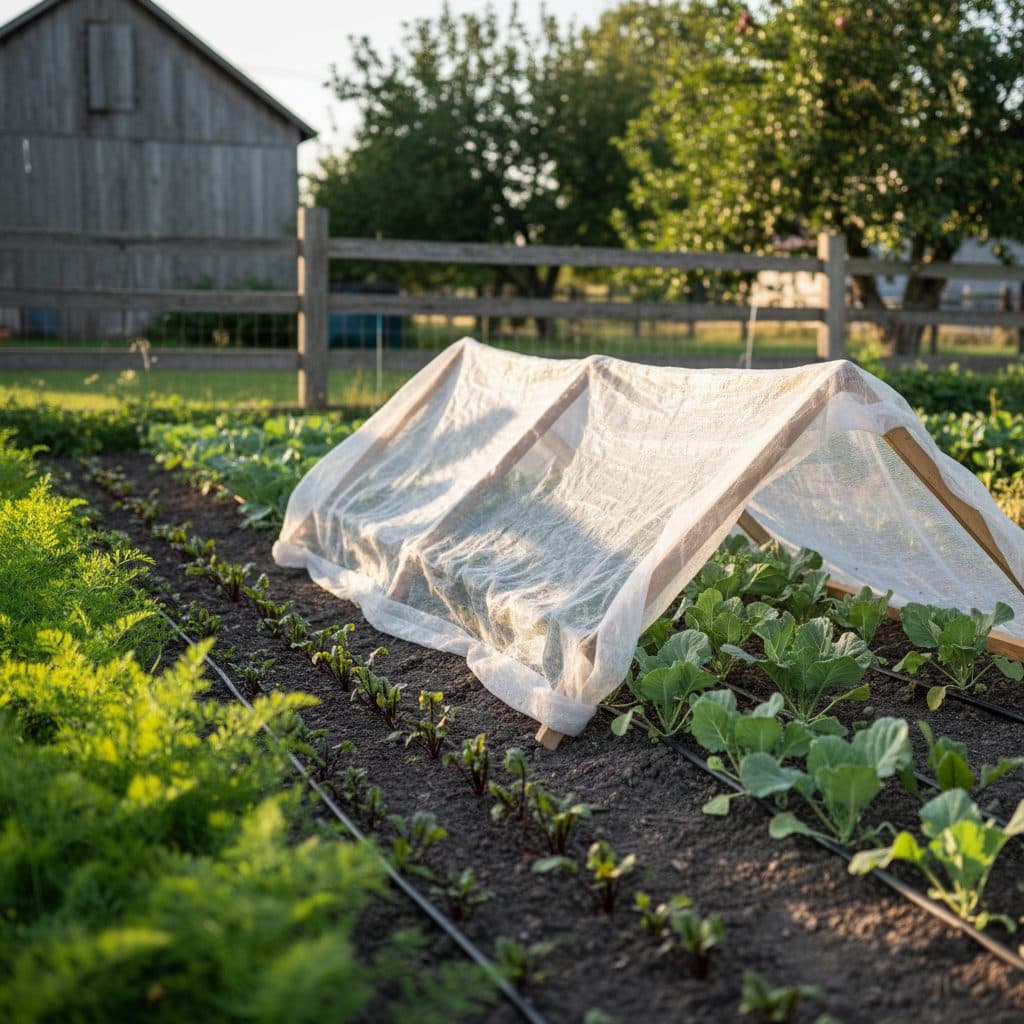
Midsummer planting, while rewarding, comes with its own set of challenges, primarily intense heat, inconsistent rainfall, and persistent pests. Daytime temperatures can easily exceed 90°F in July and August across much of the US, which can stress young seedlings and inhibit germination [4]. To combat this, shade cloth is a real help: it takes a real bite out of soil surface temperature — the number that actually governs germination — while cooling the air beneath it by only a few degrees. A 30-50% shade cloth draped over hoops 18-24 inches above the bed can make a significant difference for newly sown seeds and transplants.
irrigation and pest control strategies
Water management is critical during this period. Young plants require consistent moisture, often needing 1-2 inches of water per week, especially in sandy soils. Drip irrigation or soaker hoses are more efficient than overhead watering, reducing water loss by evaporation by up to 50% and minimizing fungal diseases. Applying a 2-4 inch layer of mulching material, such as straw or shredded leaves, helps conserve soil moisture, regulate soil temperature, and suppress weeds. For pest control, regular pest monitoring is key. Inspect plants daily for common midsummer pests like cabbage worms or squash bugs. Hand-picking can be effective for small infestations, while row covers can physically exclude pests from brassica crops. For larger issues, consult local extension services for integrated pest management (IPM) recommendations tailored to your region and specific pest pressures. Plant water relations matter for irrigation planning, as research on edaphoclimatic conditions shows [5].
- Use 30-50% shade cloth to lower temperatures by 10-15°F for young plants.
- Implement drip irrigation to deliver 1-2 inches of water weekly efficiently.
- Apply 2-4 inches of organic mulch to conserve soil moisture and regulate temperature.
- Monitor plants daily for pests and hand-pick or use row covers as needed.
- Adjust watering schedules based on local rainfall and plant needs, especially during dry spells above 85°F.
Crop rotation and soil health for sustained productivity
Maintaining healthy soil is fundamental to successful midsummer sowing and long-term garden productivity. Crop rotation is a cornerstone of this practice, preventing the buildup of specific pests and diseases that target particular plant families. For instance, brassicas should not be planted in the same spot more than once every three years to break disease cycles, as recommended by the USDA Natural Resources Conservation Service [6]. Following a heavy feeding brassica crop with a nitrogen-fixing legume, such as clover or vetch, can replenish soil nutrients naturally.
building soil fertility with cover crops
After harvesting your fall crops, consider planting cover crops like winter rye or hairy vetch. These plants protect the soil from erosion over winter, add organic matter when tilled under in spring, and improve soil structure. Winter rye, for example, can add 2-3 tons of organic matter per acre. For specific recommendations on cover crops suited to your region, see our guide to living-mulch and cover-crop legumes by USDA zone. Incorporating 1-2 inches of finished compost into your beds annually also dramatically boosts soil fertility and microbial activity. Healthy soil, rich in organic matter, can hold significantly more water—up to 20% more by weight—making your garden more resilient to drought conditions and less reliant on frequent irrigation during warm periods.
- Rotate crops to a new family every year, aiming for a three-year cycle.
- Follow heavy feeders with nitrogen-fixing cover crops like clover or vetch.
- Incorporate 1-2 inches of finished compost annually to boost soil organic matter.
- Plant winter cover crops to prevent erosion and add biomass.
- Test soil every 2-3 years to monitor nutrient levels and pH, aiming for 6.0-7.0.
Midsummer Sowing Guide: Brassicas vs. Root Crops
Crop Type | Optimal Sowing Period (USDA Zone 6-8) | Days to Maturity (Approx.) | Heat Tolerance (Germination) | Soil Depth Requirement |
|---|---|---|---|---|
Brassicas (Broccoli, Kale) | July 15 – August 15 | 60-90 days | Moderate (needs shade/moisture) | 6-8 inches |
Carrots | July 20 – August 20 | 70-80 days | Low (requires consistent moisture) | 12 inches |
Beets | July 15 – August 25 | 55-65 days | Moderate (benefits from cover) | 8-10 inches |
Soil Temperature: For optimal germination of fall carrots, soil temperatures should ideally be between 55-75°F, though seeds can sprout up to 85°F with consistent moisture.
Shade Protection: Using a 30% shade cloth can reduce soil surface temperatures by 10-15°F, significantly improving germination rates for midsummer plantings.
Water Needs: Midsummer-sown crops typically require 1-2 inches of water per week, especially during the first 21 days after planting, to establish strong root systems.
Frequently asked questions
What is midsummer sowing?
Midsummer sowing involves planting seeds in July and August for a fall or early winter harvest. This practice extends the growing season by 6-8 weeks and allows for succession planting after early summer crops, making efficient use of garden space.
Which crops are best for midsummer planting?
Brassicas like broccoli, kale, and cabbage, along with root crops such as carrots and beets, are excellent choices for midsummer planting. These crops prefer cooler temperatures for maturation and can be harvested before hard freezes, typically maturing in 60-90 days.
How do I ensure germination in hot midsummer soil?
To ensure germination in hot midsummer soil, maintain consistent moisture by watering daily, especially for the first 10-20 days. Using shade cloth can reduce soil temperatures by 10-15°F, and covering rows with a board for 3-5 days can also help retain moisture and lower surface heat.
What are the benefits of crop rotation for fall crops?
Crop rotation helps prevent the buildup of soil-borne diseases and pests specific to certain plant families. Following a three-year rotation cycle helps break the life cycles of soil-borne brassica and root-crop diseases, though it will not clear long-lived pathogens such as clubroot.
Can I plant cover crops after my fall harvest?
Yes, planting cover crops like winter rye or hairy vetch after your fall harvest is highly beneficial. They protect the soil from erosion, add 2-3 tons of organic matter per acre when tilled in, and improve soil structure and fertility over the winter months.
What USDA zones are suitable for midsummer sowing?
Midsummer sowing is generally suitable for USDA zones 4 through 9. The specific timing within July and August will vary by zone, with earlier planting in cooler zones (4-5) and later planting in warmer zones (8-9) to avoid the most intense heat.
References
- Somerset’s seeds for midsummer sowing / (1937). Somerset’s seeds for midsummer sowing /.
- Verification of Mythological Material on Celebrations as Recorded by Matthaeus Praetorius: the Celebration of Midsummer Herb Fest and Driving the Cattle out to (2018). Verification of Mythological Material on Celebrations as Recorded by Matthaeus Praetorius: the Celebration of Midsummer Herb Fest and Driving the Cattle out to .
- Summer dormancy in Dactylis glomerata L.: the influence of season of sowing and a simulated mid-summer storm on two contrasting cultivars (2006). Summer dormancy in Dactylis glomerata L.: the influence of season of sowing and a simulated mid-summer storm on two contrasting cultivars.
- Analysis of Agro-meteorology and Ecology of Extremely Heat and Chilling Injuries of Middle-season Rice in Midsummer and Corresponding Countermeasures (2009). Analysis of Agro-meteorology and Ecology of Extremely Heat and Chilling Injuries of Middle-season Rice in Midsummer and Corresponding Countermeasures.
- Plant water relations and edaphoclimatic conditions affecting acorn production in a holm oak (Quercus ilex L. ssp. ballota) open woodland (2010). Plant water relations and edaphoclimatic conditions affecting acorn production in a holm oak (Quercus ilex L. ssp. ballota) open woodland.
- USDA Natural Resources Conservation Service (2024). USDA Natural Resources Conservation Service.