Key takeaways
- Crafting your own seed-starting and potting mixes lets you buy ingredients in bulk instead of by the bag, which usually costs less per tray.
- Custom mixes allow precise control over drainage, water retention, and nutrient levels, leading to healthier plant growth.
- Peat moss and coco coir provide the primary bulk and water retention, each with distinct advantages for growers.
- Perlite provides aeration and drainage, preventing compaction and root rot in both seed and potting mixes.
- Quality compost introduces essential nutrients and beneficial microbes, vital for robust seedling development and mature plant vigor.
- Specific ratios of ingredients are recommended for seed starting (finer, lower nutrients) versus general potting (more robust, higher nutrients).
Quick answer: Mixing your own seed-starting and potting mixes lets you buy in bulk rather than by the bag. This approach allows for precise control over drainage, water retention, and nutrients to support healthy plant growth.
In the expansive growing regions of the United States, from the fertile valleys of USDA zone 5 to the warmer climates of zone 8, many growers find themselves facing a common challenge: the cost and consistency of commercial seed-starting and potting mixes. However, by taking control and mixing your own, you can tailor the medium to your plants and buy your ingredients in bulk rather than by the bag, according to insights from experienced growers who have been “rolling their own” for decades [4].
Custom blends use three primary components: peat moss or coco coir for bulk and moisture retention, perlite for aeration and drainage, and compost for nutrients and microbial activity. Mixing your own medium lowers costs and lets you adjust drainage and fertility for specific crops, from tender herbs to heavy-feeding vegetables.
Understanding your base: peat moss versus coco coir
The foundation of most homemade seed-starting and potting mixes is either peat moss or coco coir, both providing excellent water retention and a stable structure for roots. Peat moss, harvested from bogs primarily in Canada, can hold up to 20 times its dry weight in water, making it an incredibly efficient moisture reservoir for plants in regions like the humid Southeast. Its strongly acidic pH, typically ranging from 3.5 to 4.5, is beneficial for acid-loving plants like blueberries or azaleas. However, its harvesting raises environmental concerns for some growers, as peat bogs regenerate far more slowly than peat is harvested from them.
Coco coir: a sustainable alternative
Coco coir, a byproduct of coconut processing, offers a more renewable option, especially for growers in drier climates like Arizona, where its consistent moisture retention is a significant advantage. It has a more neutral pH, usually between 5.5 and 6.8, which is suitable for a broader range of plants, including most common vegetables and herbs. Before use, coco coir often needs to be rinsed thoroughly to remove excess salts, a process that can reduce its electrical conductivity by 50% or more, preventing nutrient lockout for young seedlings. Both materials are excellent for providing the bulk and moisture needed for healthy plant development, supporting strong root systems in young plants.
- Peat moss: high water retention, acidic pH (3.5-4.5), slow decomposition.
- Coco coir: good water retention, neutral pH (5.5-6.8), renewable, often requires rinsing.
- Cost-effectiveness: both are generally more affordable in bulk than pre-mixed soils.
- Availability: widely available at garden centers across the US.
- Sterility: both are relatively sterile, reducing disease risk for seedlings.
The role of perlite: aeration and drainage
Perlite is an essential component in potting mixes, especially for seed starting, where rapid drainage helps prevent damping-off disease. This lightweight, white volcanic glass expands when heated to 1,600°F, creating a porous, sterile material that significantly improves aeration and drainage in your mix. Without perlite, a mix of peat or coir and compost can become compacted, especially after repeated watering, leading to oxygen-deprived roots and poor plant performance. For example, in trials with *Murraya koenigii* (curry leaf plant), potting media with adequate perlite showed significantly better root development and overall nursery performance [3].
Why perlite is essential for root health
Adding perlite ensures that oxygen can reach the roots, which is vital for cellular respiration and nutrient uptake. It also prevents waterlogging, a common issue in containers, particularly in regions with heavy rainfall like the Pacific Northwest. A good quality perlite should be dust-free and come in a consistent particle size, typically 0.1 to 0.25 inches. While vermiculite is another option for aeration, perlite offers superior drainage and is less prone to compaction over time, maintaining its structure for months, even in frequently watered seedling trays. Aim for at least 25% perlite in most seed-starting mixes to ensure adequate air pockets for delicate roots.
- Aeration: provides vital oxygen to plant roots.
- Drainage: prevents waterlogging and root rot.
- Lightweight: reduces the overall weight of potting containers.
- Sterile: free from pathogens and weed seeds.
- Stable: maintains structure over time, resisting compaction.
The power of compost: nutrients and microbial life
Compost is the biological heart of your potting mix, providing a slow-release source of essential nutrients and introducing beneficial microorganisms that support plant health. Unlike synthetic fertilizers, compost feeds the soil, which in turn feeds the plant, creating a more resilient growing environment. The USDA Natural Resources Conservation Service highlights compost’s ability to improve soil structure, water retention, and nutrient availability [5]. For seed starting, a fine, well-sieved compost is preferred to avoid large chunks that might impede delicate seedling emergence. A general rule is to use compost that has cured for at least 6 months to ensure stability and reduce the risk of ‘burning’ young roots with excessive nitrogen.
Selecting and incorporating quality compost
When selecting compost, look for a dark, crumbly texture and an earthy smell; it should never smell sour or ammoniacal. Options include mushroom compost, vermicompost (worm castings), or well-aged yard waste compost. For seed-starting mixes, a lower percentage of compost, typically 10% to 20% by volume, is usually sufficient, providing enough initial nutrients without overwhelming tender roots. For general potting mixes, you can increase this to 20% to 30% for plants that are heavier feeders, such as tomatoes or peppers. The microbial activity in compost helps convert nutrients into forms readily available to plants, supporting steady growth and disease resistance in container plants.
- Nutrient source: provides slow-release essential plant nutrients.
- Microbial activity: introduces beneficial bacteria and fungi.
- Soil structure: improves water retention and aeration.
- Disease suppression: helps protect plants from pathogens.
- pH buffering: helps stabilize soil pH.
Crafting your seed-starting mix: precise ratios for success
A successful seed-starting mix is fine-textured, sterile, and offers excellent drainage while retaining just enough moisture for germination. It typically contains fewer nutrients than a general potting mix because young seedlings derive initial energy from their cotyledons. A common and effective ratio for most vegetable and flower seeds is 2 parts peat moss or coco coir, 1 part perlite, and 0.5 parts fine compost. This blend provides a light, airy medium that prevents compaction, crucial for delicate root emergence. For very fine seeds, like petunias or snapdragons, you might consider sifting your mix through a 0.25-inch screen to ensure an even finer consistency.
Adjusting for specific seed needs
When starting larger seeds, such as pumpkins or beans, you can raise the compost to 0.75 parts for a bit more initial nutrition, which holds it at the 20% ceiling that keeps nutrient burn off tender roots. For growers in USDA zone 7, where early spring starts are common, ensuring the mix is consistently moist but not waterlogged is key to preventing damping-off, a fungal disease that can wipe out entire trays of seedlings. Mix thoroughly - pockets of unblended peat or perlite give you inconsistent trays. For more detailed guidance on getting your seeds off to a strong start, explore our article on seed starting for beginners. Using a 24-cell seedling tray can help manage individual plant needs more effectively.
- Standard mix: 2 parts peat/coir, 1 part perlite, 0.5 parts compost.
- Fine seeds: sift standard mix through a 0.25-inch screen.
- Larger seeds: 2 parts peat/coir, 1 part perlite, 0.75 parts compost (holds compost at the 20% ceiling).
- Sterility: ensure components are sterile to prevent disease.
- Moisture: aim for consistent moisture, like a wrung-out sponge.
Developing your potting mix: balanced blends for mature plants
Once seedlings have developed their first true leaves and are ready for transplanting, they require a more nutrient-rich and stable potting mix to support vigorous growth. A general-purpose potting mix should balance water retention, drainage, and nutrient availability for plants that will reside in containers for weeks or months. A reliable starting point for most container plants, including herbs like those for starting a herb garden, is 1 part peat moss or coco coir, 1 part perlite, and 1 part quality compost. This 1:1:1 ratio provides suitable root expansion and sustained nutrient delivery for container crops with a long growing season like celery.
Tailoring mixes for specific plant needs
For heavy feeders such as tomatoes or peppers, you might increase the compost component to 1.5 parts, making the ratio 1:1:1.5, to provide additional organic matter and nutrients. Conversely, for succulents or plants requiring exceptionally sharp drainage, reduce the compost to 0.5 parts and increase perlite to 1.5 parts, creating a mix that dries out more quickly, preventing root rot in arid conditions like those found in parts of Southern California. Remember that careful selection of potting media components directly impacts plant growth and health [3]. Always ensure your compost is well-aged and free of large debris, which can interfere with root development and water distribution, especially in smaller 1-gallon pots.
- General potting: 1 part peat/coir, 1 part perlite, 1 part compost.
- Heavy feeders: 1 part peat/coir, 1 part perlite, 1.5 parts compost.
- Succulents/drainage: 1 part peat/coir, 1.5 parts perlite, 0.5 parts compost.
- Nutrient boost: consider adding 0.5 cups of balanced organic fertilizer per 5 gallons of mix.
- pH adjustment: add 1 tablespoon of dolomitic lime per gallon if using peat moss.
The mixing process and proper storage
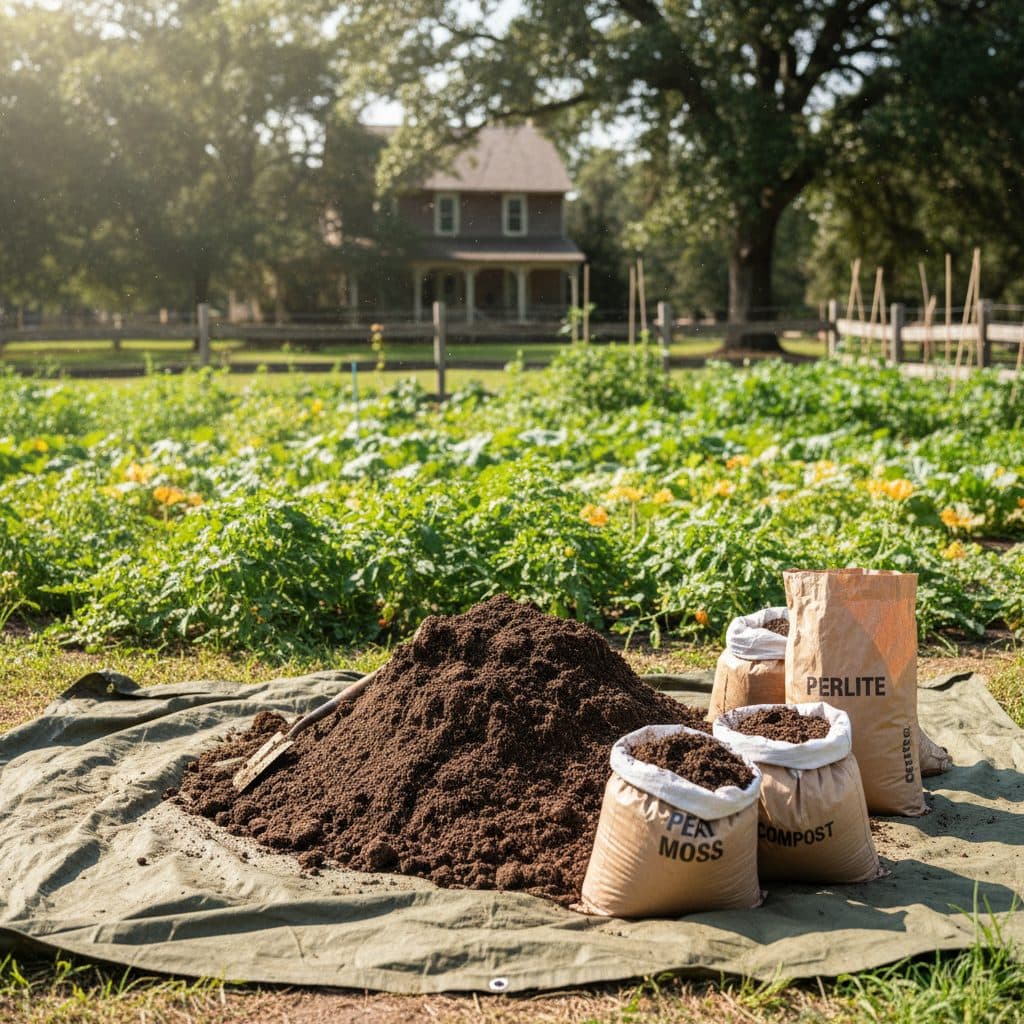
Mixing your own growing medium is a straightforward process, but proper technique ensures uniformity and consistency, which are critical for plant success. Begin by gathering all your components: peat moss or coco coir, perlite, and compost. A large tarp or a dedicated mixing tub, capable of holding 10 to 20 gallons of material, is ideal for this task. Start by measuring out your peat or coir and perlite, then thoroughly blend these two components first. This initial step ensures even distribution of the aeration material, preventing pockets of waterlogging or compaction in your final mix, which can lead to uneven growth across a tray of 72 seedlings.
Achieving consistency and safe storage
Once the peat/coir and perlite are well combined, add your compost and any optional amendments like dolomitic lime or a slow-release organic fertilizer. Mix everything again until the blend is homogenous, with no distinct layers or clumps of individual ingredients. For best results, moisten the mix slightly as you go, aiming for a consistency similar to a wrung-out sponge: moist enough to hold its shape when squeezed, but not dripping wet. This pre-moistening helps prevent dust and ensures the mix is ready for immediate use. Store any unused mix in sealed containers or heavy-duty bags in a cool, dry place, such as a shed in USDA zone 6, to maintain its quality for up to 6 months. This practice helps prevent the growth of undesirable fungi or the drying out of beneficial microbes.
- Gather materials: peat/coir, perlite, compost, optional amendments.
- Use a large container: a tarp or 10-20 gallon tub works well.
- Mix dry components first: blend peat/coir and perlite thoroughly.
- Add compost and amendments: ensure even distribution.
- Moisten gradually: aim for a wrung-out sponge consistency.
Component Properties for Custom Mixes
Component | Primary Function | Key Characteristic |
|---|---|---|
Peat Moss | Bulk, Water Retention | Acidic pH (3.5-4.5), holds 20x dry weight in water |
Coco Coir | Bulk, Water Retention | Neutral pH (5.5-6.8), renewable, requires rinsing |
Perlite | Aeration, Drainage | Lightweight, sterile, maintains structure, prevents compaction |
Compost | Nutrients, Microbes | Slow-release nutrients, improves structure, disease suppression |
Cost Savings: Buying peat, perlite and compost in bulk generally costs less per tray than bagged mix, and the gap widens with volume.
pH Control: Peat moss provides an acidic base (pH 3.5-4.5), while coco coir offers a more neutral option (pH 5.5-6.8), allowing for precise pH adjustment.
Water Retention: Peat moss can hold up to 20 times its dry weight in water, significantly reducing watering frequency in containers.
Frequently asked questions
What is the best ratio for a general potting mix?
A good general potting mix ratio is 1 part peat moss or coco coir, 1 part perlite, and 1 part quality compost. This blend offers balanced drainage, water retention, and nutrient availability for most container plants, supporting growth for several months.
How much compost should I use in a seed-starting mix?
For seed-starting mixes, use compost sparingly, typically 0.5 to 0.75 parts for every 2 parts of peat/coir and 1 part perlite. This ensures a low-nutrient environment ideal for germination, usually not exceeding 20% of the total volume.
Can I use garden soil in my potting mix?
It is generally not recommended to use garden soil in potting mixes because it can introduce weed seeds, pests, and diseases. Garden soil also compacts easily in containers, leading to poor drainage and aeration, which can stress roots within a few weeks.
How long can I store my homemade potting mix?
When stored in sealed containers or heavy-duty bags in a cool, dry place, your homemade potting mix can remain viable for up to 6 months. After this period, some beneficial microbial activity may decrease, and the mix might begin to break down slightly.
What is the difference between perlite and vermiculite?
Perlite provides superior drainage and aeration due to its rigid, porous structure, while vermiculite offers better water retention and nutrient exchange capacity. Perlite maintains its structure longer, whereas vermiculite can compact over 3-4 months, making perlite generally preferred for drainage in seed starting.
References
- MIXING RESINS, ADHESIVES AND POTTING COMPOUNDS (2023). MIXING RESINS, ADHESIVES AND POTTING COMPOUNDS.
- Mixing Resins, Adhesives and Potting Compounds (2023). Mixing Resins, Adhesives and Potting Compounds.
- Nursery Performance of from Seed in Relation Murraya koenigii
to Potting Media and Hormonal Treatment of Branch Cuttings (2023). [Nursery Performance of from Seed in Relation Murraya koenigii
to Potting Media and Hormonal Treatment of Branch Cuttings](https://doi.org/10.55362/ije/2023/3851). - Rolling your own (1993). Rolling your own.
- USDA Natural Resources Conservation Service (2024). USDA Natural Resources Conservation Service.