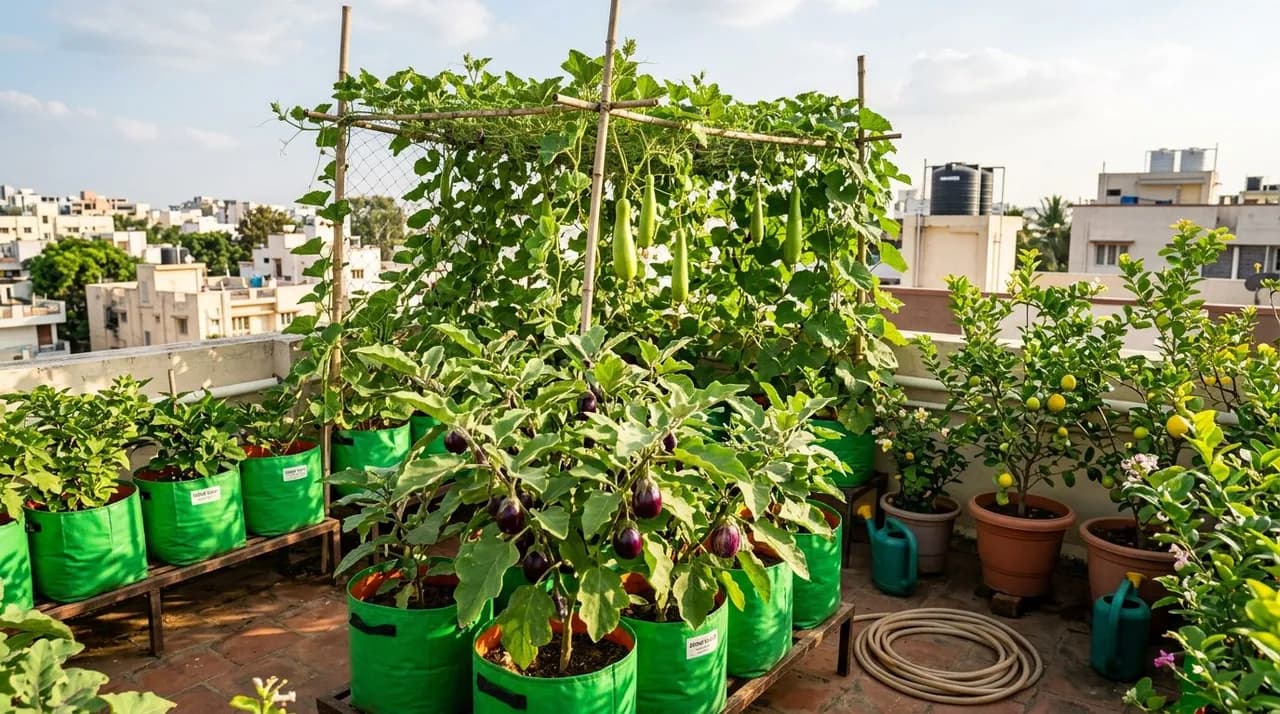
Key takeaways
- Select heat-tolerant crops suited to intense rooftop sunlight, seasonal monsoon rains, and container growing conditions.
- Top heavy-yielding vegetables for Indian terraces include brinjal, bhindi (ladies finger), tomatoes, chillies, and climbing gourds.
- Fast-growing leafy greens like methi (fenugreek), palak (spinach), and coriander thrive in wide, shallow containers.
- Vertical climbing creepers such as bottle gourd (lauki) and bitter gourd (karela) maximize vertical space and shade lower grow bags.
- Position heavy containers (40+ litres) along exterior load-bearing perimeter walls and structural beams rather than slab centres.
Quick answer: The best terrace garden plants for Indian rooftops include heat-loving vegetables (brinjal, bhindi, chillies, tomatoes), vertical creepers (bottle gourd, ridge gourd, bitter gourd), shallow-rooted leafy greens (methi, palak, coriander), and compact container fruits (lemon, dragon fruit, dwarf guava).
Choosing the right terrace garden plants transforms a barren, heat-radiating concrete rooftop into a lush, productive urban oasis. Across Indian cities (from high-rises in Mumbai and Bengaluru to independent houses in Delhi, Hyderabad, and Chennai), rooftop gardening provides fresh culinary herbs and vegetables.
However, cultivating plants on an open concrete slab is distinctly different from growing in ground beds. Rooftops endure extreme environmental exposure: blistering summer (zaid) temperatures frequently exceeding 40°C, gusty pre-monsoon winds, and intense tropical monsoon (kharif) downpours that can drench containers. Plants must possess the resilience to thrive within confined grow bags and pots under direct, unfiltered sun.
By selecting proven vegetable varieties, utilizing vertical climbing creepers, matching container depths to root habits, and organizing your terrace layout according to structural load-bearing principles, you can create a high-yielding, multi-layered food garden right above your living room.
Structural and microclimate planning for rooftops
Before purchasing dozens of grow bags, evaluate the structural capacity and climate dynamics of your terrace:
Weight distribution and waterproofing
- Load-bearing placement: Wet soil is heavy. Position large, heavy planters (such as 50 to 100-litre containers for fruit trees) along the outer perimeter walls and directly above structural pillars and load-bearing beams. Keep lightweight seedling trays and shallow leafy green planters in central slab spans.
- Waterproofing and drainage paths: Verify your roof's waterproofing membrane is intact. Always elevate grow bags and pots on terracotta risers, plastic stands, or bricks. This allows irrigation runoff and monsoon rains to flow freely beneath pots toward roof drainage outlets without pooling.
Managing searing summer heat
During April, May, and June, rooftop temperatures can soar past 42°C, heating concrete slabs and baking container roots:
- Install a 50% green agro-shade net 2.5 to 3 metres above the terrace to cut solar heat load and lower leaf temperatures while maintaining ventilation.
- Group pots together to create a humid microclimate that reduces individual transpirational water loss.
- For broad strategies on selecting heat-loving species, explore our guide on plants for full sun.
Top daily vegetables for Indian terraces
These stalwart vegetables form the backbone of a productive Indian kitchen garden, delivering continuous harvests across seasons.
1. Brinjal / eggplant (Solanum melongena)
Brinjal is one of the most reliable performers on Indian rooftops. It thrives in high heat and tolerates container confinement without fuss.
- Top varieties: Round purple (Bharta brinjal), slender green long, and small purple clustering (Pusa Purple Cluster).
- Container size: 30 cm to 35 cm diameter pot or 25-litre HDPE grow bag per single plant.
- Care: Demands 6 hours of direct sun. Pinch the main shoot when the plant reaches 30 cm tall to stimulate bushy lateral branching.
2. Bhindi / ladies finger (Abelmoschus esculentus)
Bhindi loves tropical warmth and grows vigorously throughout summer and monsoon.
- Container size: 30 cm deep grow bag, accommodating two plants per bag.
- Care: Direct sow seeds 2 cm deep. Pick tender pods every two to three days to encourage continuous flowering.
3. Chillies / mirchi (Capsicum annuum)
Hot green chillies are indispensable in every Indian home. A single healthy bush yields dozens of pungent chillies every week.
- Container size: 25 cm to 30 cm pot.
- Care: Avoid overwatering, which causes flower drop. Leaf curl in chillies and tomatoes is caused by viruses carried by whiteflies, thrips, and mites; buttermilk will not cure an infected plant: remove and bin badly curled plants, and manage sucking insects early with yellow sticky traps and neem oil sprays to protect the rest of the crop.
4. Tomatoes (Solanum lycopersicum)
Tomatoes excel during the post-monsoon and winter (rabi) season across the plains, and during summer in southern and hill regions.
- Top varieties: Determinate bush types and indeterminate varieties: Pusa Ruby (classic Indian round, indeterminate) and Arka Rakshak (high-yielding round variety with triple-disease resistance to leaf curl, bacterial wilt, and early blight).
- Container size: 35 cm deep pot with sturdy bamboo stakes or string trellising.
When preparing lightweight potting soil for these heavy feeders, review our comprehensive guide on how to use cocopeat for plants.
Creepers and vertical climbers: maximizing vertical space
Vining gourds and climbing legumes are the true workhorses of the terrace garden. Trained over vertical bamboo frames, steel mesh, or nylon trellises, their lush canopy shades the concrete roof while hanging heavy fruit below.
1. Bottle gourd / lauki (Lagenaria siceraria)
Lauki is a rapid climber producing massive green gourds throughout the summer and monsoon seasons.
- Container size: Minimum 45 cm diameter pot or 50-litre grow bag for one to two vines.
- Trellising: Direct vines onto an overhead pergola or sturdy vertical net. 3G pruning (pinch the main vine at 10 to 12 leaves, pinch the 2G side shoots when they reach 10 leaves, and let the 3G shoots flower) can increase female flower count on gourds. It works best on vigorous plants with plenty of root room; on a smaller terrace container, simple tip-pruning to keep the vine within bounds is often enough.
2. Bitter gourd / karela (Momordica charantia)
Compact and high-yielding, karela features attractive lobed foliage and textured, vitamin-rich fruit.
- Container size: 30 cm to 35 cm pot.
- Care: Provide vertical netting. The small yellow flowers attract beneficial pollinators to your rooftop.
3. Ridge gourd (tori / turai) and sponge gourd (gilki)
These fast-growing tropical cucurbits produce tender, ridged culinary gourds within 50 to 60 days from seed. They thrive during hot, humid kharif monsoon months.
4. Yardlong climbing beans (Vigna unguiculata subsp. sesquipedalis)
Produces long, tender legume pods hanging in pairs. As nitrogen fixers, their roots actively enrich the soil biology of your containers.
To ensure heavy fruit set across all rooftop cucurbits, integrate companion blooms by reviewing plants for pollinators.
Fast-growing leafy greens and culinary herbs
Leafy greens require shallow root space, maturing from seed to harvest in just three to five weeks.
- Methi / Fenugreek (Trigonella foenum-graecum): Sow seeds thickly across wide, shallow rectangular grow bags (15 cm deep). Harvest whole young shoots in 21 days for fragrant methi parathas.
- Palak / Spinach (Spinacia oleracea): Thrives during the cooler rabi months. Practice cut-and-come-again harvesting by picking outer leaves while leaving the central crown intact.
- Coriander / Dhaniya (Coriandrum sativum): Crush whole coriander seeds gently before sowing into moist, fertile potting mix. In hot summer weather, position coriander in partial afternoon shade under taller plants or shade netting. For shade placement techniques, see plants for full shade.
- Pudina / Mint (Mentha spicata): Spreads rapidly via horizontal runners. Grow in dedicated shallow troughs to prevent it from outcompeting other plants.
- Amaranth / Chaulai (Amaranthus tricolor): A heat-tolerant red and green leafy vegetable that thrives in 40°C summer sun when English spinach bolts.
Compact fruit trees for terrace containers
Growing fresh fruit on a terrace is entirely achievable by choosing grafted, dwarfing, and shallow-rooted species:
- Lemon / Kagzi Nimbu (Citrus aurantiifolia): Produces juicy, acid limes throughout multiple annual flushes. Learn complete pot management in our dedicated guide on how to grow a lemon tree in a pot in India.
- Dragon Fruit / Kamalam (Selenicereus undatus): A drought-tolerant climbing cactus trained over an umbrella trellis. Review step-by-step planting and pollination mechanics in how to grow dragon fruit at home.
- Guava / Amrood (Psidium guajava): Dwarf varieties (such as Taiwan Pink or VNR Bihi, which both need heavy seasonal pruning to fruit well in 50-litre drums) produce sweet guavas twice a year.
- Pomegranate / Anaar (Punica granatum): Naturally shrubby and drought-hardy, pomegranate flourishes in hot rooftop sun.
Seasonal planting calendar for Indian terraces
Structure your sowing and harvesting activities around India's three primary horticultural seasons:
1. Zaid / summer season (February to May)
- Sow: Bhindi, bottle gourd, ridge gourd, bitter gourd, watermelon, amaranth (chaulai), and sweet corn.
- Maintenance: Install green shade netting in late March, mulch containers heavily with dry straw, and water twice daily during heatwaves.
2. Kharif / monsoon season (June to September)
- Sow: Brinjal, chillies, tomatoes (late monsoon), cucumber, cowpeas (lobia), and turmeric/ginger.
- Maintenance: Check grow bag drainage weekly, elevate all pots on stands, and spray neem oil preventatively to manage monsoon fungal leaf spot and insect pests.
3. Rabi / winter season (October to January)
- Sow: Cauliflower, cabbage, broccoli, carrots, radishes (mooli), beetroot, peas, palak, methi, coriander, and strawberries.
- Maintenance: Remove summer shade netting to provide full, unfiltered winter sunlight, reduce watering frequency, and top-dress pots with rich vermicompost.
By matching the right vegetable varieties, leafy greens, and container fruit trees to your rooftop conditions, you can establish a productive, steady source of home-grown food that supplies fresh vegetables throughout the entire year.