Key takeaways
- A kitchen garden (also called a home vegetable garden or potager) is a dedicated domestic growing space cultivated to produce fresh, chemical-free vegetables, culinary herbs, and fruits for daily household cooking.
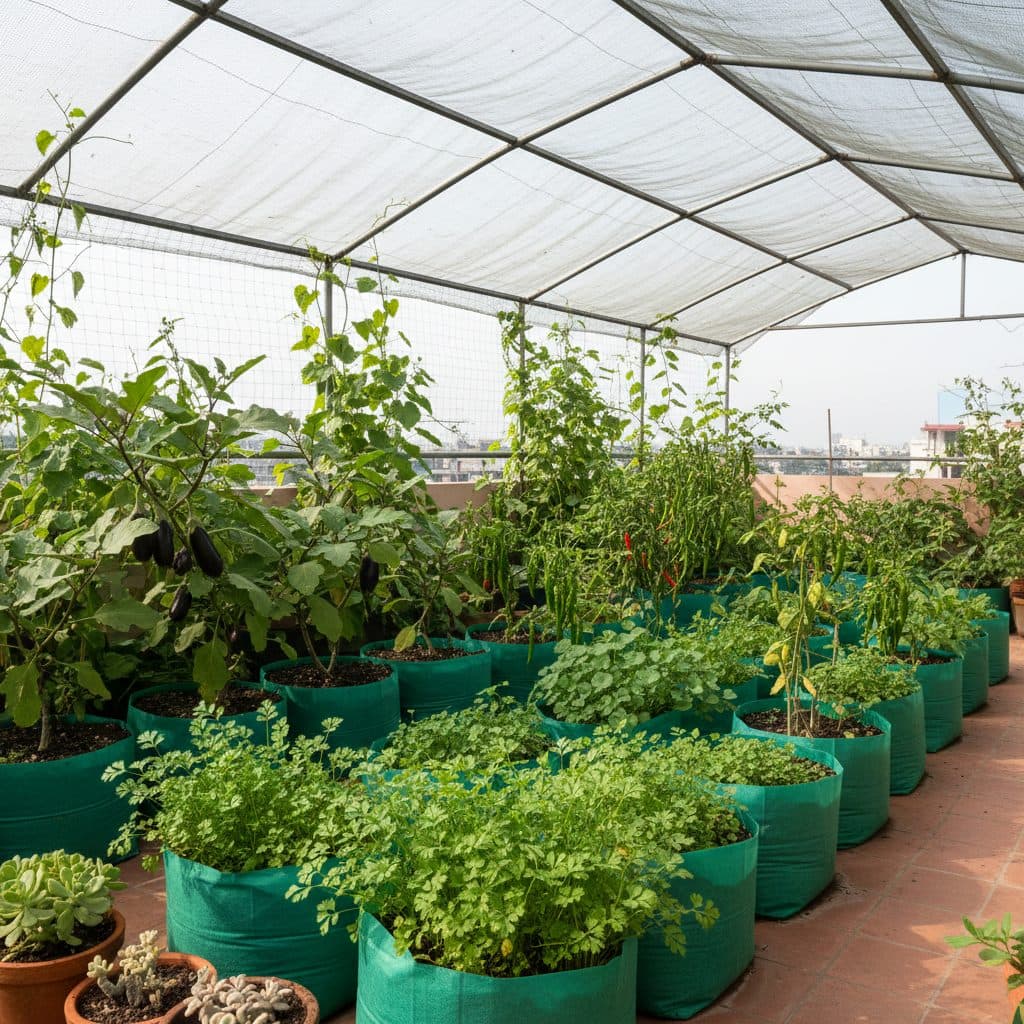
- In Indian urban and suburban settings, kitchen gardening thrives on concrete rooftops (terrace gardens), balconies, and open backyards using breathable HDPE grow bags and terracotta containers.
- Planning crops around India's seasonal agricultural calendar—kharif (monsoon), rabi (winter), and zaid (summer)—maximizes yields and reduces pest outbreaks.
- A standard lightweight rooftop potting mix consists of 40% washed cocopeat, 40% vermicompost, and 20% well-aerated garden soil amended with neem cake.
- Kitchen gardening delivers superior nutritional freshness, reduces household grocery expenses, recycles kitchen wet waste into rich organic compost, and creates green urban microclimates.
- Simple organic pest management using cold-pressed neem oil, wood ash, and buttermilk sprays keeps crops healthy without synthetic chemical pesticides.
Quick answer: A kitchen garden is a domestic garden designed to grow edible crops—including daily vegetables, culinary herbs, greens, and fruits—directly adjacent to the home for household consumption. In India, kitchen gardens are commonly established on terrace roofs, balconies, and backyards using grow bags to supply daily essentials like coriander, chillies, brinjal, bhindi, and tomatoes.
Growing your own food at home has evolved from a traditional rural practice into a vital urban movement across India. As concerns over synthetic pesticide residues on commercially purchased produce grow, Indian households are converting open sunny terraces, apartment balconies, and courtyard patches into productive edible spaces.
Understanding what is kitchen garden design and management helps you establish a low-maintenance, high-yield growing system tailored to local conditions. Whether you have a spacious rooftop in Chandigarh or a compact balcony in Bengaluru, a kitchen garden allows you to harvest crisp, organic greens and fragrant culinary herbs within arm's reach of your cooking pot.
+-------------------------------------------------------------+
|              KITCHEN GARDEN CORE ARCHITECTURE               |
|                                                             |
|   1. DAILY CULINARY GREENS & HERBS:                         |
|   - Coriander (Dhania), Methi, Mint (Pudina), Curry Leaf    |
|                                                             |
|   2. STAPLE FRUITING VEGETABLES:                            |
|   - Tomatoes, Brinjal (Baingan), Bhindi (Okra), Chillies    |
|                                                             |
|   3. SEASONAL CLIMBING GOURDS:                              |
|   - Bottle Gourd (Lauki), Bitter Gourd (Karela), Ridge Gourd|
|                                                             |
|   4. NUTRIENT CYCLING INFRASTRUCTURE:                       |
|   - Vermicompost bin, Neem cake organic pest management     |
+-------------------------------------------------------------+
Meaning and historical importance of a kitchen garden
Historically known in India as griha vatika or kitchen baari, a kitchen garden is fundamentally different from commercial agricultural fields or purely ornamental flower beds. Its primary purpose is utility: producing a continuous, diverse supply of seasonal vegetables, digestive greens, and medicinal herbs for daily household meals.
+-------------------------------------------------------------+
|          KITCHEN GARDEN VS COMMERCIAL AGRICULTURE           |
|                                                             |
|   FEATURE           KITCHEN GARDEN        COMMERCIAL FARM   |
|   -------           --------------        ---------------   |
|   Goal              Dietary diversity     Monoculture yield |
|   Chemical Inputs   100% Organic          Synthetic sprays  |
|   Harvest Style     Daily picking         Bulk single harvest
|   Space Required    5 to 50 square metres Acres / Hectares  |
|   Location          Balcony, Rooftop, YardRural agricultural|
|+-------------------------------------------------------------+
In earlier generations, every independent Indian homestead maintained a backyard kitchen garden near the kitchen washing area, naturally utilizing greywater from grain washing to irrigate leafy greens and banana trees. Today, modern urban kitchen gardens adapt these principles to rooftops and balconies using lightweight containers and drip irrigation systems.
To start an edible space with easy culinary seasonings, explore our starter guide on starting a herb garden.
Key benefits of maintaining a kitchen garden in India
Cultivating an edible garden at home delivers substantial nutritional, economic, and environmental rewards:
+-------------------------------------------------------------+
|              PRIMARY BENEFITS OF A KITCHEN GARDEN           |
|                                                             |
|   1. 100% PESTICIDE-FREE NUTRITION:                         |
|   - Zero chemical residues; harvested minutes before cooking|
|                                                             |
|   2. HOUSEHOLD COST SAVINGS:                                |
|   - Eliminates daily retail purchases of coriander, chillies|
|                                                             |
|   3. ORGANIC WASTE RECYCLING:                               |
|   - Converts vegetable peels and tea leaves into compost    |
|                                                             |
|   4. URBAN ROOFTOP SHADING & COOLING:                       |
|   - Foliage canopy shades roof slabs from direct summer heat|
+-------------------------------------------------------------+
1. Superior nutritional quality and freshness
Commercial vegetables transported across long supply chains lose vital water-soluble vitamins (such as vitamin C and B-complex) within hours of harvest. Homegrown vegetables picked ten minutes before cooking retain their full vitamin profile, crisp texture, and aromatic oils.
2. Elimination of toxic chemical residues
Commercial vegetable crops in India frequently receive heavy doses of systemic insecticides and synthetic fungicides. By managing your kitchen garden organically with neem oil, compost tea, and companion planting, your family consumes clean, pure produce.
3. Kitchen waste recycling and circular ecology
Indian kitchens generate substantial organic wet waste daily from vegetable peels, fruit rinds, and used tea leaves. Integrating a simple vermicomposting bin into your kitchen garden turns this daily waste into dark, odor-free plant nutrition. Learn step-by-step vermiculture in our vermicomposting at home worm bin guide.
4. Thermal cooling for urban concrete homes
In hot Indian summers where ambient temperatures exceed 42°C, concrete rooftops absorb immense solar radiation, heating upper floors. A dense terrace kitchen garden with potted canopies and climbing gourd trellises shades the concrete roof slab from direct solar radiation, helping lower top-floor heat transfer.
Essential components: containers, grow bags, and potting soil
Urban Indian kitchen gardeners primarily grow in containers rather than in-ground soil. Choosing the right growing containers and soil blend is essential for plant health and rooftop structural safety.
+-------------------------------------------------------------+
|                 LIGHTWEIGHT POTTING SOIL BLEND              |
|                                                             |
|   [ 40% Washed Cocopeat ]  --> Moisture retention & aeration|
|   [ 40% Vermicompost ]     --> Organic plant nutrients      |
|   [ 20% Native Red Soil ]  --> Mineral structure & stability|
|   - 5% Neem Cake Powder    --> Pest & root-rot suppression  |
+-------------------------------------------------------------+
Component | Proportion | Functional Role |
|---|---|---|
Cocopeat (Washed) | 40 percent | Retains moisture, lightens container weight for rooftops |
Vermicompost / Aged Cow Dung | 40 percent | Provides balanced macro and micronutrients |
Red Garden Soil / Loam | 20 percent | Provides mineral base, anchors root systems |
Neem Cake Powder (Neem Khali) | 100 grams per bag | Prevents soil-borne nematodes, grubs, and fungal root rots |
Bone Meal / Rock Phosphate | 50 grams per bag | Supplies organic phosphorus for strong flowering and root growth |
Container selection: grow bags vs terracotta
- HDPE Green Grow Bags (240 to 350 GSM): The gold standard for terrace gardens. They are lightweight, UV-stabilised, highly durable (lasting 5 to 7 years), and feature pre-punched drainage eyelets that prevent waterlogging during heavy monsoon downpours.
- Size guide:
- Small (25 cm x 25 cm): Coriander, methi, palak, chillies, garlic.
- Medium (30 cm x 30 cm): Tomatoes, brinjal, bhindi, capsicum.
- Large (45 cm x 45 cm): Bottle gourd, bitter gourd, papaya, dwarf lemon.
For practical container layouts in compact urban homes, read our comprehensive manual on balcony container vegetable gardening.
India's seasonal planting calendar: kharif, rabi, and zaid
Timing your sowings with India's agricultural seasons ensures optimal germination, strong vegetative growth, and minimal pest pressure.
+-------------------------------------------------------------+
|              INDIAN SEASONAL PLANTING CALENDAR              |
|                                                             |
|   1. KHARIF (Monsoon Crop: Sow June to July):               |
|   - Crops: Bhindi, Brinjal, Chillies, Bottle Gourd, Karela  |
|   - Focus: High humidity tolerance, excellent bag drainage  |
|                                                             |
|   2. RABI (Winter Crop: Sow September to November):         |
|   - Crops: Palak, Methi, Coriander, Radish, Peas, Broccoli  |
|   - Focus: Abundant sunlight, peak leafy harvests           |
|                                                             |
|   3. ZAID (Summer Crop: Sow February to March):             |
|   - Crops: Cucumbers, Ridge Gourd, Amaranth (Chaulai), Mint |
|   - Focus: 50% Green shade net, twice-daily watering        |
+-------------------------------------------------------------+
1. Kharif season (Monsoon / June to September)
The onset of the monsoon brings warm, humid conditions ideal for climbing cucurbits and fruiting solanaceous vegetables. Sow seeds of bhindi, brinjal, cluster beans (gawar), bottle gourd, sponge gourd (torai), and bitter gourd. Ensure grow bags are elevated on drainage pots or bricks so excess monsoon rain drains away immediately without rotting root systems.
2. Rabi season (Winter / October to February)
Winter is the most rewarding growing season across northern and central Indian plains. Sow cool-season leafy greens including palak, methi, coriander, mustard greens (sarson), red radishes, carrots, peas, and cauliflower. These crops thrive in bright, mild winter sunshine and dry air.
3. Zaid season (Summer / March to June)
Extreme summer heat with temperatures reaching 40°C to 45°C requires protective management. Install a 50 percent green agro-shade net over your terrace garden to filter scorching solar radiation. Grow heat-tolerant crops like mint (pudina), amaranth greens (chaulai), cucumbers, and snake gourds.
For city-specific seasonal strategies in northern India, explore our local guide on terrace gardening in Chandigarh.
Step-by-step guide to setting up your first kitchen garden
Setting up a productive kitchen garden requires a phased, practical workflow:
+-------------------------------------------------------------+
|                 5-STEP KITCHEN GARDEN LAUNCH                |
|                                                             |
|   Step 1: Map Sunlight (Minimum 5 to 6 hours direct sun)    |
|   Step 2: Waterproof Terrace Slab & Place Drain Tiles       |
|   Step 3: Fill Grow Bags with Aerated Cocopeat-Compost Mix  |
|   Step 4: Sow Easy Starter Seeds (Methi, Coriander, Bhindi) |
|   Step 5: Install Trellis Supports & 50% Summer Shade Net   |
+-------------------------------------------------------------+- Assess sunlight: Identify an area receiving at least five to six hours of uninterrupted direct sunlight daily. Fruiting vegetables (tomatoes, brinjal, chillies) require full sun to flower and fruit, while leafy greens (palak, mint) tolerate partial afternoon shade.
- Waterproofing and drainage: On terrace roofs, place grow bags on raised wooden slats, recycled PVC pipe runners, or concrete drain tiles. This keeps container bottoms off the concrete roof slab, preventing moisture seepage and allowing rainwater to run freely toward roof drains.
- Seed sowing: Start with easy-to-germinate starter crops:
- Methi: Scatter whole kitchen fenugreek seeds across a shallow grow bag, cover with 1 cm of compost, and water gently. Fresh leaves are ready to cut within 21 days.
- Chillies & Tomatoes: Sow seeds in a small seedling tray, and transplant sturdy 10 cm seedlings into individual 30 cm grow bags after four weeks.
- Trellising: Erect vertical bamboo or nylon net trellises along terrace walls to train climbing gourds upward, maximizing vertical space.
Organic pest management for Indian kitchen gardens
Common urban pests include aphids, whiteflies, caterpillars, and mealybugs. Manage them with regular organic monitoring rather than harmful chemicals:
- Neem oil spray: Mix 5 ml of pure cold-pressed neem oil and 2 ml of organic liquid soap in 1 litre of warm water. Spray thoroughly every 10 to 14 days as a preventative barrier on leaf tops and undersides.
- Sour buttermilk spray (Khatta Chhaas): Ferment 1 litre of buttermilk for four days in a copper vessel, dilute with 5 litres of water, and spray to control fungal powdery mildew and boost vegetative greening.
- Wood ash dusting: Dust fine wood ash sparingly over wet foliage in early morning to deter chewing beetles and caterpillars; avoid heavy applications that can raise leaf-surface pH excessively and cause leaf scorch.
- Mealybug control: If soft white cottony sap-suckers appear on hibiscus, brinjal, or chilli stems, apply targeted treatments detailed in our guide on how to get rid of mealybugs on plants.