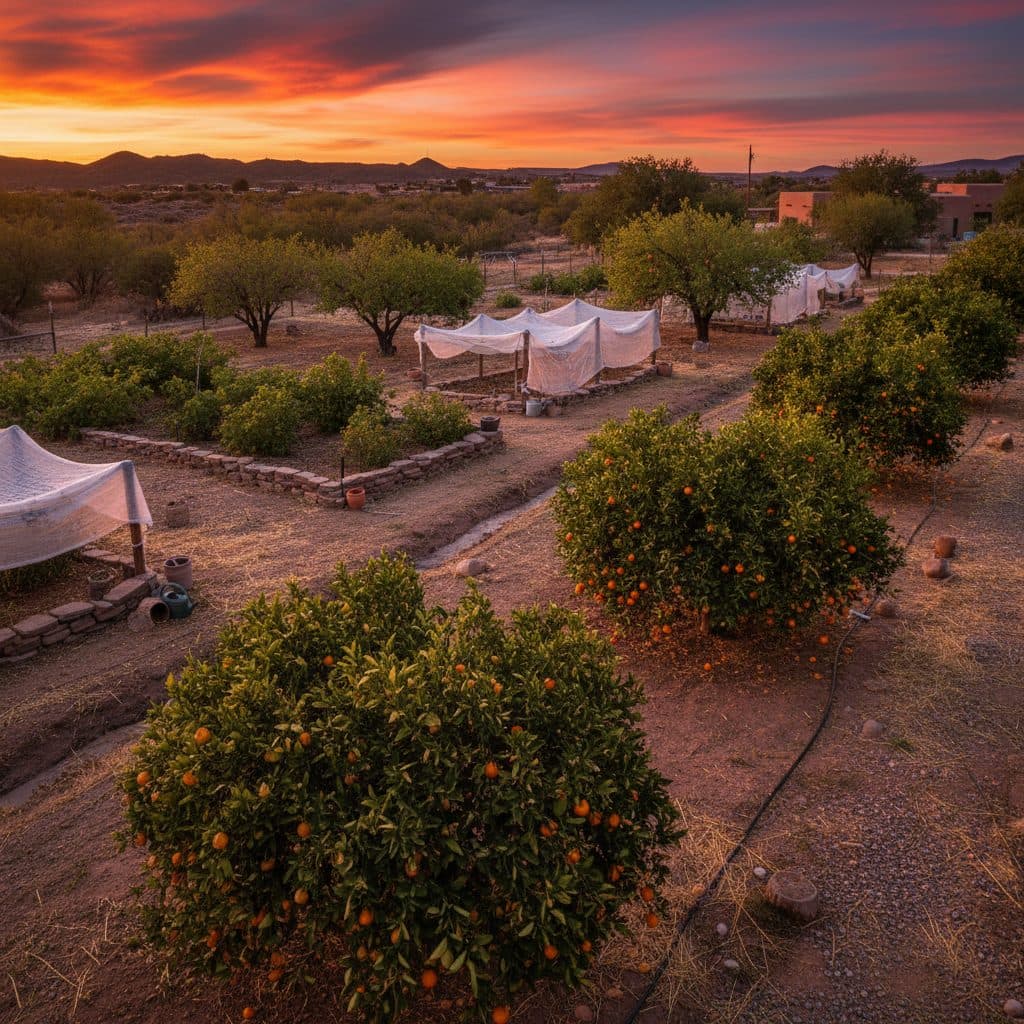
Key takeaways
- Immediately assess plants for heat stress symptoms like scorched leaves or fruit drop, focusing on critical areas.
- Rehydrate deeply and slowly, ensuring water penetrates 18 to 24 inches into the root zone for established plants.
- Improve soil health with organic matter and mulch to retain moisture and regulate temperature, aiming for 3 to 4 inches of cover.
- Prune only truly dead or severely damaged wood to minimize further stress, waiting for signs of new growth.
- Monitor for opportunistic pests and diseases that can target weakened plants, applying targeted treatments if necessary.
- Plan for future heat events by selecting resilient varieties and improving microclimates, especially in regions experiencing 100°F+ temperatures.
Quick answer: To recover heat-stressed fruit plants, immediately rehydrate deeply, improve soil health with organic matter and mulch, prune only truly dead wood, and monitor for pests. Plan for future heat events by selecting resilient varieties and improving microclimates.
In the summer of 2023, areas like the desert Southwest and parts of the Southeast experienced prolonged heatwaves, with temperatures consistently exceeding 105°F for multiple days. Such extreme conditions can severely stress fruit-bearing plants, leading to scorched foliage, premature fruit drop, and long-term vitality issues. Recovering citrus, stone fruit, and berries after a heatwave requires a methodical approach, focusing on hydration, soil health, and careful observation to bring your garden back to full production.
Even a single day above 95°F can cause significant damage to sensitive fruit crops in USDA zones 7 through 9. This guide outlines practical steps for US growers to help their plants rebound, emphasizing strategies that build resilience against future climate challenges. We will cover immediate care, soil rejuvenation, and protective measures to ensure your fruit trees and bushes continue to thrive.
Assessing heat damage and immediate first aid
After a heatwave, the first step is a thorough assessment of your plants. Look for visual cues such as leaf scorch, where leaf edges turn brown or black, particularly on the south or west-facing sides of the plant. Fruit may show sunburn spots, shriveling, or premature dropping. For example, a mature navel orange tree in Southern California might drop 30% of its fruit after three days above 100°F. Check the soil moisture deeply—not just the surface—using a soil moisture meter to a depth of 6 to 12 inches. If the soil is dry, immediate, slow, deep watering is critical to rehydrate roots without shocking the system.
providing immediate relief
Provide temporary shade for severely stressed plants, especially young trees or bushes, using shade cloth that blocks 30% to 50% of sunlight. This can reduce leaf surface temperatures by 10°F to 15°F. Avoid fertilizing immediately, as this can add stress to roots already struggling to absorb water and nutrients. Instead, focus on consistent hydration. For a mature peach tree in USDA zone 7, apply 15 to 20 gallons of water slowly over several hours, allowing it to soak into the root zone. Repeat this every two to three days until soil moisture levels stabilize at 60% to 70% saturation.
- Check for leaf discoloration and wilting, especially on new growth.
- Inspect fruit for sunburn, shriveling, or early drop-off.
- Use a soil moisture meter to confirm dryness at 6 to 12 inches deep.
- Apply 10 to 20 gallons of water slowly to the drip line of affected trees.
- Install temporary shade cloth to reduce direct sun exposure by 30% to 50%.
Rehydrating and nourishing the soil
Deep and consistent watering is paramount after a heatwave. Surface watering encourages shallow roots, making plants more vulnerable to future heat. Instead, water slowly and deeply, aiming to moisten the soil to a depth of at least 18 to 24 inches for established fruit trees. This can mean applying 20 to 30 gallons of water per tree, two to three times a week, depending on soil type and plant size. Clay soils in the Midwest may hold water longer than sandy soils in Florida, requiring different irrigation schedules. Measuring soil moisture with a 3-in-1 soil meter can help prevent over or under-watering.
improving soil health
Once plants show signs of recovery, typically after one to two weeks, focus on rebuilding soil health. Incorporate 2 to 3 inches of organic compost around the drip line of trees and bushes, avoiding direct contact with the trunk. This improves soil structure, increases water retention by up to 20%, and provides slow-release nutrients. A layer of 3 to 4 inches of organic mulch, such as wood chips or straw, helps regulate soil temperature, reducing it by 10°F to 15°F on hot days, and minimizes evaporation. The USDA Natural Resources Conservation Service notes that soil organic matter supports drought resilience [6]. Consider a light application of a balanced organic fertilizer, like fermented soybean meal, at half strength, if plants are showing signs of nutrient deficiency after a few weeks of recovery.
- Water deeply to reach 18 to 24 inches into the root zone.
- Apply 20 to 30 gallons per mature fruit tree, two to three times weekly.
- Incorporate 2 to 3 inches of organic compost around the drip line.
- Add a 3 to 4 inch layer of organic mulch to conserve moisture.
- Consider a half-strength organic fertilizer after two weeks of recovery.
Pruning and pest management after stress
Resist the urge to immediately prune away all damaged foliage. Severely stressed plants need every leaf for photosynthesis, even if they look scorched. Wait until new growth emerges, typically after two to four weeks of consistent care, before pruning. At that point, remove only truly dead branches or leaves that are 100% brown and brittle. For example, a blueberry bush in USDA zone 6 might have 15% to 20% of its leaves scorched; pruning these too early could further weaken the plant. Make clean cuts with sanitized tools to prevent disease entry. Avoid heavy pruning, which can stimulate excessive new growth that is vulnerable to late-season heat or early frosts.
managing opportunistic pests
Heat-stressed plants are often more susceptible to pests and diseases. The stress weakens their natural defenses, making them targets for spider mites, aphids, and borers. In the arid regions of Arizona, spider mite populations can explode after heatwaves, damaging up to 50% of berry leaves. Inspect plants daily for signs of infestation, particularly on the undersides of leaves. If you find pests, start with non-chemical controls like a strong spray of water to dislodge aphids, or introduce beneficial insects. For persistent issues, use targeted organic pesticides, following label instructions carefully. Ensure good air circulation around plants to deter fungal diseases, which can also appear when plants are weakened. A 2024 study noted increased risks of water-borne diseases amidst heatwaves in Karachi, Pakistan. Environmental stress can affect plant health through several pathways [5].
- Delay pruning until new growth appears, typically two to four weeks post-heatwave.
- Remove only completely dead or brittle branches and leaves.
- Sanitize pruning tools with a 10% bleach solution between cuts.
- Monitor daily for spider mites, aphids, and borers, especially on undersides of leaves.
- Use water sprays or beneficial insects for initial pest control.
Long-term resilience and future preparation
Building long-term resilience for your fruit plants involves several strategies. Improving soil health is foundational; consistent addition of organic matter over time can increase soil’s water holding capacity by 15% to 25%. This helps plants better withstand periods of drought and high temperatures. In USDA zone 9, where heatwaves are becoming more frequent, selecting heat-tolerant fruit varieties matters. For example, choose ‘Eureka’ lemons over ‘Meyer’ lemons for better heat resistance, or ‘Emerald’ blueberries which tolerate higher temperatures than ‘Bluecrop’.
microclimate management and water conservation
Consider planting cover crops or creating microclimates with taller, shade-providing plants to protect sensitive fruit. A 2024 study on heatwave predictions in India points to the need for proactive measures globally [1]. For berries, using a shade structure for 30% to 50% afternoon shade can reduce fruit temperature by 5°F to 10°F, preventing sunburn. Implement efficient irrigation systems like drip lines or soaker hoses, which can reduce water usage by 30% to 50% compared to overhead sprinklers. Collecting rainwater in barrels can provide a supplemental water source, especially in regions with summer water restrictions. For future planning, consider the benefits of hydroponic strawberries for controlled environments, or even growing more resilient species like passion fruit in warmer zones.
- Continuously build soil organic matter to improve water retention by 15% to 25%.
- Select heat-tolerant fruit varieties suitable for your specific USDA zone.
- Create microclimates with shade cloth or companion plants to reduce temperature by 5°F to 10°F.
- Install drip irrigation or soaker hoses to save 30% to 50% on water.
- Consider rainwater harvesting to supplement irrigation during dry spells.
Post-heatwave recovery needs for common fruit types
Fruit Type | Typical Heat Stress Symptoms | Key Recovery Action |
|---|---|---|
Citrus (e.g., Oranges, Lemons) | Leaf scorch, fruit drop (20-40%), branch dieback | Deep watering (20-30 gal/tree), temporary shade (30-50%) |
Stone Fruit (e.g., Peaches, Cherries) | Sunburn on fruit, premature ripening, leaf curling | Consistent deep watering (15-25 gal/tree), mulch (3-4 in) |
Berries (e.g., Blueberries, Raspberries) | Shriveled berries, scorched leaves (15-30%), reduced yield | Shade cloth (30%), increased organic matter in soil (2 in) |
Soil temperature: Mulching with 3 to 4 inches of organic material can reduce soil surface temperatures by 10°F to 15°F on hot days, protecting shallow roots.
Water absorption: Heat-stressed plants may only absorb 50% to 70% of water efficiently, requiring slower, more prolonged irrigation cycles to ensure penetration.
Fruit drop: A heatwave can cause up to 40% of developing fruit to drop prematurely, significantly impacting the season’s yield for sensitive varieties.
Frequently asked questions
How quickly should I water my plants after a heatwave?
Begin watering as soon as temperatures drop below 90°F, focusing on slow, deep irrigation to penetrate 18 to 24 inches into the soil. For severely stressed plants, this immediate action can reduce further damage by 20% to 30%.
Should I remove all scorched leaves right away?
No, resist the urge to prune immediately. Even scorched leaves can contribute to photosynthesis, providing 5% to 10% of the plant’s energy. Wait two to four weeks for new growth to emerge before removing only completely dead or brittle foliage.
What kind of fertilizer should I use, and when?
Avoid fertilizing immediately after a heatwave. Once plants show signs of recovery, typically after two weeks, apply a balanced organic fertilizer at half strength. This helps replenish nutrients without overstressing the root system, which may be 15% to 25% weakened.
How can I prevent future heat damage to my fruit trees?
Implement long-term strategies such as improving soil organic matter by 2 to 3 inches annually, selecting heat-tolerant varieties for your USDA zone, and installing shade structures that reduce sun exposure by 30% to 50% during peak heat. These measures can protect up to 70% of your crop.
Are heat-stressed plants more prone to pests?
Yes, heat-stressed plants are significantly more vulnerable to pests like spider mites and aphids, with susceptibility increasing by 30% to 50%. Monitor plants daily and use non-chemical controls like water sprays or beneficial insects as a first line of defense.
References
- Probabilistic Post-processing of Temperature Forecasts for Heatwave Predictions in India (2024). Probabilistic Post-processing of Temperature Forecasts for Heatwave Predictions in India.
- Feeling the heatwave (2012). Feeling the heatwave.
- Supporting older people through the heatwave (2005). Supporting older people through the heatwave.
- How to … prepare the care home for a heatwave (2019). How to … prepare the care home for a heatwave.
- Risk of Water-Borne Diseases Outbreak Amidst Heatwave in Karachi, Pakistan (2024). Risk of Water-Borne Diseases Outbreak Amidst Heatwave in Karachi, Pakistan.
- USDA Natural Resources Conservation Service (2024). USDA Natural Resources Conservation Service.