Key takeaways
- Proper rain garden basin depth, typically 18-36 inches, is necessary for effective water storage and infiltration.
- A ponding zone of 6-12 inches allows stormwater to collect and slowly soak into the ground.
- Amended infiltration soil, often 50-60% sand, 20-30% compost, and 10-20% native soil, significantly improves percolation rates.
- Sizing your rain garden to 5-10% of its contributing impervious area is a common guideline for residential properties.
- Selecting native plants adapted to both wet and dry conditions enhances a rain garden’s long-term success and reduces maintenance.
- Regular maintenance, including weeding and checking for sediment buildup, ensures the rain garden functions optimally for years.
Quick answer: A rain garden is a shallow depression engineered with specific layers to capture and filter stormwater runoff from impervious surfaces, promoting rapid infiltration and reducing runoff by 20-50%. Key components include proper basin depth, a ponding zone, and amended infiltration soil.
In the humid subtropical climate of the Southeast, like in parts of Georgia, a single intense thunderstorm can drop 2-3 inches of rain in an hour, overwhelming conventional drainage systems and sending nutrient-rich topsoil into local waterways. Building a rain garden offers a practical solution, capturing this runoff and allowing it to slowly infiltrate the ground. This approach helps manage stormwater, recharges groundwater, and supports local ecosystems, all while improving the resilience of your property.
A well-designed rain garden is a specific type of passive irrigation earthwork, engineered to collect and absorb rainwater from impervious surfaces such as roofs, driveways, and patios. The effectiveness of this system hinges on three primary components: the overall basin depth, the designated ponding zone, and the specific composition of the amended infiltration soil. Understanding these elements helps create a functional rain garden that can mitigate up to 30% of stormwater runoff from a typical residential property, as observed in studies like those conducted at the University of Delaware [1].
Understanding the rain garden basics
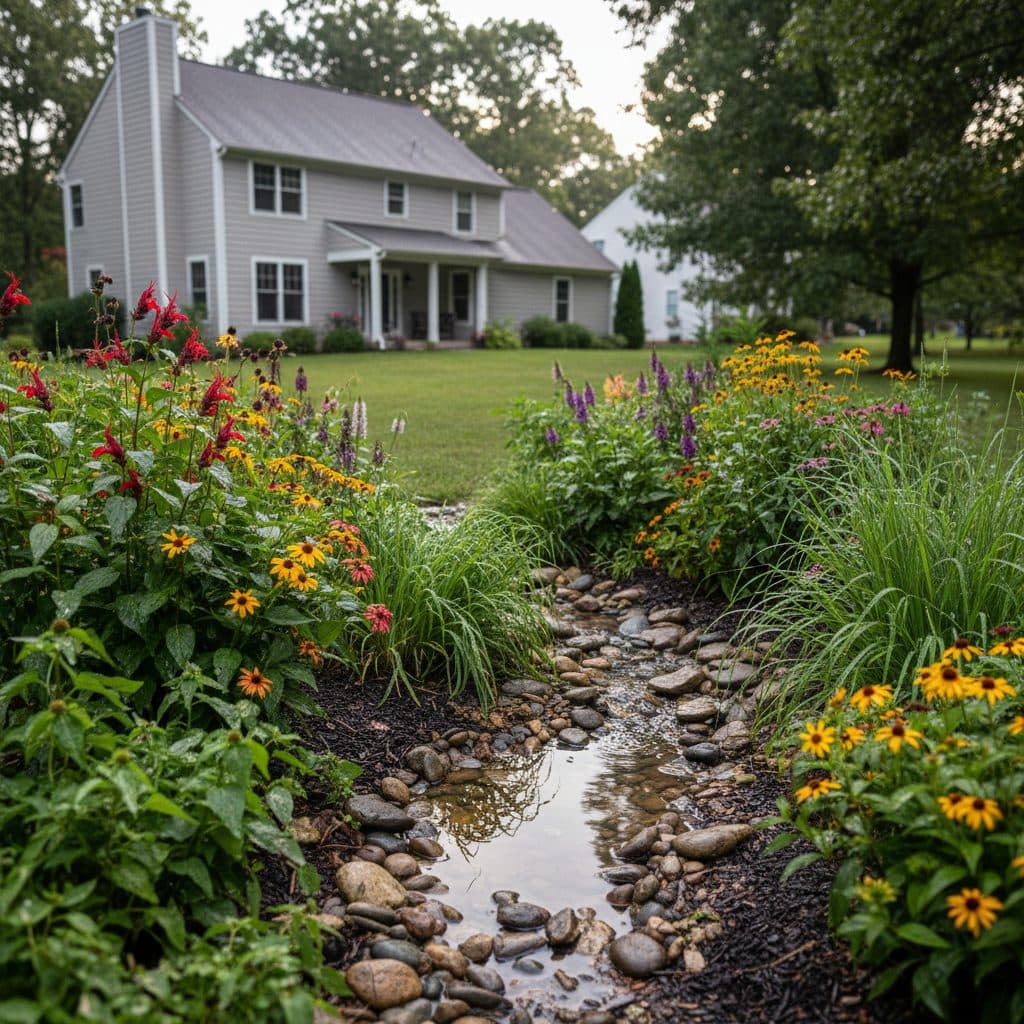
A rain garden is essentially a shallow depression designed to capture and filter stormwater runoff from impervious surfaces. Unlike a traditional garden, it’s engineered with specific layers to promote rapid infiltration, preventing water from pooling for more than 24-48 hours. In regions like the Pacific Northwest, where annual rainfall can exceed 40 inches, these gardens help manage urban runoff and protect salmon habitats. The goal is to mimic natural hydrological processes, allowing water to soak into the soil rather than rushing into storm drains.
Core components of a rain garden
The basic structure includes a vegetated surface, a ponding area, and a deep layer of amended soil over native subsoil. Research in South Korea demonstrated that appropriately sized rain gardens could reduce peak stormwater runoff by 35% during heavy rainfall events [2]. This layered approach holds and cleans water as it percolates through the soil profile. Proper siting, accurate sizing, and careful plant selection allow the system to handle typical rainfall events without becoming waterlogged or overflowing. For example, a rain garden collecting water from a 1,000 square foot roof in USDA zone 7 might need to be 50-100 square feet in area.
- Reduces stormwater runoff volume by 20-50%.
- Filters pollutants such as nitrogen, phosphorus, and sediment from runoff.
- Recharges local groundwater supplies.
- Provides habitat and food for beneficial insects and birds.
- Improves property value by up to 10% and improves yard appearance.
Basin depth and ponding zone: the mechanics of infiltration
The effectiveness of a rain garden hinges significantly on its basin depth and the designated ponding zone. The ponding zone is the shallow depression where water temporarily collects before it infiltrates the soil. For most residential applications in areas like the Mid-Atlantic, this zone is typically 6-12 inches deep, allowing sufficient volume to hold runoff from a 1-inch rain event over its catchment area. A deeper ponding zone, up to 18 inches, might be necessary for larger catchment areas or in regions with very heavy, infrequent rainfall, but it must drain within 24-48 hours to prevent mosquito breeding and plant stress.
calculating total basin depth
The total basin depth includes the ponding zone and the underlying amended soil layer. This combined depth commonly ranges from 18 to 36 inches. For example, a rain garden with a 6-inch ponding zone might have an additional 12-30 inches of amended soil beneath it. This substantial soil volume is critical for water storage and filtration, as well as for supporting plant root systems. Studies modeling rain garden performance suggest that a minimum of 18 inches of amended soil is necessary to achieve significant pollutant removal and infiltration rates of at least 0.5 inches per hour [5]. Without adequate depth, the garden can quickly become saturated, leading to overflow and diminished performance. Consider using a 3-in-1 Soil pH, Moisture & Light Meter to monitor soil conditions during establishment.
- 6-12 inches: Typical ponding depth for residential rain gardens.
- 18-36 inches: Recommended total basin depth, including amended soil.
- 24-48 hours: Maximum time water should remain in the ponding zone.
- 1 inch: Common design storm event for residential rain gardens.
- 10 feet: Minimum distance from building foundations to prevent water damage.
Crafting the amended infiltration soil
The soil mix within your rain garden basin is the primary component for effective water infiltration. Native soils, especially heavy clays common in regions like the Piedmont of North Carolina, often have infiltration rates too slow to handle significant stormwater runoff. Therefore, amending the soil is essential to create a medium that drains quickly while still supporting plant life. The ideal amended soil mix typically consists of 50-60% sand, 20-30% compost, and 10-20% native soil, by volume. This specific blend ensures a high percolation rate, often exceeding 0.5 inches per hour, which prevents prolonged standing water.
components for optimal drainage and plant health
The sand component, usually coarse washed sand, provides the necessary porosity for rapid water movement. Compost, such as leaf compost or well-rotted wood chips, adds organic matter, which improves soil structure, enhances water retention capacity (without impeding drainage), and provides essential nutrients for plants. The small percentage of native soil introduces beneficial microorganisms and helps the amended mix integrate with the surrounding landscape. For example, a rain garden in USDA zone 5 with a 200 square foot basin and an 18-inch amended soil layer would require approximately 10 cubic yards of this custom soil blend. Thoroughly mixing the soil before placement ensures consistent performance across the entire basin. You can use an Expandable Garden Hose to wet down and settle the soil after installation.
- 50-60%: Coarse washed sand for porosity.
- 20-30%: High-quality compost for organic matter and nutrients.
- 10-20%: Native topsoil for microbial diversity.
- 0.5 inches per hour: Minimum desired infiltration rate.
- 18-36 inches: Recommended depth of the amended soil layer.
Sizing and placement for performance
Correctly sizing and placing your rain garden are fundamental steps that directly impact its ability to manage stormwater effectively. A common guideline for residential properties is to size the rain garden to be 5-10% of the impervious area it will collect runoff from. For instance, if your roof and driveway combined represent 2,000 square feet of impervious surface, your rain garden should ideally be 100-200 square feet. This ratio helps ensure the garden can handle typical rainfall events without overflowing. In urban areas of Taiyuan Basin, China, studies have shown that proper sizing of low-impact development features, including rain gardens, can significantly reduce peak stormwater flows by up to 60% [6].
strategic placement considerations
Placement is equally important. The rain garden should be located at least 10 feet away from any building foundations to prevent water from seeping into basements or crawl spaces. It should also be situated in a relatively flat area, or a gentle slope, to allow for even water distribution across the basin. Avoid placing it directly over septic systems, utility lines, or in areas with high water tables. Directing downspouts or other runoff sources into the rain garden can be achieved with simple swales or pipes. For example, a 4-inch diameter PVC pipe can easily convey water from a downspout to a garden 15 feet away. Consider integrating a greywater system to further reduce your water footprint by diverting laundry or shower water to appropriate landscape areas.
- 5-10%: Typical rain garden size relative to contributing impervious area.
- 10 feet: Minimum distance from building foundations.
- 2,000 square feet: Example impervious area for sizing calculations.
- 1 inch: Design storm event for which the rain garden should be sized.
- 60%: Potential reduction in peak stormwater flows with proper sizing.
Plant selection and long-term maintenance
Choosing the right plants supports both garden appearance and the long-term drainage function of the basin. Native plants are highly recommended because they are adapted to the local climate, requiring less water and fewer fertilizers once established. In USDA zone 8, for example, plants like Gulf muhly grass (Muhlenbergia capillaris), swamp sunflower (Helianthus angustifolius), and blue flag iris (Iris versicolor) thrive in the fluctuating wet and dry conditions of a rain garden. These plants often have deep root systems that help improve soil structure and increase infiltration rates and increase infiltration rates. A study from 2024 evaluated the role of plant choice in maintaining the hydrological benefits of rain gardens [4].
essential maintenance practices
While rain gardens are generally low-maintenance, some regular care is necessary, especially during the first year of establishment. Initial watering is necessary; plants may need 1-2 inches of water per week for the first 6-8 weeks if rainfall is insufficient. Weeding is also important to prevent invasive species from outcompeting the desired plants. Over time, inspect the inflow points for sediment buildup and clear any blockages to ensure water can freely enter the basin. Mulching with 2-4 inches of shredded hardwood or pine straw helps suppress weeds, retain soil moisture, and moderate soil temperatures. By following these simple practices, your rain garden can effectively manage stormwater for 15-20 years or more. For more plant ideas, explore Drought tolerant plants: how to choose them by zone and water them right.
- Native plants: Best choice for adaptation and low maintenance.
- Deep roots: Improve soil structure and infiltration.
- 1-2 inches: Weekly watering needed during establishment for 6-8 weeks.
- Weeding: Essential to prevent invasive species.
- 2-4 inches: Recommended mulch depth.
Comparison of native soil vs. amended rain garden soil
Characteristic | Typical Native Soil (e.g., Clay) | Amended Rain Garden Soil |
|---|---|---|
Infiltration Rate | 0.1-0.2 inches/hour | 0.5-1.0 inches/hour |
Organic Content | 1-3% | 5-10% |
Pore Space | Low (30-40%) | High (45-55%) |
Water Holding Capacity | High (but slow release) | Moderate (with rapid drainage) |
Root Penetration | Difficult, shallow | Easy, deep (up to 30 inches) |
Stormwater Reduction: Rain gardens can reduce stormwater runoff from residential properties by up to 30%, significantly impacting local water quality.
Infiltration Target: An ideal rain garden soil mix aims for an infiltration rate of at least 0.5 inches per hour to prevent prolonged ponding.
Frequently asked questions
How deep should a residential rain garden be?
For most residential applications, a rain garden basin should have a total depth of 18-36 inches, including a 6-12 inch ponding zone and 12-30 inches of amended soil beneath it. This depth allows for sufficient water storage and infiltration capacity.
What is the ideal soil mix for a rain garden?
The ideal amended soil mix for a rain garden typically consists of 50-60% coarse washed sand, 20-30% high-quality compost, and 10-20% native topsoil. This blend ensures an infiltration rate of at least 0.5 inches per hour.
How far should a rain garden be from a house foundation?
A rain garden should be located at least 10 feet away from any building foundations. This distance helps prevent water from potentially seeping into basements or crawl spaces, protecting the structural integrity of the building.
How long should water pond in a rain garden?
Water in the ponding zone of a rain garden should typically infiltrate completely within 24-48 hours after a rain event. This timeframe prevents mosquito breeding and protects the health of the plants within the garden.
What percentage of my impervious area should a rain garden cover?
As a general guideline for residential properties, a rain garden should be sized to cover 5-10% of the impervious surface area (like roofs and driveways) that drains into it. For example, a 1,000 sq ft impervious area would need a 50-100 sq ft rain garden.
References
- The University of Delaware Rain Garden: Environmental Mitigation of a Building Footprint (2007). The University of Delaware Rain Garden: Environmental Mitigation of a Building Footprint.
- Sizing Rain Garden to Reduce Stormwater Runoff in Hyoja Drainage Basin – Applying Monte Carlo Simulation – (2014). Sizing Rain Garden to Reduce Stormwater Runoff in Hyoja Drainage Basin – Applying Monte Carlo Simulation –.
- Rain garden reimagined: A computational approach to urban water retention and infiltration (2026). Rain garden reimagined: A computational approach to urban water retention and infiltration.
- The Rain Garden (2024). The Rain Garden.
- Modeling stormwater rain garden performance (2023). Modeling stormwater rain garden performance.
- Choosing the LID for Urban Storm Management in the South of Taiyuan Basin by Comparing the Storm Water Reduction Efficiency (2019). Choosing the LID for Urban Storm Management in the South of Taiyuan Basin by Comparing the Storm Water Reduction Efficiency.