Key takeaways
- Radish microgreens mature in 7-10 days and are the fastest, most forgiving variety for a first tray.
- Pea microgreens, ready in 10-14 days, provide a sweet, tender shoot rich in protein and vitamins.
- Sunflower microgreens are a robust, nutty option, typically harvested in 7-12 days after a 24-hour soak.
- Broccoli microgreens are highly nutritious, though they take 8-12 days to grow and have a milder flavor.
- A simple setup with trays, a growing medium, and light can yield consistent harvests in any US climate.
- Consistent moisture and good air circulation prevent mold and support steady growth across all varieties.
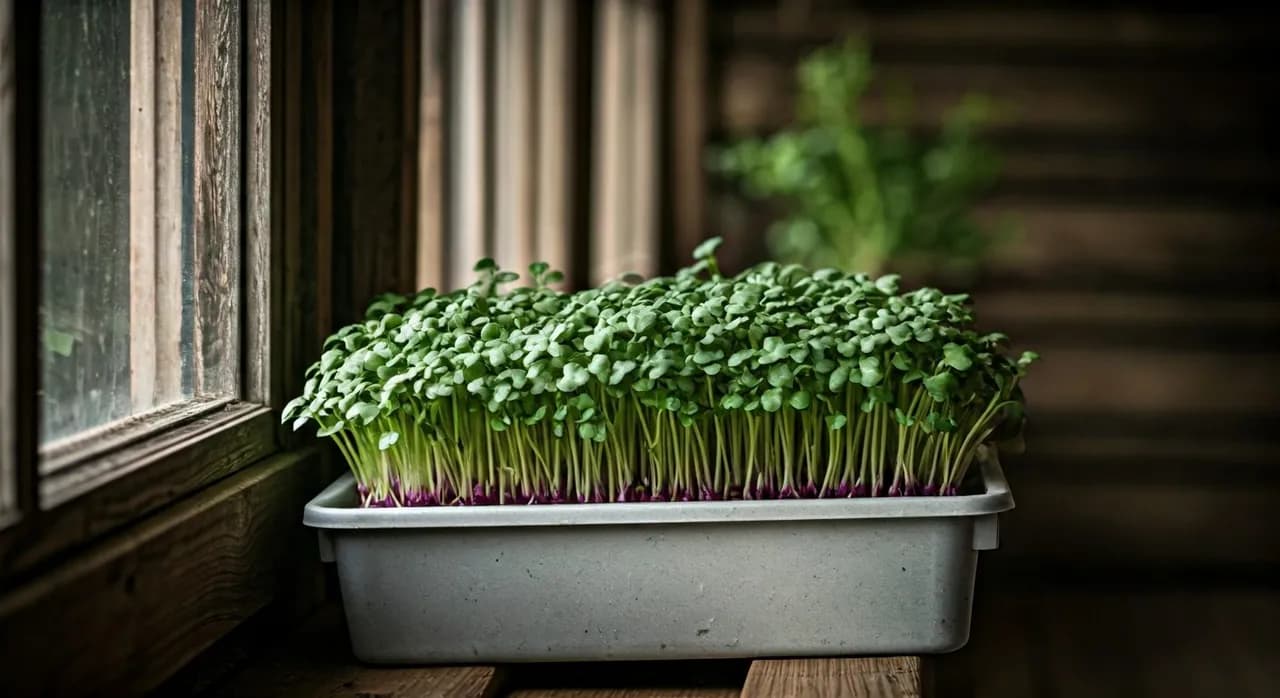
Quick answer: You can grow microgreens like radish, pea, sunflower, and broccoli in US homes, yielding harvests in as little as seven days. A simple setup with trays, growing medium, and light, along with consistent moisture and good air circulation, ensures success.
Across the US, from the humid Gulf Coast to the arid Southwest, gardeners are discovering the rapid rewards of microgreens. These young seedlings, harvested when they are just a few inches tall, offer a concentrated burst of flavor and nutrients, often containing higher levels of vitamins and antioxidants than their mature counterparts. For home growers in USDA zones 3 through 10, microgreens are an accessible way to produce fresh greens year-round, even in small spaces or during winter months.
Starting with the right varieties makes the process straightforward and rewarding. This guide focuses on four popular and relatively easy-to-grow microgreens — radish, pea, sunflower, and broccoli — providing specific insights for US growers looking to add fresh, nutrient-dense produce to their kitchen in as little as seven days. We’ll cover their specific needs, from seeding rates to harvest times to ensure a successful first crop.
Radish microgreens — a quick, peppery harvest
Radish microgreens (Raphanus sativus) are an excellent choice for beginners due to their rapid growth and distinctive peppery flavor. In many US regions, they can be ready for harvest in just 7 to 10 days from seeding. Research indicates that radish microgreens can be successfully grown in hydroponic systems, reaching maturity quickly and offering consistent physiological and biochemical growth aspects [3].
seeding and care for radish
To start, spread radish seeds densely over your growing medium, aiming for about 20 to 30 seeds per square inch. Cover them with a thin layer of medium or another tray for two to three days to encourage germination in the dark. Once germinated, expose them to 12 to 16 hours of light daily. Studies show that varying light intensity and zinc levels can significantly influence the metabolomic profile of radish microgreens, affecting their nutritional value [1].
- Rapid Growth: Harvest in 7-10 days.
- Distinct Flavor: Adds a peppery kick to dishes.
- Easy to Grow: Tolerant of various indoor conditions.
Aim for a growing medium that feels damp but not soggy; avoid overwatering. Laboratory work has explored raising the zinc content of radish microgreens using nano zinc oxide treatments [2]. That is research-stage work on trial crops, not a home method — engineered nanoparticles are not something to put on greens you plan to eat raw, so grow your radish microgreens in plain medium.
Pea microgreens — sweet, tender shoots
Pea microgreens (Pisum sativum) offer a sweet, fresh flavor and a satisfying crunch, making them a favorite for salads and garnishes across US kitchens. These robust greens typically take a bit longer than radish, generally ready for harvest in 10 to 14 days. They are known for being a good source of plant-based protein and various vitamins, providing a substantial yield from a single planting.
preparing and growing pea shoots
Unlike many other microgreens, pea seeds benefit significantly from a pre-soak. Soak your pea seeds in cool water for 12 to 24 hours before planting; this helps to soften their hard outer shell and speeds up germination. After soaking, drain the seeds thoroughly and spread them densely on your growing medium, aiming for a thick, single layer, which might be about 200 grams of seed for a standard 10×20 inch tray. Covering them with a weighted tray for three to five days helps to establish strong root systems and encourages uniform growth.
- Sweet Flavor: Adds a refreshing taste.
- High Yield: Produces a substantial amount of greens.
- Nutrient Rich: Good source of protein and vitamins.
- Soaking Required: Essential for optimal germination.
Once the pea shoots are about one to two inches tall, remove the weight and expose them to light for 12 to 16 hours daily. Maintain consistent moisture, watering from the bottom if possible to prevent mold. You can often get a second harvest from pea microgreens by allowing the cut stems to regrow for another 7 to 10 days, though the yield will be about 50% of the first cut. This makes them an economical choice for home growers in any USDA zone.
Sunflower microgreens — robust and nutty
Sunflower microgreens (Helianthus annuus) are a favorite among many US growers for their substantial size, crunchy texture, and delightful nutty flavor. They are one of the larger microgreen varieties and can add significant bulk to salads and sandwiches. Typically, sunflower microgreens are ready for harvest in 7 to 12 days, offering a quick turnaround for a hearty green.
soaking and hull removal for sunflowers
Similar to peas, sunflower seeds require a pre-soak, usually for 12 to 24 hours, to aid germination. After soaking, drain them well and spread them thickly on your growing medium — a 10×20 inch tray can hold about 150 to 200 grams of hulled sunflower seeds. Cover the seeds with another tray and apply a light weight (around five pounds) for three to four days. This blackout period encourages strong, uniform growth and helps the seedlings push off their hulls, which can sometimes be stubborn.
- Nutty Flavor: Adds a rich, distinct taste.
- Crunchy Texture: Provides a satisfying mouthfeel.
- Large Size: Great for substantial salads.
- Hull Management: Important to remove hulls for best quality.
Once the seedlings are one to two inches tall and have shed most of their hulls, remove the weight and expose them to 12 to 16 hours of light daily. Good air circulation prevents mold on sunflowers, especially in humid climates like those found in the southeastern US. If hulls remain stuck, a gentle misting can sometimes help them loosen. Harvest when the first set of true leaves begins to emerge, usually when the plants are three to four inches tall, cutting them just above the soil line.
Broccoli microgreens — nutrient-dense and mild
Broccoli microgreens (Brassica oleracea) are highly prized for their exceptional nutritional profile, particularly their concentration of sulforaphane, a beneficial compound. Despite their powerful health benefits, they have a relatively mild, slightly cabbage-like flavor, making them versatile for various culinary uses. These fine-seeded greens are generally ready for harvest in 8 to 12 days, offering a steady supply of dense nutrition.
fine seeds and consistent moisture
Broccoli seeds are small, so precise seeding is important. Aim for an even, dense spread — about 25 to 35 grams of seed across a 10×20 inch tray. Unlike peas and sunflowers, broccoli seeds do not require pre-soaking. After seeding, mist the seeds gently and cover the tray for three to four days to encourage germination in a dark, humid environment. This blackout period helps them stretch for light, resulting in taller, more uniform stems.
- High Nutrition: Rich in sulforaphane.
- Mild Flavor: Versatile for many dishes.
- Quick Turnaround: Harvest in 8-12 days.
- No Soaking: Simplifies the planting process.
Once germinated, expose the trays to 12 to 16 hours of light daily. Delicate seedlings need consistent moisture; bottom watering is often preferred to keep the fine seeds from being displaced and to prevent fungal issues. Ensure good air circulation, especially in warmer US climates, to reduce the risk of damping-off. Harvest when the microgreens are one to two inches tall, cutting them cleanly above the soil line.
Microgreen variety comparison for home growers
Variety | Harvest time | Flavor profile | Seeding Rate (per 10×20 in tray) | Special notes |
|---|---|---|---|---|
Radish | 7-10 days | Peppery, spicy | 30-40 grams | Fastest growing of the four; no pre-soak needed. |
Pea | 10-14 days | Sweet, fresh, crunchy | 200-250 grams | Requires 12-24 hour soak, potential for second harvest. |
Sunflower | 7-12 days | Nutty, robust | 150-200 grams (hulled) | Requires 12-24 hour soak, often needs weight to shed hulls. |
Broccoli | 8-12 days | Mild, slightly cabbage-like | 25-35 grams | High in sulforaphane, no soaking required. |
Nutrient Boost: Microgreens can contain up to 40 times higher levels of some vitamins and antioxidants than their mature plant counterparts, offering significant nutritional benefits.
Quick Harvest: Most microgreen varieties are ready for harvest within 7 to 14 days from seeding, providing a rapid turnaround for fresh produce.
Frequently asked questions
What’s the best temperature for growing microgreens?
For most microgreen varieties, an ambient temperature between 65°F and 75°F is ideal for consistent and healthy growth. Temperatures outside this range, such as below 60°F, can significantly slow down germination and overall development.
How much light do microgreens need?
Microgreens require substantial light for proper development and flavor. Provide 12 to 16 hours of artificial or natural light daily once they have germinated and emerged from their blackout period. A light intensity of about 200-300 PPFD (Photosynthetic Photon Flux Density) is often recommended.
Can I reuse my growing medium for microgreens?
It is generally not recommended to reuse growing medium for microgreens due to the risk of disease and nutrient depletion. Reusing medium increases the chance of mold and bacterial problems in the next crop and usually gives a weaker, less even stand.
Why are my microgreens molding?
Mold is a common issue, often caused by overwatering, insufficient air circulation, or too dense seeding. Ensure your growing area has good airflow, avoid standing water in trays, and sow more thinly if mold persists.
What’s the difference between sprouts and microgreens?
Sprouts are the entire germinated seed, consumed root, seed, and shoot, typically grown in water for 3-5 days. Microgreens are grown in soil or a growing medium, harvested by cutting the stem just above the soil line when they are 1-3 inches tall, usually within 7-21 days.
How long can I store harvested microgreens?
Properly harvested and stored microgreens can last for 5 to 7 days in the refrigerator. Store them unwashed in an airtight container lined with a paper towel to absorb excess moisture to ensure they remain fresh and crisp.
References
- Radish Microgreen Metabolomic Profile in Response to Zinc Biofortification and Light Intensity (2023). Radish Microgreen Metabolomic Profile in Response to Zinc Biofortification and Light Intensity.
- Biofortification of Radish (<i>Raphanus sativus</i> L.) Microgreen with Nano Zinc Oxide (2025). Biofortification of Radish (<i>Raphanus sativus</i> L.) Microgreen with Nano Zinc Oxide.
- GROWING OF RADISH MICROGREEN (RAPHANUS SATIVUS L.) IN HYDROPONIC SYSTEM: PHYSIOLOGICAL AND BIOCHEMICAL ASPECTS OF GROWTH AND PRODUCT QUALITY (2026). GROWING OF RADISH MICROGREEN (RAPHANUS SATIVUS L.) IN HYDROPONIC SYSTEM: PHYSIOLOGICAL AND BIOCHEMICAL ASPECTS OF GROWTH AND PRODUCT QUALITY.