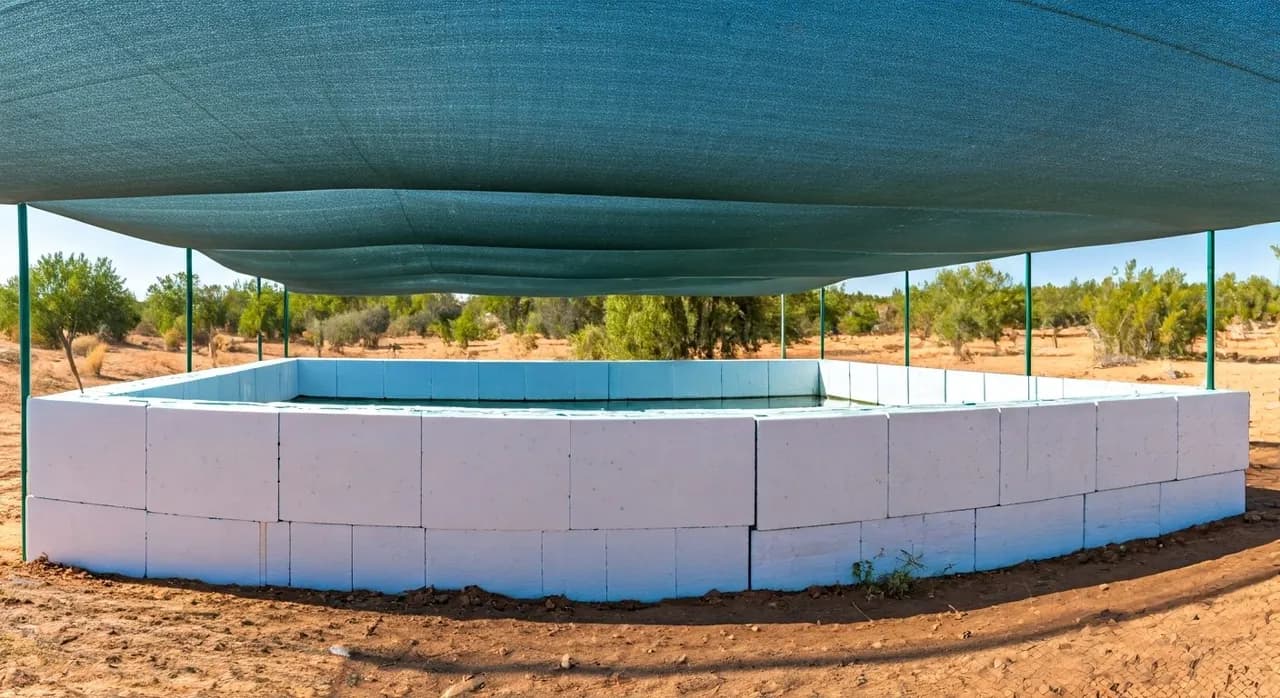
Key takeaways
- Maintaining reservoir water temperatures between 65°F and 75°F is crucial for plant health and fish survival in hydroponic and aquaponic systems.
- Uncontrolled water temperatures in hot climates like Arizona, Florida, and Texas can lead to root rot, nutrient lockout, and pathogen growth, including Naegleria fowleri.
- Effective insulation, such as XPS foam with an R-value of 5 per inch, significantly reduces heat transfer from the environment into the reservoir.
- Shade structures using 50% to 80% density shade cloth can block a substantial amount of solar radiation, helping to lower water temperatures.
- Combining both insulation and shading offers the most robust solution for temperature control, especially in USDA zones 9-11 where summer highs exceed 100°F.
- Regular monitoring with a reliable thermometer and proactive maintenance of insulation and shade materials are essential for long-term system stability.
Quick answer: To keep hydroponic and aquaponic reservoirs cool in hot climates like Texas, Florida, and Arizona, use effective insulation such as XPS foam and implement shade structures with 50-80% density shade cloth to reduce heat transfer and solar radiation.
In the scorching summers of Texas, Florida, and Arizona, maintaining stable water temperatures for hydroponic and aquaponic systems presents a significant challenge. Outdoor reservoir temperatures can easily climb past 85°F (29°C), sometimes reaching 95°F (35°C) in direct sunlight, which is far too warm for most plant roots and many fish species. For instance, in parts of Southern Arizona, daily highs can consistently exceed 100°F (38°C) for weeks, directly impacting water in uncovered or uninsulated tanks. This heat stress can lead to slowed growth, nutrient deficiencies, and even the death of your crops and aquatic life, jeopardizing an entire season’s yield.
Beyond crop health, excessively warm water—especially above 80°F (27°C)—can create conditions favorable for harmful pathogens, including the free-living amoeba Naegleria fowleri, which has been linked to severe infections in these very states [0, 1, 2]. As growers, our goal is to keep reservoir water consistently within the optimal range of 65°F to 75°F (18°C to 24°C) for most plants, and 75°F to 85°F (24°C to 29°C) for warm-water fish like tilapia. Achieving this requires a thoughtful, multi-pronged approach to both insulating and shading our water reservoirs, ensuring system stability and productivity even when ambient temperatures soar well above 90°F (32°C).
The challenge of maintaining optimal reservoir temperatures
In the intense summer heat of USDA zones 9, 10, and 11—common across much of Texas, Florida, and Arizona—your hydroponic or aquaponic reservoir acts like a giant solar collector. Direct sunlight and high ambient air temperatures, which can average 90°F (32°C) to 105°F (41°C) for months in places like Phoenix, Arizona, or inland Florida, rapidly transfer heat into the water. This temperature increase has several detrimental effects. First, warmer water holds less dissolved oxygen, which is critical for healthy root respiration and fish survival. For instance, cooler water holds more dissolved oxygen than warmer water. This reduction can lead to anaerobic conditions that suffocate plant roots and stress fish, potentially causing a significant drop in aquaponic fish growth rates.
Nutrient lockout
Elevated water temperatures (consistently above 78°F or 26°C) can promote the growth of undesirable algae and harmful bacteria, including species that cause root rot. This also creates a more hospitable environment for dangerous organisms such as Naegleria fowleri, which thrives in warm freshwater environments, as evidenced by cases reported in these states [0, 1, 2]. In a 500-gallon reservoir, a sudden temperature spike to 90°F (32°C) can trigger an algae bloom within 24-48 hours, consuming vital nutrients and further depleting oxygen. Third, nutrient uptake by plants can be severely impaired when root zone temperatures exceed 75°F (24°C), leading to nutrient lockout even if your nutrient solution is perfectly balanced. This can manifest as stunted growth or chlorosis, reducing yields over a growing cycle. Over a 30-year period, environmental shifts in these regions have even impacted wildlife, like the Crested Caracara, demonstrating broad climate changes that affect all outdoor systems [4]. Addressing heat gain protects water oxygenation, root health, and overall system safety.
- Reduced dissolved oxygen for plant roots and fish.
- Increased pathogen risk, including root rot fungi and harmful amoebae.
- Impaired nutrient uptake by plants, leading to deficiencies.
- Algae blooms that compete for nutrients and oxygen.
- Stress on fish, potentially leading to disease or death in aquaponics systems.
Effective insulation materials and methods
Insulating your reservoir is the first line of defense against heat transfer from the surrounding air and ground. The goal is to create a thermal barrier that slows the movement of heat into your water. For outdoor systems in USDA zone 9 and higher, a minimum of 2 inches of insulation is often necessary to maintain stable temperatures when ambient air reaches 90°F (32°C) or more. Extruded polystyrene (XPS) foam boards are a popular choice, offering a consistent R-value of 5 per inch of thickness. This means a 2-inch board provides an R-10 barrier, significantly slowing heat gain. These boards are rigid, moisture-resistant, and relatively durable, making them suitable for direct ground contact or burying. A 1,000-gallon reservoir insulated with 2 inches of XPS foam can significantly reduce heat gain compared to an uninsulated tank.
Expanded polystyrene (EPS) foam
Another option is expanded polystyrene (EPS) foam, which typically has an R-value of 3.5 to 4 per inch. While slightly less insulative per inch than XPS, it is often more cost-effective, and readily available in thicknesses up to 4 inches, providing an R-14 to R-16 barrier. For internal insulation, if your reservoir is made of a non-toxic, food-grade material, a thin layer of reflective insulation can be applied to the inside walls above the water line, significantly reducing radiant heat transfer from the air gap. This is similar to the reflective mylar used in indoor grow tents, which helps maintain consistent temperatures. When considering insulation, think about the reservoir’s location; if it’s partially buried, the surrounding soil can offer some thermal mass, but insulation is still critical for the exposed sides and top. For example, a 500-gallon reservoir in Central Florida will benefit immensely from a complete insulation wrap, reducing daily temperature swings, potentially saving on cooling costs if chillers are used. Ensure all seams are sealed with foil tape to prevent thermal bridging and water intrusion, which can significantly degrade insulation performance over time.
- XPS foam boards (R-5 per inch) for exterior insulation.
- EPS foam panels (R-3.5 to 4 per inch) as a cost-effective alternative.
- Reflective insulation to reduce radiant heat transfer, especially on lids.
- Insulated lids to prevent heat gain from above and reduce evaporation.
- Buried reservoirs can use surrounding earth as an additional thermal buffer.
Designing effective shade structures
While insulation addresses heat transfer through conduction and convection, shading tackles direct solar radiation, which is often the largest source of heat gain for outdoor reservoirs. In regions like South Texas, where sun intensity is extreme, a well-designed shade structure can significantly reduce water temperatures on a 95°F (35°C) day. Shade cloth is the most common and versatile solution, available in various densities, typically ranging from 30% to 80%. For reservoirs in full sun, a 50% to 70% shade cloth is usually appropriate, blocking a significant portion of solar energy while still allowing some ambient light for surrounding plants. Black shade cloth offers maximum heat reduction, while white or reflective options can also help scatter light, potentially lowering temperatures further. Choosing the right density is critical; too much shade can hinder plant growth, while too little will be ineffective.
Shade pergola or frame
Constructing a simple shade pergola or frame over your reservoir is straightforward. Use treated lumber or galvanized steel pipes to create a structure that stands 1 to 2 feet taller than your reservoir, allowing for air circulation. This air gap matters; direct contact between shade cloth and the reservoir surface can transfer heat. The structure should extend at least 1 foot beyond the reservoir’s footprint on all sides to account for the sun’s angle throughout the day. For larger systems or integrated greenhouses, consider a comprehensive four-season greenhouse design that incorporates passive shading elements, potentially reducing cooling loads significantly. Alternatively, strategically planting fast-growing shade trees like Empress or Hybrid Poplars on the south and west sides of your system can provide natural, long-term shade, though this requires more planning and several years for maturity. Even a simple reflective tarp can offer a temporary solution, reflecting a high percentage of solar radiation away from the reservoir, but it may not withstand winds over 30 mph without proper securing.
- Shade cloth (50% to 70% density) for direct solar radiation blocking.
- Pergola or frame structures to elevate shade cloth 1-2 feet above the reservoir.
- Strategic tree planting for natural, long-term shade on south and west exposures.
- Reflective tarps or covers for immediate, temporary shading.
- Integrated greenhouse designs with built-in shading features.
Synergistic approaches to temperature control
The most effective strategy for managing reservoir temperatures in climates like those found in Florida, Arizona, and Texas is to combine both insulation and shading. These two approaches work synergistically, with insulation preventing heat transfer from the ambient environment and shading blocking direct solar gain. For example, a 300-gallon aquaponics system in a USDA zone 10 backyard could see a significant water temperature drop on a 100°F (38°C) day by employing both methods, compared to an unmanaged system. This combined effort can result in a significant improvement in plant growth and fish health, leading to higher yields. The USDA Natural Resources Conservation Service (NRCS) documents integrated approaches for water management [5].
Start by insulating all exposed sides and the bottom of your reservoir with 2 to 3 inches of XPS foam, achieving an R-value of 10 to 15. Ensure seams are sealed with foil tape to prevent air and moisture intrusion, which can significantly compromise the insulation’s effectiveness. Next, construct a sturdy shade structure that covers the entire reservoir, positioning a 60% shade cloth about 18 inches above the water surface. This combination creates a cool microclimate around the reservoir, significantly reducing the thermal load. For larger systems, like a 2,000-gallon commercial setup in Central Arizona, a robust steel frame for the shade cloth might be necessary to withstand winds up to 60 mph. Even for smaller systems, like turning a fish tank into an aquaponics garden, these principles apply, just on a smaller scale. For instance, a 50-gallon tank in a screened porch in South Florida might only need 1 inch of foam and a simple reflective lid to keep temperatures below 75°F (24°C), whereas a 1,000-gallon outdoor reservoir in West Texas will demand more robust measures, including a 70% shade cloth and 3 inches of insulation. Remember that water evaporation rates in arid regions like Arizona can be high from open water surfaces, so an insulated, shaded lid helps minimize water loss and maintain temperature stability.
- Insulate all sides and bottom with a minimum of 2 inches of foam.
- Cover the top with an insulated, reflective lid.
- Erect a shade structure 1 to 2 feet above the reservoir.
- Use 50% to 70% shade cloth to block direct sun.
- Ensure adequate airflow around the reservoir and under the shade.
Comparison of reservoir cooling strategies
Strategy | Primary benefit | Typical temp. reduction | Cost (relative) | Maintenance |
|---|---|---|---|---|
Insulation (XPS foam) | Reduces conductive/convective heat gain | 5-10°F | Medium | Low (5-10 years) |
Shade Cloth (50-70%) | Blocks direct solar radiation | 10-15°F | Low | Medium (3-7 years) |
Insulated Lid | Prevents top heat gain & evaporation | 3-7°F | Low | Low (5-10 years) |
Reflective Barrier | Reduces radiant heat | 5-10°F | Low | Low (5-10 years) |
Evaporative Cooling (DIY) | Direct water cooling | 5-15°F (with water loss) | Medium | High (daily checks) |
Temperature Drop: A combination of 2-inch XPS insulation and 60% shade cloth can significantly reduce reservoir water temperatures on a 100°F (38°C) day in Arizona.
Oxygen Levels: Maintaining cooler water temperatures helps ensure dissolved oxygen levels remain adequate for healthy root growth and fish in aquaponics.
Frequently asked questions
What is the ideal water temperature for hydroponics and aquaponics?
For most hydroponic plants, the ideal water temperature is between 65°F and 75°F (18°C to 24°C). In aquaponics, this range is also good for plant roots, but fish like tilapia prefer 75°F to 85°F (24°C to 29°C), requiring careful balancing.
How thick should insulation be for an outdoor reservoir in Arizona?
In Arizona’s intense summer heat, a minimum of 2 to 3 inches of XPS foam insulation is recommended for outdoor reservoirs. This provides an R-value of 10 to 15, significantly slowing heat transfer when ambient temperatures exceed 100°F (38°C).
Does shade cloth really make a big difference in water temperature?
Yes, shade cloth can make a substantial difference. A 50% to 70% density shade cloth can significantly reduce direct solar heat gain on a 95°F (35°C) day, preventing your reservoir from overheating.
Can I use reflective materials instead of foam insulation?
Reflective materials are excellent for blocking radiant heat, significantly reducing solar gain, especially on the top of a reservoir or in an air gap. However, they are less effective at preventing conductive heat transfer than foam insulation, which provides a higher R-value per inch, so a combination is often best.
How often should I check my reservoir’s water temperature?
During hot summer months in Texas, Florida, or Arizona, check your reservoir’s water temperature at least twice daily (once in the morning and once in the late afternoon) to monitor fluctuations and ensure it stays within the 65°F to 75°F range.
Are there any risks associated with warm reservoir water?
Yes, water temperatures consistently above 80°F (27°C) increase the risk of dissolved oxygen depletion, root diseases, and the proliferation of harmful bacteria and amoebae like <em>Naegleria fowleri</em>, which has been reported in these states [0, 1, 2].
References
- Primary Amebic Meningoencephalitis —Arizona, Florida, and Texas, 2007 (2008). Primary Amebic Meningoencephalitis —Arizona, Florida, and Texas, 2007.
- Primary Amebic Meningoencephalitis—Arizona, Florida, and Texas, 2007 (2009). Primary Amebic Meningoencephalitis—Arizona, Florida, and Texas, 2007.
- Utah, Nevada, 1986, [numbers 12033-12052]. South Carolina, Florida, Texas, Arkansas, Utah, Nevada, California, Arizona, 1987, [numbers 12053-12092]. USSR, 1988, (1986). [Utah, Nevada, 1986, [numbers 12033-12052]. South Carolina, Florida, Texas, Arkansas, Utah, Nevada, California, Arizona, 1987, \numbers 12053-12092]. USSR, 1988,.
- Assessing Range Shifts and Expansions of Crested Caracaras over 30 Years in Arizona, Texas, and Florida, USA (2024). Assessing Range Shifts and Expansions of Crested Caracaras over 30 Years in Arizona, Texas, and Florida, USA.
- USDA Natural Resources Conservation Service (2024). USDA Natural Resources Conservation Service.