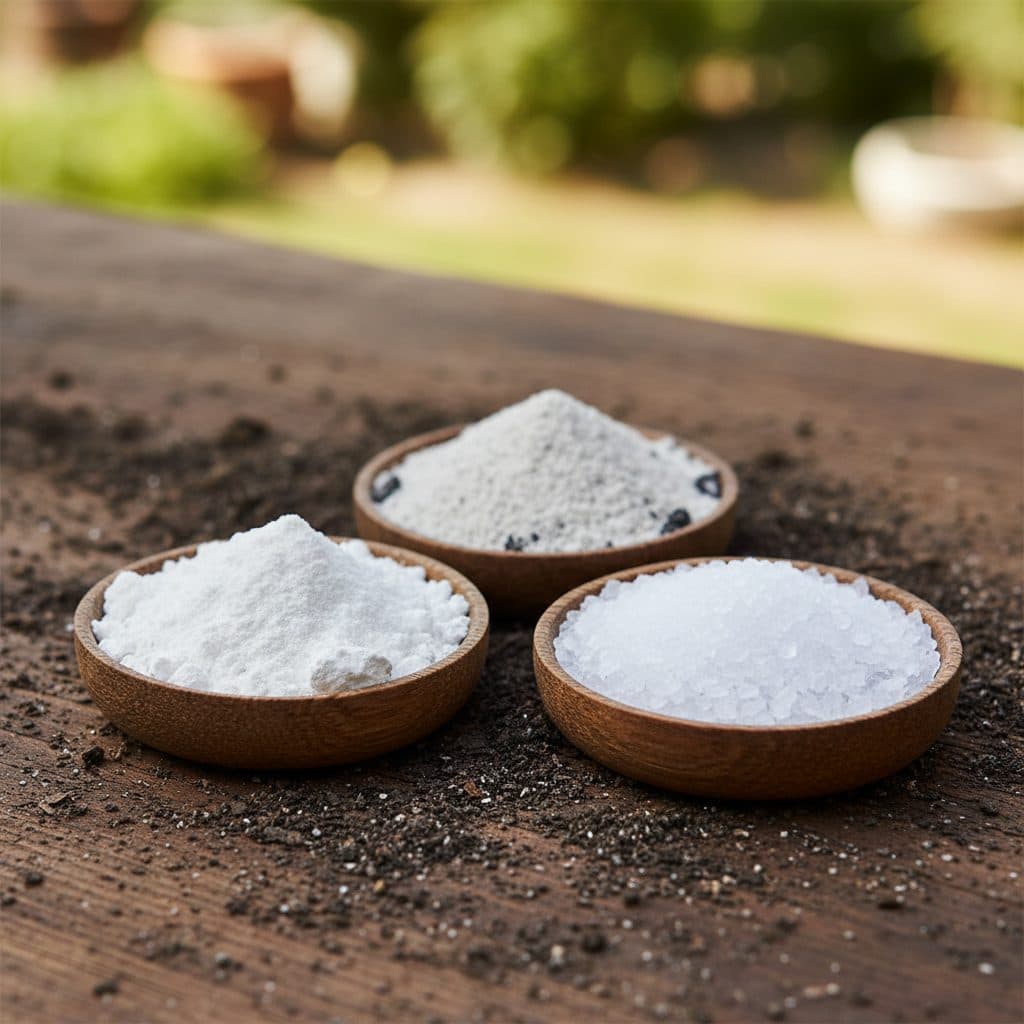
Soil amendments demystified: wood ash, Epsom salt, gypsum and more

Key Takeaways
- Wood ash pH scale: Raise soil pH rapidly using wood ash, which is highly alkaline with a pH range of 10 to 13.
- Nutrients in wood ash: Provide essential macronutrients with wood ash, which contains 1.5% to 2% phosphorus and 5% to 7% potassium.
- Epsom salt caution: Apply Epsom salt (10% magnesium, 13% sulfur) only after a soil test confirms a magnesium deficiency.
- Blossom end rot risk: Avoid excess magnesium from Epsom salt, which blocks calcium absorption and triggers blossom end rot in tomatoes.
- Gypsum soil structure: Apply gypsum (22% calcium, 18% sulfur) to reclaim sodic clay soils, boosting water infiltration by 20%.
- Gypsum pH stability: Supply calcium and sulfur with gypsum without altering soil pH, as it is neutral compared to wood ash or lime.
Quick answer: Soil amendments like wood ash, Epsom salt, and gypsum can balance soil chemistry and boost fertility when applied correctly. Always conduct a soil test to identify specific deficiencies before application to prevent nutrient imbalances and toxicity.
The Environmental Protection Agency (EPA) estimates that the average American generated 328 pounds of food waste in 2016, with households accounting for 40% to 50% of the nation’s 26.5 million tons of annual food waste. While composting organic scraps recycling is a foundational practice, backyard gardeners often search for fast-acting mineral soil amendments to address nutrient deficiencies. Understanding the chemical actions of wood ash, Epsom salt, and gypsum, and verifying soil conditions before application, prevents nutrient lockouts and toxic salt accumulations.
By applying the correct mineral amendments, you can balance your soil chemistry within 14 days. This guide explains how to use these amendments safely.
The chemistry of wood ash as a liming agent (pH 10 to 13)
These wood combustion products are highly alkaline and act as a fast-acting substitute for agricultural limestone. Wood ash has a calcium carbonate equivalent (CCE) of 25% to 50%, meaning it requires twice the volume of limestone to achieve the same pH shift.

Raising soil pH rapidly (pH 10 to 13)
This solubility makes wood ash highly reactive in the soil, raising the pH within 7 to 10 days of application. Because of its high alkalinity (pH 10 to 13), you must never apply wood ash to acid-loving plants like blueberries, which require a low pH of 4.5 to 5.5. Over-application can spike soil pH above 7.5, locking out iron, manganese, and zinc.
Providing potassium and phosphorus values (5% potassium)
This mineral ash is also an organic fertilizer, typically containing 1.5% to 2% phosphorus and 5% to 7% potassium. These nutrients are highly soluble, making them immediately available to plant roots.
Epsom salt myths and magnesium deficiencies (10% magnesium)
These crystalline salts are composed of magnesium sulfate heptahydrate ((MgSO_4 \\cdot 7H_2O)), providing approximately 10% magnesium and 13% sulfur. Despite widespread gardening myths, Epsom salt is not a general cure-all for garden plants.

The risk of calcium lockout and blossom end rot (10% magnesium)
This chemical composition can cause severe nutrient imbalances if applied to soils that already have adequate magnesium. Calcium and magnesium compete for the same absorption pathways on plant root hairs. Adding excess magnesium to the soil blocks calcium uptake, leading to a calcium deficiency in developing tomato fruits and causing blossom end rot in up to 30% of crops.
Verifying deficiency with soil testing (6.0 to 7.0 pH)
This risk makes soil testing essential before applying Epsom salt. Only apply magnesium sulfate if a laboratory soil test shows magnesium levels are under 50 parts per million (ppm). If your soil pH is between 6.0 and 7.0 and magnesium is sufficient, adding Epsom salt provides zero benefit.
Gypsum applications for sodic clay soils (22% calcium)
These calcium sulfate dihydrate minerals ((CaSO_4 \\cdot 2H_2O)) contain approximately 22% calcium and 18% sulfur. Gypsum is highly valued for its ability to improve clay soil structure without changing pH.

Calcium and sulfur supply without pH changes (22% calcium)
This neutral chemical profile makes gypsum the ideal calcium source for alkaline soils (pH above 7.0) that require extra calcium. Unlike calcium carbonate (limestone), gypsum does not contain carbonate ions, so it does not react with hydrogen ions to raise pH.
Loosening sodic clay soil structures (20% more infiltration)
This mineral is particularly effective in sodic clay soils, which contain over 15% sodium on the soil’s exchange sites. The calcium ions in gypsum displace sodium ions, causing the fine clay particles to aggregate into larger crumbs, which increases water infiltration rates by 20%. In non-sodic clay soils, however, gypsum will not loosen the soil.
Calculating application rates for garden beds (10 pounds limit)
Inside the garden bed, application rates must be calculated carefully to prevent salt stress. The table below outlines maximum annual application limits for residential vegetable beds, which are active up to 365 days a year.
Soil Amendment | Core Nutrient Content | Maximum Annual Rate | Best Application Timing |
|---|---|---|---|
Wood Ash | 5% Potassium, 1.5% Phosphorus | 15 pounds per 1,000 sq ft | Late Fall or Winter |
Epsom Salt | 10% Magnesium, 13% Sulfur | 1 pound per 1,000 sq ft | Spring (only if deficient) |
Gypsum | 22% Calcium, 18% Sulfur | 30 pounds per 1,000 sq ft | Early Spring or Fall |
- Bed preparation: Blend amendments into the top 6 inches of soil using a rake, ensuring 100% integration.
- Soil diagnostics: Check soil pH shifts before and after adding amendments using our 3-in-1 Soil pH, Moisture & Light Meter to keep beds between 6.0 and 7.0 pH.
- Bed digging: Turn heavy clay soils and blend gypsum using our sturdy Garden Hand-Tool Set — Trowel, Rake, Cultivator & Weeder, which features 4 essential tools.
- Nitrogen balancing: Combine mineral amendments with slow-release organic fertilizers. Mixing in 1 cup of our Fermented Soybean Meal Organic Fertilizer (500 g) provides the nitrogen needed for vegetable growth.
Troubleshooting soil amendment errors
These chemical additions require careful monitoring to prevent crop damage and pH imbalances, which can affect up to 100% of your garden yields.
Soil pH spiking over 7.5
- Cause: Excess wood ash was applied, raising pH within 10 days.
- Solution: Apply agricultural sulfur at a rate of 10 pounds per 1,000 square feet to lower pH.
Tomato blossom end rot appearing
- Cause: Excess Epsom salt blocked calcium uptake, stunting 30% of fruit.
- Solution: Stop all magnesium applications immediately, and apply a foliar spray of 1% calcium chloride.
Clay soil remaining dense and compacted
- Cause: Gypsum was applied to non-sodic clay soil, which lacks the 15% sodium needed for flocculation.
- Solution: Incorporate 2 inches of finished organic compost to build soil structure naturally.
Safety Warning: Wood ash generates potassium hydroxide (lye) when wet. Always wear safety goggles and a dust mask when spreading dry ash, and avoid applying it during windy days.
Frequently asked questions
Does wood ash raise or lower soil pH?
Wood ash is highly alkaline with a pH range of 10 to 13. It raises soil pH rapidly, and should be used as a substitute for agricultural limestone, but only on non-acid-loving plants.
Can I apply Epsom salt to my tomato plants?
You should only apply Epsom salt (10% magnesium) if a soil test confirms a magnesium deficiency. Excess magnesium blocks calcium absorption, leading to blossom end rot in up to 30% of tomato crops.
Does gypsum loosen clay soil?
Gypsum (22% calcium, 18% sulfur) only loosens sodic clay soils, where sodium levels exceed 15% on exchange sites. It displaces the sodium with calcium, which increases water infiltration by 20%.
Will gypsum change my soil pH?
No. Gypsum (calcium sulfate) is chemically neutral and supplies calcium and sulfur to the soil without significantly changing the soil pH, making it perfect for neutral or alkaline soils.
References
- University of New Hampshire Cooperative Extension. (2021). Wood Ash in the Garden. UNH Extension.
- Michigan State University Extension. (2022). Gypsum in Soil Management. MSU Extension.
- University of Minnesota Extension. (2023). Epsom Salt Cautions for Tomato Growers. UMN Extension.
- Oregon State University Extension. (2022). Nutrients in Wood Ash. OSU Extension.
- Colorado State University Extension. (2021). Managing Sodic and Clay Soils with Gypsum. CSU Extension.