Key takeaways
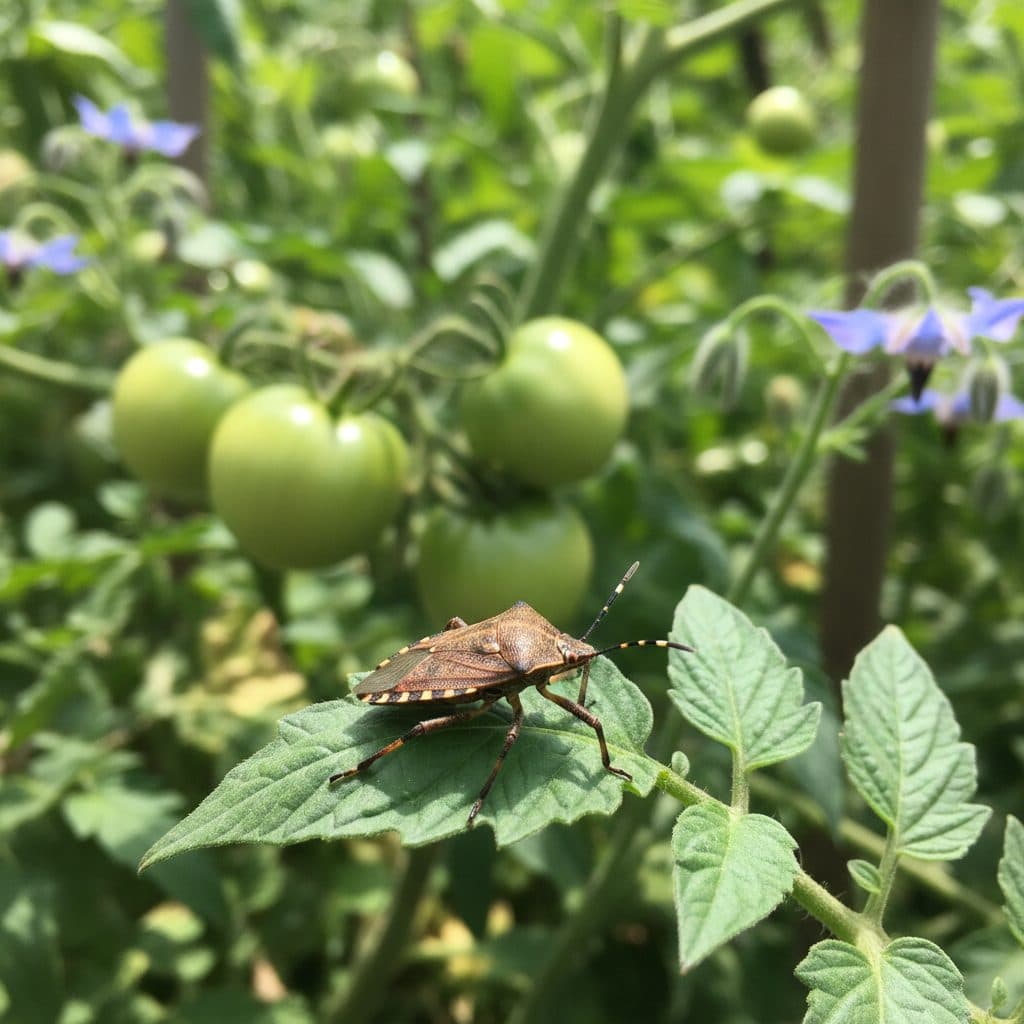
- Identify shield-shaped true bugs including the invasive brown marmorated stink bug, native green stink bug, and closely related leaf-footed bugs.
- Recognize puncture damage on tomatoes and peppers, characterized by whitish spongy blemishes ("cloudy spot") and sunken, distorted fruit skin.
- Hand-pick adult bugs during cool early mornings by knocking them directly into a bucket of soapy water.
- Plant perimeter trap crops like sunflowers, sorghum, and buckwheat to intercept migrating stink bugs before they reach maincrop solanaceous beds.
- Apply particle barrier films (OMRI-listed kaolin clay) or install 1/8-inch exclusion netting over fruiting clusters before adult egg-laying peaks.
Quick answer: Controlling stink bugs in garden vegetables organically relies on an integrated strategy of physical exclusion, morning hand-collection into soapy water, perimeter trap cropping with sunflowers and sorghum, and applying kaolin clay mineral barriers. Because adult stink bugs have hard exoskeletons that resist most contact organic sprays, preventing feeding punctures on young tomatoes, peppers, and beans requires early-season scouting and destroying egg clusters under leaves.
Stink bugs and leaf-footed bugs (Pentatomidae and Coreidae families) are among the most frustrating warm-season pests in American vegetable gardens. Armed with piercing-sucking mouthparts, they puncture developing fruits to inject digestive enzymes, leaving behind spongy white scars, catfacing deformities, and bitter off-flavors.
The arrival and spread of the invasive brown marmorated stink bug (Halyomorpha halys) has exacerbated pest pressure across the Mid-Atlantic, South, Midwest, and Pacific Northwest.
Because broad-spectrum chemical insecticides kill beneficial predators while failing to provide lasting stink bug control, organic growers must deploy multi-layered cultural, physical, and biological defenses.
Identifying stink bugs and leaf-footed bugs
Accurate pest identification prevents accidental harm to beneficial predatory bugs that share similar shield-shaped anatomy.
+------------------------+-----------------------+-----------------------------------+-------------------------+
| Species                | Scientific Name       | Visual Identification Markers     | Pest Status             |
+------------------------+-----------------------+-----------------------------------+-------------------------+
| Brown Marmorated       | *Halyomorpha halys*   | White bands on antennae; marbled  | Destructive invasive    |
| Green Stink Bug        | *Chinavia hilaris*    | Solid bright green; black antennae| Common native pest      |
| Leaf-Footed Bug        | *Leptoglossus* spp.   | Flattened leaf-like hind legs     | Destructive pest        |
| Spined Soldier Bug     | *Podisus maculiventris*| Sharp shoulder spines; dark beak  | Highly beneficial predator|
| Assassin Bug (Wheel)   | *Arilus cristatus*    | Cog-like wheel crest on thorax    | Highly beneficial predator|
+------------------------+-----------------------+-----------------------------------+-------------------------+
+-------------------------------------------------------------------+
| STINK BUG ANATOMICAL IDENTIFICATION |
| |
| [ Brown Marmorated Stink Bug ] [ Spined Soldier Bug ] |
| - White banded antennae - Sharp pointed shoulders|
| - Smooth rounded shoulders - Thick predatory beak |
| - Alternating black/white edges - Feeds on caterpillars |
| (DESTRUCTIVE PEST) (BENEFICIAL ALLY) |
+-------------------------------------------------------------------+Check the undersides of tomato, bean, and squash leaves for barrel-shaped egg clusters laid in neat geometric grids of 20 to 30 eggs. Stink bug eggs range from pale green to bronze. Crushing these egg masses before they hatch stops hundreds of nymphs from feeding.
To distinguish beneficial predatory stink bugs (like the spined soldier bug and rough stink bug) from pest species, inspect the insect's proboscis (beak) tucked beneath its head: predatory species possess a stout, thick beak used to impale caterpillars, whereas plant-feeding pest species have a slender, needle-thin beak designed to pierce plant tissue.
Diagnosing stink bug damage on garden crops
Stink bugs feed on a wide variety of fruiting vegetables, tree fruits, and legumes.
+--------------------+-----------------------------------+-------------------------------------+
| Affected Crop      | Typical Feeding Symptoms          | Long-Term Damage                    |
+--------------------+-----------------------------------+-------------------------------------+
| Tomatoes           | Cloudy, spongy white/yellow spots | Hard calloused flesh; catfacing     |
| Sweet Peppers      | Sunken dimples and pale blisters  | Premature fruit rot and drop        |
| Snap & Pole Beans  | Twisted pods; shriveled seeds     | Unmarketable, stringy pods          |
| Sweet Corn         | Missing, dimpled kernels          | Secondary fungal ear rot            |
| Tree Fruit (Peach) | Deep dimples ("catfacing")        | Gummy sap exudation; misshapen fruit|
+--------------------+-----------------------------------+-------------------------------------+
The characteristic "cloudy spot" on tomatoes occurs when the insect injects saliva that dissolves internal fruit cells. The flesh beneath the skin turns white, dry, and pithy, ruining the texture for slicing and canning.
For a comprehensive breakdown of tomato fruit and foliage symptoms, review our tomato troubleshooting guide.
Cultural controls: trap cropping and barrier plantings
Stink bugs are highly selective foragers that prefer specific flowering seed heads over standard tomato or pepper foliage. Planting perimeter trap crops intercepts migrating adults.
+-------------------------------------------------------------------+
|               PERIMETER TRAP CROP CONFIGURATION                   |
|                                                                   |
|   +-----------------------------------------------------------+   |
|   | [Trap Border: Sunflowers + Grain Sorghum + Buckwheat]     |   |
|   |                                                           |   |
|   |      [===== Main Garden Bed: Tomatoes & Peppers =====]    |   |
|   |                                                           |   |
|   | [Trap Border: Sunflowers + Grain Sorghum + Buckwheat]     |   |
|   +-----------------------------------------------------------+   |
|   Stink bugs congregate on sunflowers; vacuum or hand-pick there  |
+-------------------------------------------------------------------+
+------------------------+-----------------------------------+-------------------------+
| Trap Crop Species | Optimum Sowing Timing | Stink Bug Attraction |
+------------------------+-----------------------------------+-------------------------+
| Mammoth Sunflowers | 3 weeks before main tomato planting| Developing seed heads |
| Grain Sorghum (Milo) | Sown in border strips in May | High preference during milk stage|
| Buckwheat | Fast summer succession blocks | Nectar + early seed draw|
| Mustard Greens | Early spring border | Early season overwintered adults|
+------------------------+-----------------------------------+-------------------------+When stink bugs concentrate on the trap crop borders, vacuum them using a handheld shop vac fitted with a stocking over the nozzle pipe, or shake them into soapy water. This concentrates your pest control efforts away from delicate heirloom tomatoes.
Explore trap cropping and interplanting strategies in companion planting trap crops pest control.
Physical exclusion and mineral barrier sprays
Because adult stink bugs have tough, thick chitin shells, physical barriers provide the most reliable protection for fruiting crops.
+-------------------------------------------------------------------+
|               PHYSICAL & MINERAL DEFENSE TECHNIQUES               |
+-------------------------------------------------------------------+
| 1. Insect Exclusion Mesh: 1/8-inch (3 mm) mesh over hoop frames   |
|2. Fruit Cluster Bags:    Organza drawstring bags over prize tomatoes|
| 3. Kaolin Clay Film:      OMRI-listed Surround WP protective spray|
| 4. Morning Hand-Picking:  Knock sluggish bugs into soapy water    |
|5. Diatomaceous Earth:    Dust around stem bases for crawling nymphs|
+-------------------------------------------------------------------+
Kaolin clay particle barrier
Kaolin clay (Surround WP) is a natural mineral powder mixed with water and sprayed onto plant foliage and fruit. It forms a powdery white chalk residue that acts as a tactile and visual deterrent. Stink bugs find the clay particles irritating to their sensory organs and mouthparts, prompting them to abandon coated plants. Reapply after heavy rainstorms.
Apply supplementary mineral dusts around garden stems using protocols from diatomaceous earth pest control.
Targeting vulnerable soft nymphs
While hard-shelled adults resist contact soaps, young first-and second-instar nymphs have thin cuticles susceptible to organic potassium soap sprays. Spray newly hatched nymph clusters with an OMRI-listed insecticidal soap or a 1% horticultural oil emulsion during early morning hours before direct sunlight causes foliage burn.
Encouraging natural biological predators
Conserving native beneficial predators helps keep stink bug populations below damaging economic thresholds.
+------------------------+-----------------------------------+-------------------------+
| Natural Predator       | Target Stink Bug Stage            | Garden Attraction Plant |
+------------------------+-----------------------------------+-------------------------+
| Spined Soldier Bug     | Nymphs and small adults           | Fennel, dill, goldenrod |
| Assassin & Ambush Bugs | Nymphs and adults                 | Yarrow, alyssum, cosmos |
| Samurai Wasp (*Trissolcus*)| Parasitizes 60-90% of egg masses| Sweet alyssum, buckwheat|
| Tachinid Flies         | Lays eggs on adult stink bug backs| Cilantro, caraway, mint |
| Songbirds (Wrens)      | Forages for adults in leaf litter | Nesting boxes, dense shrubbery|
+------------------------+-----------------------------------+-------------------------+
The tiny samurai wasp (Trissolcus japonicus) is a specialist egg parasitoid that deposits its own larvae inside stink bug eggs, preventing them from hatching. Plant continuous flowering umbellifers (dill, fennel, coriander, and sweet alyssum) to provide nectar for adult parasitic wasps.
For comprehensive beneficial insect identification and habitat construction, see beneficial insects us garden pest control and structured protocols in integrated pest management home garden beginner.
Fall clean-up and overwintering prevention
Stink bugs overwinter as adults in dry, sheltered locations such as woodland edges, woodpiles, overgrown brush, and home attics.
+-------------------------------------------------------------------+
|               AUTUMN STINK BUG REDUCTION CHECKLIST                |
+-------------------------------------------------------------------+
| - Remove dead tomato, pepper, and bean vines immediately in autumn|
| - Till or broadfork empty garden beds to expose resting adults    |
| - Mow perimeter tall grass borders where adults seek winter refuge|
| - Inspect window screens, door sweeps, and attic vents on house   |
+-------------------------------------------------------------------+
Clearing spent crop residue immediately after the final autumn harvest denies adults late-season forage, reducing the population that survives to reproduce the following spring.