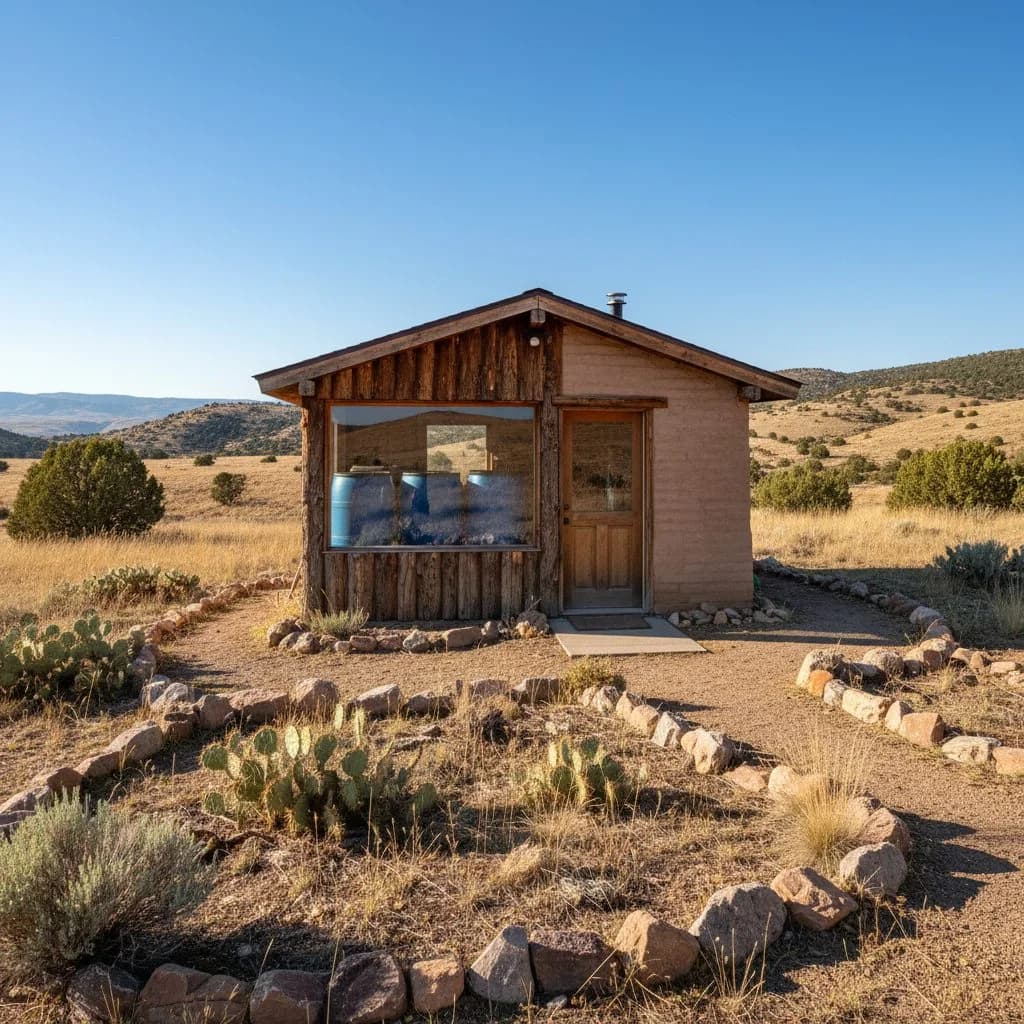
Key takeaways
- Water barrels offer high heat capacity, storing 62.4 pounds per cubic foot.
- Rock beds provide stable, long-term heat retention, especially in cold climates like USDA zone six.
- Cob walls, a blend of sand, clay, and straw, regulate indoor temperatures by absorbing and releasing heat slowly.
- Proper sizing of thermal mass can reduce heating needs by 20% to 40% in a well-insulated structure.
- Integrating these natural materials reduces reliance on active heating systems and external energy sources.
- Consider local material availability and climate conditions for optimal thermal mass performance.
Quick answer: For a USDA Zone 5 homestead, passive heat storage can be achieved using water barrels, rock beds, and cob walls. These materials absorb solar heat during the day and release it slowly, reducing heating and cooling loads by 20-40%.
In the high desert of eastern Oregon, where winter nights can drop to 0°F and summer days reach 95°F, managing indoor temperatures without a constant energy draw is a primary concern for off-grid homesteaders. Passive solar design, a strategy that harnesses the sun’s energy for heating, relies heavily on thermal mass — materials that absorb, store, and slowly release heat. This approach can significantly reduce heating and cooling loads, significantly in a well-designed structure, making a substantial difference in energy independence.
Choosing the right thermal mass materials is critical for maintaining comfortable living spaces year-round, particularly in regions with wide diurnal temperature swings or extended cold periods, such as USDA zone five. While concrete slabs and masonry walls are common choices, many natural and low-cost alternatives exist. Water barrels, rock beds, and cob walls offer practical, accessible solutions for storing solar heat, helping to stabilize indoor temperatures and reduce the need for active heating systems. Understanding their properties and proper application can transform a simple structure into a more resilient, energy-efficient home.
Using water barrels as thermal mass
Water is an exceptional material for thermal mass due to its high specific heat capacity, meaning it can absorb and store a large amount of heat energy per unit of volume. One gallon of water, weighing approximately 8.34 pounds, can store significantly more heat than an equivalent volume of concrete or rock. Water has a higher specific heat capacity than concrete. This property makes water an ideal medium for absorbing solar radiation during the day and releasing it slowly overnight, effectively moderating indoor temperatures in a structure like a small cabin in northern Minnesota, where winter temperatures can drop to -20°F.
Sizing and placement considerations
When incorporating water barrels, placement matters most. They should be situated in direct sunlight, typically behind south-facing windows, to maximize solar gain. For a small, well-insulated structure, a general guideline suggests one to two gallons of water for every square foot of south-facing glazing. For example, a 100-square-foot room with 10 square feet of south-facing windows might benefit from 10 to 20 gallons of water thermal mass. Dark-colored barrels, such as those painted black or dark blue, absorb solar radiation more efficiently, increasing their thermal performance. Consider using food-grade barrels to avoid chemical leaching, especially if they are repurposed containers. You can also integrate these barrels into a solar water heater system to provide domestic hot water.
- High specific heat capacity: Water stores more heat per volume than most common building materials.
- Cost-effective material: Repurposed barrels can be acquired for $10 to $30 each.
- Flexible placement: Barrels can be stacked or arranged to fit various architectural designs.
- Humidity regulation: Water can contribute to indoor humidity balance, especially in dry climates like Arizona.
Building rock beds for passive heat
Rock beds, often integrated into the foundation or subfloor of a structure, provide a dense and stable form of thermal mass. While rock has a lower specific heat capacity than water (typically around 0.2 BTU per pound per degree Fahrenheit), its sheer density and widespread availability make it a viable option for passive heat storage. Large quantities of rock, such as river stones or crushed gravel, can absorb significant amounts of heat over long periods. In a well-designed system in a USDA zone six climate, a rock bed can maintain a stable indoor temperature, reducing the need for auxiliary heating during winter months.
Designing and installing rock beds
For effective heat storage, a rock bed should be at least one foot deep, and ideally two to three feet deep, extending across a substantial area of the building’s footprint. The optimal rock size is typically between two to six inches in diameter, allowing for good air circulation if used in a forced-air system, but also providing sufficient surface area for heat transfer. In regions like the Lava Beds National Monument in California, natural rock formations demonstrate the long-term thermal stability of large rock masses [1]. When constructing a rock bed, ensure proper drainage to prevent moisture issues, especially in areas with high water tables or heavy rainfall, which can compromise the bed’s integrity over time [2]. A vapor barrier, such as a 6 mil polyethylene sheet, should be installed beneath the rock bed to prevent ground moisture from entering the living space, protecting the structure for decades.
- High density: Rocks offer substantial mass for long-term heat retention.
- Durability: Once installed, a rock bed can require minimal maintenance for many years.
- Local availability: Many regions have abundant, low-cost rock resources, often for less than $50 per ton.
- Foundation integration: Can be incorporated into the building’s foundation, reducing overall construction costs by 10% to 15%.
Cob walls as natural thermal mass
Cob, a natural building material composed of sand, clay, and straw, offers excellent thermal mass properties combined with structural integrity. These thick, monolithic walls absorb heat slowly throughout the day and radiate it back into the living space at night, creating a stable and comfortable indoor environment. A typical cob wall, often 18 to 24 inches thick, provides a significant thermal lag, meaning the peak heat absorbed at noon might be released during the cooler evening hours. This characteristic is particularly beneficial in climates with significant daily temperature swings, such as the high desert regions of New Mexico, where temperatures can vary by 40°F or more within a 24-hour period.
Constructing with cob
The construction of cob walls is labor-intensive but requires minimal specialized tools, making it a cost-effective option for many homesteaders. The material composition is roughly 70% to 80% sand, 15% to 25% clay, and 5% to 10% straw by volume, with water added to achieve a workable consistency. Proper mixing and layering provide durability; cob structures in Yemen have stood for over 500 years. For added resilience against moisture, a stone foundation extending at least 18 inches above grade is recommended, protecting the cob from splash-back and ground moisture. Integrating cob walls with a passive solar design can further improve their performance, allowing south-facing walls to absorb maximum solar gain.
- Excellent thermal lag: Cob walls can delay heat transfer by 8-12 hours.
- Breathable material: Helps regulate indoor humidity naturally, maintaining 40% to 60% relative humidity.
- Sound dampening: Thick cob walls significantly reduce external noise.
- Fire resistant: Non-combustible materials reduce fire risk, offering fire resistance.
Integrating thermal mass into your homestead design
Effective thermal mass integration depends on the overall building design, especially for off-grid living. For instance, a small, 200-square-foot tiny home in upstate New York could benefit from a combination of strategies: south-facing windows for solar gain, an interior wall made of cob for its thermal lag, and a few 55-gallon water barrels strategically placed to capture direct sunlight. This multi-material approach can provide more balanced temperature regulation than relying on a single method, potentially reducing heating fuel consumption by 35% to 50% during the coldest months.
Key design considerations
When planning your thermal mass strategy, consider your local climate, available resources, and the building’s orientation. In a humid climate like central Florida, where cooling is a larger concern than heating, thermal mass can help absorb daytime heat and release it at night, reducing the need for air conditioning by 15% to 25%. Conversely, in a dry, cold climate like Wyoming, maximizing heat absorption during the day is the primary goal. Ensure your structure is well-insulated, with R-values of R-30 in walls and R-50 in ceilings, to prevent stored heat from escaping too quickly. Proper ventilation also manages humidity and prevents overheating during warmer periods. The interaction of water with various rock types, as seen in studies on permafrost rock walls, shows that material compatibility and moisture management affect long-term performance [2, 4].
- Climate-specific design: Tailor thermal mass choices to your region’s heating or cooling needs.
- Insulation synergy: Thermal mass works best in conjunction with high levels of insulation, like R-30 walls.
- Ventilation strategy: Plan for natural or mechanical ventilation to manage temperature and humidity.
- Material compatibility: Consider how different materials interact, especially regarding moisture and structural integrity.
Comparison of passive heat storage materials
Material | Specific Heat Capacity (BTU/lb°F) | Density (lbs/cu ft) | Typical Thickness | Cost per cubic foot | Maintenance |
|---|---|---|---|---|---|
Water | 1.0 | 62.4 | Variable (barrels) | $0.20 – $0.60 | Low |
Rock | 0.2 – 0.25 | 100 – 160 | 1-3 feet | $0.50 – $1.50 | Very Low |
Cob | 0.2 – 0.25 | 100 – 120 | 1.5-2 feet | $0.10 – $0.40 | Medium (exterior plaster) |
Water’s Capacity: A single 55-gallon water barrel can store approximately 450 pounds of water, offering substantial thermal mass for a 100-square-foot room.
Cob Wall Thickness: Cob walls, often 18 to 24 inches thick, provide a thermal lag of 8 to 12 hours, significantly stabilizing indoor temperatures.
References
- IMPLICATIONS OF WATER-ROCK REACTIONS IN LAVA TUBE ENVIRONMENTS AT LAVA BEDS NATIONAL MONUMENT (2023).
- Rock beds of water-development works (1997).
- Quantification of water flow in permafrost rock walls (2023).
- Acoustic emission and fractal characteristics of red beds soft rock under water-force coupling (2023).
- USDA Natural Resources Conservation Service (2024).