Key takeaways
- Maintain water temperatures between 75°F and 85°F for optimal tilapia growth and health, often requiring heating in cooler US regions.
- Feed tilapia a high-quality, 32-40% protein diet, typically 2-4 times daily, targeting a feed conversion ratio of 1.5:1 to 2:1.
- Expect tilapia to reach market size (1.5 pounds) in 6-9 months, with stocking densities of one fish per 5-10 gallons in recirculating systems.
- Monitor water parameters like pH (6.5-8.0), ammonia (<0.5 ppm), nitrites (<0.5 ppm), and nitrates (5-150 ppm) to support fish and plant health.
- Integrate nutrient-demanding plants like water spinach or leafy greens to effectively utilize fish waste in a balanced aquaponics setup.
Quick answer: In US aquaponics systems, a well-managed 1,000-gallon setup can produce approximately 600 pounds of tilapia annually. This yield is achieved by maintaining optimal water parameters, providing a high-quality diet, and effective stocking density.
For many growers in USDA zone 8 and warmer, raising tilapia in an aquaponics system offers a reliable source of protein and plant nutrients. These resilient fish are well-suited to controlled environments, providing a consistent harvest for the home or small-scale commercial operation. Understanding their fundamental needs — from the water they swim in to the food they eat — matters for success and keeps the system healthy enough to produce hundreds of pounds of fish each year.
A well-managed aquaponics system in a climate-controlled environment, such as a reflective indoor grow tent, can produce a strong harvest. With proper care, a well-managed 1,000-gallon system can support a significant harvest of tilapia annually, alongside a variety of produce. This guide outlines the essential practices for maintaining healthy tilapia populations and the factors that influence their well-being and productivity.
Water temperature: the foundation for tilapia health
Tilapia are tropical fish, meaning they thrive in warm water. For optimal growth and health, you need to maintain your system’s water temperature consistently between 75°F and 85°F (24°C and 29°C). Temperatures below 68°F (20°C) can cause stress, reduce feeding, and significantly slow growth, potentially leading to disease. In cooler climates, like those found in USDA zones 6 and 7, this often means investing in reliable water heaters, similar to a farm animal heat lamp, but specifically designed for aquatic environments.
maintaining consistent temperatures
Fluctuations in water temperature can be as detrimental as consistently low temperatures. A sudden drop of even 5°F can shock fish, impacting their immune systems and making them vulnerable. Monitoring the water temperature daily, or even hourly with automated sensors, is a basic requirement for animal health [1]. For larger systems, a dedicated water heater with a thermostat is essential to maintain a stable environment. In a 1,000-gallon system, a heater rated for 1,000-1,500 watts might be necessary to maintain the desired temperature range, especially during colder months in northern states like Michigan or Montana.
- Use a reliable submersible heater with a thermostat.
- Insulate tanks to minimize heat loss, which can reduce energy consumption.
- Monitor water temperature at least twice daily with a calibrated thermometer.
- Consider a backup heating system for systems over 500 gallons to prevent catastrophic temperature drops.
- Avoid placing tanks in drafty areas or direct sunlight, which can cause rapid temperature swings of 10°F or more.
Feeding strategies: optimizing growth and system balance
Feeding tilapia correctly is a balancing act between promoting rapid growth and preventing water quality issues. Tilapia are omnivores, but they thrive on a high-protein diet, especially during their grow-out phase. A commercial fish feed with 32-40% protein content is typically recommended for fingerlings and juvenile fish, transitioning to 28-32% protein for larger fish. The amount you feed depends on the fish’s size, water temperature, and stocking density, but a general guideline is to feed 2-4 times per day, offering an amount they can consume within 10-15 minutes.
calculating feed rates and fcr
The feed conversion ratio (FCR) is a critical metric, representing the amount of feed required to produce one unit of fish weight. For tilapia, A good FCR means that the fish are efficient at converting feed into weight. Consistent nutrient delivery is fundamental for growth in managed systems [2]. Overfeeding is a common mistake that leads to uneaten food decaying in the tank, increasing ammonia and nitrite levels, which are toxic to fish. For a system with 100 pounds of tilapia, you might feed 1.5-2 pounds of feed daily, split into multiple feedings. Consider supplementing with fermented soybean meal as a nutrient booster for your plants, but ensure it’s not directly fed to fish in large quantities.
- Feed small amounts multiple times a day instead of one large meal.
- Observe fish behavior; reduce feeding if they are not actively eating.
- Store feed in a cool, dry place to maintain its nutritional value for up to six months.
- Choose a floating pellet feed to easily monitor consumption and remove uneaten portions.
- Adjust feed rates based on water temperature; fish eat less in cooler water below 70°F.
Growth rates and stocking density: planning your harvest
Tilapia are known for their relatively fast growth rates, making them an attractive species for aquaculture. Under ideal conditions, fingerlings (1-2 inches) can reach market size, typically 1.5 pounds, in 6-9 months. This rapid growth is contingent on maintaining optimal water parameters, providing a high-quality diet, and managing stocking density effectively. Monitoring key environmental parameters is a basic practice in managing biological systems. For example, in a 250-gallon system, you might aim to harvest 25-30 fish every 6-8 months.
determining appropriate stocking levels
Stocking density refers to the number of fish per unit of water volume. While tilapia can tolerate relatively high densities, overcrowding can lead to stress, disease outbreaks, and stunted growth. A common recommendation for recirculating aquaponics systems is to manage stocking density carefully to avoid overcrowding. For instance, a 500-gallon fish tank could comfortably house 50-100 tilapia. Higher densities are possible with robust filtration and aeration, but require more diligent monitoring and management. Overstocking can also overwhelm the nitrification capacity of your biofilter, leading to dangerous ammonia spikes that can wipe out a population of 50 or more fish in a matter of hours.
- Start with smaller fingerlings, around 1-2 inches, for best growth potential.
- Harvest fish when they reach 1.5-2 pounds for optimal meat yield and system efficiency.
- Implement a staggered stocking and harvesting schedule to ensure continuous production.
- Provide ample aeration and water circulation, especially in higher density systems, to maintain dissolved oxygen levels above 5 mg/L.
- Consider tank size; a 100-gallon tank can support 10-20 market-size tilapia, while a 1,000-gallon tank can support 100-200.
Maintaining water quality: beyond temperature
While temperature is vital, it’s just one component of overall water quality. In an aquaponics system, the delicate balance of nitrogen compounds, pH, and dissolved oxygen directly impacts the health of both fish and plants. Ammonia (NH3/NH4+), nitrite (NO2-), and nitrate (NO3-) levels must be carefully managed. Ammonia and nitrite are highly toxic to fish, even at low concentrations, while nitrate is the primary nutrient for plants. Adjusting inputs based on observed outcomes is a core principle of effective management [4]. Regular testing, at least 2-3 times per week, is non-negotiable for system stability.
key water parameters and their ranges
The ideal pH range for an aquaponics system is typically 6.5-7.5, which is a compromise between the slightly acidic preference of most plants and the slightly alkaline preference of tilapia. Ammonia and nitrite levels should always be near zero. Nitrate, the beneficial byproduct of the nitrogen cycle, can be present in a wide range, serving as plant food. Dissolved oxygen (DO) is also critical, with levels above 5 mg/L being optimal for tilapia. In a system with 100 gallons of water, even a small amount of uneaten food or fish waste can quickly elevate ammonia levels to dangerous concentrations above 1.0 ppm.
- Test water parameters (pH, ammonia, nitrite, nitrate) 2-3 times weekly.
- Ensure dissolved oxygen levels remain above 5 mg/L with adequate aeration.
- Perform regular water changes, typically 10-20% of the total volume every 1-2 weeks, to dilute accumulated solids.
- Maintain a healthy biofilter, which houses the beneficial bacteria responsible for converting toxic ammonia and nitrite to less harmful nitrate.
- Avoid sudden changes in pH; aim for a gradual adjustment of no more than 0.2 pH units per day if correction is needed.
Aquaponics integration: plants and fish in harmony
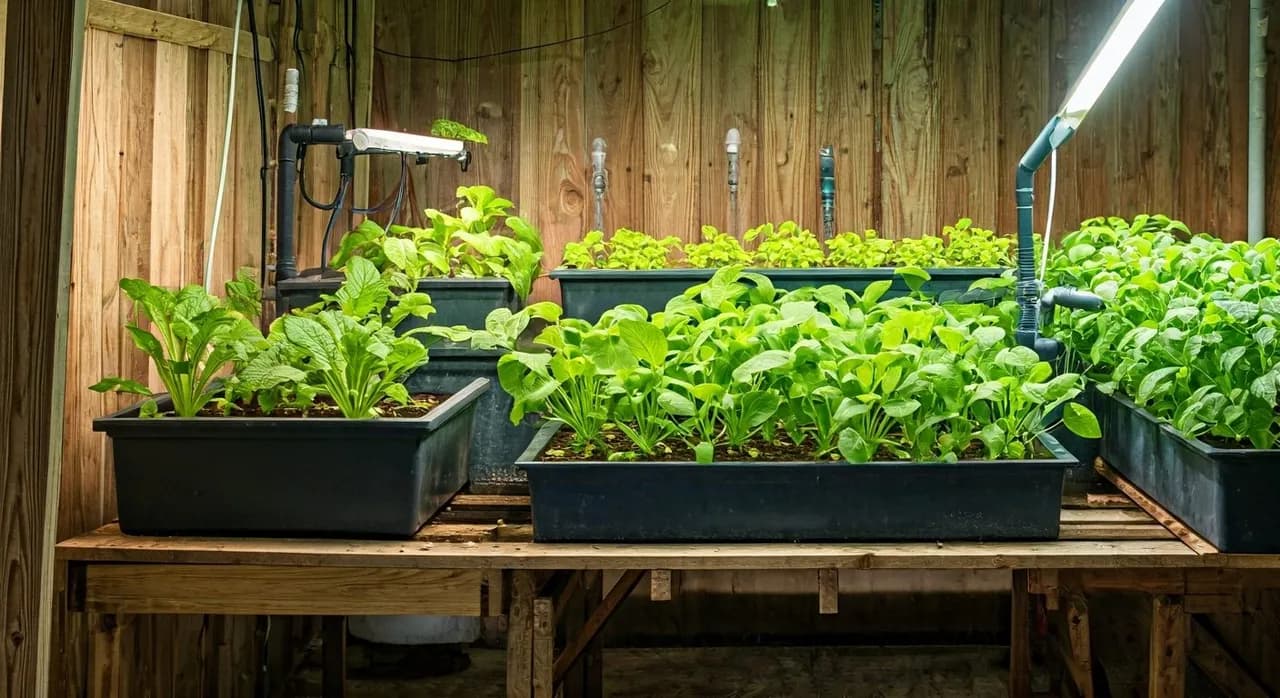
The beauty of aquaponics lies in its symbiotic relationship: fish waste provides nutrients for plants, and plants filter the water for the fish. This closed-loop system requires careful consideration of both components to ensure efficiency and productivity. Selecting the right plants is key to effectively utilizing the nutrients produced by your tilapia. Efficient resource management contributes to the overall success of a system [5]. For example, a system with 100 tilapia might produce enough nutrients to support 20-30 mature lettuce plants or several large tomato vines.
choosing plants for your system
Fast-growing, leafy greens and fruiting plants with moderate to high nutrient demands are excellent choices for aquaponics. Examples include lettuce, kale, Swiss chard, basil, mint, and even fruiting plants like tomatoes, peppers, and cucumbers. Water-loving plants like water spinach or water hyssop can also thrive, directly absorbing nitrates from the water. Avoid plants that prefer very acidic or alkaline conditions, as this can throw off the system’s pH balance. A general rule is to have a grow bed volume roughly equal to your fish tank volume for effective filtration and nutrient uptake, for instance, a 250-gallon fish tank paired with 250 gallons of grow bed volume.
- Start with leafy greens like lettuce or basil, which have high nutrient uptake rates.
- Consider nutrient film technique (NFT) or deep water culture (DWC) for high-density plant production.
- Ensure adequate lighting for plants, typically 12-16 hours per day, using full-spectrum LED grow lights.
- Monitor plant health for nutrient deficiencies, which can indicate insufficient fish waste or an imbalance in the system.
- Harvest plants regularly to encourage new growth and maintain nutrient uptake, removing 20-30% of plant mass at each harvest.
Disease prevention and management: keeping your stock healthy
Even with the best care, disease can sometimes occur in an aquaponics system. Proactive prevention is always the best approach, as treating sick fish in an integrated system can be challenging due to the presence of plants and beneficial bacteria. Stress from poor water quality, overcrowding, or improper feeding is the leading cause of disease outbreaks. Sustainable practices are supported by understanding natural resource cycles [6]. A 1,000-gallon system with 200 fish, if neglected, could see a disease spread through the entire population in less than 48 hours.
common tilapia ailments and prevention
Common tilapia diseases include bacterial infections (e.g., columnaris), parasitic infestations (e.g., ich), and fungal infections. Many of these are opportunistic, attacking fish weakened by stress. Maintaining stable water parameters, providing a nutritious diet, and avoiding sudden environmental changes can prevent many potential disease issues. Quarantining new fish for 2-4 weeks in a separate tank before introducing them to your main system is an important step to prevent introducing pathogens. Observe fish daily for signs of distress, such as clamped fins, lethargy, or lesions, which can indicate a problem in 1-2 fish before it affects dozens.
- Quarantine all new fish for at least three weeks in a separate 10-gallon isolation tank.
- Avoid overfeeding, which can lead to poor water quality and stress.
- Maintain stable water temperatures and parameters to reduce fish stress.
- Remove any dead or dying fish immediately to prevent the spread of disease.
- Sanitize all equipment, such as nets and buckets, before use in the main system to prevent cross-contamination.
Tilapia Species Comparison for Aquaponics
Species | Growth Rate | Temperature Tolerance | Notes |
|---|---|---|---|
Nile Tilapia (Oreochromis niloticus) | Fast (1.5 lbs in 6-9 months) | 75-85°F (24-29°C) | Most common, good meat quality, robust. |
Blue Tilapia (Oreochromis aureus) | Moderate (1.5 lbs in 8-12 months) | 65-80°F (18-27°C) | More cold-tolerant, can survive down to 50°F briefly, but growth slows. |
Mozambique Tilapia (Oreochromis mossambicus) | Slower (1.5 lbs in 10-14 months) | 70-82°F (21-28°C) | Salt tolerant, good for brackish systems, less common for pure aquaponics. |
Optimal Temperature: Maintain water temperature between 75°F and 85°F for 100% optimal tilapia growth and health.
Feed Protein: Tilapia require a diet with 32-40% protein content for efficient growth, achieving a 1.5:1 FCR.
Harvest Time: Expect tilapia to reach market size of 1.5 pounds in 6-9 months under ideal aquaponics conditions.
Water pH: Keep system pH between 6.5 and 7.5 to balance the needs of both tilapia and most aquaponics plants.
Frequently asked questions
What is the best water temperature for tilapia in aquaponics?
The optimal water temperature for tilapia in an aquaponics system is between 75°F and 85°F (24°C and 29°C). Maintaining this range ensures rapid growth and strong immune systems for your fish, with growth significantly slowing below 68°F.
How often should I feed my tilapia?
Tilapia should typically be fed 2-4 times per day, providing an amount they can consume within 10-15 minutes. This frequency helps prevent overfeeding, which can lead to poor water quality and stress on the fish and system biofilter.
How long does it take for tilapia to reach harvest size?
Under optimal aquaponics conditions, tilapia fingerlings can reach a market size of 1.5-2 pounds in approximately 6-9 months. Factors like water temperature, feed quality, and stocking density significantly influence this growth rate.
What are the ideal water quality parameters for tilapia aquaponics?
Key water parameters include a pH of 6.5-7.5, ammonia and nitrite levels below 0.5 ppm, and dissolved oxygen above 5 mg/L. Nitrate levels can range from 5-150 ppm, providing essential nutrients for your plants.
Can I mix different species of fish with tilapia in aquaponics?
It is generally not recommended to mix different fish species with tilapia in a production aquaponics system. Tilapia are territorial and can outcompete or stress other species, potentially leading to reduced growth rates and increased disease risk for all fish in the 500-gallon tank.
How much space does one tilapia need?
In a recirculating aquaponics system, a general guideline is to provide 5-10 gallons of water per market-size tilapia. For example, a 100-gallon tank can comfortably support 10-20 tilapia, ensuring adequate space for growth and waste management.
References
- EEG Basics (2024). EEG Basics.
- Basics of Nursing Care in Surgery (2020). Basics of Nursing Care in Surgery.
- Basics of Neurocritical Care (2019). Basics of Neurocritical Care.
- Behavior Change in Primary Care: The Basics (2019). Behavior Change in Primary Care: The Basics.
- ACO 101: The Basics Of Accountable Care (2011). ACO 101: The Basics Of Accountable Care.
- USDA Natural Resources Conservation Service (2024). USDA Natural Resources Conservation Service.