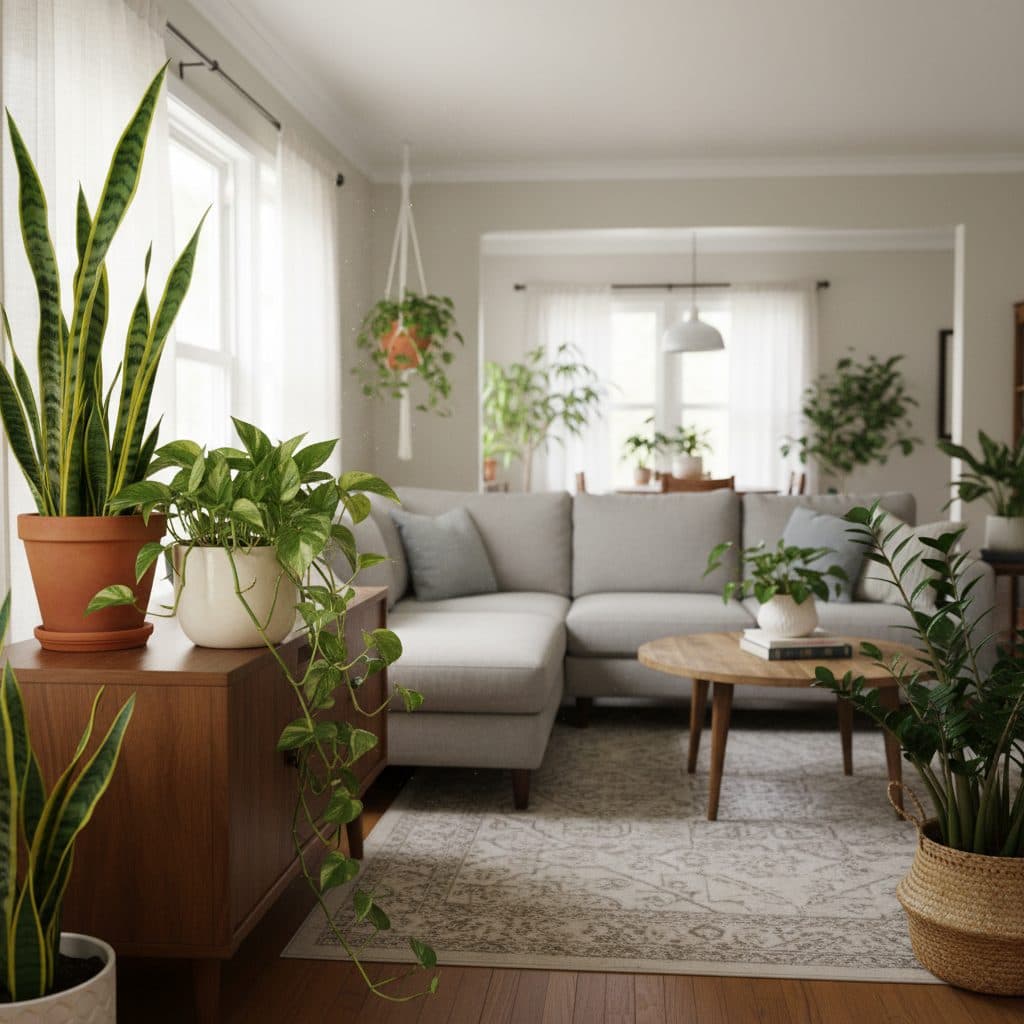
Key takeaways
- Start with resilient plants like Pothos, Snake Plant, and ZZ Plant, which tolerate varied conditions.
- Overwatering is a common beginner mistake; check soil moisture before adding more water.
- Most beginner-friendly plants prefer bright, indirect light but can adapt to lower light levels.
- Consistent, simple care routines are more effective than complex, infrequent interventions.
- Utilize tools like soil moisture meters to avoid guesswork in watering schedules.
- Even ‘unkillable’ plants benefit from occasional feeding, especially during active growth periods.
Quick answer: Nearly unkillable houseplants for US homes include resilient species like Pothos, Snake Plant, ZZ Plant, and Chinese Evergreen, which tolerate varied conditions and minimal care. These plants thrive with bright, indirect light and proper watering, making them ideal for beginners.
For many US households, particularly those in bustling urban centers like New York City or sprawling suburban areas across the Midwest, houseplants offer a touch of green without requiring a full garden. However, starting with indoor plants can feel daunting. Like learning a new skill, starting with foundational concepts is key. The good news is, you don’t need a green thumb to succeed; you just need the right plants. This guide focuses on 15 species known for their resilience, making them perfect for absolute beginners. It is important to note that many common houseplants, including several on this list, are toxic to cats and dogs if ingested. Pet owners should research specific plants before bringing them into their homes.
These plants can withstand a range of common beginner missteps, from inconsistent watering to less-than-ideal light conditions. Our selections are widely available in garden centers across all USDA zones, from the humid South to the arid Southwest, and typically cost under 25 dollars for a 6-inch pot. We’ll cover their basic needs, ensuring you can confidently bring more plant life into your home or apartment, even if you’ve never kept a plant alive before.
The foundation: why easy plants matter for new growers
Embarking on the journey of houseplant care is much like learning any new skill. Success often hinges on starting with manageable basics. For plant enthusiasts, this means choosing species that are forgiving of mistakes and adaptable to typical indoor environments found across the US, from a small apartment in Seattle to a larger home in Atlanta. Many new growers report losing their first plant within three months, often due to overwatering or insufficient light. Selecting robust plants significantly reduces this initial failure rate.
Understanding light and water basics
The two primary factors for houseplant survival are light and water. Most of the plants on our list thrive in bright, indirect light, which means they prefer a spot near a window but out of direct sun, especially during the intense midday hours. For instance, a south-facing window with a sheer curtain provides ideal conditions for many. When it comes to watering, the general rule is to let the top 1-2 inches of soil dry out before watering again. Using a soil moisture meter can remove much of the guesswork, ensuring your plant receives the right amount of hydration, preventing common issues like root rot that affect many new plants. Proper soil drainage is essential for houseplant health, preventing root issues common in overwatered conditions [6].
- Choose well-draining potting mix to prevent soggy roots.
- Place plants near windows for bright, indirect light, avoiding direct sun.
- Water thoroughly until water drains from the bottom, then allow soil to dry.
- Consider humidity levels, especially in drier climates like Arizona.
- Rotate plants every few weeks for even growth and light exposure.
Low light, high reward: the truly resilient
Not every home or apartment in the US offers abundant natural light. For north-facing rooms or interior spaces, certain plants tolerate low light conditions reliably. These plants are often characterized by their thick, waxy leaves or slow growth rates, which allow them to conserve energy more effectively. They are ideal for beginners who might not have the perfect sunny spot but still want to enjoy the benefits of indoor greenery. Many popular houseplants, like Pothos, can thrive in varied light conditions, from bright indirect to lower light, making them adaptable for most US homes [6].
Top four low-light champions
The Pothos (Epipremnum aureum) is arguably the most forgiving houseplant, often growing vines over 10 feet long. It tolerates low light, infrequent watering, and can recover quickly from neglect. Its variegated leaves add visual interest to any space, from a small studio in Boston to a large living room in Dallas. The Snake Plant (Sansevieria trifasciata) is another powerhouse, known for its upright, sword-like leaves that can reach 3 feet tall. It can go for several weeks without water, sometimes for several weeks in cooler conditions, making it highly drought-tolerant. The ZZ Plant (Zamioculcas zamiifolia) is incredibly resilient, requiring water only every 2-4 weeks and tolerating very low light, making it perfect for dimly lit corners. Finally, the Chinese Evergreen (Aglaonema) offers beautiful patterned foliage and can handle lower light, with some varieties growing up to 2 feet tall.
- Pothos (Epipremnum aureum): Adapts to various light levels, including low light.
- Snake Plant (Sansevieria trifasciata): Thrives on neglect, tolerates very low light.
- ZZ Plant (Zamioculcas zamiifolia): Extremely drought-tolerant, ideal for dark spots.
- Chinese Evergreen (Aglaonema): Offers colorful foliage in low to medium light.
Moderate care, big impact: resilient beauties
While some plants excel in low light, others prefer a bit more brightness but are still incredibly forgiving, offering a lush aesthetic with moderate attention. These plants suit spaces with moderate natural light (such as a west-facing window in Denver or an east-facing window in California) and simple care routines. They reward regular care with steady growth and healthy foliage. Understanding basic plant needs, like light and water, is a fundamental first step [2].
Five popular moderate-care choices
The Heartleaf Philodendron (Philodendron hederaceum) is a classic for its heart-shaped leaves and trailing habit; it can grow long vines indoors with proper care. It thrives in medium to bright indirect light and appreciates watering when the top 2 inches of soil are dry. Spider Plants (Chlorophytum comosum) are known to produce numerous ‘plantlets’ or ‘spiderettes,’ with a single mature plant potentially yielding many new offshoots annually. They prefer bright indirect light and consistent moisture. The Peace Lily (Spathiphyllum) is famous for dramatically drooping when thirsty, making its watering needs easy to read; it prefers medium light and can grow up to 3 feet tall. Dracaena varieties, such as Dracaena fragrans or marginata, offer striking foliage and can reach heights of 6 feet or more, tolerating a range of light conditions. Finally, the Cast Iron Plant (Aspidistra elatior) lives up to its name, enduring very low light, infrequent watering, and temperature fluctuations, making it suitable for even the most challenging spots in a home in Michigan or Florida.
- Heartleaf Philodendron: Trailing vines, easy to propagate from cuttings.
- Spider Plant: Produces ‘spiderettes’ for easy propagation, air-purifying qualities.
- Peace Lily: Signals thirst clearly, produces elegant white blooms.
- Dracaena: Variety of forms and colors, tolerant of some neglect.
- Cast Iron Plant: Extremely hardy, thrives in very low light and neglect.
Succulents and unique textures: beyond the basics
Expanding beyond the most common foliage plants, there’s a world of resilient succulents and unique textured plants that are still very beginner-friendly. These plants often have specific needs, such as excellent drainage and plenty of light, but once those are met, they require minimal intervention. They are particularly well-suited for drier climates, like those in Arizona or Nevada, where their natural adaptations shine. Many succulent varieties can go for weeks without water, storing moisture in their thick leaves or stems, making them perfect for busy individuals or those prone to forgetting to water.
Six more forgiving choices
Aloe vera (Aloe barbadensis miller) is easy to care for and produces soothing sap, growing up to 2 feet tall. It needs bright light and infrequent watering, perhaps every 3-4 weeks. The Jade Plant (Crassula ovata) is a classic succulent that can grow into a small tree, reaching heights of 3 feet or more. It loves bright light and dry soil between waterings. The Christmas Cactus (Schlumbergera) provides beautiful winter blooms with minimal fuss, preferring bright indirect light and watering when the top inch of soil is dry. The Money Tree (Pachira aquatica) with its braided trunk, can grow 6 feet tall indoors and tolerates some neglect, needing water when the top 2 inches of soil are dry. The Prayer Plant (Maranta leuconeura) is known for its leaves that fold up at night; it prefers medium light and consistent moisture, though it tolerates occasional dryness. Finally, Satin Pothos (Scindapsus pictus) offers velvety, silver-splashed leaves and similar easy care to its cousin, the Pothos, thriving in medium to low light conditions and growing vines over 6 feet long.
- Aloe Vera: Medicinal properties, requires bright light and infrequent watering.
- Jade Plant: Tree-like growth, needs bright light and well-draining soil.
- Christmas Cactus: Winter blooms, prefers bright indirect light.
- Money Tree: Unique braided trunk, tolerant of some neglect.
- Prayer Plant: Decorative foliage, leaves fold at night.
- Satin Pothos: Velvety leaves, similar care to standard Pothos.
Long-term success: tips for thriving houseplants
Even the most resilient houseplants benefit from a few simple, consistent care practices that can significantly extend their lifespan and vitality. Establishing good basic habits leads to long-term success. Regular observation helps catch issues early: spend a few minutes each week checking plants for signs of stress, pests, or growth. This proactive approach can prevent minor issues from becoming major problems, saving you time and potentially replacing plants that cost 15-30 dollars each.
Feeding, cleaning, and repotting
While ‘unkillable’ plants are not heavy feeders, they do benefit from occasional fertilization, especially during their active growing season from spring to fall. A balanced liquid fertilizer, diluted to half strength, applied every 4-6 weeks can provide essential nutrients. For example, a 5-10-5 NPK ratio is often suitable. Consider using an organic option like fermented soybean meal organic fertilizer for a slow-release nutrient boost. Dust accumulation on leaves can hinder photosynthesis by blocking up to 20 percent of light, so gently wipe leaves with a damp cloth every month or two. Repotting is generally needed every 1-2 years, or when roots start circling the pot’s bottom, indicating the plant has outgrown its current home. Choose a pot only 1-2 inches larger in diameter to avoid overwatering issues. For larger plants, consider a reflective indoor grow tent if you want to optimize light and humidity for specific growth stages, especially in regions with short daylight hours like Alaska during winter.
- Fertilize every 4-6 weeks during spring and summer with diluted feed.
- Wipe leaves monthly to remove dust and improve light absorption.
- Repot every 1-2 years into a slightly larger pot (1-2 inches wider).
- Prune leggy growth to encourage bushier, healthier plants.
- Monitor for pests weekly, addressing issues early with natural sprays.
Comparison of top 4 beginner houseplants
Plant Name | Light Needs | Watering Frequency | Growth Rate |
|---|---|---|---|
Pothos | Low to Bright Indirect | Every 1-2 weeks | Medium to Fast |
Snake Plant | Low to Bright Indirect | Every 2-4 weeks | Slow |
ZZ Plant | Very Low to Medium Indirect | Every 2-4 weeks | Slow |
Heartleaf Philodendron | Medium to Bright Indirect | Every 1-2 weeks | Medium to Fast |
Watering Tip: Over 30 percent of new plant owners struggle with overwatering; use a soil moisture meter to ensure the top 1-2 inches of soil are dry before watering again.
Light Adaptability: Many resilient houseplants can tolerate light levels ranging from 200 to 500 foot-candles, making them suitable for various spots in a typical US home.
Frequently asked questions
What is the absolute easiest houseplant for a beginner?
The ZZ Plant (Zamioculcas zamiifolia) is often considered the easiest, as it can tolerate very low light and go for 2-4 weeks without water, making it incredibly forgiving for new growers in any US region.
How often should I water ‘unkillable’ houseplants?
Most ‘unkillable’ houseplants prefer to dry out between waterings. A good rule of thumb is to check the top 1-2 inches of soil; if it’s dry, then water thoroughly. This typically means watering every 1-3 weeks, depending on the plant and environmental conditions in your home, which can vary by 15-20% seasonally.
Do these easy-care plants need fertilizer?
While not strictly necessary for survival, even easy-care plants benefit from occasional fertilization during their active growing season (spring and summer). A diluted liquid fertilizer, applied every 4-6 weeks, can boost their growth by up to 25 percent.
Can these plants survive in low light apartments?
Yes, many of the plants listed, such as the ZZ Plant, Snake Plant, and Pothos, are highly tolerant of low light conditions, making them excellent choices for apartments with limited natural light, common in many US cities where window space might be minimal.
What’s the biggest mistake beginners make with houseplants?
The most common mistake beginners make is overwatering, which can lead to root rot and plant death. It’s estimated that many houseplant failures among new owners are due to excessive watering. Always ensure proper drainage and let the soil dry out between waterings.
References
- Absolute Beginners (1400). Absolute Beginners.
- JavaScript for Absolute Beginners (2010). JavaScript for Absolute Beginners.
- Get Better: R for absolute beginners (2020). Get Better: R for absolute beginners.
- Dart for Absolute Beginners (2014). Dart for Absolute Beginners.
- Unity for Absolute Beginners (2014). Unity for Absolute Beginners.
- USDA Natural Resources Conservation Service.