Key takeaways
- Understanding the nitrogen cycle matters: it converts toxic ammonia to plant-usable nitrate.
- pH directly controls nutrient availability; most plants thrive between 5.5 and 6.5.
- Regular testing with reliable kits or digital meters prevents nutrient deficiencies and toxicities.
- Ammonia and nitrite levels should always be near zero parts per million (ppm) in established systems.
- Nitrate levels typically range from 50 to 150 ppm for optimal plant growth.
- Consistent system monitoring and timely adjustments drive long-term success and healthy yields.
Quick answer: Maintaining optimal water chemistry in hydroponic and aquaponic systems involves consistently monitoring pH and the nitrogen cycle (ammonia, nitrite, nitrate) to ensure nutrient availability and prevent toxicity. This precise management can significantly increase plant growth rates and overall yields.
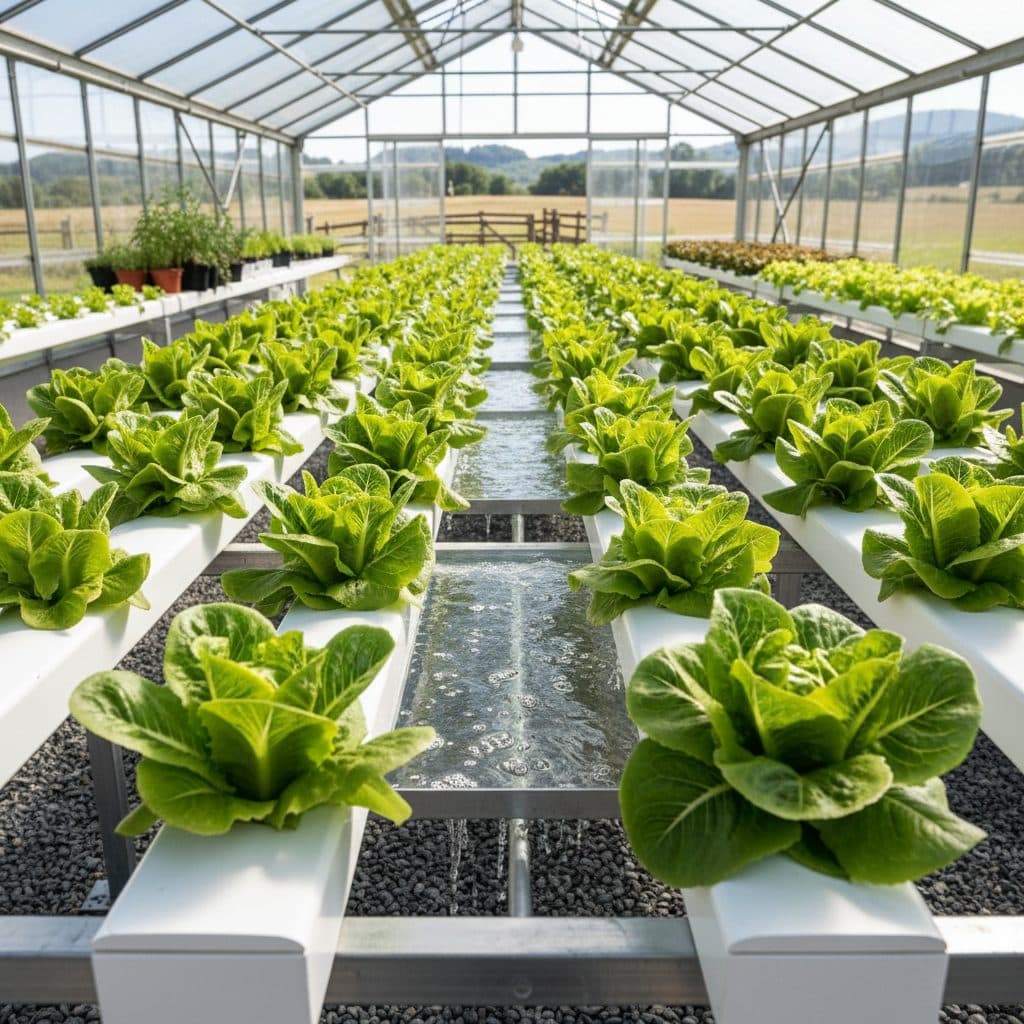
In a hydroponic farm near Fresno, California, growers have seen plant growth rates increase simply by consistently monitoring and adjusting their water chemistry. For anyone growing plants without soil, whether in a small home setup or a larger commercial operation, the water carries the nutrients your plants depend on. Getting the chemistry right means providing your plants with precisely what they need, exactly when they need it, leading to healthier growth and more abundant harvests.
This means keeping a close eye on four critical parameters: ammonia, nitrite, nitrate, and pH. These compounds are interconnected, forming the backbone of the nitrogen cycle and influencing how effectively your plants can absorb essential nutrients. Ignoring these factors can lead to stunted growth, nutrient deficiencies, or even plant death, costing you time and resources. Understanding how to measure and manage these levels is a fundamental skill for any successful soilless grower.
The nitrogen cycle: ammonia, nitrite, and nitrate
The nitrogen cycle is a fundamental process in both hydroponic and aquaponic systems, transforming nitrogenous waste into a usable form for plants. In aquaponics, fish waste, primarily ammonia, is the starting point. Ammonia (NH₃ or NH₄⁺) is highly toxic to fish, even at low concentrations, and can harm plants at higher levels. Beneficial bacteria, specifically Nitrosomonas species, convert ammonia into nitrite (NO₂⁻). This initial conversion is critical for system health, especially when stocking fish at a density of one pound per 5 to 10 gallons of water.
from toxic waste to plant food
Nitrite, while less toxic than ammonia, is still harmful to fish and can inhibit plant growth. Fortunately, another group of beneficial bacteria, Nitrobacter species, quickly convert nitrite into nitrate (NO₃⁻). Nitrate is the preferred form of nitrogen for most plants and is relatively harmless to fish. This two-step process, known as nitrification, is vital for maintaining a balanced system. For example, a healthy aquaponics system supporting tilapia in USDA zone 9 will typically show ammonia and nitrite levels consistently near zero, while nitrate levels might range from moderate to high for optimal plant uptake. You can learn more about this symbiotic relationship in aquaponics systems explained: fish, plants, and the nitrogen loop.
- Ammonia (NH₃/NH₄⁺): Highly toxic to fish and plants, should be near zero.
- Nitrite (NO₂⁻): Less toxic than ammonia but still harmful, also needs to be near zero.
- Nitrate (NO₃⁻): Plant-preferred nitrogen source, safe for fish at typical plant-optimal levels.
- Nitrification: The bacterial process converting ammonia to nitrite, then to nitrate.
- Beneficial bacteria: Nitrosomonas and Nitrobacter are essential for this conversion.
pH: the master key to nutrient availability
While the nitrogen compounds provide the building blocks, pH dictates whether your plants can actually use them. pH is a measure of the acidity or alkalinity of your water, expressed on a scale from 0 to 14. A pH of 7 is neutral, below 7 is acidic, and above 7 is alkaline. Most hydroponic and aquaponic plants, including common crops like lettuce and tomatoes, thrive in a slightly acidic range, typically between 5.5 and 6.5. Outside this range, even if all the necessary nutrients are present in the water, they can become unavailable to the plant roots, a phenomenon known as nutrient lockout.
optimizing nutrient uptake
For example, iron, a crucial micronutrient, becomes much less available to plants when the pH rises above 7.0. Conversely, at very low pH levels, below 5.0, some nutrients like manganese can become toxic. In a typical deep water culture system growing basil in a reflective indoor grow tent, maintaining a stable pH can increase nutrient uptake efficiency compared to a system with fluctuating pH. Regular monitoring, ideally daily or every other day, is essential. If your pH drifts too high, you might use a food-grade acid like phosphoric acid to lower it. If it’s too low, potassium hydroxide or calcium carbonate can raise it. Always make small adjustments, no more than 0.5 pH units at a time, to avoid shocking your plants.
- pH range: A scale from 0 (acidic) to 14 (alkaline), with 7 being neutral.
- Ideal range: Most plants prefer a slightly acidic pH, typically 5.5 to 6.5.
- Nutrient lockout: When nutrients are present but unavailable due to incorrect pH.
- pH down: Acids like phosphoric acid or nitric acid.
- pH up: Bases like potassium hydroxide or calcium carbonate.
Practical testing methods and equipment
Accurate measurement is the cornerstone of effective water chemistry management. There are several methods available, each with its own advantages and costs. For ammonia, nitrite, and nitrate, liquid reagent test kits are a common choice for home growers. These kits involve adding specific drops to a water sample and comparing the resulting color to a chart. While generally reliable, especially for aquaponics, their accuracy can sometimes be subjective due to color interpretation. A typical ammonia test kit might cost around 15 to 25 dollars and provide 50 to 100 tests.
choosing the right tools for your system
For pH, litmus paper strips offer a quick, inexpensive, but less precise reading, often with an accuracy of ±0.5 pH units. Digital pH meters, however, provide much greater accuracy, typically ±0.01 to ±0.05 pH units, and are essential for serious growers. These meters require regular calibration using buffer solutions, usually pH 7.0 and pH 4.0 or 10.0 solutions, to maintain their precision. A good quality digital pH meter can range from 40 to 150 dollars, but it pays for itself in consistent results. For commercial operations, or even larger home systems, more advanced spectrophotometric methods can provide highly accurate readings for nitrogen compounds, often with precision down to 0.01 ppm, as referenced in recent research [1].
- Liquid reagent test kits: Good for ammonia, nitrite, nitrate; involve color comparison.
- Litmus paper strips: Quick and inexpensive for pH, but less accurate (±0.5 pH).
- Digital pH meters: Highly accurate (±0.01-0.05 pH), require calibration with buffer solutions.
- Calibration solutions: Essential for maintaining the accuracy of digital pH meters.
- Spectrophotometers: Advanced, highly accurate methods for precise nitrogen compound analysis.
Interpreting results and troubleshooting common issues
Once you have your test results, the next step is to understand what they mean and how to react. In an established aquaponics system, ammonia and nitrite levels should consistently read near zero ppm. If you see a spike above 0.25 ppm, it often indicates an issue with your biological filter — perhaps too many fish, overfeeding, or a recent system disturbance. For instance, an aquaponics system with 30 gallons of water and 10 small fish might show a temporary ammonia spike to 1.0 ppm if 25% of the water is changed rapidly without acclimating the bacteria.
correcting imbalances for plant health
High nitrate levels (above 200 ppm) are generally not harmful to plants but can indicate that your plants aren’t consuming nitrogen fast enough, or that your feeding schedule is too aggressive. Low nitrate levels (below 30 ppm) mean your plants are hungry and need more nitrogen, which can be addressed by increasing fish feed in aquaponics or adding a nitrogen supplement in hydroponics. For pH, if it’s consistently too high (e.g., 7.5), you’ll likely see signs of iron deficiency in your plants, such as yellowing leaves with green veins. Conversely, a pH consistently below 5.0 can lead to stunted growth and root damage. Adjustments should always be gradual, adding small amounts of pH up or down solutions and retesting after 30 to 60 minutes to see the effect. For example, adding a small amount of pH down to a reservoir will lower the pH.
- Ammonia/Nitrite spikes: Indicate bacterial filter issues, overfeeding, or system shock.
- High nitrate: Plants not consuming enough nitrogen or over-fertilization.
- Low nitrate: Plants are nitrogen deficient, need more nutrients.
- High pH: Leads to nutrient lockout, especially iron deficiency.
- Low pH: Can cause root damage and nutrient toxicity.
Maintaining long-term system stability
Achieving a balanced system isn’t a one-time event; it’s an ongoing commitment. Regular monitoring, as discussed, is your first line of defense. Beyond testing, several practices contribute to long-term stability. In aquaponics, maintaining a stable fish population and a consistent feeding schedule are paramount. Overfeeding can quickly overwhelm your biological filter, leading to ammonia spikes. Using high-quality fish food that is 35% to 40% protein also minimizes waste and supports healthy fish growth.
proactive measures for consistent yields
For both hydroponics and aquaponics, adequate aeration is vital for the beneficial bacteria that drive the nitrogen cycle. Air stones and pumps help maintain dissolved oxygen levels. Regular water changes, typically 10% to 20% every two to four weeks, help prevent the buildup of undesirable compounds and replenish trace elements. Even in a well-managed system, some trace elements can deplete over time, impacting plant health. For example, a 50-gallon deep water culture system in USDA zone 7 growing bell peppers might benefit from a 15% water change every three weeks to maintain optimal micronutrient levels. Consider using a garden PE irrigation hose for efficient water management during these changes. This proactive approach ensures your system remains productive and your plants stay healthy, yielding consistent harvests year after year.
- Consistent feeding: Avoid overfeeding fish to prevent ammonia spikes.
- Aeration: Ensure sufficient dissolved oxygen for beneficial bacteria and plant roots.
- Water changes: Regular partial water changes help remove accumulated waste and replenish nutrients.
- Beneficial bacteria: Protect and foster these microorganisms for a healthy nitrogen cycle.
- System cleanliness: Regularly remove solid waste and decaying plant matter.
Comparison of Water Testing Methods
Method | Parameters Tested | Accuracy | Cost (Approximate) | Ease of Use |
|---|---|---|---|---|
Test Strips | pH, Nitrite, Nitrate | Low (±0.5 pH, qualitative) | $10-20 (50 tests) | Very High |
Liquid Reagent Kits | Ammonia, Nitrite, Nitrate, pH | Medium (±0.25 ppm, ±0.2 pH) | $15-30 per kit (50-100 tests) | Medium |
Digital pH Meter | pH | High (±0.01-0.05 pH) | $40-150 | High (with calibration) |
Digital EC/TDS Meter | EC/TDS (overall nutrients) | High (±2% FS) | $30-100 | High (with calibration) |
Spectrophotometer | Ammonia, Nitrite, Nitrate (highly precise) | Very High (±0.01 ppm) | $500-2000+ | Medium (lab setting) |
pH Impact: A pH shift from 6.0 to 7.5 can significantly reduce the availability of iron to plants.
Ammonia Toxicity: High ammonia levels can cause significant stress and mortality in many common aquaponics fish species.
Frequently asked questions
How often should I test my water parameters?
For new systems, test pH daily and ammonia/nitrite every other day for the first two weeks. Once established, test pH daily or every other day, and ammonia, nitrite, and nitrate weekly. EC/TDS should be checked every one to two weeks to monitor overall nutrient strength and confirm levels are appropriate for your specific crops and growth stage.
What is the ideal pH range for most hydroponic plants?
Most hydroponic plants, including popular crops like lettuce, tomatoes, and herbs, thrive in a slightly acidic pH range between 5.5 and 6.5. Maintaining this range ensures optimal availability and absorption of essential macro and micronutrients, preventing deficiencies that can reduce yields.
My ammonia levels are high in my aquaponics system. What should I do?
High ammonia, often above 0.5 ppm, indicates an issue with your biological filter or overfeeding. Reduce fish feeding by 25% for a few days, check for any deceased fish, and ensure adequate aeration. A partial water change of 10% to 20% can help dilute ammonia quickly, especially if levels exceed 1.0 ppm, protecting your fish and plants.
Can I use tap water for my hydroponic system?
You can use tap water, but it’s important to test it first. Tap water often contains chlorine or chloramines, which are harmful to beneficial bacteria, and can have a high pH or alkalinity. Letting tap water sit for 24 hours can dissipate chlorine, but chloramines require a dechlorinator. Knowing your tap water's initial pH and hardness matters for consistent nutrient management, since it can vary significantly by municipality, sometimes reaching a pH as high as 8.5.
What are the signs of nutrient lockout due to incorrect pH?
Signs of nutrient lockout often mimic specific nutrient deficiencies, even if the nutrients are present in the water. For example, if your pH is too high (above 7.0), you might see yellowing between the veins of new leaves, indicating an iron deficiency. If pH is too low (below 5.0), older leaves might show brown spots or stunted growth, suggesting issues with calcium or magnesium uptake, potentially reducing crop yield.
How do I calibrate a digital pH meter?
To calibrate a digital pH meter, you’ll need two or three buffer solutions, typically pH 7.0 and pH 4.0 (and sometimes pH 10.0). Rinse the probe with distilled water, then immerse it in the pH 7.0 solution and adjust the meter until it reads 7.0. Rinse again, then immerse in the pH 4.0 solution and adjust. Repeat this monthly or after 20-30 uses to maintain accuracy within 0.02 pH units.
References
- A Novel System for Simultaneous Real-Time Determination of 15NEnriched Ammonia, Hydroxylamine, Nitrite and Nitrate (2023). A Novel System for Simultaneous Real-Time Determination of 15NEnriched Ammonia, Hydroxylamine, Nitrite and Nitrate.
- Methods of testing water used in industry (2023). Methods of testing water used in industry.
- Methods of testing water used in industry (2023). Methods of testing water used in industry.
- Selective Stepwise Reduction of Nitrate and Nitrite to Dinitrogen or Ammonia (2023). Selective Stepwise Reduction of Nitrate and Nitrite to Dinitrogen or Ammonia.
- Pulsed Nitrate-to-Ammonia Electroreduction Facilitated by Tandem Catalysis of Nitrite Intermediates (2023). Pulsed Nitrate-to-Ammonia Electroreduction Facilitated by Tandem Catalysis of Nitrite Intermediates.
- USDA Natural Resources Conservation Service (2024). USDA Natural Resources Conservation Service.