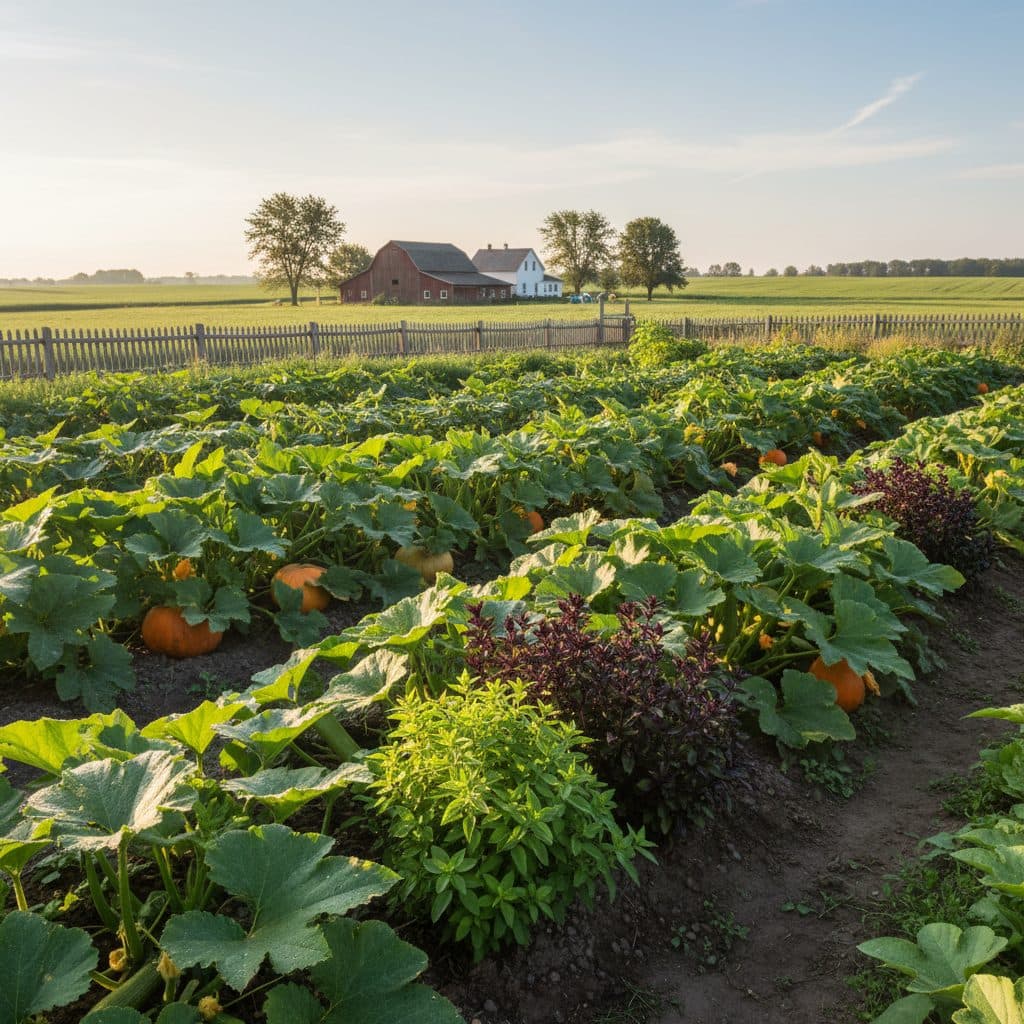
Key takeaways
- Downy mildew, caused by oomycetes like Pseudoperonospora cubensis and Peronospora belbahrii, thrives in cool, wet conditions, leading to significant crop damage.
- Early identification matters: watch for angular yellow spots on cucurbit leaves and dark, fuzzy growth on basil undersides, especially in humid regions.
- Cultural practices such as proper plant spacing (2-3 feet), morning watering, and good air circulation are fundamental to prevention.
- Selecting resistant varieties for both cucurbits (e.g., ‘SMR-58’ cucumber) and basil (e.g., ‘Prospera’ series) significantly reduces disease pressure.
- Organic treatments like copper-based fungicides or neem oil can help manage outbreaks when applied early and consistently, following label instructions.
- Integrated Pest Management (IPM) combines monitoring, cultural controls, and targeted treatments to minimize disease impact while supporting plant health.
Quick answer: Managing downy mildew on cucurbits and basil involves early identification, implementing cultural practices like proper spacing and morning watering, and using organic treatments such as copper-based fungicides or neem oil when necessary. These integrated strategies can significantly reduce crop loss in US gardens.
In many US growing regions, from the humid Southeast to the cooler Pacific Northwest, downy mildew poses a consistent threat to popular garden crops like cucurbits and basil. This aggressive disease, caused by water mold pathogens, can quickly devastate a harvest, turning lush green leaves into withered, brown foliage in a matter of weeks. For instance, in Punjab, India, cucurbit downy mildew prevalence was reported at 25-60%, a pattern echoed in many US states [5].
Understanding the life cycle of these pathogens and implementing proactive management strategies are essential for home gardeners and small-scale farmers. By focusing on prevention, selecting appropriate varieties, and employing organic treatments when necessary, growers can protect their yields. This guide offers practical, evidence-based advice to help you maintain healthy cucurbit and basil plants, even in challenging conditions, potentially saving 30% or more of your anticipated harvest.
Identifying downy mildew: cucurbits versus basil
Downy mildew is not a true fungus but an oomycete, a water mold that thrives in cool, moist conditions with temperatures between 50 and 70°F (10 and 21°C) and high humidity, often above 85%. On cucurbits like cucumbers, melons, and squash, the pathogen Pseudoperonospora cubensis causes characteristic angular yellow spots on the upper leaf surface, typically bordered by leaf veins [1]. These spots eventually turn brown and necrotic. On the underside of infected leaves, a fuzzy, purplish-gray growth—the pathogen’s spores—becomes visible, particularly in the morning when dew is present. In contrast, basil downy mildew, caused by Peronospora belbahrii, presents differently on sweet basil and holy basil. Initial symptoms include yellowing on the upper leaf surface, which can be mistaken for a nutritional deficiency, but upon closer inspection, dark, fuzzy spores appear on the undersides of the leaves [3]. This disease can spread rapidly, covering an entire basil plant in just five to seven days under favorable conditions.
Diagnostic features for early detection
Early detection is critical for managing downy mildew. For cucurbits, monitor older leaves first, as symptoms often appear there before spreading to younger foliage. In regions like the Mid-Atlantic, where morning dew is common, inspect plants between 6:00 AM and 9:00 AM for visible spore structures. For basil, pay close attention to any unexplained yellowing, especially if it progresses quickly across multiple leaves. A magnifying glass can help confirm the presence of the dark spores on the leaf undersides. If you suspect downy mildew, isolating affected plants or removing symptomatic leaves immediately can slow its spread, potentially limiting the impact to less than 10% of your crop.
- Cucurbits: Angular yellow spots on top, purplish-gray fuzzy growth underneath.
- Basil: Yellowing on top, dark, fuzzy spores on the underside.
- Timing: Most visible in cool, humid morning conditions.
- Spread: Rapid, often within five to seven days for basil.
- Location: Often starts on older leaves for cucurbits.
Prevention through cultural practices
Preventing downy mildew starts with creating an environment less favorable for its development. Since this disease thrives in moisture, managing water and air circulation is paramount. When planting cucurbits, ensure adequate spacing—at least three feet between plants for vining varieties and two feet for bush types—to promote good airflow and allow leaves to dry quickly after rain or irrigation. For basil, a spacing of 10 to 12 inches between plants is generally sufficient in USDA zones 6-9. Watering plants at the base in the morning, rather than overhead in the evening, allows foliage to dry before nightfall, significantly reducing leaf wetness periods that favor spore germination. In a study on downy mildew control, reducing leaf wetness by 30% through proper irrigation practices proved highly effective [2].
Optimizing garden conditions to deter disease
Crop rotation is another vital strategy. Planting cucurbits or basil in the same spot year after year can lead to a buildup of disease inoculum in the soil. A rotation cycle of at least three years, moving these crops to a different part of the garden, can break the disease cycle. Consider using raised beds, which can improve drainage and reduce soil splash, keeping leaves drier. In humid climates, like the Gulf Coast states, pruning lower leaves on cucurbit plants can further improve air circulation around the plant base. Using mulch, such as straw or wood chips, can also help reduce soil splash onto leaves, which can carry spores. These practices collectively can reduce disease incidence by 40% or more, contributing to healthier plants and better yields.
- Spacing: Three feet for vining cucurbits, two feet for bush varieties, 10-12 inches for basil.
- Watering: Water at the base in the morning to allow leaves to dry.
- Airflow: Ensure good air circulation around and within plants.
- Crop rotation: Implement a three-year rotation cycle for cucurbits and basil.
- Mulching: Use mulch to reduce soil splash and maintain soil moisture.
Resistant varieties: a primary defense
One of the most effective long-term strategies for managing downy mildew is selecting resistant varieties. For cucurbits, significant progress has been made in breeding cucumbers with resistance to Pseudoperonospora cubensis. Varieties like ‘SMR-58’, ‘Marketmore 76’, and ‘Dasher II’ have shown good resistance in field trials across the US, including in the humid conditions of the Southeast. These varieties can reduce the need for chemical interventions by up to 70%. For melons, look for varieties labeled as resistant, such as ‘Athena’ cantaloupe, which performs well in USDA zones 5-9. Squash varieties, while generally more susceptible, also have some options, though often with partial resistance. Always check seed catalogs for specific resistance ratings, often indicated by codes like ‘DM’ for downy mildew.
Basil varieties that stand up to downy mildew
Basil growers have also seen the introduction of new resistant varieties, a welcome development given how quickly the disease spreads. The ‘Prospera’ series, including ‘Prospera DMR’ and ‘Prospera Compact’, has demonstrated strong resistance to Peronospora belbahrii in trials conducted in states like New Jersey and California. Other resistant basil options include ‘Amazel Basil’ and ‘Everleaf Emerald Towers’. These varieties maintain their vigor and flavor even when susceptible plants nearby succumb to the disease, offering a yield advantage of 50% or more. When planning your garden, prioritize these resistant options, especially if you’ve experienced downy mildew in previous seasons. Combining resistant varieties with good cultural practices provides the strongest defense against this challenging pathogen.
- Cucumbers: ‘SMR-58’, ‘Marketmore 76’, ‘Dasher II’.
- Melons: ‘Athena’ cantaloupe.
- Basil: ‘Prospera DMR’, ‘Prospera Compact’, ‘Amazel Basil’, ‘Everleaf Emerald Towers’.
- Benefit: Reduces need for treatments by up to 70%.
- Availability: Check seed catalogs for ‘DM’ resistance ratings.
Organic treatments and integrated pest management
Even with the best cultural practices and resistant varieties, downy mildew can sometimes appear, especially during prolonged periods of cool, wet weather. When an outbreak occurs, organic growers have several options for treatment, though timing and consistent application are key. Copper-based fungicides are approved for organic use and can be effective if applied preventatively or at the very first sign of disease. For instance, a 0.5% copper solution applied weekly can provide protection. However, repeated use of copper can accumulate in the soil, so it should be used judiciously. Neem oil, derived from the neem tree, can also offer some suppressive effects, particularly by interrupting spore germination, and is generally applied at a 1% dilution every 7-10 days [2].
A holistic approach to disease management
Integrated Pest Management (IPM) for downy mildew involves a combination of strategies. This includes regular scouting of plants—at least twice a week—to catch symptoms early. Using organic fertilizers to maintain plant vigor can also help plants better withstand disease pressure, though it won’t prevent infection. If symptoms are localized to a few leaves, carefully remove and dispose of them to reduce inoculum. For severe outbreaks, particularly in greenhouse settings, increasing ventilation and reducing humidity to below 80% can slow disease progression significantly. Remember that no single treatment is a magic bullet; a layered approach using prevention, resistance, and targeted organic treatments offers the best chance of success, reducing crop losses to less than 15%.
- Copper fungicides: Apply 0.5% solution preventatively or at first sign.
- Neem oil: Use a 1% dilution every seven to ten days for suppressive effects.
- Scouting: Inspect plants twice weekly for early detection.
- Sanitation: Remove and dispose of infected leaves promptly.
- Environment: Reduce humidity below 80% in protected environments.
Distinguishing downy mildew from other issues
It’s easy to misdiagnose downy mildew, especially since its initial symptoms can resemble nutrient deficiencies or other fungal diseases. For example, powdery mildew, a true fungus, often appears as white, powdery spots on the upper leaf surface of cucurbits, which is distinctly different from the angular yellow spots and purplish-gray fuzzy growth of downy mildew [1]. Powdery mildew thrives in dry conditions with moderate humidity, often above 50%, whereas downy mildew prefers high humidity (above 85%) and cooler temperatures. Nutrient deficiencies, such as a lack of nitrogen or magnesium, can also cause yellowing of leaves, but these symptoms typically lack the distinct angular pattern or the fuzzy growth on the leaf undersides. For instance, magnesium deficiency often causes interveinal yellowing, but the veins remain green.
When to seek expert advice for plant diagnostics
If you’re unsure about a diagnosis, especially after observing symptoms for several days, consider sending a sample to your local university extension office. Most state extension services, like those in California or Florida, offer diagnostic services for a nominal fee, often between $15 and $30. They can accurately identify the pathogen and provide tailored recommendations for your specific region and crop. This can save you time and resources by preventing the application of ineffective treatments. Remember that accurate diagnosis is the first step in effective disease management, so you apply the right solution at the right time, potentially saving 20% of your crop that might otherwise be lost to misidentification.
- Powdery Mildew: White, powdery spots on upper leaf surface.
- Nutrient Deficiency: General yellowing, often interveinal, no fuzzy growth.
- Downy Mildew: Angular yellow spots, fuzzy growth on underside.
- Conditions: Downy mildew prefers cool, wet; powdery mildew prefers dry, moderate.
- Support: University extension services offer diagnostic help for a fee.
Resistant Cucurbit and Basil Varieties for US Gardens
Crop Type | Resistant Varieties | Key Features |
|---|---|---|
Cucumber | ‘SMR-58’, ‘Marketmore 76’, ‘Dasher II’ | Good resistance to Pseudoperonospora cubensis, suitable for various US climates. |
Melon | ‘Athena’ Cantaloupe | Known for downy mildew resistance, performs well in USDA zones 5-9. |
Basil | ‘Prospera DMR’, ‘Prospera Compact’, ‘Amazel Basil’, ‘Everleaf Emerald Towers’ | Strong resistance to Peronospora belbahrii, maintains flavor and vigor. |
Disease Spread: Downy mildew spores can travel hundreds of miles on wind currents, making regional monitoring crucial for early warnings in areas like the Northeast.
Humidity Threshold: Maintaining relative humidity below 80% in greenhouses or high tunnels can significantly inhibit downy mildew spore production and spread, protecting up to 60% of crops.
Frequently asked questions
What conditions favor downy mildew on cucurbits and basil?
Downy mildew thrives in cool, moist conditions with temperatures between 50 and 70°F (10 and 21°C) and high relative humidity, often above 85%. Prolonged leaf wetness, typically for four to six hours, also matters for spore germination and infection.
Can downy mildew overwinter in my garden soil?
Generally, the downy mildew pathogens that affect cucurbits (Pseudoperonospora cubensis) and basil (Peronospora belbahrii) do not overwinter in soil in most US regions. They primarily survive as spores that are blown in from warmer climates or on infected plant debris, but not typically as persistent soilborne inoculum. However, a three-year crop rotation is still recommended to break potential disease cycles.
Are there any organic sprays that can cure downy mildew?
Organic sprays like copper-based fungicides or neem oil can help manage and suppress downy mildew, but they are generally more effective as preventative measures or when applied at the very first signs of disease. They do not ‘cure’ an advanced infection but can protect new growth and slow the spread. Consistent application, often weekly, is required to maintain protection.
How can I distinguish downy mildew from powdery mildew on my plants?
Downy mildew typically causes angular yellow spots on the upper leaf surface and fuzzy purplish-gray (cucurbits) or dark (basil) growth on the underside of leaves. Powdery mildew, conversely, appears as white, powdery patches primarily on the upper leaf surface. Downy mildew prefers cool, wet conditions, while powdery mildew favors dry, moderate conditions. A simple visual check of the leaf undersides can often confirm the difference within 90% accuracy.
What is the most effective prevention method for downy mildew?
The most effective prevention combines several strategies: selecting resistant varieties, ensuring proper plant spacing (e.g., 2-3 feet for cucurbits), watering at the base in the morning, and practicing a three-year crop rotation. These cultural practices collectively reduce the conditions favorable for disease development and can prevent up to 70% of potential infections.
References
- Downy mildew of cucurbits. (2018). Downy mildew of cucurbits..
- Chemical control of Downy mildew of Cucurbits (2012). Chemical control of Downy mildew of Cucurbits.
- Downy Mildew on Basil in the Greenhouse (2024). Downy Mildew on Basil in the Greenhouse.
- Downy mildew of cucurbits (2010). Downy mildew of cucurbits.
- Distribution and Prevalence of Downy Mildew Disease on Cucurbits in Punjab (2023). Distribution and Prevalence of Downy Mildew Disease on Cucurbits in Punjab.
- USDA Natural Resources Conservation Service (2024). USDA Natural Resources Conservation Service.