Key takeaways
- Pill bugs and sowbugs are crustaceans, not insects, and primarily consume decaying organic matter, improving soil structure.
- Earwigs are insects that eat decaying plants, fungi, and small insect pests like aphids, providing natural pest control.
- High populations of these creatures, often in damp conditions, can lead to damage on tender seedlings, soft fruits, or root vegetables.
- Integrated pest management (IPM) focuses on habitat modification, moisture control, and physical barriers to manage populations.
- Monitoring is key; a population of five to ten pill bugs per square foot is generally considered normal and beneficial.
- Organic strategies like trapping with overturned pots or creating dry zones can effectively reduce localized damage without harming beneficial soil life.
Quick answer: Earwigs, pill bugs, and sowbugs are primarily beneficial decomposers that improve soil health and control pests, but high populations can damage young plants and soft fruits. Integrated pest management focuses on habitat modification and moisture control to manage their numbers.
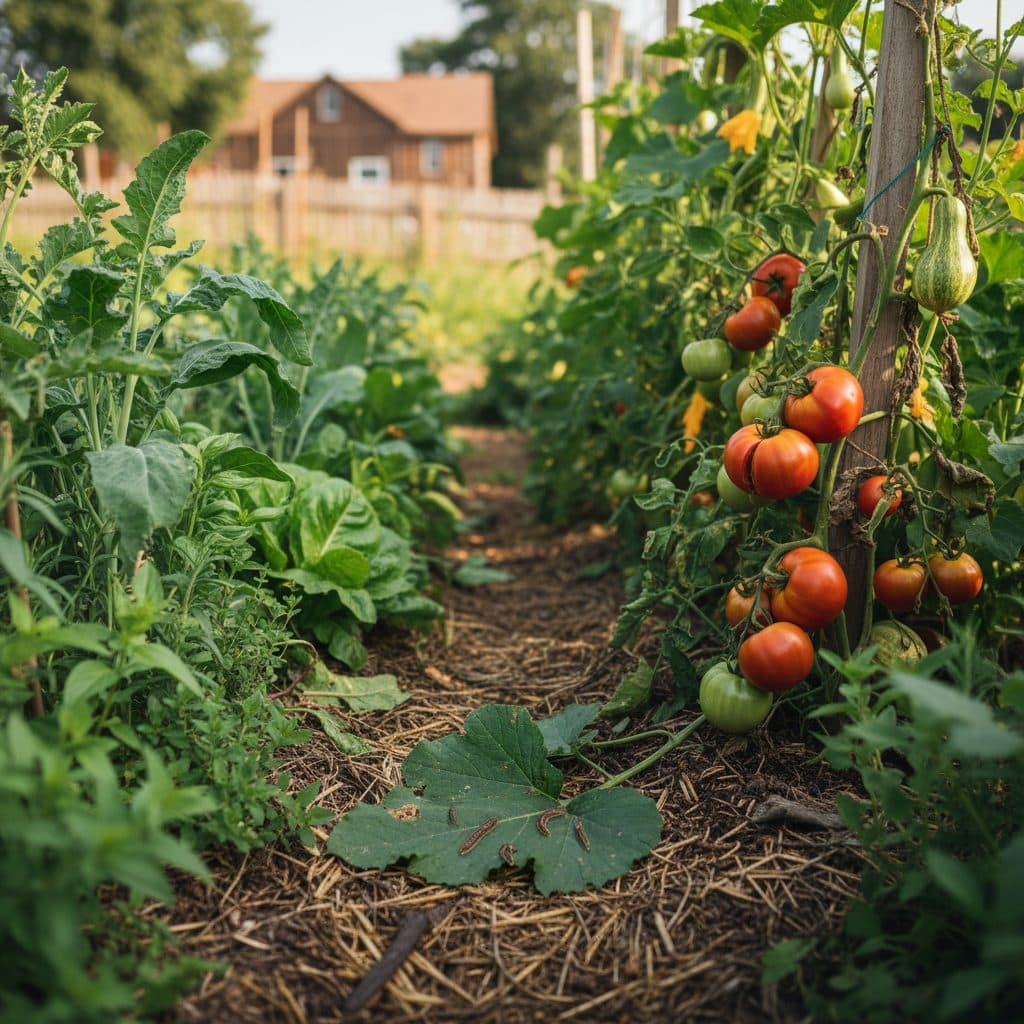
Across the United States, from the humid gardens of Florida to the dry plains of Colorado, growers often encounter small, multi-legged creatures scurrying under rocks or leaf litter. Earwigs, pill bugs, and sowbugs are common residents in many garden soils, especially where moisture is consistent and organic matter is abundant. In a typical USDA zone 7 garden, you might find dozens of these arthropods per square foot of healthy soil, each playing a role in the complex web of garden life.
Understanding whether these creatures are helping or harming your crops is crucial for maintaining a productive garden. While they are often beneficial decomposers, breaking down plant debris and contributing to soil health, their populations can sometimes surge, leading to damage on vulnerable plants. This article will help you differentiate between these common garden inhabitants, recognize their valuable contributions, and implement practical strategies if their numbers exceed beneficial levels, potentially impacting up to 10% of your harvest.
Who are these common garden arthropods?
When you lift a rock or a piece of wood in your garden, you are likely to find a variety of small, segmented creatures. Identifying these arthropods is the first step in understanding their role. Pill bugs (Armadillidium vulgare), also known as roly-polies, are terrestrial crustaceans, not insects, and can roll completely into a tight ball when disturbed, a defense mechanism that protects their soft undersides. They typically measure about one-half inch in length and have seven pairs of legs [1].
distinguishing sowbugs from pill bugs
Sowbugs (Porcellionidae family) are closely related to pill bugs but cannot roll into a complete ball. They are generally flatter and have two prominent tail-like appendages, called uropods, extending from their rear segment, which pill bugs lack. Both pill bugs and sowbugs prefer damp, dark environments and are primarily detritivores, consuming decaying plant material and fungi, which helps break down organic matter in the soil. Research shows pill bugs can make decisions and anticipate environmental changes, navigating complex spaces over 20 minutes [3].
- Pill bugs: Can roll into a tight ball, no tail-like appendages.
- Sowbugs: Cannot roll into a ball, possess two distinct tail-like appendages.
- Earwigs: Have prominent pincers (cerci) at their rear, typically one-half to one inch long.
- All three: Prefer moist, dark habitats and are often found under debris.
The beneficial roles in your garden
Despite their sometimes-unwanted presence, these arthropods provide significant benefits to garden ecosystems. Pill bugs and sowbugs are important decomposers that break down dead plant material, fallen leaves, and other organic debris. This process returns nutrients to the soil, improving its structure and fertility. In a one-acre garden, these crustaceans can process up to 100 pounds of organic matter annually, contributing to a healthier soil profile. This activity supports the overall organic gardening soil ecosystem, making nutrients available for your plants.
earwigs as natural pest controllers
Earwigs, while sometimes viewed as pests, are often beneficial predators. They feed on a variety of soft-bodied insects, including aphids, slugs, and insect eggs. In some agricultural studies, earwigs have been observed consuming up to 50 aphids per day, providing a natural form of pest control that reduces reliance on sprays. They also consume fungi and decaying plant material, further contributing to decomposition. For example, in apple orchards in the Pacific Northwest, earwigs can reduce woolly apple aphid populations by 30% to 40%.
- Decomposition: Pill bugs and sowbugs break down dead plant material, enriching soil.
- Nutrient cycling: They release nutrients back into the soil, making them available for plant uptake.
- Pest predation: Earwigs consume aphids, mites, and other small insect pests.
- Fungal control: Earwigs also feed on various fungi, potentially limiting plant disease spread.
- Soil aeration: Their movement through the soil can contribute to minor aeration.
When populations become problematic
While generally beneficial, populations of earwigs, pill bugs, and sowbugs can sometimes explode, especially in conditions of high moisture and abundant organic debris. When their primary food sources—decaying matter—become scarce, or their numbers are excessively high, they may turn to living plant tissue. This is particularly true for tender seedlings, young transplants, and soft fruits like strawberries or tomatoes that are in contact with the soil. Damage often appears as ragged holes in leaves or superficial feeding on fruit surfaces. In some cases, up to 20% of a strawberry crop can be damaged by pill bugs in very wet conditions [2].
identifying damage and triggers
Damage from these creatures is usually most noticeable at night, as they are nocturnal. Look for small, irregular holes in leaves, especially on plants like lettuce, basil, or beans. On fruits, you might see shallow gouges or chewed areas. In a garden with a population density exceeding 20 individuals per square foot, the risk of damage to vulnerable plants increases significantly. High humidity, heavy mulching (more than 4 inches deep), and poor drainage create ideal breeding grounds, allowing populations to reach problematic levels. For example, in a raised bed with consistent overhead watering, you might observe a 3x increase in pill bug activity.
- Tender seedlings: Young plants are most vulnerable to feeding damage.
- Soft fruits: Strawberries, melons, and tomatoes resting on soil are susceptible.
- Root vegetables: Carrots, potatoes, and radishes can be nibbled below ground.
- High humidity: Creates ideal conditions for population growth, especially above 80% relative humidity.
- Excessive mulch: Thick layers of organic mulch provide shelter and moisture, attracting large numbers.
Integrated pest management strategies
When earwig, pill bug, or sowbug populations start causing noticeable damage, an integrated pest management (IPM) approach is the most effective and sustainable solution. The goal isn’t eradication, but rather population management to reduce damage to acceptable levels, often below 5% of the crop. This starts with cultural practices that modify their habitat. Reducing excessive moisture is key; improve drainage, water in the morning so surfaces dry by evening, and avoid overwatering. Consider reducing mulch thickness to 2 inches around vulnerable plants, especially in USDA zones with high rainfall, such as the Pacific Northwest.
physical barriers and traps
Creating physical barriers can protect young plants. A 2-inch wide band of diatomaceous earth around plant bases can deter crawling pests. For individual plants, plastic collars or copper tape can be effective. Traps are also a useful tool for monitoring and reducing localized populations. Overturned melon rinds, damp newspaper rolls, or shallow dishes of beer sunk into the soil can attract and trap dozens of these creatures overnight. For example, a single beer trap can capture up to 50 pill bugs in a 24-hour period. Regularly checking and emptying these traps, ideally every two days, can significantly reduce numbers in problem areas. You might also consider using Fermented Soybean Meal Organic Fertilizer to promote healthy soil, reducing stress on plants that might otherwise be more susceptible.
- Reduce moisture: Improve drainage and water in the morning to allow surfaces to dry.
- Manage mulch: Keep mulch layers thin (1-2 inches) around sensitive plants.
- Physical barriers: Use diatomaceous earth, copper tape, or plant collars.
- Trapping: Employ overturned citrus rinds, damp newspaper, or beer traps.
- Remove debris: Clear away excess leaf litter, boards, and stones where they hide.
Maintaining a balanced garden ecosystem
A healthy garden ecosystem naturally keeps most pest populations in check, including earwigs, pill bugs, and sowbugs. By focusing on soil health and biodiversity, you create an environment where these creatures can fulfill their beneficial roles without becoming a nuisance. Incorporating organic matter, such as compost, into your soil supports a diverse community of microorganisms and macroorganisms, ensuring a steady supply of decaying food for detritivores. This can be supported by practices described in organic gardening fertilizer guides.
encouraging natural predators
Many beneficial insects and small animals prey on earwigs, pill bugs, and sowbugs. Ground beetles, spiders, toads, and birds all contribute to keeping their numbers balanced. Providing habitat for these predators, such as diverse plantings, perennial borders, and a source of water, can significantly reduce pest pressure. For instance, a garden with a healthy population of ground beetles can see a 25% reduction in pill bug numbers over a growing season. Avoid broad-spectrum pesticides, which can harm these beneficial predators and interrupt the natural balance, potentially leading to a resurgence of pest populations within a few weeks.
- Soil health: Enrich soil with compost to support a diverse microbial community.
- Biodiversity: Plant a variety of species to attract beneficial insects and wildlife.
- Predator habitat: Provide shelter and water for ground beetles, spiders, and birds.
- Avoid pesticides: Broad-spectrum chemicals harm beneficial organisms, interrupting natural controls.
- Crop rotation: Rotate crops to break pest cycles and improve soil structure by 15% to 20%.
Key Differences: Earwigs, Pill Bugs, and Sowbugs
Characteristic | Earwigs | Pill Bugs | Sowbugs |
|---|---|---|---|
Type | Insect | Crustacean (Isopod) | Crustacean (Isopod) |
Rolling ability | No | Yes (into a ball) | No |
Rear appendages | Pincers (cerci) | None visible | Two tail-like (uropods) |
Legs | Six | Fourteen (seven pairs) | Fourteen (seven pairs) |
Typical size | 0.5 – 1 in | 0.25 – 0.5 in | 0.25 – 0.6 in |
Pill bug lifespan: Pill bugs can live for up to three years, undergoing 4-5 molts per year as they grow.
Earwig diet diversity: Earwigs have a diverse diet, consuming over 40 different types of plant material and small insects.
Sowbug moisture needs: Sowbugs require high humidity, typically above 75%, to survive, making them sensitive to dry conditions.
Explore organic garden solutions
Frequently asked questions
Are pill bugs and sowbugs harmful to humans or pets?
No, pill bugs and sowbugs are harmless to humans and pets. They do not bite, sting, or carry diseases, and they are not poisonous if ingested. They are primarily scavengers, focusing on decaying plant material, and pose no direct threat to your family or animals in the garden.
How can I tell if earwigs are eating my plants or other pests?
Earwigs are omnivores. If you see them on plants with ragged holes, especially at night, they might be feeding on the plant. However, if you also have aphid infestations, they could be consuming those pests. Observing their behavior over a few nights, or checking for pest populations, can help determine their primary activity. Typically, if plant damage is minor, less than 5% of foliage, they are likely more beneficial.
What is the best way to reduce earwig populations without chemicals?
The best non-chemical method involves trapping and habitat modification. Roll up damp newspapers or place overturned flower pots filled with straw near affected plants; earwigs will hide in them during the day. Collect and dispose of the trapped insects daily. Reducing damp debris and excess mulch by 2-3 inches also helps, as they prefer moist, dark hiding spots.
Do pill bugs and sowbugs eat plant roots?
Generally, pill bugs and sowbugs prefer decaying organic matter and are unlikely to eat healthy plant roots. However, in very high populations (over 25 per square foot) and extremely dry conditions where other food sources are scarce, they might nibble on tender root hairs, especially on seedlings or shallow-rooted plants. Ensuring consistent moisture and ample organic matter usually prevents this.
Can I use neem oil to control these pests?
While neem oil can deter some pests, it’s not typically the primary or most effective solution for earwigs, pill bugs, or sowbugs, as they are not insects in the same way aphids or squash bugs are. Neem oil works best on chewing and sucking insects. For these detritivores, cultural controls and traps are usually more effective and targeted, especially since neem oil can affect beneficial insects if not applied carefully, as detailed in <a href=”https://agripure.org/articles/neem-oil-for-plants”>Neem oil for plants</a>.
References
- Pill Bugs (2022). Pill Bugs.
- Pesky Pill Bugs (2021). Pesky Pill Bugs.
- Decision-making and Anticipation in Pill Bugs (Armadillidium vulgare) (2004). Decision-making and Anticipation in Pill Bugs (Armadillidium vulgare).
- From the lab into the world: A pill for people, pets & bugs (1995). [From the lab into the world: A pill for people, pets & bugs](https://doi.org/10.1016/0160-9327(95)90083-7).
- Exploration of Environment by AntennaeWearing Teflon Tubes in Pill Bugs (2010). Exploration of Environment by AntennaeWearing Teflon Tubes in Pill Bugs.
- USDA Natural Resources Conservation Service (2024). USDA Natural Resources Conservation Service.