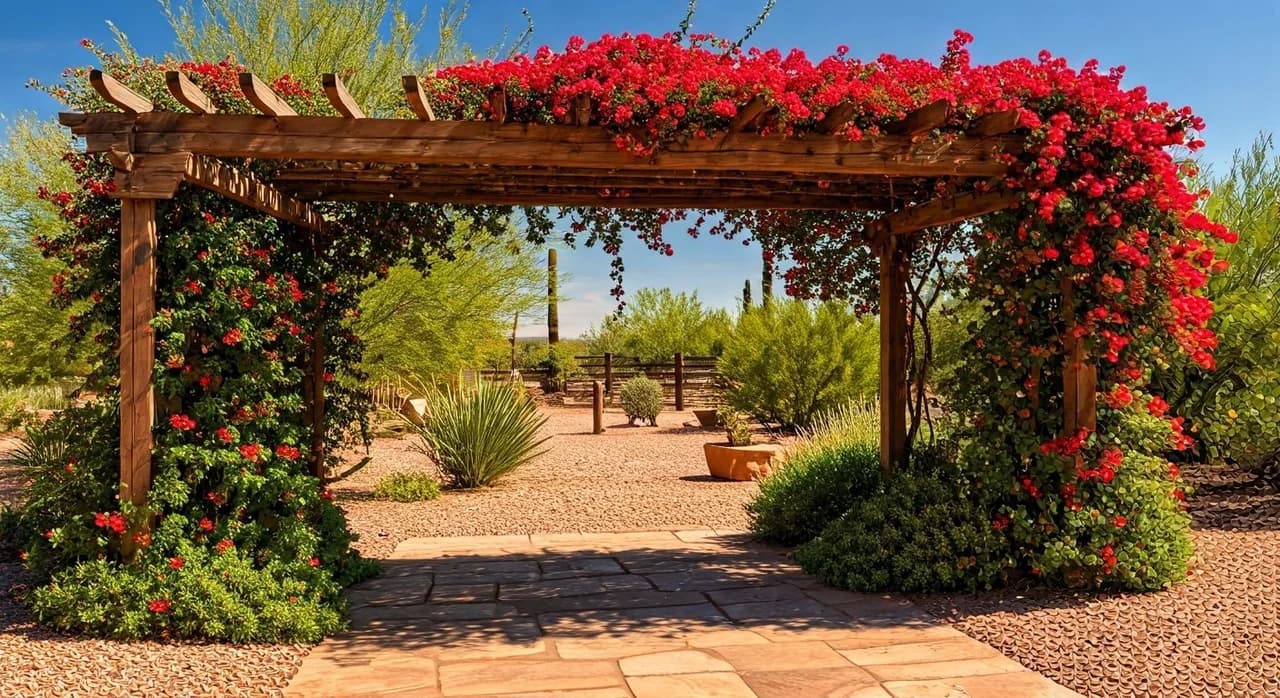
Key takeaways
- Select vines suited for USDA Zones 7-10, prioritizing heat and drought tolerance for the Southwest.
- Understand climbing mechanisms—twiners, tendrils, scramblers, and clinging roots—to match plants with structures like fences and pergolas.
- Prepare soil with organic matter to improve water retention and drainage in arid regions.
- Provide consistent deep watering during the first growing season, then reduce frequency for established, drought-tolerant species.
- Prune regularly to manage growth, encourage flowering, and maintain plant health and structural integrity.
- Consider plant mature size and vigor; some fast growers can overwhelm structures if not managed.
Quick answer: Vigorous climbers like Lady Banks’ Rose and grapevines thrive in the Southwest’s 100-degree summers, offering shade and privacy. These plants are heat and drought-tolerant, suitable for USDA Zones 7-10.
In the arid landscapes of Arizona, Nevada, and parts of California, where summer temperatures often exceed 100 degrees Fahrenheit, selecting the right plants for fences and pergolas is a practical decision. These structures, common on homesteads and in residential settings, serve multiple purposes, from defining property lines to providing essential shade [1, 2]. Plants for these structures need specific adaptations to heat and drought so they thrive in these harsh conditions, not just survive them.
This guide focuses on fast-growing, resilient climbers that offer functional benefits like privacy, shade, and aesthetic appeal without demanding excessive water once established. We’ll explore several species well-suited for USDA Zones 7 through 10, providing concrete advice on how to integrate them into your Southwest landscape for maximum benefit and minimal fuss.
Understanding southwest growing conditions for climbers
The Southwest presents a unique set of challenges for plant growth, primarily defined by intense solar radiation, high temperatures, and low annual rainfall. Many regions receive less than 15 inches of rain per year, making drought tolerance a critical factor for plant survival. Soil types vary, but often include sandy or rocky compositions with rapid drainage, which can be both a blessing and a curse for water management. Understanding these conditions, especially within USDA Zones 7 to 10, is the first step in successful plant selection [6].
Types of climbing plants and their needs
Climbing plants employ various methods to ascend structures, and matching the plant’s climbing mechanism to your fence or pergola is critical for success. For instance, some vines, like Fig Vine, use clinging rootlets to attach directly to surfaces, which can be effective on solid walls but might damage some fence materials [1]. Others, such as grapevines, rely on tendrils to wrap around supports, while roses are often scramblers, needing to be tied or woven through structures. Consider the long-term structural integrity of your fence or pergola; a mature vine weighing hundreds of pounds will require sturdy support, as discussed in detail in our article on farm infrastructure design.
- Twiners: Wrap their stems around supports, like Wisteria.
- Tendrils: Small, specialized structures that coil around thin supports, such as Crossvine.
- Clinging Rootlets: Attach directly to surfaces, like Fig Vine, potentially damaging paint or mortar.
- Scramblers: Use thorns or stiff stems to lean and hook onto structures, requiring tying, like Lady Banks’ Rose.
- Adhesive Discs: Similar to clinging rootlets but with disc-like pads, less common for these plants.
Top five fast-climbing plants for southwest fences
When selecting plants for fences, the goal is often rapid coverage for privacy or aesthetic appeal. The following five species are known for their vigorous growth and resilience in the hot, dry conditions of the Southwest, generally thriving in USDA Zones 7-10. Each offers unique characteristics suitable for different fence types and desired outcomes, often growing to a significant length within a few years if given adequate support and initial care.
Lady banks’ rose (rosa banksiae)
This thornless rose is a true workhorse for fences, growing vigorously once established. It can reach a mature size of 20 feet tall and 30 feet wide, providing a dense screen of small, yellow or white flowers in spring. Lady Banks’ Rose is remarkably drought-tolerant and prefers full sun, making it ideal for the Southwest. It’s a scrambler, meaning it will need some initial training and tying to a fence structure, but its lack of thorns makes this task relatively easy. This rose is also considered deer-resistant, a useful trait in many areas, as noted in our deer-resistant plant guide.
- Growth Rate: 15-20 feet per year.
- Mature Size: Up to 20 feet tall, 30 feet wide.
- USDA Zones: 6-9.
- Water Needs: Low once established, tolerates dry conditions.
- Support Type: Scrambler, needs tying to a fence or trellis.
Top five fast-climbing plants for southwest pergolas
Pergolas are designed to provide shade and create inviting outdoor spaces, making plant selection critical for effective coverage [3]. The best climbers for pergolas offer dense foliage, can withstand the weight of their own growth, and tolerate the intense sun exposure typical of the Southwest. These plants generally thrive in USDA Zones 7-10 and can quickly transform an open structure into a shaded retreat, often covering a 10-foot by 10-foot pergola within three to five years.
Grape (vitis spp.)
Grapes are an excellent choice for pergolas, offering dense shade and edible fruit. Varieties like ‘Flame Seedless’ or native Vitis species are well-suited for the Southwest, tolerating temperatures up to 105 degrees Fahrenheit. They are vigorous growers, and their large leaves provide substantial shade. Grapes are tendril climbers, needing sturdy wires or wooden slats for their tendrils to grasp. Proper pruning is essential for both fruit production and maintaining the plant’s structure on the pergola so it doesn’t become too heavy or unruly.
- Growth Rate: 10-15 feet per year.
- Mature Size: Can cover a 20-foot by 20-foot area.
- USDA Zones: 5-9 (varies by species).
- Water Needs: Moderate once established, deep watering every 7-10 days in summer.
- Support Type: Tendrils, requires strong wires or slats.
Water-wise planting and establishment
Even drought-tolerant plants require careful attention during their establishment phase, typically the first one to two years after planting. Proper soil preparation matters in the Southwest’s often poor soils. Amending the planting hole with organic matter, such as compost, will improve both water retention in sandy soils and drainage in heavy clay soils. This initial investment in soil health can significantly reduce future water requirements and plant stress. For example, adding 1 cubic foot of compost to a 2-foot wide planting hole can significantly improve water holding capacity.
Watering schedules for arid climates
During the first growing season, deep, infrequent watering is more effective than shallow, frequent watering. Aim to water deeply, encouraging roots to grow downwards where soil moisture is more consistent. For a newly planted vine, this might mean applying a significant amount of water several times a week during peak summer heat in USDA Zones 8-10. As the plant matures, reduce the frequency. An established Lady Banks’ Rose, for instance, might only need deep watering every two to three weeks during the hottest months, or even less if monsoon rains occur. A soil moisture meter can be an invaluable tool to accurately assess when your plants truly need water, preventing both over and under-watering.
- Initial Watering: 5-10 gallons per plant, 2-3 times per week for the first 3 months.
- Established Watering: Deep watering every 2-4 weeks, depending on species and local rainfall.
- Soil Amendments: Incorporate 25-50% organic compost into planting holes.
- Mulching: Apply a 3-4 inch layer of organic mulch to conserve soil moisture.
- Drip Irrigation: Consider drip systems for efficient water delivery, reducing water waste.
Long-term care and maintenance
Once established, even the most resilient climbers require ongoing care to maintain their health, vigor, and desired form. This includes regular pruning, pest and disease monitoring, and occasional fertilization. Proper maintenance ensures your plants continue to provide the privacy and shade you intended for many years, often for 15 to 25 years or more for well-cared-for vines. Neglecting these tasks can lead to overgrown, unhealthy plants that fail to meet their functional purpose.
Pruning for health and structure
Pruning is perhaps the most critical long-term maintenance task for climbing plants. For vigorous growers like Bougainvillea or Grape, annual pruning can remove a significant portion of the previous year’s growth. This promotes new flowering wood, manages size, and prevents the plant from becoming a tangled mess or overwhelming its support structure. For example, grapes are typically pruned in late winter, removing up to 90% of the previous season’s growth to maximize fruit production and maintain an open canopy. Always use sharp, clean tools to prevent disease transmission and make clean cuts, and consider the plant’s natural growth habit—some bloom on old wood, others on new—to ensure you don’t remove future flowers. Regular inspection for pests, such as spider mites which thrive in dry, hot conditions, can prevent major infestations that might otherwise require significant intervention.
- Annual Pruning: Remove 30-50% of growth for vigorous vines to maintain shape and encourage blooms.
- Timing: Prune most flowering vines after they bloom; deciduous vines like grapes in late winter.
- Support Checks: Inspect fences and pergolas annually for damage from vine weight or wind, especially after 5-7 years.
- Fertilization: Apply a balanced, slow-release fertilizer (e.g., 5-10-5) once in spring, especially for fruiting vines.
- Pest Monitoring: Regularly check for common Southwest pests like spider mites or aphids, particularly under leaves.
Comparison of Fast Climbers for Southwest Fences and Pergolas
Plant Name | USDA Zones | Growth Rate (ft/year) | Climbing Type | Drought Tolerance |
|---|---|---|---|---|
Lady Banks’ Rose | 6-9 | 15-20 | Scrambler | High |
Carolina Jessamine | 7-10 | 10-15 | Twining | Medium-High |
Bougainvillea | 9-11 | 8-12 | Scrambler (thorny) | High |
Crossvine | 6-9 | 10-20 | Tendrils | High |
Grape (Vitis spp.) | 5-9 | 10-15 | Tendrils | Medium-High |
Fig Vine (Ficus pumila) | 8-10 | 10-15 | Clinging Rootlets | Medium |
Southwest Zones: Most arid Southwest regions fall within USDA Plant Hardiness Zones 7 to 10, experiencing average minimum winter temperatures ranging from 0°F to 40°F.
Water Savings: Established drought-tolerant vines can significantly reduce their water needs compared to their first year of planting.
Shade Impact: A mature vine on a pergola can significantly reduce the surface temperature of a patio on a hot day.
References
- Clinging Rootlets, Creepers, Twiners, Tendrils, and Scrambling Climbers (2011).
- Fences and Between Fences: Cultural, Historical, and Smithsonian Perspectives (2008).
- Pergolas: Functions, Forms, and Construction Elements (2011).
- Walls and Fences: Perspectives from Universities and Museums (2008).
- Mountain Climbers (2022).
- USDA Natural Resources Conservation Service (2024).