Key takeaways
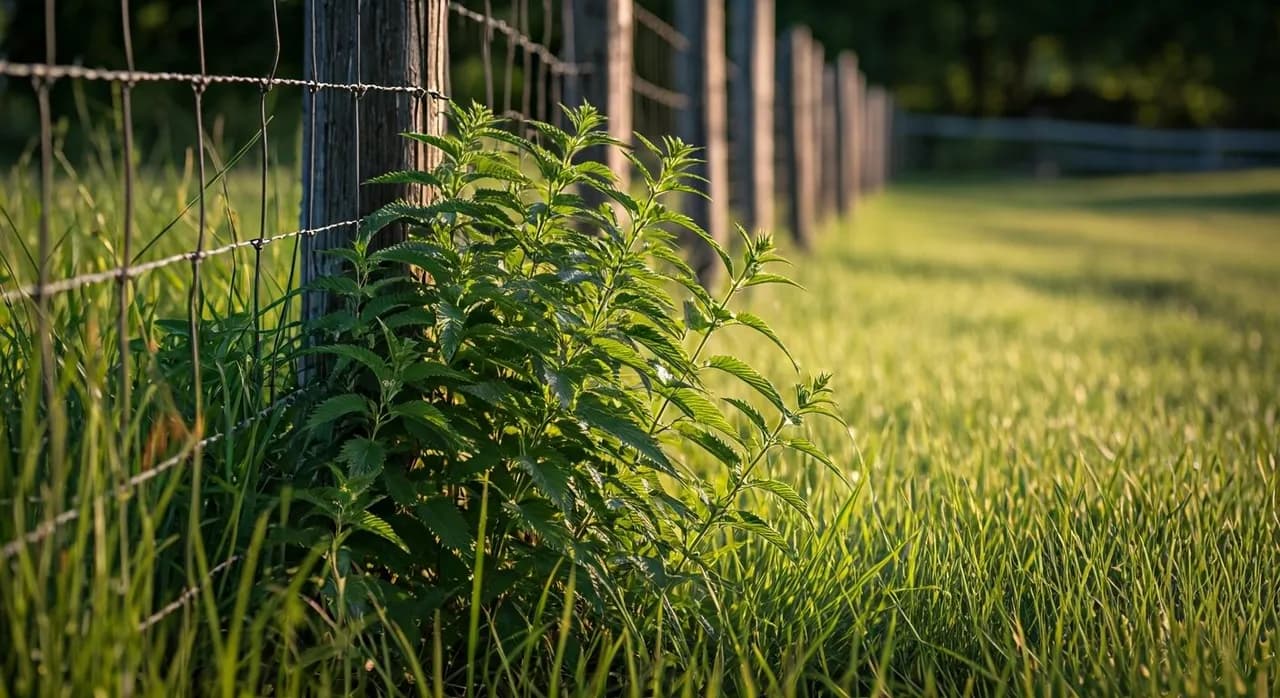
- Stinging nettle (Urtica dioica) has opposite leaves and potent stinging hairs on stems and undersides.
- Wood nettle (Laportea canadensis) has alternate leaves and a less severe sting, typically found in moist, shaded areas.
- Always wear gloves when handling nettles to prevent contact with irritating trichomes, which contain histamine.
- Cooking or drying nettles effectively neutralizes their stinging compounds, making them safe to eat.
- Distinguish nettles from toxic look-alikes like white snakeroot by examining leaf arrangement, stem shape, and hair presence.
- Stinging nettle is a good source of vitamins A, C, and K, with a 100-gram serving offering significant nutrients.
Quick answer: Stinging nettle (Urtica dioica
) has opposite leaves and potent stinging hairs on stems and undersides, growing 3-7 feet tall. Wood nettle (Laportea canadensis
) has alternate leaves, a milder sting, and typically grows 2-4 feet tall in moist, shaded areas.
Across the eastern United States, from the humid Appalachian foothills to the temperate Pacific Northwest, wild edibles offer a diverse bounty for the informed forager. In states like Pennsylvania and Oregon, where woodlands are abundant, understanding plant identification matters for safety. Two common plants, stinging nettle (Urtica dioica) and wood nettle (Laportea canadensis), are often found in similar habitats, offering nutritional benefits but demanding careful identification to avoid unpleasant stings or, worse, ingesting toxic look-alikes.
This guide aims to provide clear, practical distinctions between these two nettle species and their common doppelgangers. With proper knowledge, you can confidently identify, harvest, and prepare these nutritious plants across USDA zones 3 through 9, where stinging nettle thrives.
Identifying the true stinging nettle
In many parts of the United States, particularly across the Pacific Northwest and northeastern states, stinging nettle (Urtica dioica) is a common sight, often growing in dense patches along stream banks and disturbed areas. This perennial plant can reach impressive heights, typically ranging from 3 to 7 feet tall, and is easily recognized by its characteristic stinging hairs [1]. These tiny, hollow structures, known as trichomes, cover the stems and the undersides of the leaves, injecting irritating compounds like histamine and acetylcholine upon contact, causing a temporary but noticeable sting that can last for a period of time [5]. Foragers in USDA zones 3 through 9 should become familiar with its distinct features before attempting to harvest this nutritious wild edible.
Physical characteristics and habitat
Stinging nettle leaves are typically dark green, heart-shaped to lanceolate, and deeply serrated along their margins, growing opposite leaves along the stem. The stems are usually roundish, though sometimes slightly angled, and covered with those tell-tale stinging hairs. It prefers nitrogen-rich, moist soils and partial shade, often found near old homesteads or along woodland edges where the soil has been disturbed. In a single acre, you might find hundreds of plants, each offering a wealth of vitamins A, C, and K, along with significant amounts of iron and calcium [1]. When harvesting, always wear thick gloves and long sleeves to protect your skin, as even a brush against the plant can result in an uncomfortable encounter. The young leaves, often the top 4-6 inches of the plant, are the most tender and flavorful for culinary use.
- Look for opposite leaves on the stem.
- Observe serrated leaf margins and a heart-shaped to lanceolate form.
- Confirm the presence of stinging hairs on stems and leaf undersides.
- Note the plant’s height, often between 3 and 7 feet.
- Check its habitat: moist, nitrogen-rich soil in disturbed areas.
Distinguishing wood nettle from its stinging cousin
While stinging nettle is widespread, its close relative, wood nettle (Laportea canadensis), is primarily found in the eastern half of North America, particularly abundant in the moist, shaded woodlands of the mid-Atlantic states and the Ohio River Valley. Unlike Urtica dioica, wood nettle prefers deep shade and rich, damp soils, often growing in floodplains or along shaded stream banks where sunlight penetration is low. This native perennial typically grows to a height of 2 to 4 feet, making it generally shorter than the common stinging nettle. Its sting, while present, is often described as a less potent sting than that of its more famous cousin, usually causing a milder irritation that subsides relatively quickly.
Key differences and edibility
The most significant identifying feature of wood nettle is its alternate leaf arrangement—the leaves grow one at a time, alternating sides along the stem, rather than directly opposite each other. Its leaves are broadly ovate to heart-shaped, with coarsely toothed margins, and may appear somewhat thinner than stinging nettle leaves. While it does possess stinging hairs, they are typically less numerous and concentrated more on the stems and leaf petioles than on the leaf blades themselves. Wood nettle is edible and can be prepared similarly to stinging nettle, requiring cooking to neutralize its mild sting. In many states like West Virginia, foragers appreciate its tender young shoots and leaves, which can be harvested from late spring through early summer, yielding several pounds per patch.
- Look for alternate leaf arrangement along the stem.
- Note the plant’s preference for deep shade and moist, rich soils.
- Observe its typical height of 2 to 4 feet.
- Feel for stinging hairs primarily on stems and leaf petioles.
- Identify broadly ovate leaves with coarse teeth.
Avoiding toxic look-alikes
Accurate identification is paramount when foraging, as several plants can be mistaken for nettles, some of which are toxic. One of the most common look-alikes is Dead Nettle (Lamium purpureum or Lamium album), a member of the mint family. Dead nettle is widespread across the US, often found in gardens and disturbed areas, and while it is edible, it lacks the nutritional punch of true nettles. A key distinguishing feature is its square stem, a characteristic shared by all mints, which is easily felt by rolling the stem between your fingers. True nettles, both stinging and wood, have roundish stems. Dead nettle also lacks stinging hairs entirely, hence its name, and typically grows much shorter, often only 6 to 18 inches tall.
Differentiating from dangerous plants
A more dangerous look-alike, particularly for its toxic properties, is White Snakeroot (Ageratina altissima). This plant, common in eastern and central US woodlands, can cause severe illness if ingested. While its leaves can sometimes resemble nettle leaves in shape and serration, White Snakeroot has a distinct cluster of white flowers that bloom in late summer and early fall, and its leaves are typically arranged oppositely, but they lack any stinging hairs. The plant can grow several feet tall. Always confirm the presence of stinging hairs for true nettles and avoid any plant that lacks them but otherwise resembles nettle, especially if it has white flowers. Another plant sometimes confused is wild grape, but its tendrils and woody vines are unmistakable; you can learn more about it at https://agripure.org/plants/vitis-parvifolia. For other common wild edibles, consider exploring resources like https://agripure.org/plants/oxalis-corniculata for Indian Wood-Sorrel, which is also widely distributed. Always err on the side of caution; if you are unsure about a plant’s identity, do not consume it. Foraging beginners should always consult a reliable field guide or an experienced local forager before harvesting any wild plant, particularly in regions like the Great Lakes states where biodiversity is high.
- Check for a square stem (Dead Nettle) versus a roundish stem (true nettles).
- Confirm the absence of stinging hairs (Dead Nettle, White Snakeroot).
- Look for white flower clusters in late summer (White Snakeroot).
- Note the typical height: 6-18 inches for Dead Nettle, 3-5 feet for White Snakeroot.
- Examine leaf arrangement and overall growth habit carefully.
Harvesting and preparing nettles safely
Once you have confidently identified stinging nettle or wood nettle, the next step is safe harvesting and preparation. Protect yourself from the sting; always wear thick gardening gloves, long sleeves, and long pants. In regions like the Pacific Northwest, where nettle patches can be quite dense, this protection is essential to avoid contact with hundreds of trichomes. Use a sharp pair of shears or scissors to snip the top 4-6 inches of the plant, focusing on the tender young leaves and shoots, which are the most palatable. Avoid older, tougher leaves, especially after the plant has flowered, as they can develop a gritty texture and contain higher levels of oxalates. For those new to wild edibles, our guide on safe foraging practices at https://agripure.org/articles/foraging-for-beginners offers additional essential tips.
Neutralizing the sting and culinary uses
The good news is that the stinging compounds in nettles are easily neutralized by heat or drying [0, 4]. A quick blanching in boiling water is sufficient to remove the sting, after which the nettles can be used like spinach in soups, stir-fries, or pestos. Drying nettle leaves for several days also renders them harmless; dried nettle can be used to make nutritious teas or ground into a powder for supplements, often found in 500 mg capsules [1, 3]. Nettle is a powerhouse of nutrients, including vitamins A, C, and K, and minerals like iron and calcium, with a 100-gram serving providing a significant portion of daily requirements for many of these. Foragers in states like Wisconsin appreciate nettle for its versatility, using it in everything from frittatas to green smoothies, often harvesting 2-3 pounds from a single successful outing. Remember, always forage responsibly, taking only what you need and leaving plenty for wildlife and future growth.
- Always wear thick gloves and long sleeves during harvest.
- Harvest the top 4-6 inches of young, tender growth.
- Blanch nettles for 2-3 minutes in boiling water to remove sting.
- Consider drying leaves for teas or powdered supplements.
- Utilize cooked nettles in soups, stir-fries, or pestos.
Key Distinctions Between Stinging Nettle and Wood Nettle
Feature | Stinging Nettle (Urtica dioica) | Wood Nettle (Laportea canadensis) |
|---|---|---|
Leaf Arrangement | Opposite | Alternate |
Stinging Hairs | Abundant and potent on stems and leaves | Present, but less potent, mainly on stems and petioles |
Habitat | Disturbed soils, open woodlands, fields (USDA zones 3-9) | Moist, shaded woodlands, floodplains (Eastern US) |
Stem Shape | Roundish, sometimes slightly angled | Round |
Leaf Shape | Heart-shaped to lanceolate, deeply serrated | Ovate to broadly ovate, coarsely toothed |
Stinging Nettle Height: Stinging nettle (Urtica dioica
) can reach heights of 3 to 7 feet, often found in dense patches in USDA zones 3-9.
Nettle Nutrient Content: A 100-gram serving of cooked stinging nettle contains significant amounts of protein and vitamin C.
References
- Stinging Nettle (2023).
- Powdered Stinging Nettle (2023).
- Urtica urens (2022).
- Powdered Stinging Nettle Extract (2023).
- Nettle (Stinging Nettle) (2013).
- USDA Natural Resources Conservation Service (2024).