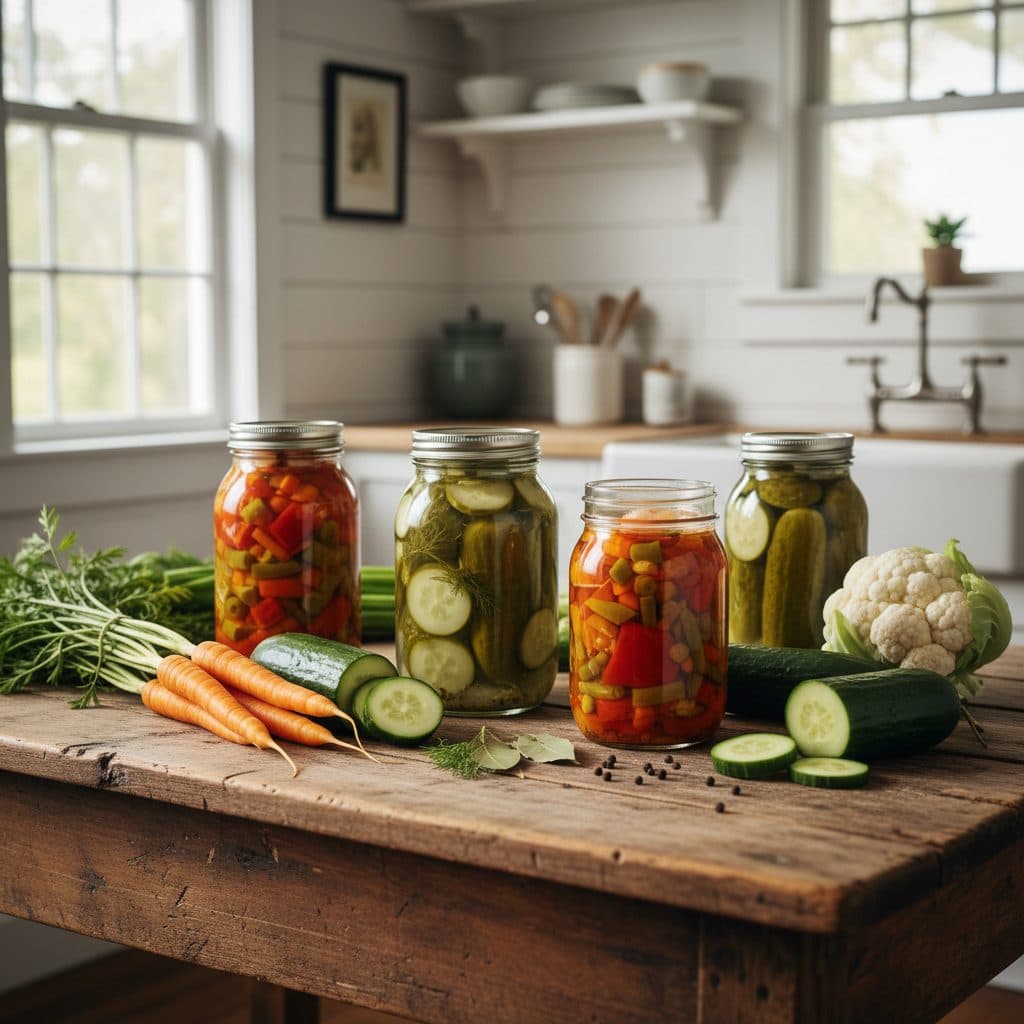
Key takeaways
- Fermentation uses a salt brine to create an anaerobic environment, encouraging beneficial lactic acid bacteria to preserve vegetables.
- Maintaining a brine concentration of 2-5% salt by weight matters for successful, safe fermentation.
- Optimal fermentation temperatures range from 60-75°F (15-24°C), influencing the speed and flavor development of your pickles.
- Dill pickles typically ferment for three to four weeks, while giardiniera may finish in one to three weeks.
- Proper storage in a cool, dark place like a root cellar at 35-40°F (2-4°C) extends the shelf life of fermented pickles to 6-12 months.
- Selecting fresh, firm produce and using non-chlorinated water are key steps for high-quality fermented products.
Quick answer: Fermentation preserves vegetables like dill pickles and giardiniera by using a salt brine to create an anaerobic environment, encouraging beneficial lactic acid bacteria to convert sugars into lactic acid, which acts as a natural preservative.
In the American Midwest, where summer gardens burst with cucumbers, carrots, and cauliflower, preserving the harvest effectively is a core skill for self-sufficiency. Fermentation stands out as a time-honored method, transforming fresh produce into flavorful, shelf-stable foods without requiring electricity or complex equipment. This process, which relies on beneficial microorganisms, has been used for thousands of years globally.
This article will guide you through crafting two distinct fermented delights: classic dill pickles and a vibrant giardiniera-style mixed vegetable pickle. Both methods leverage a simple salt brine to create an environment where lactic acid bacteria thrive, converting sugars into lactic acid. This acid acts as a natural preservative, imparting a characteristic tangy flavor and extending the usability of your vegetables for six months to a full year when stored correctly at temperatures around 35-40°F (2-4°C).
The science of fermentation for vegetable preservation
Fermentation is a natural process where microorganisms, primarily lactic acid bacteria (LAB), convert carbohydrates into lactic acid, acetic acid, and carbon dioxide. This acidic environment inhibits the growth of spoilage organisms and pathogens, effectively preserving the food. For vegetable pickling, a salt brine is essential; it draws water out of the vegetables, creating an anaerobic (oxygen-free) condition that favors LAB while discouraging undesirable microbes. A typical brine concentration for vegetable fermentation ranges from 2% to 5% salt by weight, meaning 20-50 grams of salt per 1,000 milliliters of water. For a 1-gallon batch, this translates to roughly 4.5 to 11 tablespoons of pickling salt.
understanding brine and temperature
The salt concentration directly impacts the rate of fermentation and the final texture of the pickles. A 2% brine will ferment faster but may result in softer vegetables, while a 5% brine will produce firmer pickles but at a slower pace. The ideal fermentation temperature for most vegetables is between 60°F and 75°F (15°C and 24°C). Temperatures below 60°F (15°C) will slow the process significantly, potentially leading to mold, while temperatures above 75°F (24°C) can result in mushy pickles or off-flavors. Wherever your indoor temperatures swing with the seasons, finding a consistent cool spot in a basement or pantry is important. Using non-chlorinated water also matters, since chlorine can inhibit the beneficial bacteria. A simple way to remove chlorine is to let tap water sit out for 24 hours, or use filtered water. Some Turkish-style fermented garlic pickles even use specific starter cultures to ensure consistent results, as explored in recent research [2].
- Salt concentration: Aim for 2-5% salt by weight for optimal fermentation.
- Temperature control: Maintain 60-75°F (15-24°C) for best results.
- Anaerobic environment: Keep vegetables submerged under the brine.
- Water quality: Use non-chlorinated water to support bacterial growth.
- Fermentation time: Varies from one to four weeks, depending on temperature and salt.
Crafting classic fermented dill pickles
Fermented dill pickles are a staple in many American households, known for their crisp texture and tangy, aromatic flavor. The process starts with selecting the right cucumbers. Look for pickling varieties that are four to six inches long, firm, and free of blemishes. Cucumbers grown in USDA zone 5 through 9 often reach peak harvest in mid-summer, making it an ideal time for pickling. For a 1-gallon jar, you will typically need about three to four pounds of small pickling cucumbers. Rinse them thoroughly but avoid scrubbing too hard, as some beneficial bacteria reside on the cucumber skins. Fermenting and pickling vegetables is a broad topic, but dill pickles are a great starting point for home preservers.
ingredients and method for dill pickles
Prepare your brine using non-chlorinated water and pickling salt at a 3.5% concentration, which requires approximately 7.8 tablespoons of salt per gallon of water (assuming 1 tbsp ≈ 17g). Pack the cucumbers into a clean 1-gallon jar with fresh dill heads, garlic cloves and black peppercorns, pour the brine over so everything is covered by at least an inch, weight the vegetables below the surface and fit an airlock. Homegrown dill cultivation can help ensure a fresh supply for your pickles.
- Cucumber selection: Choose small, firm pickling cucumbers, 4-6 inches long.
- Brine concentration: Use a 3-4% salt brine for good flavor and texture.
- Flavorings: Include fresh dill heads, garlic cloves, and peppercorns.
- Submersion: Keep all vegetables fully under the brine to prevent mold.
- Fermentation duration: Allow three to four weeks at 68-72°F (20-22°C).
Crafting giardiniera-style mixed vegetable pickles
Giardiniera, an Italian mixed pickled vegetable relish, offers a delightful medley of textures and flavors. While traditionally made with vinegar, a fermented version provides a richer, more complex taste and the benefits of lactic acid fermentation. Common vegetables for giardiniera include carrots, celery, cauliflower, bell peppers, and sometimes green beans or small onions. For a 1-gallon batch, you might use one head of cauliflower, three medium carrots, four celery stalks, and two bell peppers. These vegetables are widely grown across the US, with peak harvest times varying by region; for instance, carrots thrive in cooler climates like USDA zone 4, while bell peppers prefer warmer zones like USDA zone 8.
selecting and preparing vegetables
The key to good giardiniera is uniform chopping. Cut all vegetables into bite-sized pieces, roughly one-half to one inch in size, to ensure even fermentation. For example, break cauliflower into small florets, slice carrots into rounds or sticks, and chop celery into half-inch pieces. Blanching tougher vegetables like carrots or cauliflower for one to two minutes before brining can help achieve a more tender texture, though it is not strictly necessary for fermentation. Pack the prepared vegetables tightly into a 1-gallon jar, adding flavorings such as four to five cloves of garlic, a tablespoon of mixed pickling spices, and a dried chili pepper for a bit of heat. Use a 3% salt brine (about 6.7 tablespoons of salt per gallon of water) to cover the vegetables completely. Keep the vegetables submerged with a weight and seal the jar with an airlock. Ferment at 65-70°F (18-21°C) for one to three weeks, or until the desired tanginess is achieved. The exact fermentation time depends on the temperature and the specific vegetables used.
- Vegetable variety: Use carrots, celery, cauliflower, bell peppers, and other firm vegetables.
- Uniform cutting: Chop vegetables into consistent 0.5-1 inch pieces for even fermentation.
- Flavor additions: Include garlic, pickling spices, and chili peppers for complexity.
- Brine strength: A 3% salt brine is often suitable for mixed vegetables.
- Fermentation length: Ferment for one to three weeks at 65-70°F (18-21°C).
Storage, troubleshooting, and enjoying your pickles
Once your fermented dill pickles or giardiniera have reached the desired level of tanginess and flavor, proper storage keeps their quality and extends their shelf life. The ideal storage temperature for fermented foods is between 35°F and 40°F (2°C and 4°C). This temperature range significantly slows down the fermentation process, preventing the pickles from becoming too sour or mushy. A dedicated root cellar, if available, provides an excellent environment, typically maintaining stable cool temperatures and darkness. Alternatively, a refrigerator or a cool, dark basement corner can work. Stored correctly, fermented pickles can last for 6 to 12 months, offering a consistent supply of garden goodness throughout the year.
common issues and serving suggestions
Troubleshooting common fermentation issues can help ensure success. If you see growth on the surface, identify it before you decide. A thin, flat, white film is usually kahm yeast, which is harmless and can be skimmed off. Fuzzy or colored growth, whether green, black, blue or pink, is mold, and because mold feeds on the lactic acid that is doing the preserving, it raises the pH of the brine beneath it. Discard a batch with visible mold, or one that smells off, rather than skimming it. Soft or mushy pickles can result from too low a salt concentration, too high a fermentation temperature (above 75°F or 24°C), or old cucumbers. Using fresh, firm produce and maintaining the correct brine strength and temperature will minimize this issue, and trimming about a sixteenth of an inch off the blossom end of each cucumber removes the tissue richest in the softening enzymes. Serving fermented pickles is straightforward: they make excellent additions to sandwiches, salads, or as a tangy side dish to rich meals. A typical serving size might be one-quarter cup, providing a burst of flavor and beneficial bacteria. For those interested in other preservation methods, dehydrating food is another effective technique to extend the life of your harvest.
- Ideal storage: Keep fermented pickles at 35-40°F (2-4°C) for longevity.
- Shelf life: Expect 6-12 months of storage in proper conditions.
- Mold prevention: Ensure vegetables remain fully submerged under the brine.
- Texture issues: Address soft pickles by checking salt concentration and temperature.
- Enjoyment: Serve as a side, in sandwiches, or as a flavorful relish.
Comparison of Fermented Dill Pickles vs. Giardiniera
Feature | Fermented Dill Pickles | Giardiniera-Style Mixed Vegetables |
|---|---|---|
Primary Vegetable | Cucumbers (4-6 inch pickling varieties) | Mixed vegetables (carrots, celery, cauliflower, bell peppers) |
Key Flavorings | Fresh dill, garlic, black peppercorns | Garlic, mixed pickling spices, chili pepper |
Brine Concentration | 3.5% (approx. 7.8 tbsp salt/gallon) | 3% (approx. 6.7 tbsp salt/gallon) |
Fermentation Time | 3-4 weeks | 1-3 weeks |
Texture | Crisp, firm | Varied, tender-crisp |
Serving Suggestions | Sandwiches, burgers, side dish | Antipasto, salads, relish, pizza topping |
Optimal Brine: A 2-5% salt brine is needed for successful fermentation, translating to roughly 4.5-11 tablespoons of pickling salt per gallon of water.
Ideal Temperature: Fermenting vegetables at 60-75°F (15-24°C) ensures proper bacterial activity and prevents spoilage.
Long Storage: Fermented pickles, stored at 35-40°F (2-4°C) in a root cellar or refrigerator, can last for 6-12 months.
Frequently asked questions
What kind of salt should I use for fermenting pickles?
Always use non-iodized salt, such as pickling salt or kosher salt, for fermentation. Iodine and anti-caking agents found in table salt can interfere with the fermentation process and turn your brine cloudy, affecting the final product’s clarity and flavor.
Why did my fermented pickles turn soft or mushy?
Soft pickles often result from too low a salt concentration, which allows pectin-degrading enzymes to remain active, or from fermentation temperatures consistently above 75°F (24°C). Using very fresh, firm cucumbers and a 3-4% brine helps maintain crispness.
Is mold on my ferment always a sign of spoilage?
Not necessarily. White mold (kahm yeast) on the surface is generally harmless and can be skimmed off, but fuzzy, colored molds (black, green, pink) indicate spoilage and mean the batch should be discarded. Ensure vegetables stay submerged to prevent most mold growth.
How long do fermented pickles need to ferment?
Fermentation time varies based on temperature and desired flavor. Dill pickles typically take three to four weeks, while giardiniera may be ready in one to three weeks. Taste your pickles after a week or two and stop fermentation when they reach your preferred tanginess.
Can I reuse the brine from a finished batch of fermented pickles?
While some traditions suggest reusing brine (often called ‘mother brine’), it’s generally not recommended for home fermenters due to potential contamination and unpredictable results. Starting with fresh brine for each batch ensures optimal safety and flavor, using a 3-5% salt solution.
What is the best way to store fermented pickles after they are done?
After fermentation, store your pickles in sealed jars in a cool, dark place, ideally between 35-40°F (2-4°C). A refrigerator, root cellar, or cool basement is suitable. This temperature range slows further fermentation, extending shelf life to 6-12 months.
References
- Dill pickles (1906). Dill pickles.
- SOME CHARACTERISTICS OF TURKISH-STYLE FERMENTED GARLIC PICKLES PRODUCED USING FOUR DIFFERENT POTENTIALLY PROBIOTIC STARTER CULTURES (2022). SOME CHARACTERISTICS OF TURKISH-STYLE FERMENTED GARLIC PICKLES PRODUCED USING FOUR DIFFERENT POTENTIALLY PROBIOTIC STARTER CULTURES.
- Finta giardiniera, La (i) (2002). Finta giardiniera, La (i).
- Finta giardiniera, La (ii) (2002). Finta giardiniera, La (ii).
- A potted history of fermented foods – from pickles to kimchi (2025). A potted history of fermented foods – from pickles to kimchi.