Key takeaways
- Fermentation uses a 2-5% brine solution to preserve peppers and develop complex flavors over one to four weeks.
- Anaerobic conditions are crucial for safe lactic acid fermentation, preventing spoilage and promoting beneficial bacteria.
- Blending and straining create a smooth hot sauce, often with added vinegar to achieve a safe pH below 4.6.
- Proper bottling, including hot filling and pH testing, is essential for a shelf-stable product that lasts one to two years.
- A 30:1 pepper-to-salt ratio by weight is a common starting point for creating a safe and effective pepper mash.
- Fermented sauces offer a unique tangy flavor profile distinct from fresh sauces, enhancing culinary versatility.
Quick answer: Fermented hot sauce is made by submerging peppers in a 2-5% brine solution, allowing lactic acid bacteria to preserve them and develop complex flavors over 1-4 weeks. This process creates a shelf-stable, tangy condiment from a bumper crop.
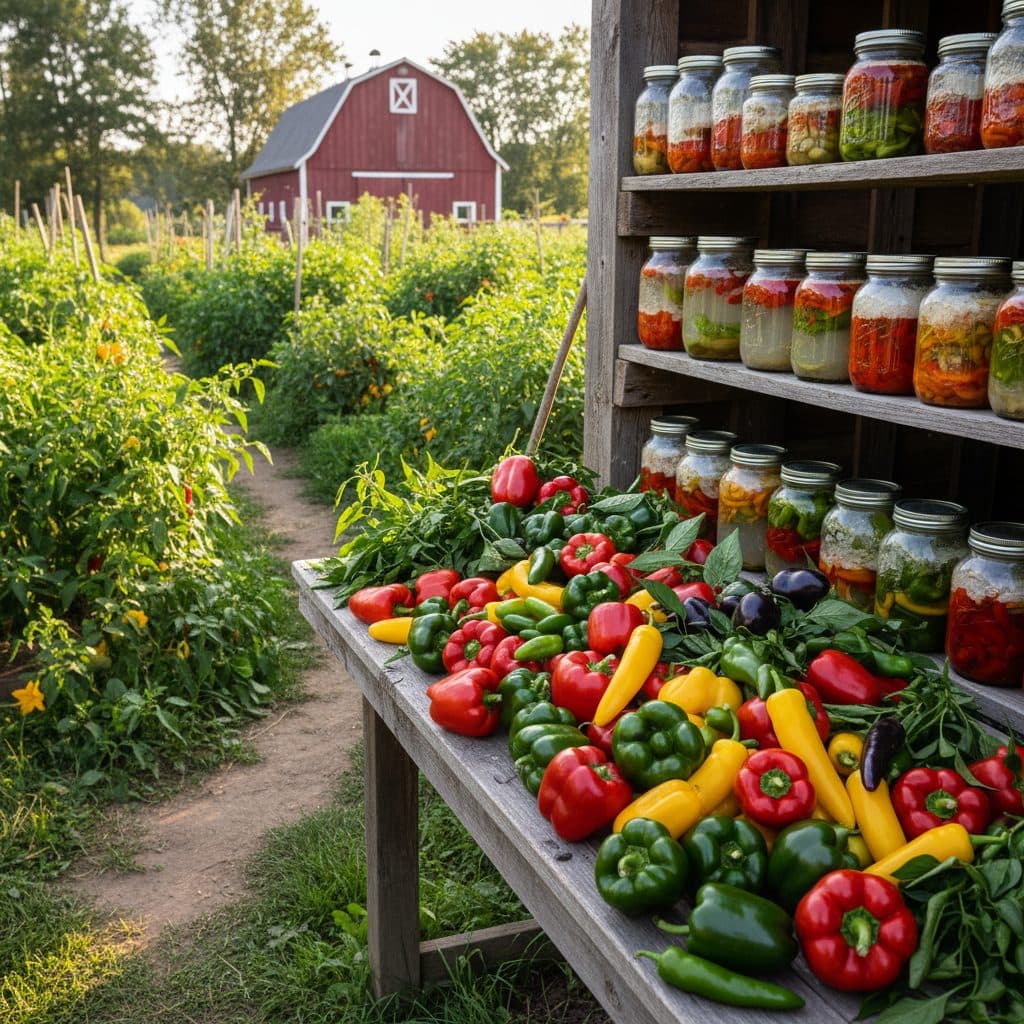
Every summer, many of us growers in places like the Mid-Atlantic or Pacific Northwest face the same delightful dilemma: a pepper glut. A dozen healthy plants of a productive variety such as ‘Early Jalapeño’ or ‘Long Slim Cayenne’ can hand you tens of pounds of ripe fruit over a few weeks. While fresh salsa and stuffed peppers are great, they only use a fraction of the harvest. Fermentation preserves that harvest into a shelf-stable condiment that lasts for months or years.
Fermenting hot sauce is an ancient practice, a method of preservation that predates modern refrigeration by thousands of years. The process extends the storage life of peppers while developing tangy flavors that fresh sauces lack. With a few basic tools and an understanding of the science, you can turn your abundant harvest into a delicious hot sauce, ready to spice up meals for the next 12 to 24 months.
How pepper fermentation works
Fermentation is a natural process where microorganisms, primarily lactic acid bacteria, convert sugars in food into lactic acid. This acid acts as a natural preservative, lowering the pH of the environment from a neutral 6.0-7.0 range down to an acidic 3.5-4.5. This acidic environment inhibits the growth of spoilage organisms and harmful pathogens, making the food safe for long-term storage. For peppers, this process not only preserves them but also develops a complex, tangy flavor profile that is highly prized in hot sauces.
Across the globe, various culinary traditions have relied on salt and ambient bacteria to preserve seasonal pepper gluts.
To successfully ferment peppers, you typically submerge them in a brine solution containing 2-5% salt by weight. This salt content draws out moisture from the peppers and creates an environment where beneficial lactic acid bacteria thrive, while deterring undesirable microbes. The fermentation process usually takes one to four weeks when kept at an ambient temperature between 60-75°F. During this time, the bacteria transform the peppers into a tangy base for your hot sauce. Any live cultures are lost once you heat or water-bath process the finished sauce. Understanding these basic principles is the first step in creating a safe and delicious fermented product.
Benefits of fermenting peppers
- Enhanced flavor complexity: Fermentation develops deep, tangy, and umami notes that are absent in fresh peppers.
- Natural preservation: Lactic acid lowers pH, inhibiting spoilage and extending shelf life for one to two years.
- Potential probiotic benefits: Unpasteurized fermented foods can contain beneficial bacteria that support gut health.
- Reduced food waste: Transforms a large harvest into a storable product, preventing spoilage of excess peppers.
- Increased nutrient availability: Fermentation can break down anti-nutrients and make certain vitamins more bioavailable.
Preparing the pepper mash
The quality of your fermented hot sauce begins with careful preparation of your peppers. Start by selecting firm, blemish-free peppers. While any pepper works well, from mild bell peppers (Capsicum annuum) to fiery habaneros (Capsicum chinense), ensure they are clean. Wash them thoroughly under cool running water, removing any dirt or debris. Wear nitrile gloves for all cutting, seeding and blending, keep your hands away from your eyes and face, and blend in a well-ventilated room with the lid on, because capsaicin aerosol coming off a blender full of hot pepper mash will burn eyes and airways. For most sauces, you will want to remove the stems, and for a milder sauce, you can also remove the seeds and internal membranes, as these contain much of the capsaicin, the compound responsible for heat. Chop your peppers into uniform pieces, about 1/4 to 1/2 inch dice, to ensure even fermentation.
Salt is the primary control agent in pepper fermentation, regulating microbial activity. It draws water out of the peppers, creating a liquid environment that favors lactic acid bacteria while inhibiting spoilage organisms. A common and effective salt concentration for pepper mash is 2-5% of the total weight of the peppers and water. Alternatively, a pepper-to-salt ratio of 30:1 by weight is often used for mash fermentation, as detailed in studies on the chemical and physical characteristics of pepper mash [2]. For a 5-pound batch of peppers, this would mean roughly 2.5 ounces of salt.
Once your peppers are chopped and salted, they need to be placed in a clean, non-reactive container, such as a glass jar or food-grade bucket. Lactic acid fermentation requires an anaerobic (oxygen-free) environment. This is typically achieved by submerging the peppers completely under their own brine or an added salt solution, using fermentation weights to keep them down. An airlock lid allows gases to escape without letting oxygen in. For a 1-gallon jar, leave about 1-2 inches of headspace to accommodate bubbling during active fermentation, which can be vigorous, especially in the first 7-10 days.
Equipment for pepper fermentation
- Large glass jars (1-gallon or 2-gallon): Ideal for visibility and non-reactivity, ensuring a clean fermentation.
- Fermentation weights: Keep peppers submerged under the brine, preventing exposure to air and mold growth.
- Airlock lids: Allow carbon dioxide to escape while preventing oxygen from entering, maintaining anaerobic conditions.
- Kitchen scale: Used for measuring peppers and salt to achieve precise brine percentages (e.g., 2-5%).
- pH meter or strips: Used to monitor the acidity of your finished sauce, ensuring it reaches a safe pH below 4.6.
Blending, adjusting, and bottling the sauce
Once your peppers have fermented for one to four weeks and have reached your desired tanginess, it’s time to transform the mash into a finished hot sauce. Carefully remove the fermentation weights and any kahm yeast (a harmless white film) that may have formed on the surface. Transfer the fermented peppers and some of their brine into a blender or food processor. Blend until smooth, which may take several minutes, depending on the power of your appliance. For a very smooth sauce, you can pass the blended mixture through a fine-mesh sieve or a food mill, pressing out all the liquid. The remaining pulp can be saved for other uses, such as drying to make a pepper powder, similar to how one might process other preserved foods like those discussed in dehydrating food.
After blending, verifying and adjusting pH determines safety and shelf stability. While fermentation naturally lowers the pH, adding a small amount of vinegar, such as white vinegar or apple cider vinegar, helps ensure the sauce reaches and maintains a pH below 4.6. This acidic level is critical for inhibiting the growth of harmful bacteria, particularly Clostridium botulinum, which cannot thrive in highly acidic environments. Use a pH meter or pH test strips to accurately measure the acidity. Start by adding 1/4 cup of vinegar per quart of sauce, blend, and retest. Continue adding small amounts until the pH consistently reads 4.0 or lower. Home test strips read only to the nearest few tenths of a unit and an uncalibrated meter drifts, so aim well under the 4.6 botulism threshold rather than at it; if you cannot verify 4.0 or lower, treat the sauce as a refrigerator product rather than a pantry one.
With the pH properly adjusted, your hot sauce is ready for bottling. Clean glass bottles, typically 5 to 16 ounces in size, are ideal. For any sauce you intend to keep at room temperature, hot filling is not optional: heat the sauce to at least 180°F, then carefully pour it into hot, clean bottles, leaving about 1/2 inch of headspace. Cap them tightly with new lids. For extra security, especially if you are new to home preservation, you can process the bottled sauce in a boiling water bath canner for 10 minutes at altitudes up to 1,000 feet, adding processing time above that as the altitude chart from your state extension service directs, following guidelines similar to those found in Home canning 101. This step ensures a vacuum seal and further inactivates any remaining yeast or mold, extending the shelf life of your delicious homemade hot sauce.
Common hot sauce ingredients beyond peppers
- Vinegar: White vinegar or apple cider vinegar, used to adjust pH to below 4.6 for safety and add tang.
- Garlic: Fresh cloves, often fermented with the peppers, add a pungent, savory depth.
- Onion: Sliced or chopped onion can be fermented alongside peppers for a sweeter, aromatic base.
- Spices: Cumin, coriander, or smoked paprika can be added after fermentation for additional flavor layers.
- Sweeteners: A touch of honey, maple syrup, or sugar can balance the heat and acidity, typically 1-2 tablespoons per quart.
Storage and safety for finished hot sauce
Once your fermented hot sauce is bottled and sealed, proper storage is key to maximizing its shelf life and maintaining its quality. A hot sauce acidified to a verified pH of 4.0 or lower and then hot-filled or water-bath processed can be stored in a cool, dark pantry or cupboard at 60-70°F for about a year. This shelf life results from lactic acid fermentation combined with careful pH control. Avoid storing bottles in direct sunlight or near heat sources, as these conditions can degrade flavor and color over time.
After opening a bottle of your homemade hot sauce, it is best to store it in the refrigerator. The cooler temperatures, typically between 35-40°F, will help maintain its freshness and prevent any further microbial activity that could alter its flavor or texture. An opened bottle, even with its low pH, will generally retain its peak quality for six to twelve months when refrigerated. While it might remain safe to consume for longer, the flavors may begin to dull or change. Always check for any unusual smells, colors, or mold growth before using an opened bottle that has been stored for an extended period.
Recognizing signs of spoilage is necessary for food safety. While kahm yeast, a white film, is common and harmless during fermentation, any fuzzy mold, off-colors (like green or black spots), or a putrid smell indicates that the sauce has gone bad and should be discarded immediately. A properly fermented and bottled hot sauce should have a pleasant tangy aroma and bright color. Your homemade hot sauce is incredibly versatile. Drizzle it on tacos, eggs, or pizza, mix it into marinades for chicken or pork, or stir a few drops into soups and stews. It can even be a secret ingredient in salad dressings. With a 20-ounce bottle, you can enjoy its spicy kick for many meals to come.
Uses for homemade hot sauce
- Marinades: Add a tablespoon to marinades for chicken, beef, or tofu to infuse a tangy, spicy flavor.
- Dressings: Whisk a teaspoon into vinaigrettes or creamy dressings for an extra kick.
- Eggs: A classic pairing, a few drops can elevate scrambled eggs, omelets, or breakfast burritos.
- Soups and stews: Stir into chili, lentil soup, or black bean stew for a warming, complex heat.
- Condiment: Serve alongside grilled meats, roasted vegetables, or as a dipping sauce for appetizers.
Comparing fresh and fermented hot sauces
Characteristic | Fresh Hot Sauce | Fermented Hot Sauce |
|---|---|---|
Flavor Profile | Bright, sharp, raw pepper notes, often vinegar-forward | Complex, tangy, umami-rich, deeper, more mellow flavor |
Shelf Life (unopened) | Weeks to a few months (refrigerated) | One to two years (pantry, pH < 4.6) |
Preservation Method | Acid (vinegar), heat processing, refrigeration | Lactic acid bacteria, salt, low pH |
Nutritional Aspect | Vitamins, minerals | Probiotics (if unpasteurized), enhanced nutrient availability |
pH Level | Typically 3.5-4.0 (with added acid) | Naturally lowers to 3.5-4.5 during fermentation |
pH matters: A finished hot sauce should have a pH below 4.6 for safe shelf storage, preventing the growth of harmful bacteria.
Salt ratio: Aim for a 2-5% salt concentration by weight, or a 30:1 pepper-to-salt ratio, for optimal fermentation conditions [2].
Frequently asked questions
What kind of salt should I use for fermentation?
Non-iodized salt, like pickling salt, sea salt, or kosher salt, is best for fermentation. Iodized salt can sometimes cause cloudiness or off-flavors in your brine, and it’s typically used at a 2-5% concentration by weight.
How long does pepper fermentation take?
Fermentation can take anywhere from one to four weeks, depending on the ambient temperature and your desired flavor. Warmer temperatures, around 70°F, generally speed up the process, often completing in 10-14 days.
How do I know if my fermentation went bad?
Signs of spoilage include fuzzy mold (not kahm yeast), a putrid or rotten smell, or a slimy texture in the peppers. If you observe any of these issues, it is safest to discard the entire batch to avoid health risks.
Can I use any type of pepper for hot sauce?
Yes, peppers of any species work well, from mild bell peppers (Capsicum annuum) to fiery habaneros (Capsicum chinense). You can also blend different types of peppers to achieve unique flavor and heat profiles in your sauce.
Do I need to sterilize my jars for fermentation?
While not strictly necessary for initial fermentation, clean jars are necessary. However, sterilizing your jars and bottles for the final hot sauce product, especially if you plan long-term storage, is a good practice to prevent contamination and ensure a shelf life of one to two years.
How long will my homemade hot sauce last?
Hot sauce acidified to a verified pH of 4.0 or lower, hot-filled and bottled, can last about a year when stored in a cool, dark pantry. Once opened, it should be refrigerated and will typically maintain its best quality for six to twelve months.
References
- TIMUR KO ACHAAR (2022). TIMUR KO ACHAAR.
- Chemical and Physical Characteristics of Pepper Mash and Hot Pepper Sauce. (2023). Chemical and Physical Characteristics of Pepper Mash and Hot Pepper Sauce..
- Fish sauce from an Archaeological perspective (2020). Fish sauce from an Archaeological perspective.
- Fermented fish sauce in Southeast Asia (2020). Fermented fish sauce in Southeast Asia.
- USDA Natural Resources Conservation Service (2024). USDA Natural Resources Conservation Service.