Key takeaways
- Beetle banks, strips of perennial grasses, offer critical overwintering habitat for ground beetles and other predatory insects, reducing pest damage by up to 30%.
- Bug hotels provide nesting and shelter for solitary bees, lacewings, and predatory wasps, which are essential for pollination and pest control.
- Proper siting of these habitats, such as facing south or southeast, can significantly increase their effectiveness and occupancy rates by 20%.
- Using native plant species in beetle banks, like switchgrass, enhances local biodiversity and provides better support for regional beneficial insects.
- Regular, minimal maintenance, including replacing bug hotel materials every two to three years, ensures these structures remain functional and attractive to insects.
- Integrated Pest Management (IPM) strategies, incorporating these habitats, can decrease reliance on synthetic pesticides by 50% or more.
Quick answer: Supporting beneficial insects through habitats like beetle banks and bug hotels can reduce pest pressure by up to 30% and decrease reliance on synthetic pesticides by 50% or more. These structures provide essential shelter and overwintering sites for predators like ground beetles and ladybugs.
In many agricultural regions across the United States, from the cornfields of Iowa to the orchards of California, managing pests is a constant challenge. For growers in USDA zone 6, like those near Kansas City, Missouri, relying solely on reactive pest control methods often leads to diminishing returns and increased costs. A more proactive approach involves building habitats for the beneficial insects that naturally keep pest populations in check. These unsung heroes, including ground beetles, ladybugs, and solitary wasps, can consume hundreds of pest larvae daily, offering a sustainable alternative to chemical interventions.
Creating dedicated spaces like beetle banks and bug hotels provides these beneficial predators with essential shelter, especially during the colder months when they need safe places to overwinter. Research indicates that establishing these habitats can significantly reduce pest damage in adjacent crops by as much as 30% in some areas, according to studies cited by SARE. This article will walk you through the practical steps for designing, building, and maintaining these structures.
Why build homes for beneficial insects?
Beneficial insects are the backbone of natural pest control in any agricultural system, from a small backyard garden to a 100-acre farm. These creatures, which include predators like ground beetles, lacewings, and parasitic wasps, actively hunt and consume common garden pests such as aphids, caterpillars, and slugs. Without adequate shelter, especially during the winter, their populations can decline significantly, leading to increased pest pressure when the growing season begins. For instance, a single ladybug larva can eat up to 50 aphids per day, while an adult may consume 5,000 in its lifetime.
The critical role of overwintering habitat
Providing overwintering habitat matters for maintaining a healthy population of these natural enemies. Many beneficial insects, such as certain species of ground beetles and solitary bees, do not migrate. Instead, they seek refuge in sheltered areas like dense grass clumps, hollow plant stems, or under leaf litter to survive freezing temperatures. In temperate climates, where winter temperatures can drop below 32°F for extended periods, these protected spaces are essential for survival. Establishing these habitats can lead to a 50% reduction in reliance on synthetic pesticides over time, as reported by SARE [3].
- Ground beetles consume over 100 pest larvae daily, including slugs and cutworms [3].
- Ladybugs are voracious predators of aphids and scale insects, with adults eating thousands.
- Lacewings target aphids, mealybugs, and spider mites, laying distinctive eggs on stalks.
- Parasitic wasps lay eggs inside pest insects like caterpillars, controlling their populations.
- Solitary bees are critical pollinators, with some species nesting in hollow stems or drilled wood.
Designing and siting your beetle bank
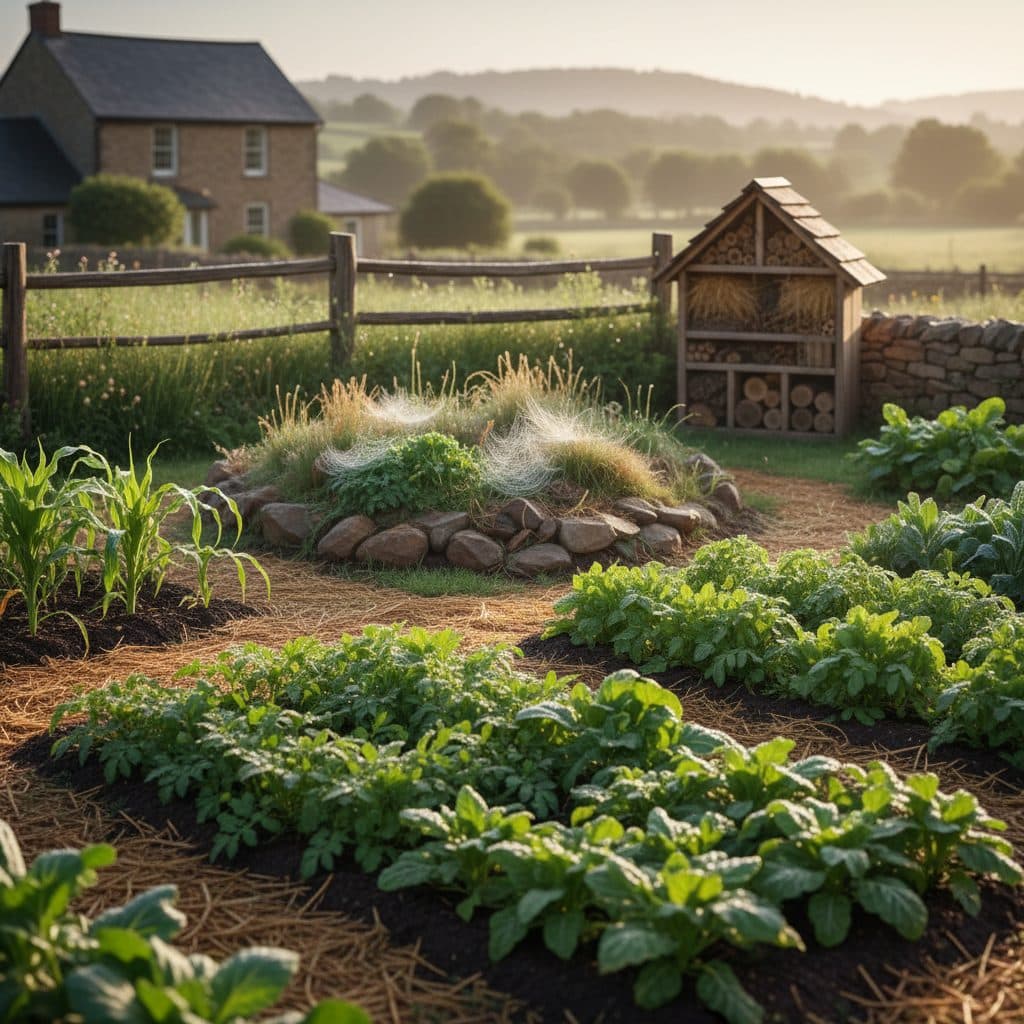
A beetle bank is essentially a raised strip of perennial grasses and wildflowers, typically running through the middle of a field or along its edges. These banks provide permanent shelter for ground beetles, spiders, and other beneficial predators, allowing them to overwinter and then disperse into surrounding crops during the growing season. For optimal effectiveness, a beetle bank should be at least 6 feet wide and elevated 6 to 12 inches above the surrounding field level to ensure good drainage and provide a distinct microclimate [1].
Choosing the right plants and location
The success of a beetle bank largely depends on the plant species chosen. Native perennial grasses are ideal because they form dense tussocks that offer excellent cover and nesting sites. The USDA Natural Resources Conservation Service recommends species like switchgrass (Panicum virgatum), big bluestem (Andropacum gerardii), and indiangrass (Sorghastrum nutans) for their structural integrity and ecological benefits in many US regions, including USDA zones 4 through 8 [1]. Incorporating native wildflowers also provides nectar and pollen for other beneficial insects, such as parasitic wasps and hoverflies, which are key predators of aphids. When considering soil health for these plantings, materials like fermented soybean meal organic fertilizer can enrich the soil and support healthy plant growth.
- Site selection: Choose an area that receives at least six hours of sunlight daily and has good drainage.
- Dimensions: Aim for a bank at least 6 feet wide and 100 feet long for agricultural fields, or smaller for gardens.
- Planting: Use a mix of native perennial grasses and wildflowers, planted densely to create thick cover.
- Elevation: Build up the soil 6 to 12 inches to create a slightly raised bed, which helps with drainage.
- Avoid disturbance: Once established, minimize tillage or mowing within the beetle bank to preserve insect habitat.
Constructing a bug hotel
Bug hotels, also known as insect hotels, are structures designed to provide shelter and nesting sites for a variety of beneficial insects, including solitary bees, lacewings, ladybugs, and predatory wasps. Unlike beetle banks, which focus on ground-dwelling insects, bug hotels cater to species that prefer to nest or overwinter above ground. A well-designed bug hotel can attract dozens of insect species within weeks of installation, offering valuable pest control and pollination services [4]. These structures are particularly effective in smaller gardens or urban settings where space for beetle banks might be limited.
Materials and design considerations
The best bug hotels incorporate a variety of natural materials to attract a diverse range of insects. Hollow stems from plants like bamboo, elderberry, or teasel, cut into 6-inch to 8-inch lengths, are excellent for solitary bees. Drilled logs with holes ranging from 0.125 inches to 0.375 inches in diameter and 4 inches deep can also provide nesting sites. Stacks of untreated wood, bundles of straw, or even old terracotta pots filled with dry leaves can offer refuge for ladybugs and lacewings. For growers in USDA zone 7, where winters are milder, these hotels can provide year-round habitat. Proper placement, such as facing south or southeast, can increase occupancy rates by 20% due to warmth and sun exposure [4].
- Hollow stems: Bundle bamboo, teasel, or elderberry stems, 6 to 8 inches long, for solitary bees.
- Drilled wood: Use untreated logs or blocks with varying hole sizes (0.125 to 0.375 inches) for different bee species.
- Stacked materials: Layer bricks, broken terracotta pots, or wood with gaps for beetles and spiders.
- Pine cones/straw: Offer crevices for lacewings and ladybugs to overwinter.
- Roofing: Add a waterproof roof to protect materials from rain, extending the hotel’s lifespan to three years or more.
Maintaining your insect habitats
Once your beetle banks and bug hotels are established, the good news is that they require relatively low maintenance compared to other garden tasks. The goal is to keep them functional and attractive to beneficial insects without causing undue disturbance. For beetle banks, this primarily means avoiding tillage, herbicides, and frequent mowing within the designated strip. Allowing the perennial grasses to grow tall and dense, perhaps mowing only once every two to three years in late winter, helps maintain the structural integrity and provides consistent cover for insects [1].
Long-term care and what to expect
For bug hotels, annual inspection is a good practice. Over time, some materials like hollow stems or drilled wood may degrade or become infested with undesirable organisms. It’s advisable to replace these components every two to three years to ensure fresh, clean nesting sites. For example, if you notice excessive spider webs or earwig populations, it might be time to refresh some sections. Consider incorporating native plants around your bug hotel to provide additional food sources, like the flowers of purslane or plantain, which can attract a broader range of beneficial insects. Remember, the primary purpose is to provide shelter, so minimal intervention is often the best approach. In USDA zone 5, where winters are harsh, ensuring these structures are robust enough to withstand heavy snow and ice is particularly important for insect survival.
- Beetle bank mowing: Mow only once every two to three years, in late winter, to maintain structure.
- Weed control: Hand-pull invasive weeds or use targeted, organic methods around the bank, avoiding broad-spectrum natural weed killers within the habitat.
- Bug hotel refresh: Replace hollow stems and drilled wood every two to three years to prevent disease and maintain attractiveness.
- Structural integrity: Periodically check the bug hotel frame for damage and make repairs to ensure stability.
- Observation: Spend five to ten minutes observing your habitats monthly to gauge activity and identify any issues.
Pest Reduction: Beetle banks can reduce pest damage in adjacent crops by up to 30% in some regions, according to SARE [3].
Increased Occupancy: Proper placement of a bug hotel, such as facing south or southeast, can increase occupancy rates by 20% due to warmth [4].
Frequently asked questions
What is the ideal size for a beetle bank?
For agricultural fields, a beetle bank should ideally be at least 6 feet wide and 100 feet long. In smaller garden settings, even a strip 3 feet wide can provide significant benefits for beneficial insects, offering refuge for dozens of species.
What materials are best for a bug hotel?
The best bug hotels incorporate a variety of natural materials. These include hollow stems (like bamboo or teasel), drilled logs with holes ranging from 0.125 to 0.375 inches, bundles of straw, and stacks of untreated wood. Using diverse materials attracts a wider range of beneficial insects.
How often should I maintain my bug hotel?
Bug hotels require minimal maintenance, but it’s good practice to inspect them annually in the spring. Replace degraded materials like hollow stems or drilled wood every two to three years to ensure clean, attractive nesting sites for new generations of insects.
Can beetle banks help with weed control?
While beetle banks are primarily for insect habitat, dense plantings of native perennial grasses can help suppress some annual weeds by outcompeting them for resources. However, they are not a primary weed control strategy; occasional hand-weeding may still be necessary, especially for invasive species.
What types of insects do bug hotels attract?
Bug hotels attract a diverse range of beneficial insects. Common occupants include solitary bees (like mason bees and leafcutter bees), lacewings, ladybugs, and various predatory wasps. These insects contribute significantly to pollination and natural pest control, with some solitary bees pollinating 20 times more effectively than honeybees.
References
- USDA Natural Resources Conservation Service (2024). USDA Natural Resources Conservation Service.
- EPA — Soak Up the Rain (2024). EPA — Soak Up the Rain.
- SARE — Sustainable Agriculture Research & Education (2023). SARE — Sustainable Agriculture Research & Education.
- ATTRA / NCAT Sustainable Agriculture (2023). ATTRA / NCAT Sustainable Agriculture.
- USDA National Agroforestry Center (2023). USDA National Agroforestry Center.