Key takeaways
- Identify key beneficial insects for your specific USDA zone, such as ladybugs for zones 3-9 and lacewings for zones 4-9.
- Plant insectary crops like dill, fennel, and cilantro to provide nectar and pollen for beneficial insects throughout the growing season.
- Time your plantings to ensure a continuous bloom of attractant flowers, starting with early spring varieties in April and extending into fall.
- Understand the life cycles of target pests and beneficial insects to optimize release times and habitat provision for maximum impact.
- Integrate practices like reduced tilling and diverse perennial plantings to create stable, long-term habitats for insect populations.
- Utilize resources like USDA zone maps and regional field guides to tailor your pest management strategy to local conditions.
Quick answer: To effectively use beneficial insects for pest control, identify key species for your USDA zone and time plantings of insectary crops like dill and cilantro to provide continuous nectar and pollen. This ensures beneficials are present when pests emerge, which reduces damage and supports farm resilience.
Across the United States, from the mild winters of USDA zone 10 in Florida to the frigid lows of zone 3 in Minnesota, growers face a constant battle against garden pests. Relying solely on chemical interventions can interrupt the delicate balance of a healthy ecosystem, often leading to resistant pest populations and harm to non-target organisms. A more sustainable approach involves inviting beneficial insects to do the work for you, a strategy that can reduce pest damage by as much as 30% in some crops.
Understanding which beneficial insects thrive in your specific USDA zone and how to time your plantings to support them is important for effective organic pest management. This guide will walk you through regional expectations for these helpful allies and provide practical advice for creating a garden that acts as a natural insectary, boosting your farm’s resilience and productivity by 15% or more.
Understanding beneficial insect roles by region
These takeaways points carry into this section, too.
The diversity of beneficial insects varies significantly across the vast geographic regions of the United States, influenced by climate, native flora, and agricultural practices. For instance, in the Rocky Mountain Region, a field guide identifies specific insects that help manage local pests, offering insights into regional biodiversity [4]. Generally, predatory insects like ladybugs (Coccinellidae) are effective across a broad range from USDA zone 3 to zone 9, consuming up to 5,000 aphids in their lifetime. Parasitic wasps, such as the tiny Trichogramma species, are also widespread, targeting moth and butterfly eggs in zones 4 through 10. Knowing what constitutes a region helps define these ecological boundaries [2].
key beneficial insect groups
Different groups of beneficial insects perform distinct roles in pest control. Predators actively hunt and consume pests, while parasitoids lay their eggs inside or on host insects, with their larvae eventually killing the host. Pollinators, while not directly pest controllers, are vital for crop production, and many also consume pests in their larval stages, like hoverflies. Creating a diverse habitat that supports multiple beneficial insect groups can lead to a 25% reduction in pest outbreaks compared to monoculture systems. For example, a diverse planting in USDA zone 6 can attract over 50 species of beneficial insects, which provide solid pest suppression for a 1-acre plot.
- Ladybugs (Coccinellidae): Voracious predators of aphids, scale insects, and mites, active in zones 3-9.
- Lacewings (Chrysopidae): Larvae are known as “aphid lions,” consuming aphids, thrips, and whiteflies in zones 4-9.
- Hoverflies (Syrphidae): Larvae feed on aphids, while adults are important pollinators, found in zones 2-10.
- Parasitic Wasps (e.g., Trichogramma): Tiny wasps that parasitize pest eggs, effective in zones 4-10.
- Ground Beetles (Carabidae): Nocturnal predators of slugs, snails, cutworms, and other soil-dwelling pests, prevalent in zones 3-9.
Timing plantings for early season attractants
Attracting beneficial insects early in the growing season is critical for establishing a strong defense against emerging pests. In USDA zones 7 and 8, where spring arrives in March, planting early-blooming flowers like dill (Anethum graveolens) and cilantro (*Coriandrum sativum*) by late February can provide vital nectar and pollen for overwintering beneficials. These plants can attract adult ladybugs and hoverflies, encouraging them to lay eggs before pest populations explode. A 200 sq ft patch of these herbs can support a beneficial insect population sufficient for a 1,000 sq ft garden area.
early spring bloomers by zone
For colder regions, such as USDA zones 4 and 5, timing shifts. Growers might plant these same attractants in April or early May, after the last hard frost, which typically occurs around May 15th. Other early season attractants include sweet alyssum (Lobularia maritima) and calendula (Calendula officinalis), which can begin blooming within 60 days of planting. These early food sources are essential for the first generation of beneficial insects, ensuring they are present when early pests like aphids start to emerge on new growth, often in May, reducing initial pest numbers by up to 60%.
- Dill: Attracts ladybugs, parasitic wasps, and hoverflies; plant in early spring after soil reaches 50°F.
- Cilantro: Provides nectar for parasitic wasps and lacewings; can be planted 2-3 weeks before the last frost date.
- Sweet Alyssum: Low-growing, provides nectar for tiny beneficials like minute pirate bugs; blooms continuously for 3-4 months.
- Calendula: Attracts hoverflies and lacewings; tolerant of cooler temperatures, making it suitable for early planting in zones 4-8.
- Feverfew: Attracts a wide range of beneficials including hoverflies and predatory wasps; perennial in zones 5-9.
Mid-season and continuous bloom strategies
That work on timing plantings sets up what follows here.
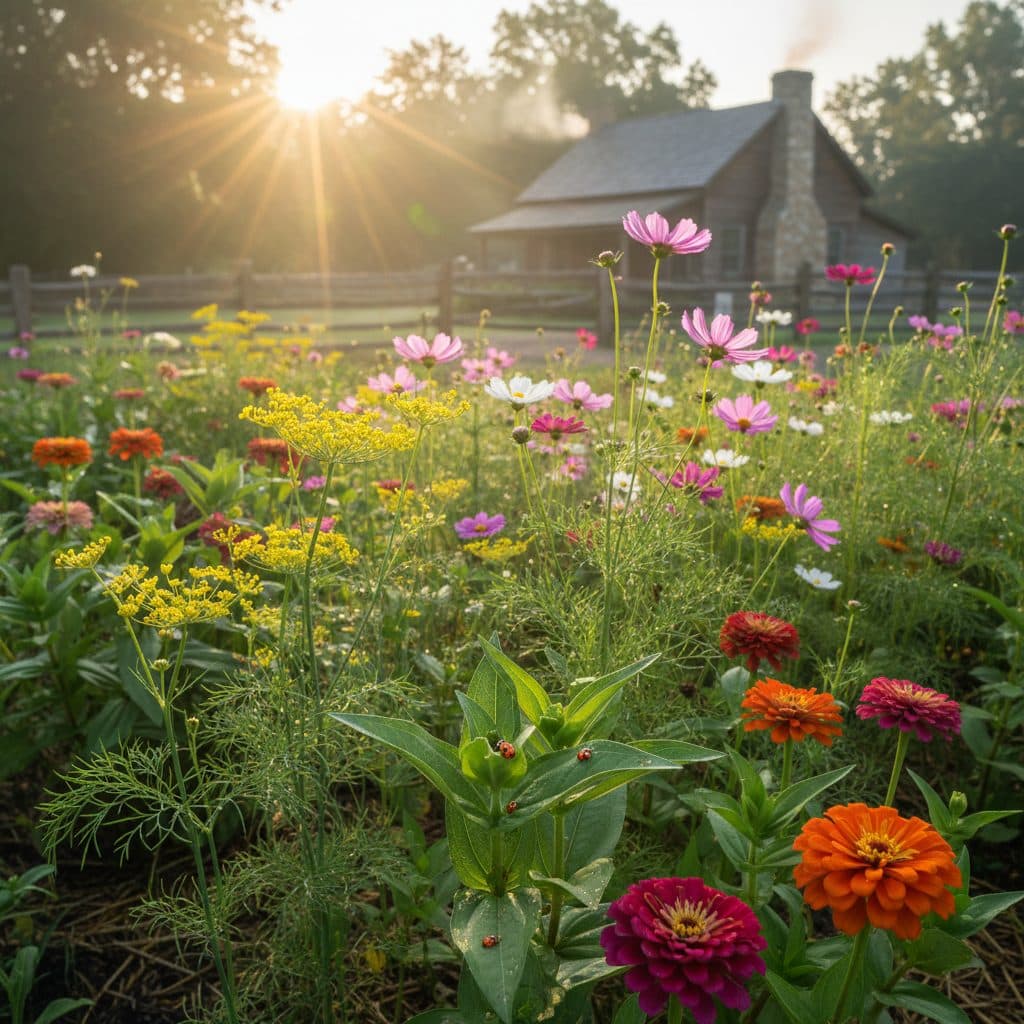
As the season progresses, maintaining a continuous supply of nectar and pollen is vital for sustaining beneficial insect populations. In USDA zones 6 and 7, where summer temperatures can regularly exceed 80°F, heat-tolerant plants like cosmos (Cosmos bipinnatus) and zinnias (Zinnia elegans) become essential from June through August. These flowers attract a broad spectrum of beneficials, including tachinid flies and predatory wasps, which are critical for controlling pests like caterpillars and squash bugs. A diverse planting strategy can support beneficial insect populations throughout the entire 120-day growing season.
sustaining beneficials through summer
Consider planting in succession, staggering bloom times every 2-3 weeks to ensure there’s always something flowering. For example, in USDA zone 5, planting borage (Borago officinalis) in May, followed by cosmos in June, and then buckwheat (Fagopyrum esculentum) in July, can create a continuous insectary. Buckwheat, a fast-growing cover crop, blooms within 30 days and attracts hoverflies and parasitic wasps, offering excellent pest suppression for 4-6 weeks. Living mulches and cover crops can further improve habitat and soil health, supporting a 20% greater diversity of beneficial insects.
- Cosmos: Attracts lacewings, hoverflies, and parasitic wasps; blooms from July to frost in zones 2-11.
- Zinnias: Provides nectar for ladybugs, hoverflies, and butterflies; blooms for 3-4 months in zones 2-11.
- Borage: Attracts bees and parasitic wasps; can reseed itself, providing continuous blooms in zones 3-10.
- Buckwheat: Fast-growing, attracts hoverflies and predatory wasps; blooms within 4-6 weeks of planting.
- Sunflower: Large heads offer pollen and nectar for many beneficials; varieties like ‘Mammoth Grey Stripe’ are excellent in zones 4-9.
Late season and overwintering habitats
This builds directly on mid-season and continuous.
As summer wanes, providing late-season food and overwintering habitats becomes important for ensuring beneficial insect populations return next spring. In USDA zones 5 and 6, where the first frost typically arrives in October, late-blooming plants like asters (Symphyotrichum) and goldenrod (Solidago) provide essential nectar for beneficials before winter. These plants can extend the foraging season by 4-6 weeks, allowing beneficials to build up fat reserves for overwintering. Leaving some plant debris and hollow stems in your garden over winter can also provide shelter for overwintering ladybugs and lacewings, increasing their survival rates by 15%.
creating winter refuge
For regions with harsh winters, such as USDA zones 3 and 4, creating specific overwintering structures can be highly effective. Brush piles, log piles, or even dedicated insect hotels can offer protection from freezing temperatures and predators. Many beneficial insects, including ground beetles and some parasitic wasps, will seek refuge in leaf litter or under bark. By not cleaning up every last leaf in the fall, especially in a 10 ft by 10 ft area, you can provide critical habitat for hundreds of beneficial insects, leading to a stronger population in the following spring. Consider drought-tolerant trees and shrubs that offer dense cover for year-round habitat.
- Asters: Late-blooming flowers that provide nectar into fall, crucial for zones 3-8.
- Goldenrod: A native plant that supports a wide array of beneficials, blooming from August to October in zones 3-9.
- Brush Piles: Offers shelter for ground beetles and other overwintering insects, especially in zones 3-7.
- Leaf Litter: Provides insulation and hiding spots for ladybugs and lacewings, improving overwintering success by 20%.
- Perennial Grasses: Clumping grasses offer dense cover for many beneficials throughout winter in zones 4-9.
Integrating IPM and diagnostics
Those late season and habits matter here as well.
An effective beneficial insect strategy is one component of a broader Integrated Pest Management (IPM) system. IPM involves monitoring pest populations, correctly identifying pests and beneficials, and using a combination of cultural, biological, and chemical controls when necessary. For instance, in USDA zone 6, regular scouting of a 100 sq ft garden plot every 3-5 days can help identify pest outbreaks early, allowing for targeted intervention before populations reach damaging levels, which is often 10-20 aphids per leaf. Using a guide can help identify specific insects and diseases in your region [5].
diagnostic tools and thresholds
Diagnostic tools, such as hand lenses and regional field guides, are invaluable for accurate identification. Understanding pest thresholds – the point at which pest populations cause unacceptable damage – helps prevent unnecessary interventions. For example, a tomato plant in USDA zone 7 can tolerate up to 15% defoliation without significant yield loss. If beneficial insects are present and actively reducing pest numbers by 50% or more, intervention may not be needed. The USDA Natural Resources Conservation Service provides resources for sustainable practices that support beneficial insects and overall ecosystem health [6].
- Regular Scouting: Inspect plants every 3-5 days to detect pest issues early, especially in warmer zones like 9 and 10.
- Pest Identification: Use a hand lens and regional guides to accurately identify pests and beneficials, critical for targeted control.
- Threshold Monitoring: Understand when pest populations warrant action; for many crops, 10-20% damage is an acceptable threshold.
- Biological Controls: Introduce beneficial insects if natural populations are insufficient, often costing $20-$50 for a release of 1,500 ladybugs.
- Cultural Practices: Employ crop rotation, proper watering, and sanitation to reduce pest pressure by 25-30%.
Beneficial Insects and Their Preferred Attractants by USDA Zone
Beneficial Insect | Primary Pests Controlled | Key Attractant Plants | Optimal USDA Zones |
|---|---|---|---|
Ladybugs | Aphids, scale insects, mites | Dill, cilantro, sweet alyssum | 3-9 |
Green Lacewings | Aphids, thrips, whiteflies, mealybugs | Fennel, cosmos, borage | 4-9 |
Hoverflies | Aphids, small caterpillars | Dill, calendula, buckwheat | 2-10 |
Parasitic Wasps | Caterpillars, aphids, beetle larvae | Carrot, parsley, yarrow | 4-10 |
Ground Beetles | Slugs, snails, cutworms, Colorado potato beetle larvae | Perennial grasses, clovers | 3-9 |
Aphid Control: A single adult ladybug can consume up to 5,000 aphids in its lifetime, significantly reducing pest pressure in USDA zones 3-9.
Habitat Diversity: Gardens with a diverse mix of flowering plants can attract 25% more beneficial insect species than monoculture plots, enhancing natural pest control.
Early Season Advantage: Planting early bloomers like dill in March (zones 7-8) can establish beneficial insect populations 2-3 weeks before major pest outbreaks.
Frequently asked questions
What are the most effective beneficial insects for aphid control in USDA zone 7?
For aphid control in USDA zone 7, ladybugs and green lacewing larvae are highly effective. A single ladybug can consume up to 5,000 aphids in its lifetime, while lacewing larvae are known as ‘aphid lions’ and can significantly reduce populations within days.
When should I plant attractant flowers in USDA zone 4 to support beneficial insects?
In USDA zone 4, you should aim to plant early attractant flowers like dill and calendula in late April to early May, after the last hard frost, which typically occurs around May 15th. This timing ensures blooms are available when beneficial insects emerge.
How can I create overwintering habitat for beneficial insects in my garden?
To create overwintering habitat, leave some plant stalks, leaf litter, and small brush piles in your garden over winter, especially in zones 3-6. This provides shelter and insulation, increasing the survival rate of beneficial insects by 15-20%.
Are there specific plants that attract parasitic wasps in USDA zone 9?
Yes, in USDA zone 9, parasitic wasps are strongly attracted to plants with small, open flowers, such as parsley, yarrow, and queen anne’s lace. Planting these can significantly increase parasitic wasp activity, reducing pest egg populations by over 50%.
What is the role of the USDA Natural Resources Conservation Service in supporting beneficial insects?
The USDA Natural Resources Conservation Service (NRCS) provides technical assistance and financial incentives to landowners for implementing conservation practices that enhance biodiversity, including creating habitats for beneficial insects and pollinators, often covering up to 75% of implementation costs [6].
References
- Laterocervical Region (Supraclavicular Region – Robbins Level V) (2023). Laterocervical Region (Supraclavicular Region – Robbins Level V).
- What Constitutes a Region? (2023). What Constitutes a Region?.
- The Region of Isolationism (2023). The Region of Isolationism.
- Field guide to diseases & insects of the Rocky Mountain Region (2010). Field guide to diseases & insects of the Rocky Mountain Region.
- HOW TO USE THE GUIDE (2017). HOW TO USE THE GUIDE.
- USDA Natural Resources Conservation Service (2024). USDA Natural Resources Conservation Service.