Key takeaways
- Monoculture farming, common across 90 million acres of corn in the US, creates predictable environments that lead to significant pest and disease outbreaks.
- Polyculture and interplanting interrupt pest life cycles by confusing them with diverse plant smells and visual cues, reducing pest populations by up to 50%.
- Strategic interplanting, like peppermint with strawberries, can deter specific pests such as Drosophila suzukii by 20% or more.
- Crop diversity improves soil health, increases beneficial insect populations, and reduces reliance on synthetic inputs by 30% to 60%.
- Starting with small-scale interplanting in a 100 square foot garden plot can provide valuable experience before scaling up.
- Adopting polyculture practices can lead to more resilient food systems and healthier ecosystems, supporting long-term farm viability.
Quick answer: Polyculture and interplanting confuse pests by diversifying plant smells and visual cues, breaking up monocultures, and attracting beneficial insects. This strategy reduces pest populations and reliance on synthetic inputs.
Across the American Midwest, vast fields of corn stretch for miles—over 90 million acres planted annually in the US. This practice, known as monoculture, has been a cornerstone of industrial agriculture for decades, promising efficiency and high yields. However, this uniformity comes at a cost: it creates an open invitation for pests and diseases, which can thrive unchecked in such predictable environments. In 2023, corn rootworm alone caused an estimated $1 billion in damage across corn-growing states like Iowa and Nebraska.
As an experienced grower, I have seen firsthand how relying on a single crop can lead to cycles of pest outbreaks and increasing chemical use. The good news is there’s a better way. By embracing polyculture—growing multiple crops together—and strategic interplanting, we can naturally confuse pests, enhance soil health, and reduce our dependence on external inputs. This approach isn’t just for small homesteads; it’s a scalable strategy that can be adapted for operations of 5 acres or 500 acres, building more resilient and productive agricultural systems.
The predictable problem of monoculture
Monoculture, the practice of growing a single crop species over a large area, has dominated agriculture for over a century. While it simplifies planting, harvesting, and pest management for specific threats, it also creates a highly unstable ecosystem. When you plant 100 acres of soybeans, for instance, you’re essentially laying out a massive buffet for any pest that specializes in soybeans. Research from 2002 highlights that monocultures are inherently less stable and more prone to pest outbreaks compared to diverse systems [2].
why monoculture invites trouble
This lack of diversity means that if a pest or disease arrives, it can spread rapidly without natural barriers. For example, a corn blight can devastate an entire 500-acre field in a matter of days, leading to yield losses of 30% or more. Furthermore, monocultures often deplete specific soil nutrients over time, requiring heavier applications of synthetic fertilizers. This cycle can degrade soil structure, reducing organic matter content from 5% to 2% within a few decades, and making the soil less resilient to drought or heavy rains. The repeated use of the same pesticides also leads to pest resistance, meaning we need stronger or different chemicals over time to achieve the same effect, a treadmill that growers in California’s Central Valley know well.
- Increased pest pressure: Pests specialize in one crop, finding abundant food.
- Rapid disease spread: Lack of genetic diversity means diseases can wipe out entire fields.
- Soil nutrient depletion: Specific nutrients are drawn out, requiring synthetic inputs.
- Reduced beneficial insects: Monoculture offers little habitat or food for predators.
- Pesticide resistance: Repeated chemical use leads to tougher pest populations, often requiring a 15% increase in application rates over five years.
How polyculture confuses pests
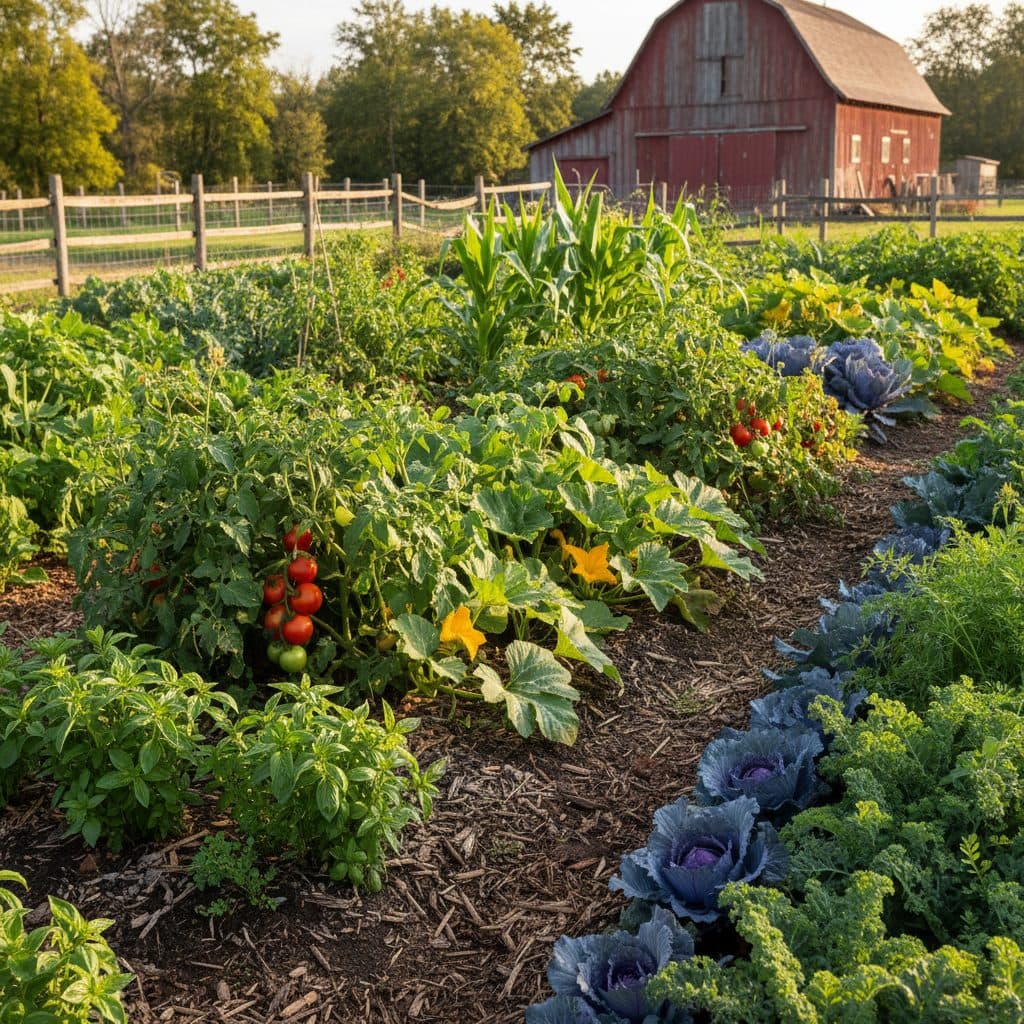
Polyculture is the deliberate cultivation of multiple crops in the same space, mimicking natural ecosystems. This strategy works by creating a complex environment that interrupts the ability of pests to locate and thrive on their host plants. Think of it like a busy city street compared to a quiet, empty highway—it’s much harder to find a specific target in a crowd. Researchers in 2022 developed new methods to quantify how mixed planting patterns confuse pests, making it easier for growers to implement these strategies [1].
the mechanisms of confusion
One primary mechanism is visual camouflage. Many insect pests locate their host plants by sight. When a target crop like cabbage is interplanted with a non-host crop like clover or marigolds, the visual cues for the cabbage moth are obscured. Another key mechanism is chemical masking. Plants release volatile organic compounds (VOCs) that pests use to sniff out their food. A diverse planting creates a cacophony of smells, making it difficult for a pest to pick out the specific scent of its preferred host. For example, interplanting carrots with onions can mask the carrot rust fly’s ability to find its host, reducing infestations by 40% in trials in USDA zone 5 gardens. This approach also attracts beneficial insects, like ladybugs and lacewings, which prey on common pests, often reducing aphid populations by 60% or more.
- Visual camouflage: Non-host plants block the view of target crops for pests.
- Chemical masking: Diverse plant scents overwhelm pest olfactory systems.
- Trap cropping: Planting a more attractive ‘sacrifice’ crop away from the main crop.
- Repellent plants: Crops that emit compounds actively disliked by pests, reducing their presence by 20%.
- Increased biodiversity: Attracts natural predators and parasitoids, creating a balanced ecosystem.
Interplanting strategies for specific pests
Interplanting is a specific form of polyculture where two or more crops are grown in close proximity for mutual benefit. This can be as simple as planting rows of basil between tomato plants or more complex systems involving multiple species. The key is selecting plant combinations that work together to deter pests or attract beneficial insects. For instance, in a 2020 study in Oregon, interplanting peppermint in strawberry fields significantly reduced the presence of Drosophila suzukii, also known as spotted-wing drosophila, a notoriously difficult pest to control [4]. The peppermint’s strong scent acted as a repellent, leading to a 25% reduction in fruit damage.
effective plant pairings
Another classic example is the ‘three sisters’ method—corn, beans, and squash—practiced by Indigenous peoples for centuries in regions like the Northeast and Southwest. The corn provides a trellis for the beans, the beans fix nitrogen in the soil, and the squash shades the ground, suppressing weeds and deterring pests with its spiny leaves. This system can increase overall yield per acre by 15% compared to monocultures of each crop. For controlling aphids, planting nasturtiums near susceptible crops like broccoli or lettuce can act as a trap crop, drawing aphids away from the main harvest. You can then easily manage the aphids on the nasturtiums, often by simply washing them off with a strong spray of water every few days, protecting 80% of your primary crop. Consider also planting marigolds around your vegetable beds; their roots release compounds that deter nematodes, reducing root damage by 50% in sandy soils common in Florida.
- Peppermint and strawberry: Deters Drosophila suzukii by 20% to 25%.
- Corn, beans, and squash: A traditional ‘three sisters’ system that offers structural support, nitrogen fixation, and weed suppression.
- Nasturtiums as trap crops: Lure aphids away from vegetables, protecting up to 80% of the main crop.
- Marigolds for nematodes: Root exudates reduce nematode populations by 50% in affected soils.
- Onions and carrots: Mask the scent of carrots from carrot rust flies, decreasing damage by 40%.
Building soil health and diversity with polyculture
Beyond pest control, polyculture also supports ecosystem health, particularly in the soil. Diverse plant roots create a complex underground network that supports a wider array of microorganisms. This living soil is the foundation of a productive farm, providing essential nutrients and improving water retention. The USDA Natural Resources Conservation Service (NRCS) emphasizes the importance of soil health principles, many of which are inherently supported by polyculture practices [6]. For instance, cover cropping—a form of polyculture—can increase soil organic matter by 0.1% to 0.5% annually, leading to better soil structure and nutrient cycling.
feeding the soil, not just the plant
When you grow a variety of plants, you’re also providing a continuous supply of diverse organic matter to the soil through root exudates and decaying plant material. This feeds a wider range of soil microbes, which in turn make nutrients more available to plants. For example, legumes in a polyculture system can fix up to 100 pounds of nitrogen per acre per year, significantly reducing the need for synthetic nitrogen fertilizers. This also helps suppress weeds. A dense, diverse planting shades the soil, preventing weed seeds from germinating and outcompeting established crops. You can learn more about building organic gardening soil to support this process. This approach can reduce weed pressure by 50% to 70% compared to bare soil or monoculture fields, meaning less time spent on manual weeding or less reliance on natural weed killers.
- Enhanced microbial activity: Diverse root systems support a wider range of beneficial soil organisms, increasing nutrient availability by 20%.
- Nitrogen fixation: Legumes in the mix can add 50 to 100 pounds of nitrogen per acre annually.
- Improved soil structure: Varied root depths create channels for air and water, increasing infiltration rates by 15%.
- Weed suppression: Dense canopy and allelopathic compounds from certain plants reduce weed germination by 60%.
- Increased organic matter: Continuous plant residue contributes to higher soil carbon levels, improving water holding capacity by 10% to 20%.
Practical steps for implementing polyculture
Transitioning from monoculture to polyculture doesn’t have to be an overnight overhaul. Start small, perhaps with a 100 square foot garden plot or a single field edge. Observe what works in your specific USDA zone—whether that’s zone 4 in Minnesota or zone 9 in Florida—and adjust. One key aspect is understanding the nutrient needs of your chosen plant combinations. For example, heavy feeders like corn will benefit from nitrogen-fixing companions, but ensure they don’t compete too aggressively for other resources. You can supplement soil health with products like fermented soybean meal organic fertilizer, which provides a slow-release nitrogen boost.
getting started with diversity
Consider the spacing of your plants. While dense planting can suppress weeds, overcrowding can lead to competition for light and water, potentially reducing yields by 10% to 20%. Aim for a balance that allows each plant to thrive. Crop rotation is also a powerful tool that complements polyculture. Even within a polyculture system, rotating your plant combinations every one to three years helps prevent the buildup of specific soil-borne diseases and pest populations. For instance, if you’ve grown tomatoes and basil together for two seasons, switch to a different combination like peppers and marigolds for the third season. This strategy can reduce the incidence of soil-borne diseases by up to 50%. Documenting your observations, which plants thrive together, which combinations deter pests, and how your soil health changes, will help as you expand your polyculture efforts. Many growers in the Pacific Northwest have found success by starting with a 1-acre trial plot, carefully monitoring results before scaling up to 5 or 10 acres.
- Start small: Begin with a 100 square foot area or a specific section of your farm.
- Observe and adapt: Pay attention to plant interactions and pest responses in your specific climate zone, like USDA zone 6.
- Research plant companions: Choose species known to have beneficial interactions, such as a 30% reduction in pest damage.
- Manage spacing: Ensure adequate room for light and air circulation to prevent competition and disease, maintaining a 6-inch spacing between smaller plants.
- Incorporate crop rotation: Even within polyculture, rotate plant families every one to three years to break pest and disease cycles.
Monoculture vs. Polyculture: A grower’s perspective
Feature | Monoculture | Polyculture |
|---|---|---|
Pest & Disease Management | High reliance on synthetic pesticides, frequent outbreaks, up to 30% crop loss. | Natural pest confusion, beneficial insect attraction, 20-50% reduction in pest damage. |
Soil Health | Nutrient depletion, reduced organic matter (often below 2%), increased erosion. | Improved soil structure, enhanced microbial diversity, 0.5% annual increase in organic matter. |
Weed Control | Heavy tillage or herbicide use, persistent weed pressure. | Natural suppression through canopy cover and competition, 50-70% reduction in weed growth. |
Biodiversity | Low, limited habitat for wildlife and beneficial insects. | High, supports a wide range of insects, birds, and soil organisms, increasing overall farm resilience by 40%. |
Input Costs | High for fertilizers, pesticides, and specialized machinery, can be $200-$400 per acre. | Lower over time due to reduced need for chemicals, potentially saving $100-$250 per acre. |
Pest reduction: Interplanting can reduce specific pest populations, like Drosophila suzukii in strawberries, by 20% to 25%.
Nitrogen boost: Legumes in a polyculture system can fix up to 100 pounds of nitrogen per acre annually, reducing fertilizer needs.
Soil organic matter: Polyculture practices, including cover cropping, can increase soil organic matter by 0.1% to 0.5% annually.
Browse organic gardening guides
Frequently asked questions
What is the main difference between polyculture and interplanting?
Polyculture is a broad term for growing multiple crops in the same area, often over a larger scale, while interplanting is a specific technique within polyculture where two or more crops are grown in very close proximity, often in the same row or bed, to achieve a specific benefit like pest deterrence, typically within a 5-foot radius.
How does polyculture help with weed management?
Polyculture helps manage weeds by creating a dense canopy that shades the soil, preventing weed seeds from germinating. Additionally, some companion plants release allelopathic compounds that naturally suppress weed growth, reducing weed pressure by 50% to 70% compared to bare ground.
Can polyculture be used in large-scale farming operations?
Yes, polyculture principles can be adapted for large-scale operations. While not always feasible to interplant every row, strategies like strip cropping, diverse cover cropping over hundreds of acres, and hedgerows for beneficial insects are effective. Many farms in the Midwest are experimenting with diverse crop rotations over 50-acre plots to improve soil health.
What are some easy companion plant combinations for beginners?
For beginners, easy combinations include basil with tomatoes to deter flies, marigolds around vegetables to repel nematodes and whiteflies, and planting radishes near spinach to draw away leaf miners. These pairings can reduce pest damage by 10% to 30% in a typical home garden plot of 10×10 feet.
How long does it take to see benefits from polyculture?
Some benefits, like pest confusion from strong-smelling companion plants, can be observed within a single growing season, often reducing immediate pest damage by 20%. Long-term benefits, such as significant improvements in soil organic matter and increased beneficial insect populations, typically become noticeable after two to three years of consistent practice, leading to a 0.5% increase in soil organic matter annually.
References
- Researchers just made it easier—and cheaper—to confuse crop pests (2022). Researchers just made it easier—and cheaper—to confuse crop pests.
- Monocultures and Pests (2002). Monocultures and Pests.
- Monocultures vs. polyculture of microalgae: unveiling physiological changes to facilitate growth in ammonium rich‐medium (2024). Monocultures vs. polyculture of microalgae: unveiling physiological changes to facilitate growth in ammonium rich‐medium.
- Effects of interplanting peppermint (Lamiaceae) in strawberry (Rosaceae) on<i>Drosophila suzukii</i>(Diptera: Drosophilidae) and seed-feeding pests (Hemiptera: (2020). Effects of interplanting peppermint (Lamiaceae) in strawberry (Rosaceae) on<i>Drosophila suzukii</i>(Diptera: Drosophilidae) and seed-feeding pests (Hemiptera: .
- Interplanting of a deficient soybean stand (2023). Interplanting of a deficient soybean stand.
- USDA Natural Resources Conservation Service (2024). USDA Natural Resources Conservation Service.