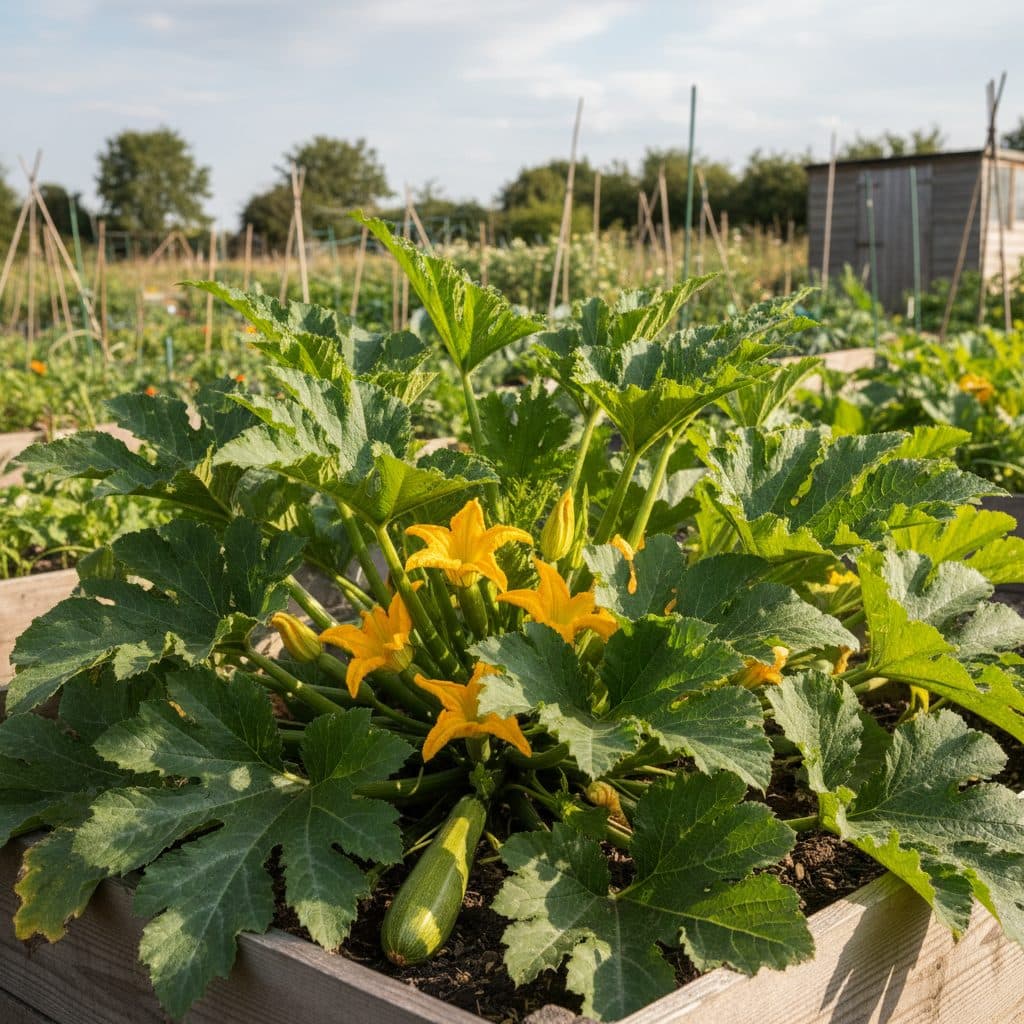
Key takeaways
- Sow courgette seeds indoors in April on a sunny windowsill or greenhouse, or direct sow outside in late May once frost risk has passed.
- Harden off young plants over 7 to 10 days before planting out in late May or early June into soil enriched with garden compost.
- Space bush varieties 90 cm apart in all directions to ensure adequate airflow and reduce the spread of powdery mildew.
- Incomplete pollination causes small fruits to turn yellow and rot from the blossom end; hand pollination quickly resolves early-season drops.
- Manage slugs physically with nocturnal hand-picking and beer traps, avoiding withdrawn chemical slug pellets.
- Cut fruits regularly when they reach 10 to 15 cm in length to encourage plants to produce new blossoms through autumn.
Quick answer: For reliable yields in the UK, sow courgette seeds on their edge in 7.5 cm pots under cover in mid to late April, or direct sow outside in late May. Plant out in early June into fertile, moisture-retentive soil in full sun, space bush varieties 90 cm apart, water generously around the base, and harvest young fruits at 10 to 15 cm to keep plants cropping until the first October frosts.
Courgettes (Cucurbita pepo) are among the most productive summer vegetables you can cultivate on a UK allotment, kitchen garden, or patio container. A single healthy bush yields dozens of tender fruits across the summer, provided it receives adequate moisture, fertile soil, and warmth.
Growing courgettes in the British climate requires protecting tender seedlings from late spring cold snaps and hungry molluscs. Because courgette foliage and blossoms are frost-sensitive, match your sowing and transplanting to the end of local spring frosts.
Whether you cultivate traditional dark green varieties, yellow cylindrical types, or round climbing forms in a compact bed, this guide explains how to manage soil nutrition, solve common fruit rot problems, and harvest continuously until autumn.
+-------------------------------------------------------------+
|               UK COURGETTE SEASONAL CALENDAR                |
|                                                             |
|   MONTH             STAGE                                   |
|   -----             -----                                   |
|   April             Sow indoors on edge (18-21°C)           |
|   May               Harden off seedlings / Direct sow late  |
|   June              Plant out into compost-rich beds        |
|   July - August     Peak flowering, feeding, and watering   |
|   Sept - October    Continuous harvest until first frost    |
+-------------------------------------------------------------+
When should you sow courgette seeds in the UK?
Courgette seeds germinate quickly in warm conditions, typically emerging within 5 to 10 days. Sowing too early indoors leads to leggy, root-bound plants that struggle when transplanted into cold ground.
+-------------------------------------------------------------+
|                  SOWING METHOD COMPARISON                   |
|                                                             |
|   METHOD            TIMING          CONDITIONS              |
|   ------            ------          ----------              |
|   Indoor Pots       Mid-Late April  Warm windowsill (18°C+) |
|   Heated Propagator Early April     Consistent bottom heat  |
|   Outdoor Direct    Late May - June Soil temperature > 15°C |
+-------------------------------------------------------------+
Indoor sowing under cover
Start seeds indoors from mid to late April. Fill 7.5 cm pots with multi-purpose peat-free compost. Insert seeds on edge roughly 2 cm deep instead of laying them flat; laying them flat can cause irrigation water to pool on the seed coat, leading to rot before germination.
Water the pots lightly with tepid water and place them in a bright position at 18°C to 21°C. Once the seedlings develop their first true leaves, move them to a cooler, well-lit position such as an unheated greenhouse or bright cold frame to prevent stem elongation.
Direct sowing outdoors
In southern England and sheltered urban microclimates, you can direct sow courgette seeds outside from late May to early June. Ensure the soil has warmed to at least 15°C. Plant two seeds per station 2 cm deep, covering them with an inverted glass jar or plastic cloche to protect against chilly nights. Once both seeds sprout, thin to leave the strongest seedling.
For more on plant establishment phases, see our guide to vegetable growth stages explained.
Which courgette varieties thrive on UK plots?
Modern cultivars offer better resistance to powdery mildew, open growth habits that make harvesting easier, and compact forms suited to small allotments:
+-------------------------------------------------------------+
|              POPULAR UK COURGETTE VARIETIES                 |
|                                                             |
|   VARIETY          GROWTH HABIT     DISTINCT TRAITS         |
|   -------          ------------     ---------------         |
|   Defender         Open bush        Heavy cropper, CMV res. |
|   Midnight         Compact bush     Ideal for large pots    |
|   Goldrush         Upright bush     Bright golden yellow    |
|   Black Forest     Climbing vining  Trellis-trained form    |
|   Tondo di Nizza   Bush             Round light green fruit |
+-------------------------------------------------------------+- 'Defender': A high-yielding F1 hybrid producing smooth, dark green fruits with good resistance to cucumber mosaic virus. Its open foliage structure makes locating and cutting fruits straightforward.
- 'Midnight': A compact, short-jointed bush variety bred specifically for small gardens and container cultivation.
- 'Goldrush': Produces slender, bright yellow fruits with a sweet flavour. The yellow skins make the developing courgettes easy to spot amongst dense green foliage.
- 'Black Forest': A unique climbing variety that can be tied to a sturdy trellis or canes, saving valuable horizontal bed space on small plots.
For growers interested in vertical support techniques, explore vining crops in pots and vertical setups.
How do you plant out and space courgettes?
Courgettes are gross feeders that develop broad, spreading root systems and wide canopies. Soil preparation directly influences fruit yield:
- Soil enrichment: Dig in a generous bucket of well-rotted garden compost or well-rotted farmyard manure per planting station two weeks before planting out.
- Hardening off: Begin acclimatising indoor-raised plants in mid-May. Place pots outside in a sheltered spot during the day and bring them in at night for 7 to 10 days before final planting.
- Spacing requirements: Allow 90 cm between individual plants. Crowding courgette plants restricts air movement, creating a humid microclimate that accelerates fungal leaf diseases.
- Mounding: In heavy clay soils prone to waterlogging, plant courgettes on slight mounds 10 cm above the surrounding soil surface to encourage rapid drainage around the main crown.
When planning bed rotations alongside root crops, pair your plot layout with growing parsnips and growing runner beans.
Why are your courgette flowers dropping without fruit?
A frequent frustration for gardeners in early summer is watching blossoms drop off the plant while tiny embryonic fruits turn yellow, shrivel, and rot from the tip.
+-------------------------------------------------------------+
|             FLOWER & FRUIT SET TROUBLESHOOTING              |
|                                                             |
|   SYMPTOM                 CAUSE               REMEDY        |
|   -------                 -----               ------        |
|   Only male flowers       Immature plant      Wait 1-2 wks  |
|   Yellow rotting tip      Poor pollination    Hand pollinate|
|   Blossoms drop early     Cold overcast days  Attract bees  |
|   Lush leaf, no bloom     Excess nitrogen     Potash feed   |
+-------------------------------------------------------------+
Understanding male and female flowers
Courgettes produce separate male and female flowers on the same plant. Female flowers are easily identified by the small, swollen immature courgette located directly behind the petals. Male flowers sit on long, thin, plain stems.
Early in the season, plants often produce only male flowers. This is normal behaviour while the root system gathers strength. Once the plant matures, both flower types open simultaneously.
Assisting pollination by hand
If cold, wet weather keeps bumblebees and honeybees from visiting your plot, hand pollinate open flowers:
- Pick a fully open male flower in the morning.
- Carefully strip away the yellow petals to expose the pollen-covered central anther.
- Gently dab the anther onto the raised central stigma inside an open female flower.
- A single male flower usually carries enough pollen for more than one female.
To boost pollinator visitation naturally across your vegetable patch, integrate companion plantings as outlined in trap cropping with nasturtiums, squash, and mustard.
How do you manage powdery mildew and slugs without pesticides?
UK regulations on garden chemicals are strict, and pesticide approvals change frequently. Healthy courgettes can be maintained entirely through cultural and physical controls.
+-------------------------------------------------------------+
|             ORGANIC PEST & DISEASE MANAGEMENT               |
|                                                             |
|   CHALLENGE        SYMPTOM             CULTURAL SOLUTION    |
|   ---------        -------             -----------------    |
|   Slugs & Snails   Rasping on stems    Beer traps, collars  |
|   Powdery Mildew   White powdery film  Base watering, prune |
|   Aphids           Curled young leaves Water jet, ladybirds |
+-------------------------------------------------------------+
Physical slug protection
Young courgette seedlings are magnets for slugs and snails during damp spring evenings. Protect vulnerable transplants by:
- Copper tape and grit barriers are widely sold, but garden trial evidence for them is weak; bottle collars, traps and hand-collecting do more.
- Setting up sunken beer traps around the perimeter of the bed.
- Hand-picking molluscs by torchlight during damp evenings.
- Keeping the soil surface immediately around the stem free of decaying plant matter.
Mitigating powdery mildew (Podosphaera xanthii)
By late August, almost all UK courgette plants develop patches of white powdery fungal growth on older leaves (Podosphaera xanthii; Golovinomyces cichoracearum causes the same symptoms in cooler summers). While late-season mildew rarely kills the plant, you can delay its onset:
- Always water directly at the base of the plant using a watering can with the rose removed; avoid wetting the foliage.
- Water early in the morning so incidental moisture evaporates quickly.
- Prune out heavily infected lower leaves with clean secateurs and place them in the council green waste bin if your home compost heap does not achieve high thermal temperatures.
How and when should you harvest courgettes?
Frequent harvesting extends the courgette season from July through October.
- Ideal size: Cut courgettes when they are 10 to 15 cm long. At this stage, the flesh is dense, the seeds are tiny, and the skin is thin and tender.
- Harvesting technique: Use a sharp knife or secateurs to slice through the stem 1 cm above the fruit. Twisting or pulling fruits can tear the main stem and introduce fungal pathogens.
- Harvest frequency: Check your plants every two to three days during warm summer spells. Courgettes grow rapidly and can transform into giant, watery marrows within 48 hours.
- Edible flowers: Female blossoms with immature fruits attached and surplus male flowers can be picked early in the morning, stuffed with ricotta, and lightly fried.
By maintaining consistent soil moisture, feeding every two weeks with an organic high-potassium liquid tomato fertiliser once fruiting begins, and keeping the plants picked clean, your kitchen garden will produce a steady harvest right up to the autumn frosts.