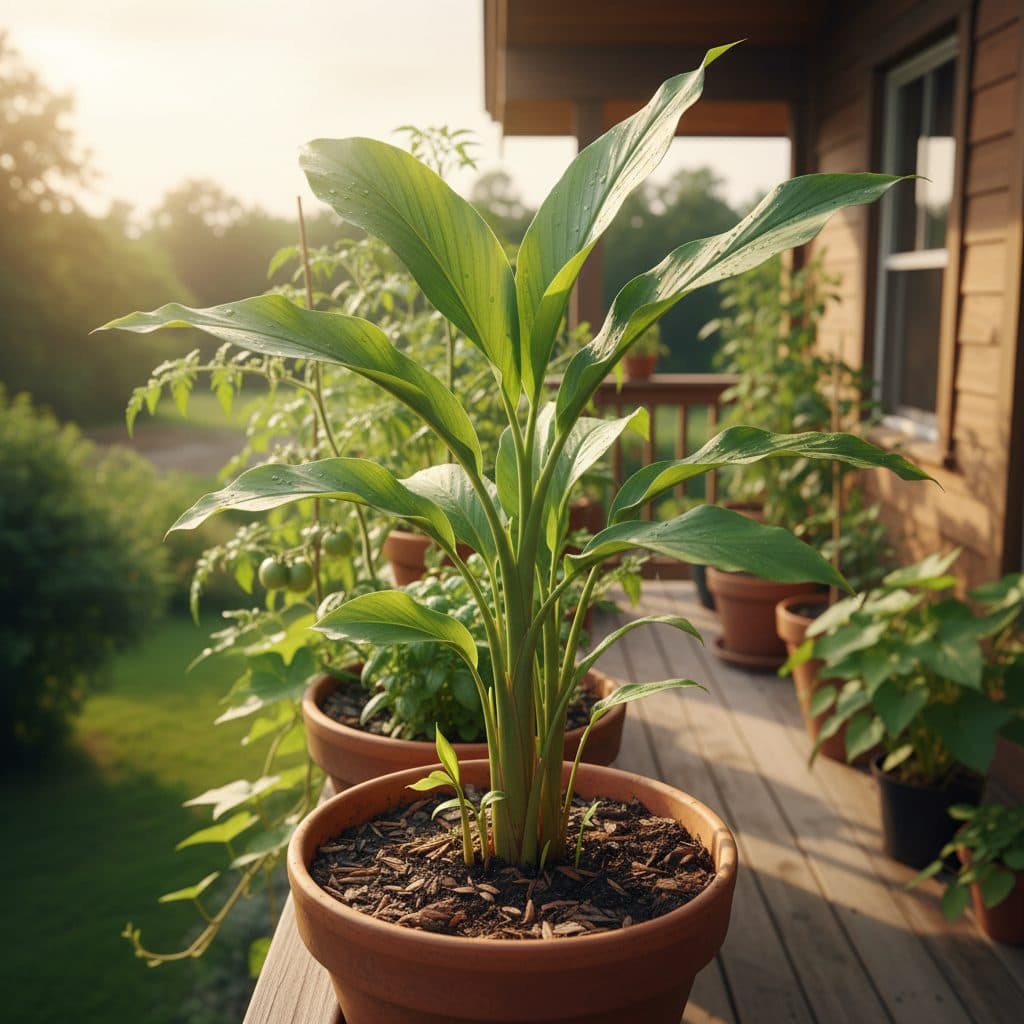
Key takeaways
- Turmeric (Curcuma longa) requires a long growing season, typically eight to ten months, making container cultivation essential for colder USDA zones 3-7.
- Choose containers at least 15 gallons in volume and 12-18 inches wide, ensuring excellent drainage with multiple 0.5-inch holes.
- Plant healthy rhizome pieces, 1-2 inches long with visible ‘eyes,’ 2-3 inches deep in a well-draining, organic-rich potting mix with a pH of 6.0-7.0.
- Maintain consistent soil moisture and fertilize every three to four weeks during the growing season with a balanced liquid fertilizer.
- Harvest turmeric when leaves begin to yellow, typically eight to ten months after planting, before the first hard frost.
- Overwinter plants indoors before temperatures drop below 45°F, allowing them to go dormant in a cool, dark place at 50-60°F with minimal watering.
Quick answer: To grow turmeric in containers in USDA zones 3-7, use 15-gallon pots with well-draining soil, plant 1-2 inch rhizome pieces, and overwinter plants indoors in a cool, dark place at 50-60°F.
In states like Minnesota or Vermont, where winter temperatures regularly drop below 0°F, growing tropical plants like turmeric (Curcuma longa) might seem impractical. However, with careful container cultivation and indoor overwintering, gardeners in USDA zones 3-7 can successfully harvest this valuable spice. This approach creates a controlled environment that protects the plant from harsh outdoor conditions.
Turmeric, a member of the ginger family, thrives in warm, humid climates, typically USDA zones 8-11. Its rhizomes, the part we harvest, require a long growing season—often eight to ten months—to mature fully. By starting plants indoors early and moving them outside after the last frost, then bringing them back in before the first autumn chill, growers can mimic these ideal conditions, which extends the effective growing period significantly. For more general advice, consider visiting our Vegetable gardening for beginners: your questions answered resource.
The benefits of container growing for turmeric
Growing turmeric in containers offers significant advantages for gardeners outside its native tropical range, especially in USDA zones 3-7. The primary benefit is the ability to provide a controlled environment, shielding the plant from cold temperatures that would otherwise kill it. For instance, in northern Ohio, where winter lows can reach -10°F, turmeric would not survive outdoors year-round. Container growing also allows for precise management of soil conditions, which matters for optimal root development and nutrient uptake. You can tailor the potting mix to meet the plant’s specific needs to ensure good drainage and aeration.
mobility and pest management
Another key advantage is mobility. Plants can be moved indoors when nighttime temperatures consistently drop below 50°F in early autumn, and then back outside after the last spring frost, typically when temperatures are above 65°F. This flexibility extends the growing season by several months. Container cultivation also helps in managing soilborne diseases and pests, as the growing medium is less likely to harbor pathogens compared to open garden soil. It also offers harvest flexibility, allowing you to harvest individual rhizomes without disturbing the entire plant, which can be beneficial for a continuous supply over a period of up to two months.
- Protection from cold snaps below 45°F.
- Customization of soil pH and nutrient levels.
- Easier management of localized pests and diseases.
- Flexibility to move plants to optimal light conditions.
- Harvesting individual rhizomes without plant removal.
Selecting containers and preparing the growing medium
The success of container-grown turmeric hinges on selecting the right container and preparing an optimal growing medium. Turmeric rhizomes spread horizontally, so choose a pot that is wide rather than deep. A container with a minimum volume of 15 gallons, and at least 12-18 inches in diameter, is ideal for one to three rhizome pieces. Ensure the container has excellent drainage with multiple 0.5-inch holes at the bottom, as turmeric is highly susceptible to root rot in waterlogged conditions. Terracotta pots offer good aeration but dry out quickly, while plastic pots retain moisture longer, which can be a benefit in dry climates like eastern Colorado.
crafting the ideal potting mix
For the growing medium, a rich, well-draining potting mix is essential. Avoid heavy garden soil, which compacts easily and restricts root growth. A good blend consists of one-third high-quality compost, one-third coco coir or peat moss, and one-third perlite or coarse sand. This mixture provides ample organic matter and ensures good aeration and drainage. Aim for a pH range between 6.0 and 7.0, which is slightly acidic to neutral. You can test your soil pH using a home kit, adjusting with lime to raise pH or sulfur to lower it, if necessary, by small increments over several weeks.
- Minimum container size of 15 gallons for optimal growth.
- Container diameter of 12-18 inches to allow rhizome spread.
- Multiple 0.5-inch drainage holes to prevent waterlogging.
- Potting mix composed of compost, coco coir, and perlite.
- Ideal soil pH between 6.0 and 7.0 for nutrient availability.
Planting turmeric rhizomes for a strong start
Starting turmeric involves selecting healthy rhizomes and providing them with the right conditions to sprout. Obtain healthy rhizomes from a reputable nursery or organic food store, ensuring they are plump and firm, without any signs of rot or mold. Look for pieces that have small bumps or nodes, known as “eyes” or buds, as these are where new shoots will emerge. Each planting piece should be 1-2 inches long and contain at least one eye. You can pre-sprout rhizomes indoors by placing them in a warm, humid environment, such as a plastic bag with damp peat moss, at around 70-75°F for two to three weeks.
planting depth and initial watering
Once sprouted, plant the rhizome pieces about 2-3 inches deep in your prepared container, with the eyes facing upwards. If planting multiple pieces in a large container, space them 6-8 inches apart to allow for future growth. After planting, water thoroughly until water drains from the bottom of the pot. Maintain consistent moisture in the soil, but avoid overwatering, especially in the initial weeks before shoots appear. Place the container in a warm location, ideally above 65°F, with bright, indirect light. Shoots typically emerge in four to six weeks, depending on temperature and rhizome viability. A soil moisture meter can be a useful tool to ensure proper watering.
- Select rhizome pieces 1-2 inches long with visible ‘eyes.’
- Pre-sprout rhizomes in a warm, humid environment at 70-75°F.
- Plant rhizome pieces 2-3 inches deep with eyes facing up.
- Space multiple pieces 6-8 inches apart in large containers.
- Water thoroughly after planting and maintain consistent moisture.
Nourishing and harvesting your turmeric crop
Once your turmeric plants are actively growing, they require consistent care to produce a good harvest. Turmeric is a heavy feeder, so regular fertilization is important. Begin feeding with a balanced liquid fertilizer (e.g., 10-10-10 or 5-5-5) every three to four weeks once the plants have established several leaves. Follow the product’s dilution instructions carefully to avoid nutrient burn. Ensure consistent moisture in the soil, especially during hot summer months when temperatures can exceed 90°F. Water deeply when the top inch of soil feels dry, but avoid letting the pot sit in standing water. Turmeric thrives in full sun to partial shade, needing at least six hours of direct sunlight daily.
pest and disease management, and harvest readiness
While generally robust, turmeric can occasionally face issues like spider mites or fungal leaf spot, especially in humid conditions. Inspect plants regularly and address problems promptly with appropriate organic treatments if necessary. The most exciting part is harvesting, which typically occurs 8-10 months after planting. In northern climates, this usually means late autumn, before the first hard frost. Signs of maturity include the yellowing and eventual browning of the leaves and stems. Once the foliage has largely died back, carefully tip the container and gently separate the rhizomes from the soil. You can save some of the smaller, healthier pieces for replanting next season and store them at around 55°F.
- Fertilize with a balanced liquid fertilizer every 3-4 weeks.
- Maintain consistent soil moisture, watering when the top inch is dry.
- Provide at least six hours of direct sunlight daily.
- Monitor for pests like spider mites and treat as needed.
- Harvest when leaves yellow and die back, 8-10 months after planting.
Overwintering turmeric rhizomes in colder climates
For gardeners in USDA zones 3-7, overwintering turmeric matters for perennial growth. Before the first frost or when nighttime temperatures consistently drop below 45°F, bring your potted turmeric plants indoors. At this point, the plant’s foliage will likely be yellowing or dying back, a sign the plant is entering dormancy. You have two main options for overwintering: keeping the plant in its pot or harvesting and storing the rhizomes.
indoor care and storage
If keeping the plant in its pot, reduce watering significantly. The goal is to keep the soil barely moist, preventing it from drying out completely but also avoiding rot. Place the pot in a cool, dark location, such as a basement or unheated garage, where temperatures remain between 50-60°F. Avoid direct sunlight during this dormant phase; indirect light is sufficient if the area isn’t completely dark. If you choose to harvest and store the rhizomes, clean them of soil, allow them to air dry for a few days, then store them in a paper bag or mesh sack filled with peat moss or sawdust. Maintain a storage temperature of 50-55°F. In spring, typically two to three months before the last frost, replant the stored rhizomes to start the cycle again. Consider using a Reflective Indoor Grow Tent if you want to maintain active growth through winter, though this requires more light and warmth.
- Bring plants indoors when temperatures consistently fall below 45°F.
- Reduce watering to allow the plant to enter dormancy.
- Store potted plants in a cool, dark place at 50-60°F.
- Alternatively, harvest and store rhizomes in peat moss at 50-55°F.
- Replant stored rhizomes 2-3 months before the last spring frost.
Turmeric Overwintering Methods Comparison
Method | Pros | Cons |
|---|---|---|
Potted (Dormant) | Less effort, plant remains intact, minimal disturbance to roots. Requires a cool, dark space (50-60°F). | Requires more space, potential for rot if overwatered, slower to re-emerge in spring. |
Harvested Rhizomes | Saves space, allows for inspection and selection of best rhizomes, easier to manage moisture. Storage at 50-55°F. | More labor-intensive, risk of drying out or rotting if not stored properly, requires replanting. |
Optimal Soil pH: Turmeric thrives in a soil pH range of 6.0-7.0, which is slightly acidic to neutral, ensuring optimal nutrient uptake for rhizome development.
Growing Season Length: Turmeric requires a long growing season of eight to ten months to fully mature its rhizomes, making indoor starting and overwintering critical in USDA zones 3-7.
Frequently asked questions
How much sunlight does container-grown turmeric need?
Container-grown turmeric needs at least six hours of direct sunlight per day during its active growing season. In very hot climates, like parts of Arizona, providing some afternoon shade can protect the leaves from scorching when temperatures exceed 90°F.
Can I grow turmeric from a piece bought at a grocery store?
Yes, you can often grow turmeric from a piece bought at a grocery store, provided it’s organic and hasn’t been treated with growth inhibitors. Look for firm, plump pieces about 1-2 inches long with visible ‘eyes’ or buds, which are the starting points for new shoots.
What is the ideal temperature range for turmeric growth?
Turmeric thrives in warm temperatures, ideally between 70-85°F, during its active growing phase. Temperatures consistently below 60°F will slow its growth significantly, and frost below 32°F will kill the plant.
How often should I water my potted turmeric?
During the active growing season, water your potted turmeric whenever the top 1 inch of soil feels dry to the touch. This might be daily in hot, dry conditions or every two to three days in milder weather, ensuring consistent moisture without waterlogging.
When is the best time to start turmeric indoors in colder zones?
In colder USDA zones 3-7, the best time to start turmeric indoors is typically eight to ten weeks before your last anticipated frost date. This allows the rhizomes to sprout and develop a strong root system before being moved outdoors when temperatures are consistently above 65°F.
References
- USDA Natural Resources Conservation Service (2024). USDA Natural Resources Conservation Service.
- SARE — Sustainable Agriculture Research & Education (2023). SARE — Sustainable Agriculture Research & Education.
- ATTRA / NCAT Sustainable Agriculture (2023). ATTRA / NCAT Sustainable Agriculture.