Key takeaways
- Ginger thrives in warm, humid conditions, requiring a minimum soil temperature of 68°F for successful growth in USDA zones 8-11.
- Well-draining, loamy soil rich in organic matter, with a pH between 6.0 and 6.8, matters for optimal ginger development.
- Plant ginger rhizome pieces 1-2 inches deep and 6-8 inches apart in beds that receive 2-5 hours of direct morning sun and afternoon shade.
- Regular hilling every 3-4 weeks, adding 2-3 inches of soil or compost, promotes larger rhizome development and protects the growing plant.
- Consistent moisture, approximately 1 inch of water per week, is vital throughout the growing season to support strong ginger growth.
- Harvest mature ginger 8-10 months after planting, once the leaves begin to yellow, or ‘baby’ ginger after 4-6 months for a milder flavor.
Quick answer: To grow ginger in USDA zones 8-11, plant rhizomes 1-2 inches deep in well-draining, loamy soil with a pH of 6.0-6.8, ensuring 2-5 hours of morning sun and afternoon shade. Maintain consistent moisture and hill plants every 3-4 weeks for optimal rhizome development.
Growing fresh ginger (Zingiber officinale) in your backyard is a rewarding project for gardeners in warmer climates, specifically USDA zones 8 through 11. While often associated with tropical regions, many areas in the southern United States, from central Florida to coastal California, offer suitable conditions for this aromatic spice. Achieving a successful harvest of plump, flavorful rhizomes requires careful planning, particularly concerning bed preparation, consistent hilling, and providing the right amount of partial shade.
This guide will walk you through the essential steps for cultivating ginger in-ground, from selecting the ideal planting site to harvesting your crop. We will cover specific soil amendments, planting techniques, and ongoing care that can lead to a bountiful yield, often many times the weight of the original planting material. With attention to detail and a bit of patience, you can enjoy the distinct taste of homegrown ginger in your kitchen for many months of the year.
Understanding ginger’s climate and soil requirements
Ginger is a tropical plant that flourishes in warm, humid environments, making it a viable crop for gardeners in USDA zones 8, 9, 10, and 11. The plant requires a long growing season, typically 8-10 months, with consistent temperatures above 68°F. In regions like central Florida or coastal Louisiana, these conditions are often met from late spring through early winter, allowing for a full growth cycle.
ideal soil composition for ginger
The ideal soil for ginger cultivation is well-draining, loose, and rich in organic matter. A loamy soil texture, which contains a balanced mix of sand, silt, and clay, is preferred, allowing for good aeration and water retention without becoming waterlogged. The soil pH should ideally fall between 6.0 and 6.8. Amending your soil with 2-3 inches of well-rotted compost or aged manure can significantly improve its structure, fertility, and drainage. This preparation is critical for the development of healthy ginger rhizomes, which grow horizontally just beneath the soil surface.
- Warm temperatures: Consistent 68°F to 85°F
- High humidity: Around 60-70% relative humidity
- Long growing season: 8-10 months without frost
- Well-draining soil: Prevents root rot
- Rich in organic matter: Supports nutrient uptake
Site selection and bed preparation for optimal growth
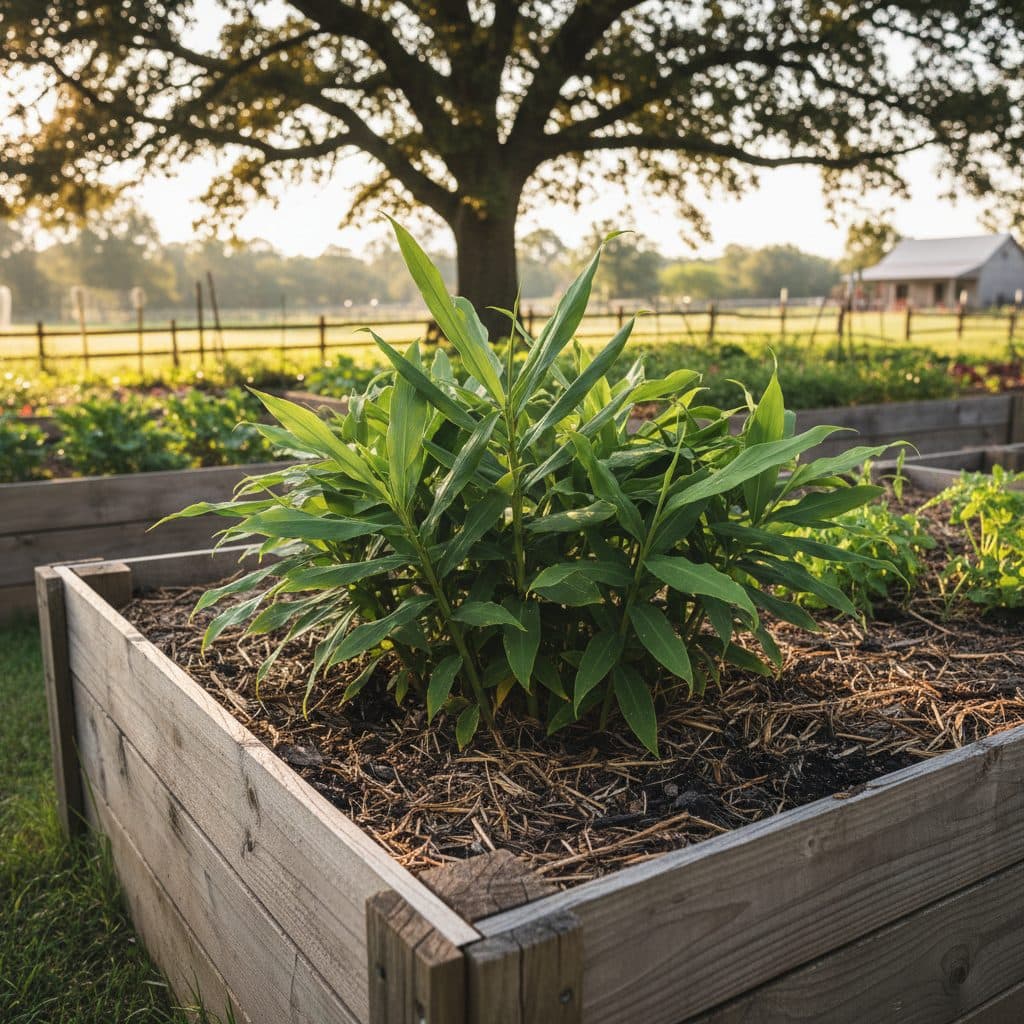
Selecting the right site for your ginger patch is paramount to its success. Ginger thrives in partial shade, preferring 2-5 hours of direct morning sun and protection from the intense afternoon sun, especially in hotter climates like USDA zone 10 and 11. A location under the dappled shade of a deciduous tree or on the east side of a building can provide this ideal light exposure. Raised beds are often recommended for ginger, as they allow for better drainage and easier soil amendment, reaching a depth of 8-12 inches. These beds can be 3-4 feet wide, allowing for comfortable access from both sides.
building a nutrient-rich ginger bed
Once you have chosen your site, preparing the bed is the next critical step. Dig down at least 12 inches and incorporate a substantial amount of organic material. For every 10 square feet of bed space, add 2-3 cubic feet of well-aged compost, leaf mold, or aged manure. This improves soil structure and provides a steady supply of nutrients throughout the growing season. If your soil is heavy clay, build the bed up with compost and grow in raised beds rather than mixing sand in — small additions of sand fill the pore space between clay particles and leave the soil denser and slower-draining than before. This thorough preparation ensures the ginger rhizomes have ample space and nutrients to expand.
- Choose a spot with 2-5 hours of morning sun.
- Ensure afternoon shade, especially in hot zones.
- Opt for raised beds 8-12 inches deep.
- Amend soil with 2-3 cubic feet of compost per 10 sq ft.
- Test soil pH to ensure it’s between 6.0 and 6.8.
Planting and initial care for young ginger
The best time to plant ginger in USDA zones 8-11 is in early spring, after all danger of frost has passed and soil temperatures consistently reach at least 68°F. In south Florida, this might be as early as March, while in parts of zone 8, it could be late April or early May. Start with fresh, plump ginger rhizomes, preferably organic, from a local nursery or a reputable online supplier. Look for pieces that are 1-2 inches long and have at least one or two visible ‘eyes’ or growth buds. You can pre-sprout them indoors in a warm, moist environment for 2-3 weeks to give them a head start.
planting ginger rhizomes and early watering
Plant the ginger pieces 1-2 inches deep with the ‘eyes’ facing upwards, spacing them 6-8 inches apart in rows that are 12 inches apart. After planting, water thoroughly but gently to settle the soil around the rhizomes. Consistent moisture is vital for ginger, which typically requires about 1 inch of water per week during its active growth phase, especially in dry periods. Avoid overwatering, as standing water can lead to rot. Mulching the bed with 2-3 inches of straw or shredded leaves can help retain soil moisture, suppress weeds, and maintain a more consistent soil temperature. This initial care supports strong growth over the next several months, leading to a healthy plant and a good harvest. For more on starting a productive garden, consider our guide on starting a herb garden.
- Plant in early spring after frost danger.
- Use 1-2 inch rhizome pieces with visible ‘eyes’.
- Plant 1-2 inches deep and 6-8 inches apart.
- Water consistently, providing 1 inch per week.
- Mulch with 2-3 inches of organic material.
Hilling and ongoing maintenance for a strong harvest
As your ginger plants grow, typically reaching 2-4 feet tall, ongoing maintenance matters most for maximizing your harvest. One of the most important practices is hilling. Starting about 4-6 weeks after planting, once the shoots are 6-8 inches tall, begin to gently mound soil or compost around the base of the plants. Repeat this process every 3-4 weeks, adding 2-3 inches of material each time, until the plants are mature. Hilling encourages the rhizomes to grow larger and closer to the surface, making them easier to harvest and protecting them from direct sunlight.
feeding and protecting your ginger crop
Ginger is a heavy feeder, so regular fertilization is beneficial. Every 3-4 weeks, apply a balanced liquid fertilizer, such as a 5-10-10 or 10-10-10 NPK solution, diluted according to package directions. Alternatively, top-dress with a 1-inch layer of compost every 6-8 weeks. Keep the bed free of weeds, as they compete for nutrients and moisture; shallow weeding is best to avoid disturbing the developing rhizomes. Pests and diseases are generally not a major issue for ginger, but watch for signs of root rot in overly wet conditions, especially during prolonged wet spells. Proper air circulation and drainage, aided by hilling and raised beds, are your best defenses. For managing weeds, consider using ground cover plants in pathways around your beds, as detailed in Ground cover plants: the right choice for slopes, dry shade, and lawn-free yards.
- Begin hilling 4-6 weeks after planting.
- Add 2-3 inches of soil/compost every 3-4 weeks.
- Fertilize every 3-4 weeks with a balanced liquid feed.
- Weed shallowly to protect rhizomes.
- Monitor for root rot in excessively wet conditions.
Harvesting and storing your homegrown ginger
The most satisfying part of growing ginger is the harvest, which typically occurs 8-10 months after planting, usually in late fall or early winter in USDA zones 8-11. You will know your ginger is ready when the leaves begin to yellow and the stalks start to fall over. At this point, the rhizomes have reached their full size and flavor potential. For a milder, less fibrous product known as ‘baby’ ginger, you can harvest earlier, around 4-6 months after planting, by carefully digging up a portion of the rhizome from the side of the plant without disturbing the main plant. This allows the rest of the plant to continue growing for a later, larger harvest.
post-harvest care and storage techniques
To harvest mature ginger, gently loosen the soil around the plant with a garden fork, being careful not to damage the rhizomes. Lift the entire plant, shake off excess soil, and cut the stalks about 1 inch above the rhizomes. Cure the harvested ginger by leaving it in a warm, dry, shaded area (around 70°F) for 1-2 days to allow the skin to toughen slightly. After curing, store whole, unpeeled rhizomes in a cool, dark, well-ventilated place, such as a basement or pantry, at temperatures between 55-60°F. Stored this way, ginger can last for several weeks. For longer storage, up to 6 months, you can freeze whole or grated ginger in airtight containers or bags.
- Harvest mature ginger 8-10 months after planting.
- Look for yellowing leaves and falling stalks.
- Harvest ‘baby’ ginger at 4-6 months for a milder taste.
- Cure ginger for 1-2 days at 70°F after harvest.
- Store cured ginger at 55-60°F for several weeks.
In-ground vs. Container Growing for Ginger
Feature | In-ground Cultivation | Container Cultivation |
|---|---|---|
Space Required | Large, dedicated bed (e.g., 3×4 ft) | Minimum 15-gallon pot, 18-24 inches wide |
Soil Volume | Unlimited, deep root run for rhizomes | Limited to pot size, requires more frequent feeding |
Watering Frequency | Less frequent, 1 inch per week | More frequent, often daily in hot weather |
Temperature Control | Limited, relies on local climate (zones 8-11) | Portable, can be moved indoors if temperatures drop below 50°F |
Yield Potential | Higher, larger rhizomes over 8-10 months | Moderate, smaller rhizomes, often 5-10 lbs per pot |
Ease of Hilling | Requires mounding soil around plants | Easier, just add more potting mix to the container |
Soil Temperature: Ginger rhizomes require a minimum soil temperature of 68°F to sprout and grow effectively, with optimal growth occurring between 75-85°F.
Organic Matter: Incorporating 2-3 cubic feet of compost per 10 square feet of bed improves drainage and moisture holding in the top few inches, which is where ginger rhizomes run.
Harvest Time: Mature ginger is typically harvested 8-10 months after planting, yielding rhizomes that are many times the weight of the original planting material.
Frequently asked questions
What USDA zones are best for growing ginger in-ground?
Ginger thrives in USDA zones 8-11, where it can experience a long, warm growing season of 8-10 months without frost. Areas with consistent temperatures above 68°F are ideal for successful cultivation.
How much sun does ginger need?
Ginger prefers partial shade, specifically 2-5 hours of direct morning sun, followed by protection from the intense afternoon sun. Too much direct sun, especially in zones 10 and 11, can scorch the leaves and reduce rhizome development.
What kind of soil is best for ginger?
The best soil for ginger is well-draining, loose, and rich in organic matter, with a pH between 6.0 and 6.8. Amending your soil with 2-3 inches of compost or aged manure can significantly improve its structure and fertility for a better yield.
When should I harvest my ginger?
You can harvest ‘baby’ ginger after 4-6 months for a milder flavor, or wait 8-10 months for mature ginger once the leaves yellow and stalks fall over. This longer period allows the rhizomes to fully develop their characteristic pungency.
How often should I water ginger plants?
Ginger requires consistent moisture, typically needing about 1 inch of water per week, especially during dry spells. Ensure the soil remains moist but not waterlogged, as excessive moisture can lead to root rot.
What is hilling, and why is it important for ginger?
Hilling involves mounding soil or compost around the base of ginger plants every 3-4 weeks as they grow, adding 2-3 inches of material each time. This practice encourages larger rhizome development and protects the growing ginger from direct sunlight.
References
- Interpreting the variation in particle size of ground spice by high-resolution visual and spectral imaging: A ginger case study. (2023). Interpreting the variation in particle size of ground spice by high-resolution visual and spectral imaging: A ginger case study..
- Survival of Salmonella during Drying of Fresh Ginger Root (Zingiber officinale) and Storage of Ground Ginger. (2015). Survival of Salmonella during Drying of Fresh Ginger Root (Zingiber officinale) and Storage of Ground Ginger..
- USDA Natural Resources Conservation Service (2024). USDA Natural Resources Conservation Service.