Key takeaways
- Cucurbit plants produce separate male and female flowers; identify the small fruit at the base of female blooms.
- Hand-pollination matters most when natural pollinators are scarce, especially in early season or during adverse weather.
- The best time to hand-pollinate is in the morning, between 6:00 AM and 10:00 AM, when pollen is most viable.
- Use a soft brush or male flower to transfer pollen directly to the female flower’s stigma.
- Consistent hand-pollination can significantly increase fruit set, sometimes by 30% to 50% in challenging conditions.
- Monitor plants for new female flowers daily, as each bloom is receptive for only one day.
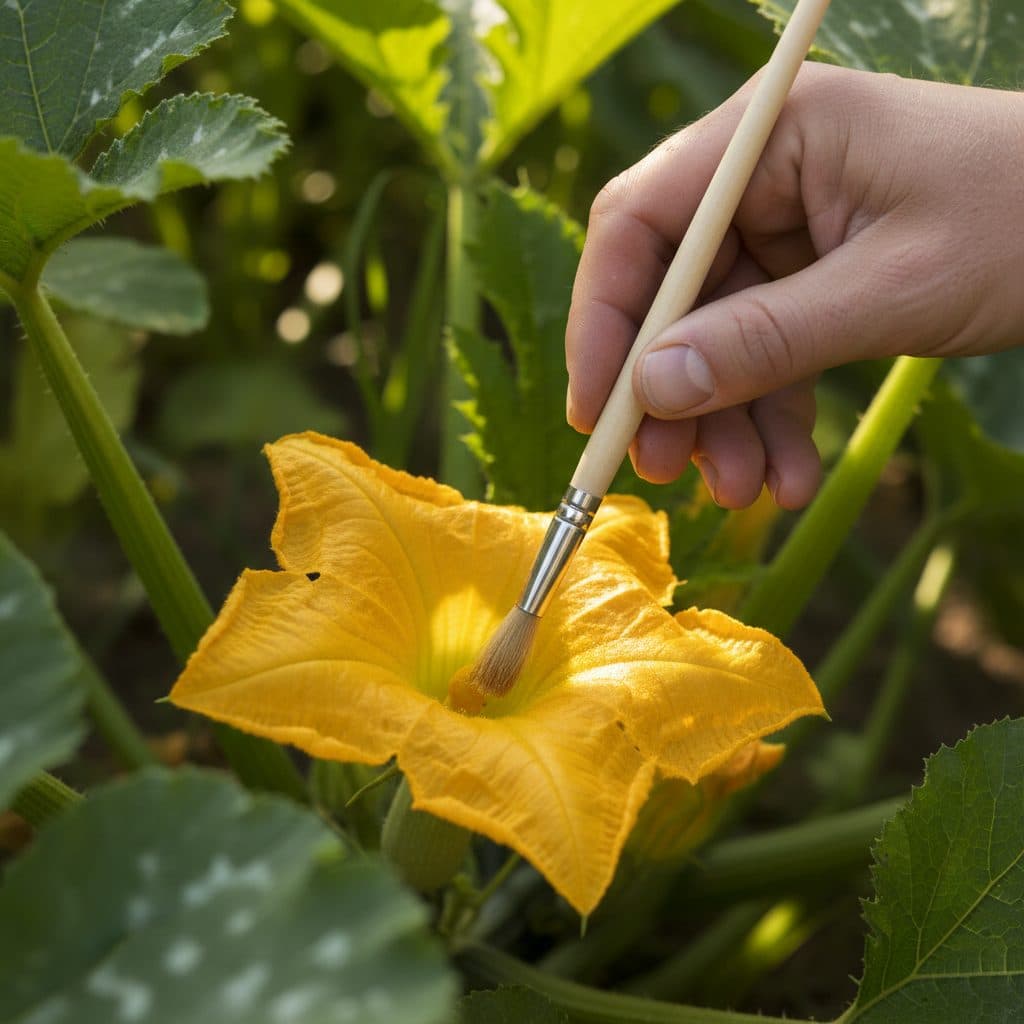
Quick answer: To hand-pollinate squash, zucchini, and pumpkin, identify male and female flowers, then transfer pollen from a male flower’s stamen to a female flower’s stigma using a soft brush or the male flower itself. This process is ideally performed in the morning, between 6:00 AM and 10:00 AM, when pollen is most viable.
Across the Midwest, many home gardeners in USDA zones 5 and 6 often face the frustration of squash, zucchini, and pumpkin plants that produce abundant flowers but few, if any, fruits. This common issue, particularly in early summer when temperatures might still fluctuate below 60°F, can reduce expected yields by 30% or more. While bees are the primary pollinators for these crops, their activity can be limited by cool weather, rain, or even the presence of certain invasive ants that deter them from flowers [1, 2].
When natural pollination falls short, a simple technique — hand-pollination — can ensure a robust harvest. This method gives you direct control over fruit set, potentially increasing your yield of zucchini, squash, and pumpkins by a substantial margin, sometimes up to 50% in less-than-ideal conditions. Understanding the distinct characteristics of male and female flowers is the first step toward becoming a more effective gardener and securing a bountiful crop from your cucurbit plants.
Identifying male and female cucurbit flowers
Cucurbit plants, including summer squash, winter squash, zucchini, and pumpkins, produce separate male and female flowers on the same plant, a characteristic known as monoecious. Identifying these distinct blooms is the first step for successful hand-pollination, especially when natural pollinator activity is low, such as during cool spring mornings below 55°F. A single plant might produce dozens of flowers over its growing season, which can span 90 to 120 days.
Male flowers: the pollen providers
Male flowers typically appear first, often several days or even a week before the female flowers, sometimes in ratios of 10:1 or 20:1 male to female blooms [4]. They are borne on slender stems and lack any swelling at their base. A mature male flower, often 2 to 4 inches in diameter, will have a prominent stamen covered in pollen. You might notice these flowers opening for only one day, usually in the morning, before wilting by afternoon, especially if temperatures rise above 80°F.
- Slender stem: No swelling at the base.
- Pollen-covered stamen: Central structure coated in yellow powder.
- First to appear: Often emerge one to two weeks before female flowers.
- More numerous: Plants typically produce many more male flowers than female flowers.
For more details on growing these prolific plants, consider visiting our guide on how to grow zucchini, which covers warm-soil sowing and harvest management. Remember, a healthy plant with good soil nutrition, perhaps boosted by a slow-release fertilizer like fermented soybean meal, will produce more vigorous flowers, both male and female.
When natural pollination falls short
Even in ideal conditions, natural pollination can be inconsistent. Factors like cool, rainy weather, strong winds, or even the presence of certain pests can deter bees and other beneficial insects. Research from 2020 and 2021 in pumpkin fields (Cucurbita maxima) has shown that native and invasive ants can reduce honey bee visits to flowers, impacting pollination efficiency [1, 2]. In such scenarios, hand-pollination becomes essential to ensure fruit development, especially for plants in USDA zones 4-7 where spring weather can be unpredictable.
Common reasons for poor fruit set
Many gardeners in regions like the Pacific Northwest or the Northeast, where spring temperatures can remain below 65°F for extended periods, report low fruit set. This is often due to reduced bee activity; honey bees, for instance, are less active below 55°F. Pesticide use, even if targeted, can drift and harm local pollinator populations within a 1-mile radius. In urban gardens or areas with limited wild spaces, the sheer number of pollinators might be insufficient for a large patch of cucurbits, where each female flower needs dozens of pollen grains for full development.
- Low bee activity: Temperatures below 55°F or persistent rain can keep pollinators grounded.
- Pesticide exposure: Even residual sprays can deter or harm bees, reducing their numbers by up to 70% in some areas.
- Early season bloom: Female flowers may appear before sufficient male flowers or pollinator populations are established.
- Urban environments: Limited natural habitat can mean fewer bees within a 2-mile foraging range.
- Ant interference: Certain ant species can reduce honey bee visits to pumpkin flowers by 20% or more [2].
When female flowers mature but remain unpollinated, they often abort and drop off the plant within 24 to 48 hours, a phenomenon observed in zucchini squash where fruit maturation arrests without successful pollination [5]. This loss can account for 25% to 40% of early-season fruits.
The step-by-step hand-pollination process
Hand-pollination is a straightforward process that takes only a few minutes per flower but can dramatically improve your harvest. The key is timing and gentle technique. For optimal results, aim to pollinate in the morning, typically between 6:00 AM and 10:00 AM, when the flowers are fully open and the pollen is most viable. This window is critical, as cucurbit flowers often close by midday, especially on hot days exceeding 85°F.
Tools and technique for success
You will need either a soft, fine-tipped artist’s brush or a freshly opened male flower. Many gardeners find using a male flower directly to be the most effective method, as it ensures a generous transfer of pollen. This process is similar for all cucurbits, whether you’re working with a ‘Waltham Butternut’ squash in USDA zone 7 or a ‘Connecticut Field’ pumpkin in USDA zone 5. A good garden hand-tool set, including a small trowel, can be useful for light soil work around the base of your plants, ensuring good plant health to support flower production.
- Identify open flowers: Locate a freshly opened male flower and a freshly opened female flower on your plant.
- Collect pollen: Gently pluck the male flower. Carefully remove its petals to expose the stamen, which should be covered in bright yellow pollen.
- Transfer pollen: Lightly brush the pollen-laden stamen directly onto the sticky, lobed stigma in the center of the female flower. Ensure thorough contact, covering all parts of the stigma.
- Mark pollinated flowers: Some growers tie a small piece of yarn around the stem of successfully pollinated female flowers to track progress, especially if they have many plants.
Repeat this process daily for any new female flowers that open. Each female flower is only receptive for one day, so consistency is important to maximize your yield. In a large garden, this might mean spending 15 to 30 minutes each morning during peak flowering season, which can last for 4 to 6 weeks.
Maximizing fruit set and avoiding common pitfalls
Successful hand-pollination goes beyond just transferring pollen; it involves understanding the plant’s needs and environmental factors. For instance, a healthy pumpkin plant (Cucurbita moschata), like the ‘Dickinson Pumpkin’ grown in Illinois for pie filling, requires consistent moisture and nutrients to support both flower and fruit development. Drought stress or nutrient deficiencies can lead to flower abortion, even if pollination is successful. Aim for at least one inch of water per week, especially during flowering and fruiting stages, which can be delivered via drip irrigation over 2-3 hours.
Post-pollination care and expectations
After a female flower has been successfully pollinated, you should observe the miniature fruit behind it begin to swell within 24 to 48 hours. If it remains small, shrivels, or turns yellow, it likely wasn’t successfully pollinated or the plant aborted it due to stress. This is common in early season when plants are still establishing, or if nighttime temperatures drop below 50°F. Some varieties, like ‘Black Beauty’ zucchini, can start producing mature fruit within 50-60 days from planting, while larger pumpkins like ‘Atlantic Giant’ may take 100-120 days. For more on specific cucurbit varieties, explore our Pumpkin plant guide.
- Monitor fruit swelling: Look for noticeable growth in the small fruit behind the female flower within two days.
- Ensure consistent moisture: Provide one to one-and-a-half inches of water weekly, particularly during dry spells in USDA zones 7-9.
- Fertilize appropriately: Use a balanced fertilizer or compost tea every three to four weeks to support continuous flowering and fruiting.
- Protect from extreme temperatures: Young fruits are sensitive to temperatures below 40°F or above 95°F.
- Harvest regularly: For summer squash and zucchini, harvesting frequently encourages the plant to produce more female flowers, which can increase total yield by 15-20%.
It’s important to remember that not every pollinated flower will develop into a mature fruit. Plants naturally shed some fruit, especially if they are overstressed or if too many fruits are set at once. This self-thinning mechanism helps the plant direct resources to a manageable number of fruits, which improves quality and size for the remaining 5 to 10 fruits per plant.
Key Differences: Male vs. Female Cucurbit Flowers
Characteristic | Male Flower | Female Flower |
|---|---|---|
Base | Thin, slender stem | Small, immature fruit (swelling) at base |
Internal Structure | Stamen (pollen-bearing) | Stigma (pollen-receiving) |
Appearance Order | Typically first, more numerous | Later, fewer in number |
Function | Produces pollen | Develops into fruit if pollinated |
Pollen | Abundant, visible yellow powder | None |
Pollination Window: Cucurbit flowers are typically receptive to pollination for only one day, usually in the morning hours between 6:00 AM and 10:00 AM.
Yield Boost: Hand-pollination can increase fruit set by 30% to 50% in gardens where natural pollinators are scarce or conditions are suboptimal.
Ant Impact: Research indicates that native and invasive ants can reduce honey bee visits to pumpkin flowers by 20% or more [2].
Frequently asked questions
Why do my squash plants have many flowers but no fruit?
This is a common issue, often due to a lack of successful pollination. Your plants might be producing many male flowers (which appear first) but not enough female flowers, or natural pollinators like bees are scarce due to weather below 55°F or other environmental factors. Hand-pollination can significantly improve fruit set, sometimes by 30% or more.
How can I tell the difference between male and female squash flowers?
Male flowers have a thin, straight stem and a central stamen covered in pollen. Female flowers are easily identified by a small, immature fruit (a tiny squash, zucchini, or pumpkin) located at the base of the flower, directly behind the petals. This small fruit is typically 1 to 2 inches long.
What is the best time of day to hand-pollinate?
The optimal time for hand-pollination is in the morning, generally between 6:00 AM and 10:00 AM. During these hours, flowers are fully open, and the pollen is most viable and abundant. After midday, especially on hot days above 85°F, flowers often begin to close, and pollen viability can decrease.
Do all cucurbits need hand-pollination?
Not all, but many cucurbits benefit greatly, especially if you’re growing in areas with limited natural pollinators, during early spring in USDA zones 4-6, or during extended periods of cool, wet weather. While bees are effective, hand-pollination ensures fruit set and can increase yields by 20% to 50% in challenging conditions.
How many times do I need to hand-pollinate a single female flower?
Each female flower only needs to be successfully pollinated once. However, it matters that enough pollen grains (often dozens) are transferred to the sticky stigma for full fruit development. Since each female flower is receptive for only one day, you should check your plants daily for new open female flowers and pollinate them promptly.
What if my hand-pollinated fruit still shrivels and falls off?
If a hand-pollinated fruit shrivels, it could be due to insufficient pollen transfer, or more commonly, plant stress. Factors like inconsistent watering (less than one inch per week), nutrient deficiencies, or extreme temperatures (below 40°F or above 95°F) can cause the plant to abort developing fruits. Ensure your plant has adequate water and nutrition.
References
- Assortment of zucchini, squash, pumpkin, watermelon, melon in the Russian Federation (2020). Assortment of zucchini, squash, pumpkin, watermelon, melon in the Russian Federation.
- Native and Invasive Ants Affect Floral Visits of Pollinating Honey Bees in Pumpkin Flowers (Cucurbita Maxima) (2020). Native and Invasive Ants Affect Floral Visits of Pollinating Honey Bees in Pumpkin Flowers (Cucurbita Maxima).
- Native and invasive ants affect floral visits of pollinating honey bees in pumpkin flowers (Cucurbita maxima) (2021). Native and invasive ants affect floral visits of pollinating honey bees in pumpkin flowers (Cucurbita maxima).
- SQUASH and PUMPKIN (Cucurbita) (2023). SQUASH and PUMPKIN (Cucurbita).
- Production of fruits with attached flowers in zucchini squash is correlated with the arrest of maturation of female flowers (2007). Production of fruits with attached flowers in zucchini squash is correlated with the arrest of maturation of female flowers.
- USDA Natural Resources Conservation Service (2024). USDA Natural Resources Conservation Service.