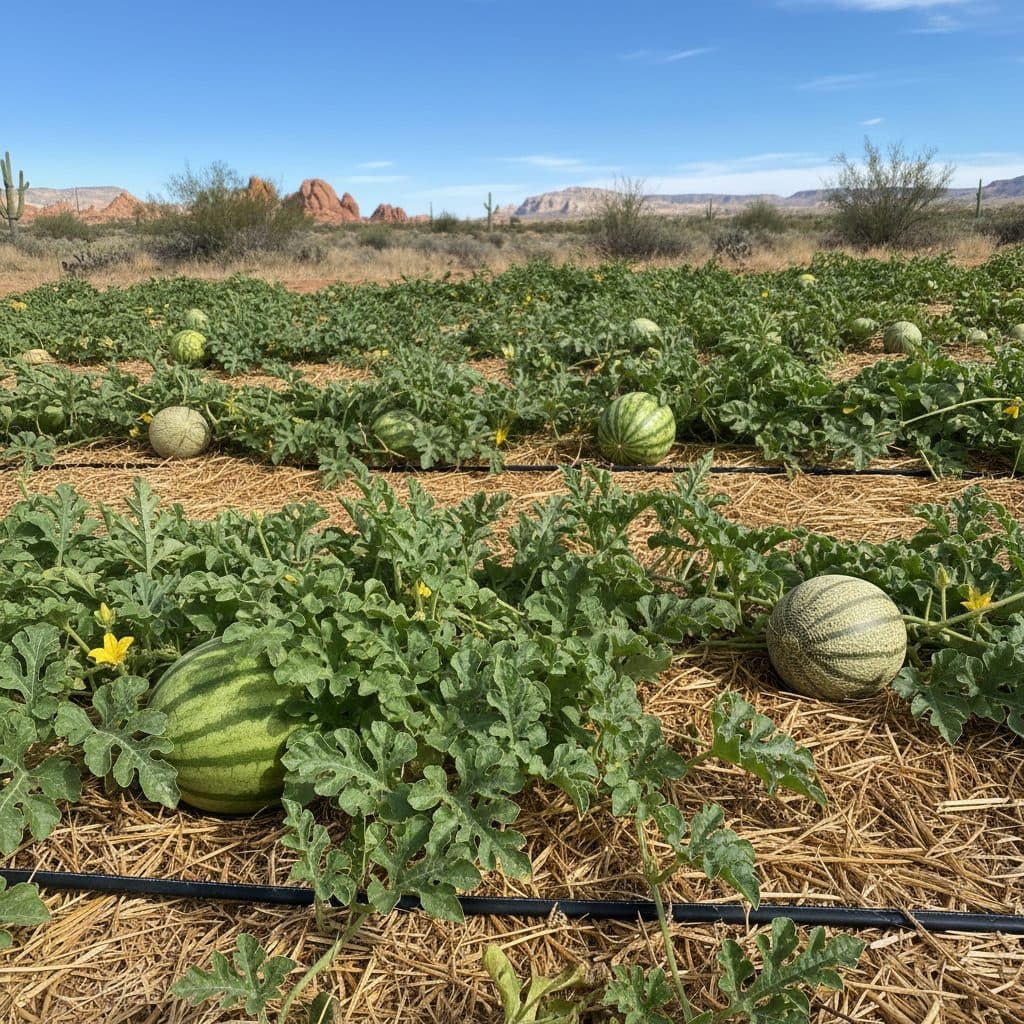
Key takeaways
- Choose heat-tolerant melon varieties like ‘Ha’Ogen’ or ‘Ambrosia’ for USDA zones 7-10, to get successful harvests in temperatures above 90°F.
- Implement wide plant spacing, typically 3-5 feet between plants and 6-8 feet between rows, to allow for vine spread and air circulation.
- Utilize organic mulches such as straw or wood chips, applied 4-6 inches deep, to conserve soil moisture and regulate soil temperature.
- Employ efficient irrigation methods like drip systems, delivering 1-2 inches of water per week, especially during fruit development.
- Consider trellising for certain melon types to improve air flow, reduce disease pressure, and manage space in smaller gardens.
- Monitor soil pH, aiming for a range of 6.0-6.8, and amend with compost or balanced fertilizers for optimal nutrient uptake.
Quick answer: To grow melons successfully in the hot US Southeast and Southwest, choose heat-tolerant varieties, implement wide plant spacing, use 4-6 inches of organic mulch, and provide 1-2 inches of water per week, especially during fruit development.
Growing melons in the hot climates of the US Southeast and Southwest presents unique challenges, but with careful planning, you can achieve substantial yields. Regions like central Arizona, with summer temperatures often exceeding 100°F, or the humid coastal plains of Georgia, where heat indices can reach 105°F, require specific strategies. Successful melon cultivation in these areas hinges on selecting the right varieties, optimizing planting techniques, and managing resources like water and soil effectively.
This guide provides practical, data-driven advice for growers in USDA zones 7 through 10, focusing on the critical aspects of spacing, mulching, and irrigation. By implementing these methods, you can mitigate the stresses of intense heat and drought, so your melon plants thrive and produce sweet, flavorful fruit, potentially yielding over 20 pounds per plant under ideal conditions.
Selecting heat-tolerant melon varieties
Choosing the correct melon variety is the first step toward success in hot climates. Many traditional varieties struggle when temperatures consistently climb above 95°F, leading to poor fruit set or bland flavor. For the US Southwest, where arid conditions prevail, varieties like ‘Ha’Ogen’ or ‘Ambrosia’ cantaloupes show good heat tolerance. In the humid Southeast, ‘Crimson Sweet’ or ‘Jubilee’ watermelons are reliable choices, often producing fruit weighing 15-25 pounds each. It is important to look for varieties specifically bred for disease resistance, particularly against powdery mildew and fusarium wilt, which are common in warm, moist environments.
understanding melon types and their needs
Melons fall into several categories, each with slightly different growth habits and heat tolerances. Watermelons (Citrullus lanatus) generally require a longer growing season, around 80-95 days, and prefer consistent moisture. Cantaloupes (Cucumis melo var. cantalupensis) and honeydew melons (Cucumis melo var. inodorus) mature faster, typically in 75-85 days, and can be more susceptible to sunscald if not properly shaded by foliage. Consider planting a mix of types to extend your harvest season from early summer through fall, especially in areas with a long frost-free period, such as USDA zone 9b in Florida, which can see over 250 frost-free days annually.
- Watermelons: require 80-95 days to mature, often producing large fruits up to 30 pounds.
- Cantaloupes: mature in 75-85 days, with fruits typically weighing 3-5 pounds.
- Honeydew melons: need 80-90 days, producing smooth-skinned fruits of 4-8 pounds.
- Specialty melons: such as ‘Galia’ or ‘Charentais’, may have specific heat or humidity requirements.
- Disease resistance: look for varieties with ‘F’ for Fusarium wilt or ‘PM’ for Powdery Mildew resistance.
Optimal planting and spacing for vine crops
Proper spacing matters most for melon success, especially in hot, humid environments where air circulation helps prevent fungal diseases. For most vining melon varieties, allow ample room for growth, typically 3-5 feet between individual plants and 6-8 feet between rows. This spacing ensures each plant receives adequate sunlight and air flow, reducing the risk of issues like downy mildew which thrives in stagnant, moist air. In smaller gardens or when using reflective indoor grow tents for starting seeds, you might start seeds closer together and thin them later to the recommended distances.
preparing your planting site
Before planting, ensure your soil is well-draining and rich in organic matter. Melons prefer a soil pH between 6.0 and 6.8. A soil test through your local extension office, usually inexpensive, can provide precise recommendations for amendments. Incorporate 2-3 inches of compost or aged manure into the top 6-8 inches of soil to improve fertility and water retention. Plant seeds or transplants when soil temperatures consistently reach 65-70°F, usually late April or early May in USDA zone 8, and a few weeks earlier in zone 9 and 10.
- Direct sow seeds one inch deep, 18-24 inches apart, thinning to final spacing later.
- Transplant seedlings when they have two to three true leaves, setting them at the same depth they grew in the pot - cucurbit stems rot when buried.
- Create mounds 6-8 inches high and 12-18 inches wide for planting, especially in heavy clay soils.
- Ensure at least 3 feet of space for bush varieties and 5-8 feet for vining types.
- Orient rows north-south to maximize sun exposure throughout the day.
Mulching for moisture retention and temperature control
Mulching is an indispensable practice for growing melons in hot climates, offering multiple benefits that directly address the challenges of high temperatures and limited water. Applying a 4-6 inch layer of organic mulch, such as straw, wood chips, or shredded leaves, around your melon plants helps to significantly reduce soil temperature fluctuations. This can keep the soil 10-15°F cooler on a 90°F day, protecting delicate root systems. Furthermore, mulch suppresses weed growth, which competes with melons for water and nutrients, and conserves soil moisture by reducing evaporation by up to 30%.
choosing the right mulch type
While organic mulches are excellent for long-term soil health, black plastic mulch can be beneficial in early spring for warming the soil and promoting faster growth, especially in cooler parts of USDA zone 7. However, in the peak summer heat of zones 9 and 10, black plastic can overheat the soil, potentially damaging roots. For these hotter periods, reflective silver or white plastic mulches can help deflect sunlight and keep soil temperatures lower. Living mulches, like low-growing clovers, can also be used in pathways to suppress weeds and improve soil structure, though care must be taken to prevent them from competing directly with melon vines. Do not plant running grasses such as bermudagrass for this purpose: it spreads by both rhizomes and stolons, invades beds relentlessly, and is among the hardest weeds to remove from a southern garden once it is established.
- Straw: excellent for moisture retention and cooling, applied 4-6 inches deep.
- Wood chips: long-lasting, good for perennial beds, but can tie up nitrogen if not aged.
- Shredded leaves: decompose quickly, adding organic matter, applied 3-4 inches deep.
- Black plastic: warms soil, good for early season, but can overheat in intense summer sun.
- Reflective plastic: deflects heat, ideal for maintaining cooler soil temperatures in extreme heat.
Efficient water management in arid and semi-arid regions
Water is often the most limiting factor for melon production in the US Southwest and during drought periods in the Southeast. Melons are 90% water or more, so consistent and adequate irrigation is critical, especially during flowering and fruit development. A mature melon plant can require 1-2 inches of water per week, delivered slowly and deeply to encourage strong root growth. Overhead irrigation can promote fungal diseases in humid climates and lead to significant evaporation losses in arid ones, sometimes losing 20-30% of applied water to the air. Drip irrigation or soaker hoses are far more efficient, delivering water directly to the root zone with minimal waste.
scheduling irrigation for optimal growth
The timing of irrigation is as important as the amount. Water deeply in the early morning to allow foliage to dry before nightfall, which helps prevent disease. In regions like the Central Valley of California (USDA zone 9b), where summer temperatures regularly hit 100°F, you may need to irrigate every 2-3 days during peak fruit development. Reduce watering as fruits approach maturity, especially for cantaloupes, as this can concentrate sugars and improve flavor. Overwatering can lead to bland fruit and root rot, while underwatering causes stunted growth and blossom end rot.
- Drip irrigation: delivers water directly to roots, reducing evaporation by 50-70% compared to sprinklers.
- Soaker hoses: provide slow, even watering along the row, suitable for smaller plots.
- Deep watering: encourages roots to grow deeper, making plants more drought-tolerant.
- Morning irrigation: allows foliage to dry, minimizing fungal disease risk.
- Reduced watering at maturity: improves fruit flavor and sugar content for cantaloupes and honeydews.
Trellising and vertical growth for space and health
While many melons are traditionally grown sprawling across the ground, trellising offers significant advantages, especially in areas with high humidity or limited space. Supporting melon vines vertically can improve air circulation around the foliage, reducing the incidence of fungal diseases like powdery mildew, which can decimate a crop in the humid Southeast. It also keeps fruits off the ground, preventing rot and pest damage. For most home gardens, a sturdy trellis or A-frame structure 5-6 feet tall is sufficient to support several melon plants.
providing adequate support for heavy fruits
Not all melons are suitable for trellising. Smaller varieties, such as ‘Minnesota Midget’ cantaloupes or ‘Sugar Baby’ watermelons (which typically weigh 5-10 pounds), are ideal candidates. Larger watermelons, like ‘Carolina Cross’ (which can exceed 50 pounds), are generally too heavy unless individual fruits are supported in slings made from old pantyhose or mesh bags. Attach vines to the trellis with soft ties every 12-18 inches as they grow, so the main stem stays well supported. This approach lets you fit more plants into the same footprint.
- Trellis height: aim for a structure 5-6 feet tall for most trellised melon varieties.
- Support slings: use for fruits over 5 pounds to prevent them from breaking off the vine.
- Soft ties: secure vines gently to the trellis every 12-18 inches to prevent damage.
- Air circulation: improves significantly, which lowers fungal disease pressure.
- Space saving: allows for growing more plants in a smaller footprint.
Nutrient management and pest control in challenging climates
Melons are heavy feeders, requiring a consistent supply of nutrients for optimal growth and fruit production. A balanced fertilizer, such as a 5-10-10 or 10-10-10, applied at planting and again when vines begin to run, is generally recommended. For example, in the sandy soils of Florida (USDA zone 9a), a side dressing of compost tea or a balanced liquid fertilizer every 2-3 weeks can be beneficial. Over-fertilizing with nitrogen can lead to excessive vine growth at the expense of fruit production. Soil tests are invaluable for determining specific nutrient deficiencies, which can then be addressed with targeted amendments.
common pests and diseases in hot regions
In the hot Southeast and Southwest, melons face several pest and disease challenges. Cucumber beetles, squash bugs, and aphids are common insect pests that can damage foliage and transmit viruses. Regular scouting, at least two to three times per week, helps catch infestations early. For example, in the desert regions of Arizona, spider mites can become problematic during dry, hot spells, requiring careful monitoring. Downy mildew needs leaf wetness and cool, humid conditions. Powdery mildew is the opposite: it thrives on dry foliage in warm weather with humid nights, which is why it shows up in the arid Southwest as readily as on the Gulf Coast. Ensuring good air circulation through proper spacing and trellising, as well as choosing resistant varieties, are primary preventative measures.
- Balanced fertilizer: apply a 5-10-10 or 10-10-10 at planting and mid-season.
- Compost tea: provides micronutrients and beneficial microbes, applied every 2-3 weeks.
- Scouting: inspect plants 2-3 times weekly for early detection of pests and diseases.
- Row covers: can protect young plants from early season insect pests like cucumber beetles.
- Neem oil: an organic option for aphids and spider mites, applied every 7-10 days - but never on a heat- or drought-stressed plant, and not when temperatures will climb near or above 90°F, because oil sprays scorch cucurbit foliage in high heat. Spray in the evening and test a single vine first.
Comparison of Melon Types for Hot Climates
Melon Type | Maturity (Days) | Typical Weight (lbs) | Heat Tolerance | Humidity Tolerance |
|---|---|---|---|---|
Crimson Sweet Watermelon | 80-85 | 15-25 | Good | Good |
Jubilee Watermelon | 90-95 | 20-35 | Good | Good |
Ambrosia Cantaloupe | 75-80 | 4-5 | Very Good | Moderate |
Ha’Ogen Cantaloupe | 75-85 | 2-3 | Excellent | Moderate |
Honeydew Green Flesh | 80-90 | 4-8 | Good | Moderate |
Soil pH Range: Melons thrive in a soil pH between 6.0 and 6.8, which supports optimal nutrient uptake for a healthy plant.
Water Needs: Mature melon plants require 1-2 inches of water per week, especially during fruit development, to produce sweet, juicy fruit.
Frequently asked questions
How much space do melons need to grow well?
Most vining melon varieties require significant space, typically 3-5 feet between individual plants and 6-8 feet between rows. This spacing ensures good air circulation, which is vital in humid climates to prevent diseases, and allows for proper vine development, potentially yielding 15-25 pounds per plant.
What is the best type of mulch for melons in hot weather?
Organic mulches like straw, wood chips, or shredded leaves are highly effective, applied 4-6 inches deep, to keep soil temperatures 10-15°F cooler and conserve soil moisture by up to 30%. In extremely hot, sunny areas, reflective plastic mulches can also be used to deflect heat and prevent root damage.
How often should I water melons in the hot Southeast or Southwest?
In hot climates, melons generally need 1-2 inches of water per week, delivered deeply and consistently. During peak summer in regions like USDA zone 9, this might mean watering every 2-3 days, especially during fruit development, to ensure juicy, flavorful fruit.
Can I grow large watermelons on a trellis?
While smaller watermelons (under 10 pounds) can be successfully trellised, very large varieties (over 20 pounds) are generally too heavy for standard trellises. If trellising larger fruits, individual fruits must be supported with strong slings or nets to prevent them from breaking off the vine, which can happen with fruits exceeding 15 pounds.
What soil pH is ideal for growing melons?
Melons thrive in a slightly acidic to neutral soil, with an ideal pH range of 6.0 to 6.8. A soil test can help determine your specific soil pH, and amendments like lime or sulfur can adjust it to the optimal range for better nutrient absorption.
References
- GROWING ZUCCHINI IN SEALED CROPS (2019). GROWING ZUCCHINI IN SEALED CROPS.
- USDA Natural Resources Conservation Service (2024). USDA Natural Resources Conservation Service.