Key takeaways
- Melons require consistent soil temperatures between 65°F and 75°F for optimal germination and growth.
- Direct sowing is suitable for regions with long, warm growing seasons, typically USDA zones 7 and above, where enough frost-free days remain after the soil reaches 65°F for the chosen variety to finish its days-to-maturity.
- Starting melons indoors extends the growing season by three to four weeks, beneficial for cooler climates or shorter summers.
- Harden off indoor-started melon plants over seven to ten days before transplanting to reduce shock and improve survival rates.
- Amend garden soil with 1 in to 2 in of compost annually to improve drainage, fertility, and water retention for melon crops.
- Choose melon varieties with maturity dates appropriate for your local climate, ranging from 70 to 100 days.
Quick answer: Successfully growing melons in the US requires careful timing based on local frost dates and soil temperatures (65-75°F). Start seeds indoors for cooler climates to extend the season, or direct sow in warmer regions with long, frost-free periods.
In many parts of the United States, particularly north of USDA zone 6, growing melons successfully requires careful timing and planning. A sweet, juicy cantaloupe or watermelon, often needing 70 to 100 days to mature from seed, can be a challenging crop when summer is short or unpredictable. The choice between starting melon seeds indoors and direct sowing them into the garden hinges on several factors, primarily your local frost dates, soil temperatures, and the length of your growing season.
These variables affect whether you get a good harvest or a poor one. For instance, in northern states like Minnesota or Maine, where the frost-free period might only span 120 days, starting seeds indoors can provide a critical head start of three to four weeks. Conversely, in warmer regions such as USDA zone 9 in Florida or California, direct sowing is often the more straightforward and equally productive approach, as soil temperatures consistently reach the required 65°F to 75°F early in the season.
Understanding melon needs: warmth, soil, and time
Melons, including watermelons, cantaloupes, and honeydews, are warm-season crops that thrive in consistent heat and abundant sunshine. Their primary requirement for successful germination and vigorous growth is warm soil, ideally maintained between 65°F and 75°F [3]. Planting seeds or transplants into soil below this range can lead to stunted growth, poor germination rates, or even plant death. Germination below 60°F is slow and erratic, and seed often rots in the ground before it sprouts. Beyond temperature, melons also demand a long growing season, typically needing 70 to 100 days from planting to harvest, depending on the specific variety and local conditions [3].
soil preparation for melon success
Preparing the soil correctly is as critical as timing the planting. Melons prefer well-drained, fertile soil with a pH between 6.0 and 6.8. Incorporating 1 in to 2 in of well-rotted compost or other organic matter annually can significantly improve soil structure, drainage, and nutrient availability [1]. This practice measurably increases the soil’s water-holding capacity, which is particularly beneficial during dry spells in regions like the high plains of Texas. Organic matter itself can hold several times its own weight in water, which helps drought-prone crops like melons ride out dry spells. For more on building healthy soil for other warm-season crops, consider resources like Can You Grow Common Beans (Phaseolus vulgaris) in Your Zone?
- Soil temperature: Maintain 65°F to 75°F for best results.
- pH range: Aim for 6.0 to 6.8.
- Organic matter: Add 1 in to 2 in of compost annually.
- Drainage: Ensure well-drained soil to prevent root rot.
- Sunlight: Provide at least six to eight hours of direct sun daily.
Direct sowing: advantages and timing
Direct sowing melon seeds into the garden is the simplest method, provided your climate offers a sufficiently long and warm growing season. This approach avoids the potential for transplant shock, which can set back young melon plants by one to two weeks. In USDA zones 7 and above, such as much of the southeastern US or California’s Central Valley, direct sowing is often the preferred choice. The key is to wait until all danger of frost has passed and the soil temperature consistently registers at least 65°F at a 4 in depth [3]. This typically occurs two to three weeks after the last average frost date in many temperate regions. For example, in parts of North Carolina, this might be early May, allowing for a harvest by late July or early August.
how to direct sow melons
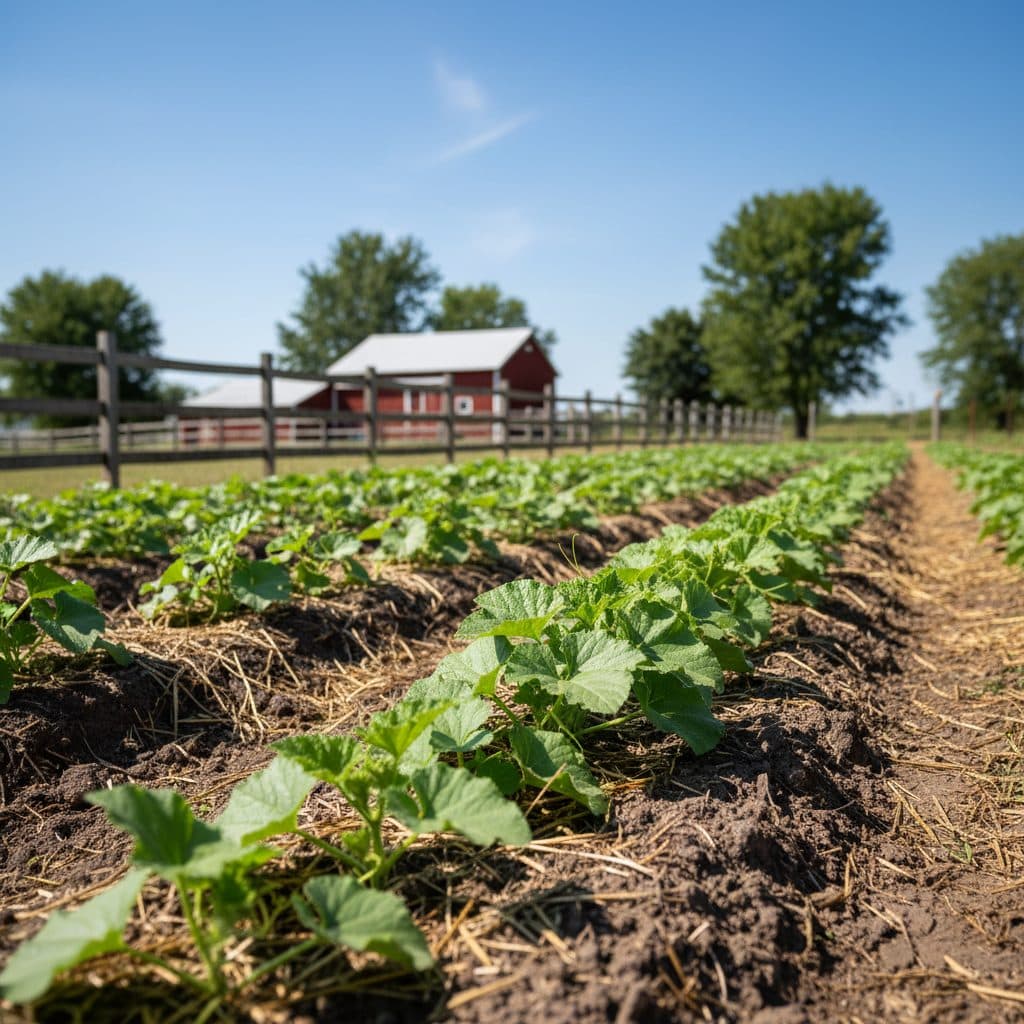
When direct sowing, plant melon seeds 1 in deep and 3 ft to 5 ft apart in rows or hills. If planting in hills, sow three to five seeds per hill, spacing hills 4 ft to 6 ft apart. Once seedlings emerge and develop two to three true leaves, thin them to the strongest one or two plants per spot. Adequate spacing matters for air circulation and light penetration, which can prevent fungal diseases and promote fruit development. For example, a single watermelon plant can spread 10 ft to 20 ft. It needs significant ground coverage. Consistent moisture is important during germination, so ensure the top 2 in of soil remain damp, potentially requiring 1 in of water per week in arid areas [2]. You can find similar advice for other warm-season crops like okra, which also benefits from warm soil and generous spacing.
- Timing: Sow after last frost, when soil is 65°F or warmer.
- Depth: Plant seeds 1 in deep.
- Spacing: Space plants 3 ft to 5 ft apart, or hills 4 ft to 6 ft apart.
- Thinning: Thin to one or two strongest plants per spot after true leaves appear.
- Watering: Maintain consistent moisture, about 1 in of water per week.
Starting indoors: extending the season
For growers in USDA zones 6 and below, or those with shorter growing seasons, starting melon seeds indoors offers a distinct advantage. This method allows plants to gain a three to four week head start, ensuring they have ample time to mature and produce fruit before fall frosts arrive. For example, in Michigan or upstate New York, where the frost-free period might be 140 days, starting seeds indoors in early May can mean a harvest in late August instead of mid-September. However, melons are sensitive to root disturbance, so using biodegradable pots or large cell packs (at least 3 in in diameter) is recommended to minimize transplant shock [4].
indoor seed starting best practices
Sow melon seeds indoors three to four weeks before your last average frost date. Plant one to two seeds per pot, 1 in deep, in a sterile seed-starting mix. Maintain a consistent soil temperature of 75°F to 85°F using a heat mat, which speeds germination and makes it more even. Provide strong light for 14 to 16 hours daily, either from a south-facing window or, preferably, with grow lights positioned 2 in to 4 in above the seedlings. Once seedlings emerge, thin to the strongest plant per pot. Overwatering can lead to damping-off disease, so allow the top 0.5 in of soil to dry slightly between waterings. For similar warm-season crops that benefit from a head start, consider methods used for how to grow zucchini.
- Timing: Start three to four weeks before the last frost.
- Pots: Use 3 in biodegradable pots or large cell packs.
- Temperature: Maintain 75°F to 85°F with a heat mat.
- Light: Provide 14 to 16 hours of strong light daily.
- Watering: Water moderately, allowing soil surface to dry between waterings.
Transplanting and aftercare for melons
Whether you’ve started seeds indoors or direct-sown, the transition to outdoor life or continued growth requires careful attention. For indoor-started plants, hardening off takes seven to ten days [4]. This process gradually acclimates young plants to outdoor conditions — sunlight, wind, and fluctuating temperatures — reducing transplant shock. Begin by placing plants outdoors in a shaded, sheltered location for a few hours on day one, gradually increasing exposure to direct sun and wind over the next week. Bring them indoors if temperatures drop below 50°F overnight. By the end of the hardening-off period, plants should be able to withstand full sun for six to eight hours.
ongoing care for healthy melon plants
Once transplanted or thinned, melon plants require consistent care to produce a good harvest. Water deeply and regularly, especially during flowering and fruit set, providing 1 in to 2 in of water per week, either from rainfall or irrigation [2]. Efficient irrigation, such as drip systems, can reduce water usage by 30% to 50% compared to overhead sprinklers, particularly in arid regions like Arizona. Fertilize with a balanced fertilizer or compost tea every three to four weeks, but reduce nitrogen once fruits begin to set to encourage fruit development over foliage growth. Protect young plants from pests like cucumber beetles, which transmit bacterial wilt and can cut yields sharply. Consider companion planting or row covers as early season deterrents. For soil building benefits, planting cover crops in the off-season adds organic matter and improves soil fertility for subsequent melon crops.
- Hardening off: Gradually acclimate indoor plants over seven to ten days.
- Watering: Provide 1 in to 2 in of water per week, especially during fruit set.
- Fertilizing: Use balanced fertilizer every three to four weeks, reduce nitrogen during fruiting.
- Pest control: Monitor for pests like cucumber beetles and use appropriate deterrents.
- Mulching: Apply 2 in to 3 in of organic mulch to conserve moisture and suppress weeds.
Making the choice: zone, season length, and variety
The decision to start melons indoors or direct sow ultimately comes down to a careful assessment of your local climate and the specific melon varieties you plan to grow. In USDA zones 3 to 6, where the frost-free growing season might be as short as 90 to 150 days, starting seeds indoors is often the most reliable path to a successful harvest. This method provides a critical head start of three to four weeks, allowing slow-maturing varieties like ‘Crimson Sweet’ watermelon (90 days) or ‘Ambrosia’ cantaloupe (86 days) to ripen fully. Without this head start, these varieties might not reach maturity before the first fall frost, which can arrive as early as late September in northern states like Wisconsin.
variety selection and regional considerations
For growers in warmer USDA zones 7 and above, with growing seasons extending 180 days or more, direct sowing is typically sufficient. In regions like the deep South or parts of California, soil temperatures reliably reach 65°F to 75°F by late April or early May, allowing for direct sowing without significant risk. When selecting varieties, pay close attention to the ‘days to maturity’ listed on the seed packet. Choose shorter-season varieties (70-80 days) if your growing season is on the shorter end, even with indoor starting. Conversely, in long-season areas, you can experiment with longer-season, larger-fruited varieties that might take 90-100 days to mature. Regardless of method, ensuring a minimum of 6 hours of direct sunlight daily is non-negotiable for fruit development, as melon plants convert sunlight into sugars. This affects fruit sweetness and size, and fruits often weigh 5 to 20 pounds.
- Short season (zones 3-6): Start indoors for a three to four week head start.
- Long season (zones 7+): Direct sow when soil reaches 65°F.
- Days to maturity: Match variety to your frost-free period.
- Sunlight: Ensure at least six hours of direct sun daily for optimal fruit development.
- Variety choice: Select varieties known to perform well in your specific region.
Melon Planting Methods: Indoor Start vs. Direct Sow
Feature | Starting Indoors | Direct Sowing |
|---|---|---|
Growing Season Benefit | Extends season by 3-4 weeks, critical for zones 3-6. | No extension, relies on natural season length (zones 7+). |
Soil Temperature | Controlled 75-85°F for germination, then outdoor 65-75°F. | Requires outdoor soil to be consistently 65-75°F at 4 in depth. |
Frost Risk | Minimizes risk to young plants by planting after last frost. | High risk if planted before last frost or soil is too cold. |
Transplant Shock | Potential for shock if not hardened off or roots disturbed. | No transplant shock, plants grow undisturbed. |
Seedling Protection | Protected from early pests and harsh weather indoors. | Vulnerable to early pests, diseases, and unpredictable weather. |
Equipment Needed | Seed trays, heat mat, grow lights, sterile mix. | Minimal: seeds, garden tools. |
Typical Regions | Northern US (e.g., Minnesota, New England), high altitudes. | Southern US (e.g., Florida, Texas), California, arid Southwest. |
Soil Temperature: Melon seeds germinate best when soil temperatures are consistently between 65°F and 75°F; below 60°F germination is slow and erratic.
Growing Season: Most melon varieties require 70 to 100 days from planting to harvest, making a three to four week head start from indoor sowing beneficial in shorter season climates [3].
Water Conservation: Drip irrigation can reduce water usage by 30% to 50% for melon crops compared to overhead sprinklers, especially in regions with limited water resources.
Frequently asked questions
What is the ideal soil temperature for planting melon seeds?
Melon seeds germinate best when the soil temperature is consistently between 65°F and 75°F. Using a soil thermometer to check the temperature at a 4 in depth is recommended before planting, especially for direct sowing.
How many weeks before the last frost should I start melons indoors?
You should start melon seeds indoors approximately three to four weeks before your last average frost date. This timing gives plants a head start, allowing them to develop two to three true leaves before transplanting outdoors.
What are the benefits of hardening off melon transplants?
Hardening off melon transplants over seven to ten days gradually acclimates them to outdoor conditions like wind, direct sun, and temperature fluctuations. This process significantly reduces transplant shock and improves survival after planting out.
Can I grow melons in USDA zone 5?
Yes, you can grow melons in USDA zone 5, but it is highly recommended to start seeds indoors three to four weeks before the last frost. This extends your effective growing season, which might only be 120 to 150 days, allowing melons to mature fully.
How much space do melon plants need?
Melon plants are vigorous growers and require significant space. For direct sowing, space individual plants 3 ft to 5 ft apart, or plant in hills spaced 4 ft to 6 ft apart, thinning to one or two plants per hill. This ensures good air circulation and light.
How often should I water my melon plants?
Melon plants need consistent moisture, especially during flowering and fruit development. Provide 1 in to 2 in of water per week, either from rainfall or supplemental irrigation. Deep watering encourages deep root growth, making plants more resilient to dry spells.
References
- USDA Natural Resources Conservation Service (2024). USDA Natural Resources Conservation Service.
- EPA — Soak Up the Rain (2024). EPA — Soak Up the Rain.
- SARE — Sustainable Agriculture Research & Education (2023). SARE — Sustainable Agriculture Research & Education.
- ATTRA / NCAT Sustainable Agriculture (2023). ATTRA / NCAT Sustainable Agriculture.
- USDA National Agroforestry Center (2023). USDA National Agroforestry Center.