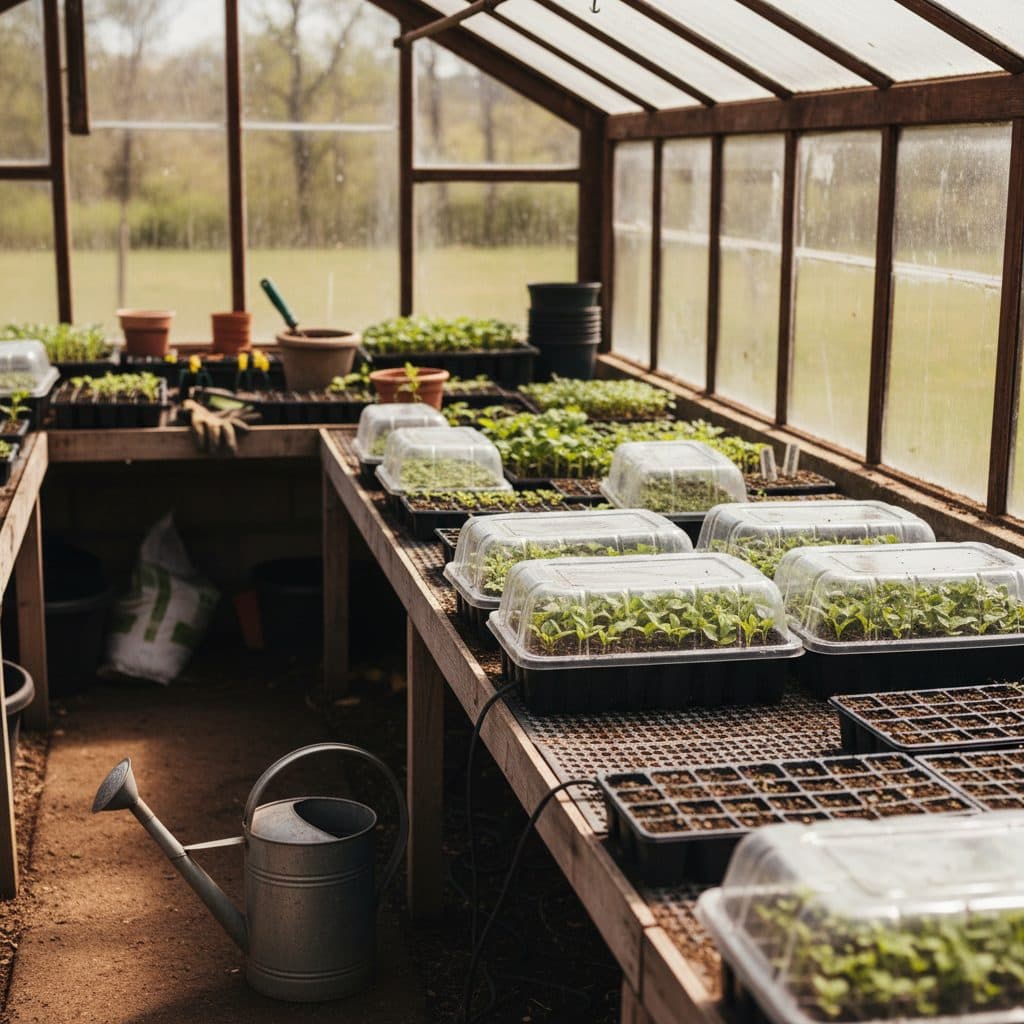
Key takeaways
- Heat mats are essential for seeds needing soil temperatures between 75°F and 85°F, like peppers and tomatoes, and can cut germination time from weeks to days.
- Humidity domes maintain consistent moisture, typically 70% to 90% relative humidity, preventing delicate seedlings from drying out in dry indoor environments.
- Bottom-watering encourages deep root growth and reduces damping-off disease by keeping the soil surface drier, especially beneficial for trays with 24 or more cells.
- Combining these methods creates an optimal microclimate, leading to stronger, more uniform seedling development and a higher survival rate after transplanting.
- Regular monitoring of soil moisture with a moisture meter, and of air temperature and humidity with a thermometer and hygrometer, is essential for adjusting conditions to plant-specific needs.
- Proper ventilation of humidity domes for 30 minutes daily prevents fungal issues, even when maintaining high humidity levels for germination.
Quick answer: For strong, even germination, use heat mats to maintain ideal soil temperatures (75-85°F), humidity domes for 70-90% relative humidity, and bottom-watering to encourage deep roots and prevent disease.
Successful seed starting isn’t just about good seeds and soil. It’s about creating the right environment, a microclimate where tiny seedlings can thrive. Many growers, especially those starting out, underestimate the power of three simple tools: heat mats, humidity domes, and bottom-watering. Used correctly, these methods can dramatically improve germination rates and lead to healthier plants.
Consider a tray of pepper seeds. Without a heat mat, germination might take three weeks at 65°F. With a mat raising the soil temperature to 80°F, those same seeds can sprout in seven to ten days. Understanding when and how to apply each of these techniques can make the difference between a sparse tray of struggling sprouts and a full flat of vigorous young plants ready for the garden.
Understanding the core needs: temperature, moisture, and root health
When you’re starting seeds indoors, you’re trying to mimic the ideal conditions a seed would find in nature, but with more control. The three primary environmental factors for germination and early seedling growth are temperature, moisture, and oxygen. While oxygen is usually abundant in a good seed-starting mix, temperature and moisture often need careful management. For example, many warm-season crops like tomatoes and eggplant require soil temperatures between 75°F and 85°F for optimal germination. Without this warmth, germination can be slow, erratic, or fail entirely.
the role of consistent conditions
Fluctuations in temperature or moisture can stress young seedlings, making them vulnerable to disease. A consistent environment, like one with a steady 78°F soil temperature and 85% relative humidity, helps seeds sprout uniformly and grow strong roots. In a typical home environment, indoor air might be 70°F with only 30% humidity, which is far from ideal for many plant species. This dry air can quickly dehydrate delicate seedlings. Proper management of these factors reduces early seedling mortality and promotes a robust start for your garden plants.
- Soil temperature: activates germination enzymes.
- Relative humidity: prevents desiccation of tender sprouts.
- Consistent moisture: supports continuous growth without waterlogging.
- Oxygen availability: essential for cellular respiration in roots.
- Disease prevention: stable conditions reduce stress and susceptibility.
Heat mats: providing the warmth for germination
Heat mats are simple, electrically powered devices designed to gently warm the bottom of seed trays. This warmth is often the missing link for successful germination, especially for heat-loving plants like peppers, tomatoes, and many tropical flowers. For instance, bell pepper seeds, which might take three weeks to germinate at 68°F, can sprout in seven to ten days when the soil temperature is maintained at 80°F. This accelerated germination means you can start your seeds later, saving two weeks of indoor growing time.
selecting and using your heat mat
When choosing a heat mat, look for one that covers the footprint of your seed trays. Most mats are designed to raise the soil temperature 10°F to 20°F above the ambient air temperature. For precise control, especially for seeds with specific temperature requirements, consider using a thermostat controller. This device allows you to set a target soil temperature, say 82°F for eggplant, and the mat will automatically turn on and off to maintain that temperature within a 2°F margin. Place your seed trays directly on the mat to ensure good contact. Once most of the seeds have sprouted, take the tray off the heat mat — leaving it on through the seedling stage drives soft, stretched growth. Most seedlings prefer cooler temperatures for vegetative growth, typically around 65°F to 70°F. Seed starting for beginners often overlooks this critical early warmth.
- Eggplant: requires 80-85°F soil for 90% germination.
- Tomatoes: thrive at 75-80°F, sprouting in 5-10 days.
- Peppers: need 75-85°F, can take 7-14 days.
- Basil: germinates best at 70-75°F, usually within 5-7 days.
- Cucumbers: prefer 70-80°F, often sprout in 3-5 days.
Humidity domes: creating a moist microclimate
Humidity domes, often clear plastic covers, are essential for maintaining the high humidity levels that many seeds and young seedlings require for successful germination and early growth. In a typical indoor environment, relative humidity can drop to 30% or 40%, which is far too low for most sprouting seeds. A dome can raise the localized humidity to 80% or 90%, preventing the seed-starting mix from drying out too quickly and protecting delicate cotyledons from desiccation. This consistent moisture is particularly beneficial for smaller seeds or those with hard seed coats, improving germination rates by 20% to 30% for species like petunias or eucalyptus.
managing humidity and airflow
While high humidity is good for germination, excessive, stagnant moisture can lead to fungal diseases like damping-off, which can wipe out an entire tray of seedlings in a single day. To prevent this, provide daily ventilation. Lift the dome for 15 to 30 minutes each day to allow for air exchange, or use domes with adjustable vents. Once most seeds have germinated and developed their first true leaves, usually within two to three weeks, you can gradually remove the dome over a few days to acclimate the seedlings to lower humidity. Weaning them off the dome this way is vital before they face the garden, where humidity might be 50% or less; it is a separate step from hardening off, which happens outdoors. Many 24-cell seedling propagation trays come with integrated domes for convenience.
- Prevents drying out: maintains 80-90% humidity.
- Aids germination: especially for slow-sprouting seeds.
- Protects tender sprouts: shields from dry air and drafts.
- Reduces watering frequency: keeps soil moist for longer periods.
- Requires ventilation: daily airflow prevents mold and damping-off.
Bottom-watering: promoting strong root development
Bottom-watering is a technique where water is supplied from below the seed tray, allowing the seed-starting mix to wick up moisture. This method offers several advantages over top-watering, especially for delicate seedlings. First, it encourages roots to grow downwards in search of water, leading to a stronger, more extensive root system – essential for plants that will eventually be transplanted into the garden. Second, it keeps the surface of the soil dry, which is a significant deterrent to damping-off disease, a common fungal issue that can kill young seedlings at the soil line. Bottom-watering wets the mix from below rather than running off or splashing, so more of what you pour actually reaches the root zone.
how to bottom-water effectively
To bottom-water, simply place your seed tray into a larger, shallow container filled with one to two inches of water. Allow the tray to sit in the water for 15 to 30 minutes, or until the top surface of the seed-starting mix appears moist. Then, remove the tray and allow any excess water to drain away. It’s important not to leave trays sitting in standing water for extended periods, as this can lead to waterlogged soil and root rot. Always check the moisture level of your soil before watering; a soil moisture meter can be a valuable tool, indicating when the top 2 inches of soil are dry.
- Encourages deep roots: roots grow towards the water source.
- Prevents damping-off: keeps soil surface dry.
- Distributes water evenly: wicking action ensures uniform moisture.
- Reduces soil compaction: avoids splashing and disturbing seeds.
- Saves time: can water multiple cells simultaneously.
Combining techniques for robust seedling growth
The true power of these techniques emerges when they are used in concert. Imagine starting tomatoes in USDA zone 5: you sow seeds in a 72-cell tray, place it on a heat mat set to 80°F, and cover it with a humidity dome. This combination provides the ideal warmth and consistent moisture for germination, often resulting in 95% germination within seven days. Once the seeds sprout, you continue bottom-watering to encourage strong root development, while also ventilating the dome daily to prevent fungal issues. After two to three weeks, as true leaves appear, you gradually remove the dome, preparing the seedlings for the ambient conditions of your grow space.
integrating for optimal results
For crops like basil or cilantro, which benefit from consistent moisture but don’t require extreme heat, you might use a humidity dome and bottom-watering without a heat mat, especially if your ambient room temperature is already around 70°F. Conversely, slow-germinating heat lovers like some hot pepper varieties may sit on the mat for four to six weeks before they sprout; once they do, move them off the mat like anything else. Always tailor your approach to the specific needs of the plant species you’re growing. For instance, cold-hardy greens like lettuce can germinate at 60°F and don’t typically need a heat mat, but bottom-watering is still beneficial. Used together, these three tools give seedlings a more even start than any one of them does alone.
- Tomatoes: heat mat + dome + bottom-watering for quick starts.
- Lettuce: bottom-watering, no heat mat, dome only until sprouting since lettuce germinates best in cool conditions.
- Peppers: extended heat mat use, dome, bottom-watering.
- Basil: dome and bottom-watering in 70°F ambient temperatures.
- Cilantro: similar to basil, benefits from consistent moisture.
Troubleshooting common propagation issues
Even with the best tools, problems can arise. One common issue is uneven germination, where some seeds sprout quickly and others lag behind. This often points to inconsistent soil temperature or moisture. For example, if the edges of your heat mat are cooler, seeds in those cells might take an extra week to sprout. Adjusting the mat’s placement or using a thermostat probe in multiple locations can help ensure a uniform 78°F across the tray. Another frequent problem is damping-off, a fungal disease that causes seedlings to collapse at the soil line. This is usually due to overly wet soil, poor air circulation, or contaminated seed-starting mix. If you see damping-off, immediately remove affected seedlings and increase ventilation by lifting the humidity dome for an hour or more daily. Some growers use a small fan set on a low speed to improve airflow, which dries the surface and slows fungal growth.
preventing future problems
To prevent these issues, always start with a sterile, high-quality seed-starting mix, which typically contains perlite and vermiculite for good drainage and aeration. Avoid using garden soil, which can harbor pathogens and weed seeds. When bottom-watering, ensure trays don’t sit in standing water for more than 30 minutes, and allow the top layer of soil to dry slightly between waterings. For humidity domes, consistent daily ventilation is key; even 15 minutes of fresh air can make a big difference in preventing mold. If you’re growing a diverse range of plants, consider using separate trays for species with very different temperature or humidity requirements. For instance, tropical peppers needing 85°F and high humidity should not be in the same dome as cool-season lettuce preferring 60°F and moderate humidity. By being vigilant and making small adjustments, you can maintain a healthy environment for 90% or more of your seedlings.
- Uneven germination: check for temperature and moisture consistency.
- Damping-off: improve airflow, reduce overwatering, use sterile mix.
- Leggy seedlings: often due to insufficient light, move closer to light source.
- Algae growth: indicates a persistently wet surface; bottom-water less often and let the top of the mix dry between waterings.
- Pest infestations: inspect regularly, use neem oil if necessary.
Comparing heat mats, humidity domes, and bottom-watering
Feature | Heat Mat | Humidity Dome | Bottom-Watering |
|---|---|---|---|
Primary Benefit | Increases soil temperature for germination | Maintains high humidity to prevent drying | Promotes deep root growth, prevents damping-off |
Optimal Temperature Range | Raises soil 10-20°F above ambient (e.g., 75-85°F) | Not directly temperature-related, but used with warmth | No direct temperature effect, but avoids cold shock |
Humidity Effect | None directly, but can slightly dry air above mat | Increases relative humidity to 70-90% | Maintains soil moisture without affecting air humidity |
Disease Prevention | None directly, but faster germination reduces exposure | Requires ventilation to prevent fungal growth | Keeps soil surface dry, reducing damping-off risk |
When to Use | Before and during germination for heat-loving plants (e.g., peppers, tomatoes) | Before and during germination, until true leaves appear | Throughout seedling stage, after germination |
Key Consideration | Use thermostat for precise control (within 2°F) | Ventilate daily for 15-30 minutes to prevent mold | Do not leave trays in standing water for more than 30 minutes |
Germination Boost: At 80°F soil temperature, peppers commonly sprout in seven to ten days rather than the two to three weeks they take at room temperature.
Humidity Control: Humidity domes can maintain relative humidity between 80% and 90%, which helps small seeds like petunias germinate evenly.
Root Health: Bottom-watering keeps the surface of the mix drier, which discourages damping-off, and draws roots down toward the moisture at the bottom of the cell.
Shop seed starting essentials
Frequently asked questions
Do all seeds need a heat mat for germination?
No, not all seeds require a heat mat. Warm-season crops like tomatoes, peppers, and eggplants benefit greatly from soil temperatures between 75°F and 85°F, often achieving 90% germination. Cool-season crops like lettuce, spinach, and many herbs can germinate effectively at cooler temperatures, typically 60°F to 70°F, and do not need supplemental heat.
How often should I ventilate a humidity dome?
You should ventilate a humidity dome daily for 15 to 30 minutes. This allows for fresh air exchange, prevents stagnant air, and significantly reduces the risk of fungal diseases like damping-off, which can devastate young seedlings within 24 hours. Consistent airflow is critical for seedling health.
Can I use bottom-watering for all my plants?
Bottom-watering is highly beneficial for most seedlings and many potted plants, encouraging deep root growth and preventing soil compaction. However, avoid leaving trays in standing water for more than 30 minutes to prevent waterlogging and root rot. Always ensure the top 1 inch of soil dries slightly between waterings.
When should I remove the heat mat and humidity dome?
Remove the heat mat as soon as most of your seeds have sprouted; leaving it on through the seedling stage encourages soft, stretched growth. Gradually remove the humidity dome over a period of three to five days as seedlings develop true leaves, acclimating them to lower ambient humidity, typically around 50%.
What is the ideal soil moisture level for seedlings?
The ideal soil moisture level for seedlings is consistently moist, but not waterlogged, similar to a wrung-out sponge. Overwatering can lead to root rot and damping-off, while under-watering causes wilting and stunted growth.