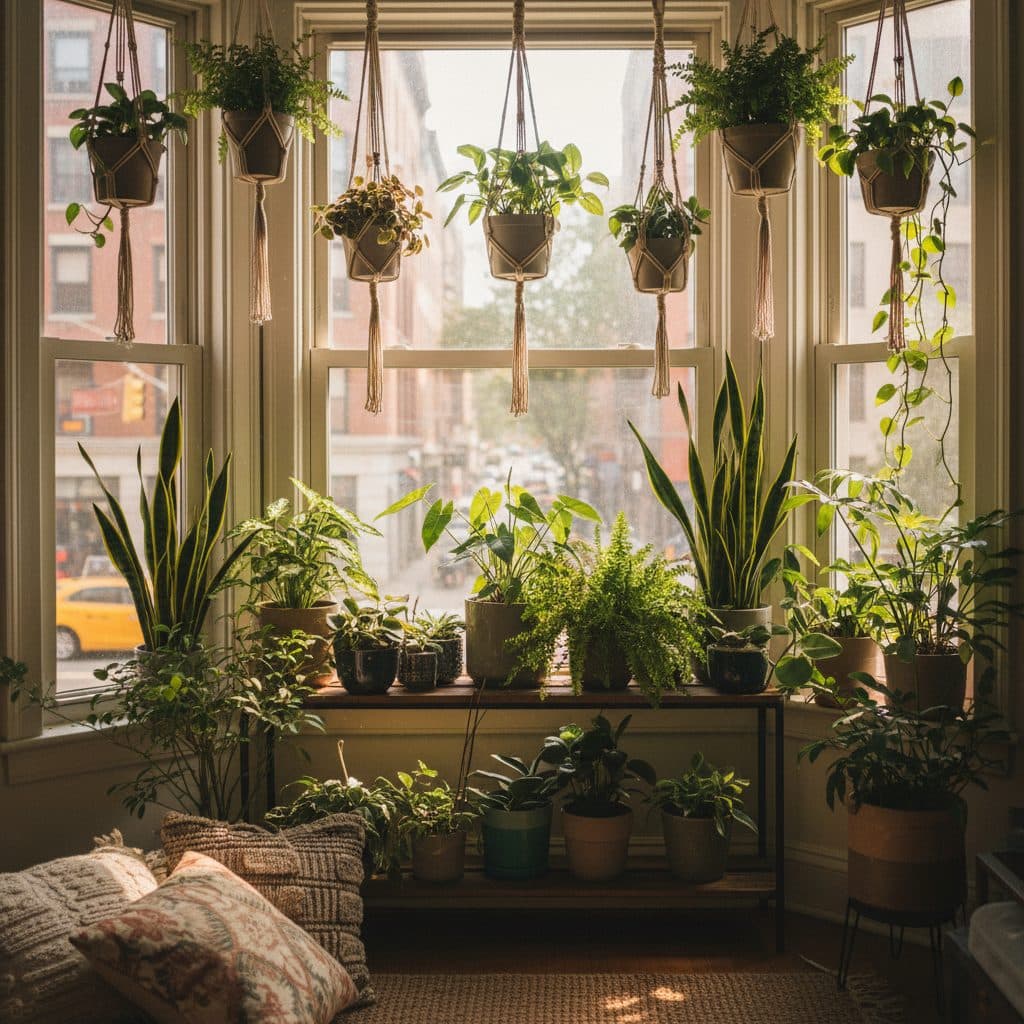
Key takeaways
- Overwatering is a leading cause of houseplant death, often indicated by yellowing leaves and soft stems that persist for more than 7 days.
- Insufficient light can cause leggy growth and pale foliage, especially for plants requiring 6 or more hours of indirect sunlight daily.
- Pest infestations, such as spider mites or mealybugs, can be identified by sticky residue, fine webbing, or visible insects on leaves and stems.
- Consistent humidity levels, ideally between 40% and 60%, matter for tropical houseplants to prevent brown leaf tips and maintain turgor.
- Proper soil drainage and aeration are essential; repotting every 12 to 18 months can prevent compaction and nutrient depletion.
Quick answer: Common houseplant ailments are diagnosed by observing symptoms like yellowing leaves, wilting, or brown spots, which often indicate issues with watering, light, humidity, or pests. Addressing these environmental factors and identifying specific patterns can help revive struggling plants.
In many US homes, from a cozy 500-square-foot apartment in Seattle to a sprawling house in USDA zone 8, houseplants bring life and a touch of the outdoors in. But what happens when your green friend starts to look less than lively? It’s a common scenario, and plenty of first-time plant owners lose one in the first year. Don’t despair — a struggling plant isn’t necessarily a lost cause. Just like a good gardener learns to grow a bountiful harvest of celery from seed, you can learn to read the subtle signs your plant is giving you.
This guide will walk you through the most common symptoms of houseplant distress, offering clear diagnostics and actionable steps. We’ll explore everything from yellowing leaves to stunted growth, helping you identify the root cause of the problem. Understanding these signals is the first step toward recovery, and with a bit of observation and care, most plants can bounce back within 2-4 weeks.
Yellow leaves and dropping foliage
Yellowing leaves are perhaps the most frequent cry for help from a houseplant, and they can signal several different issues. Identifying the specific pattern of yellowing matters for an accurate diagnosis. For instance, a Fiddle Leaf Fig might show yellowing on lower leaves first, indicating underwatering, while a Pothos with uniform yellowing across all leaves could point to a nutrient deficiency. Improper watering causes more houseplant problems than anything else, making it the first factor to consider.
overwatering versus underwatering
Overwatering often results in leaves that turn yellow and feel soft or mushy, sometimes accompanied by dark brown or black spots. The soil typically remains wet for 7 or more days after watering, creating an anaerobic environment that suffocates roots. This is particularly common in cooler climates or during winter months when plants require less water, perhaps only needing a drink every 10-14 days. Conversely, underwatering causes leaves to turn yellow, become crispy, and often start dropping from the bottom of the plant. The soil will feel bone dry, sometimes cracking, and the plant may show signs of wilting. For a deeper dive into soil moisture, consider reading the cracks in your soil to understand its hydration levels.
- Overwatering: Yellow, soft leaves; soil stays wet for 7+ days.
- Underwatering: Yellow, crispy leaves; soil dries out completely in 2-3 days.
- Nutrient Deficiency: General, uniform yellowing; often starts on older leaves.
- Low Light: Pale yellowing; new growth is stretched and weak.
Wilting and drooping stems
When your houseplant’s stems and leaves lose their rigidity and begin to sag, it’s a clear sign of distress. This wilting can be alarming, especially if your plant previously stood upright and firm. Wilting is often caused by a lack of water, but it can also signal more serious problems affecting the plant’s vascular system. A Peace Lily, for example, is notorious for dramatically drooping when thirsty, but it usually perks up within 30 minutes of receiving water.
root issues and environmental stress
The most common cause of wilting is underwatering, where the plant lacks sufficient moisture to maintain turgor pressure in its cells. However, if the soil is consistently wet and your plant is still wilting, you might be dealing with root rot. This fungal disease, caused by excessive moisture, damages the roots and prevents them from absorbing water, mimicking the symptoms of underwatering. Root rot is one of the most common ways a houseplant dies. Other factors include heat stress, where temperatures above 80°F can cause rapid water loss, and cold drafts, which can shock plants and lead to temporary wilting, especially in sensitive tropical species like Calatheas.
- Underwatering: Plant looks thirsty, soil is dry, perks up after watering.
- Root Rot: Plant wilts despite wet soil, roots are brown and mushy.
- Heat Stress: Leaves curl and droop in high temperatures, above 80°F.
- Cold Drafts: Sudden wilting after exposure to temperatures below 50°F.
Brown spots, crispy edges, and stunted growth
These symptoms often indicate environmental imbalances or pest activity, which can significantly hinder a plant’s development. Brown spots and crispy edges are frequently observed on tropical plants, like a Boston Fern, that require higher humidity than typically found in a heated US home during winter, where relative humidity can drop below 30%. Stunted growth, on the other hand, suggests a more chronic issue impacting the plant’s ability to thrive and expand its biomass, sometimes going unnoticed for 3-6 months.
humidity, light, and pest factors
Low humidity is a primary culprit for brown, crispy leaf edges, especially prevalent in arid regions or during dry indoor heating seasons. Many tropical plants prefer humidity levels between 50% and 60%. Sunburn manifests as bleached or brown spots, typically on leaves directly exposed to intense sunlight, such as those near a south-facing window in summer. Pest infestations, like spider mites or thrips, can cause tiny brown spots, distorted new growth, and a general decline in plant vigor. Finally, stunted growth can stem from several issues: inadequate light (less than 4 hours daily for most plants), nutrient deficiencies, or the plant being severely root-bound in its pot, restricting its ability to absorb water and nutrients. Providing adequate light, perhaps with the help of a reflective indoor grow tent, can significantly improve growth.
- Low Humidity: Brown, crispy leaf edges; common when humidity is below 40%.
- Sunburn: Bleached or brown spots on sun-exposed leaves; occurs with 6+ hours of direct sun for sensitive plants.
- Pests: Small spots, distorted growth, sticky residue; check undersides of leaves.
- Stunted Growth: No noticeable growth in 3-6 months; often due to root-bound conditions or poor light.
Identifying and treating common houseplant pests
Pests are an unwelcome but common challenge for indoor growers, capable of causing significant damage if not addressed promptly. They can range from nearly invisible mites to more obvious mealybugs, and often thrive in specific environmental conditions. Early detection matters, as a small infestation can quickly multiply and spread to nearby plants. Regularly inspecting your plants, especially the undersides of leaves and new growth, can help you catch problems before they become severe.
common culprits and their remedies
Spider mites are tiny arachnids that create fine webbing on leaves and stems, causing stippling and discoloration. They prefer dry, warm conditions, so increasing humidity can deter them. A common treatment involves spraying with insecticidal soap every 5-7 days for 2-3 weeks. Mealybugs appear as white, cottony masses in leaf axils and along stems, sucking sap and weakening the plant. They can be manually removed with a cotton swab dipped in rubbing alcohol, repeating every 5-7 days for three weeks to catch newly hatched nymphs. Fungus gnats are small, dark flying insects that hover around the soil surface, indicating consistently moist soil — often a sign of overwatering. Allowing the top 1-2 inches of soil to dry out between waterings is an effective control method. Powdery mildew, a fungal issue, presents as white, powdery spots on leaves, often due to poor air circulation and high humidity. Improving airflow and treating with a fungicide can resolve this problem within 1-2 weeks.
- Spider Mites: Fine webbing, tiny dots, stippled leaves; treat with insecticidal soap.
- Mealybugs: White, cottony masses; remove with alcohol swabs.
- Fungus Gnats: Small flying insects near soil; let soil dry out.
- Aphids: Small, soft-bodied insects clustered on new growth; spray with neem oil.
Understanding growth habits and environmental factors
Beyond specific symptoms, a plant’s overall growth habit and its interaction with its environment provide useful diagnostic clues. A plant that is not growing as expected, or exhibiting unusual growth patterns, is often signaling a need for adjustment in its care routine. For instance, a succulent that normally grows compactly might stretch noticeably within a few weeks if moved to a darker location, indicating a lack of sufficient light, which is common in apartments with only north-facing windows.
light, nutrients, and pot size
Leggy growth, characterized by long, stretched stems with sparse leaves, is a classic sign of insufficient light. Plants are literally reaching for more light, and this often occurs when they receive less than 4-6 hours of adequate light daily. To remedy this, move the plant to a brighter spot or supplement with a grow light for 12-14 hours a day. A lack of flowering in a plant known to bloom can be due to insufficient light, improper nutrient balance (too much nitrogen, not enough phosphorus), or the plant not being mature enough, which can take 1-3 years for some species. Environmental shock, such as a sudden drop in temperature from 70°F to 50°F, can cause rapid leaf drop, even if other conditions are ideal. Finally, improper pot size can significantly impact growth; a pot that is too large can hold excess moisture leading to root rot, while a pot that is too small (root-bound) restricts nutrient uptake and stunts growth, often requiring repotting every 12-18 months.
- Leggy Growth: Stretched stems, sparse leaves; indicates less than 4 hours of adequate light.
- Lack of Flowering: No blooms; often due to insufficient light or nutrient imbalance.
- Environmental Shock: Sudden leaf drop; caused by abrupt changes in temperature or location.
- Root-bound: Roots circling pot, stunted growth; requires repotting every 12-18 months.
Humidity Check: Many tropical houseplants thrive in 50-60% relative humidity, especially in dry climates like Arizona, where it can drop below 20%.
Water Quality: Tap water with high chlorine levels can harm sensitive plants; letting it sit for 24 hours allows free chlorine to off-gas, though it does nothing to chloramine, which many US utilities now use.
Frequently asked questions
Why are my plant’s leaves turning yellow?
Yellow leaves are a common symptom with multiple causes, most frequently overwatering or underwatering. Check your soil moisture; if it’s wet for more than 7 days, it’s likely overwatering. If it’s bone dry, it needs water.
How often should I water my houseplants?
Watering frequency depends on the plant, pot size, and environment, but a good rule of thumb is to check the top 1-2 inches of soil. If it feels dry, it’s time to water, typically every 5-10 days for most plants.
What are those tiny flies around my plant?
Those are likely fungus gnats, which are attracted to consistently moist soil. Reduce watering frequency, allowing the top 1-2 inches of soil to dry out completely between waterings, and consider using yellow sticky traps to catch the adults.
My plant is growing tall but looks sparse. What’s wrong?
This is often a sign of ‘leggy’ growth due to insufficient light. Your plant is stretching to find more light, indicating it needs at least 4-6 hours of bright indirect light daily or a supplemental grow light.
Can I save a plant with root rot?
Yes, often you can. Carefully remove the plant from its pot, trim away any brown, mushy roots with clean shears, and repot into fresh, well-draining soil. Reduce watering frequency significantly for the next 2-3 weeks.
What’s the ideal humidity for most houseplants?
Most tropical houseplants thrive in relative humidity levels between 40% and 60%. If your home’s humidity is consistently below 30%, especially in winter, consider using a humidifier or grouping plants together to increase local humidity.
References
- USDA Natural Resources Conservation Service (2024). USDA Natural Resources Conservation Service.