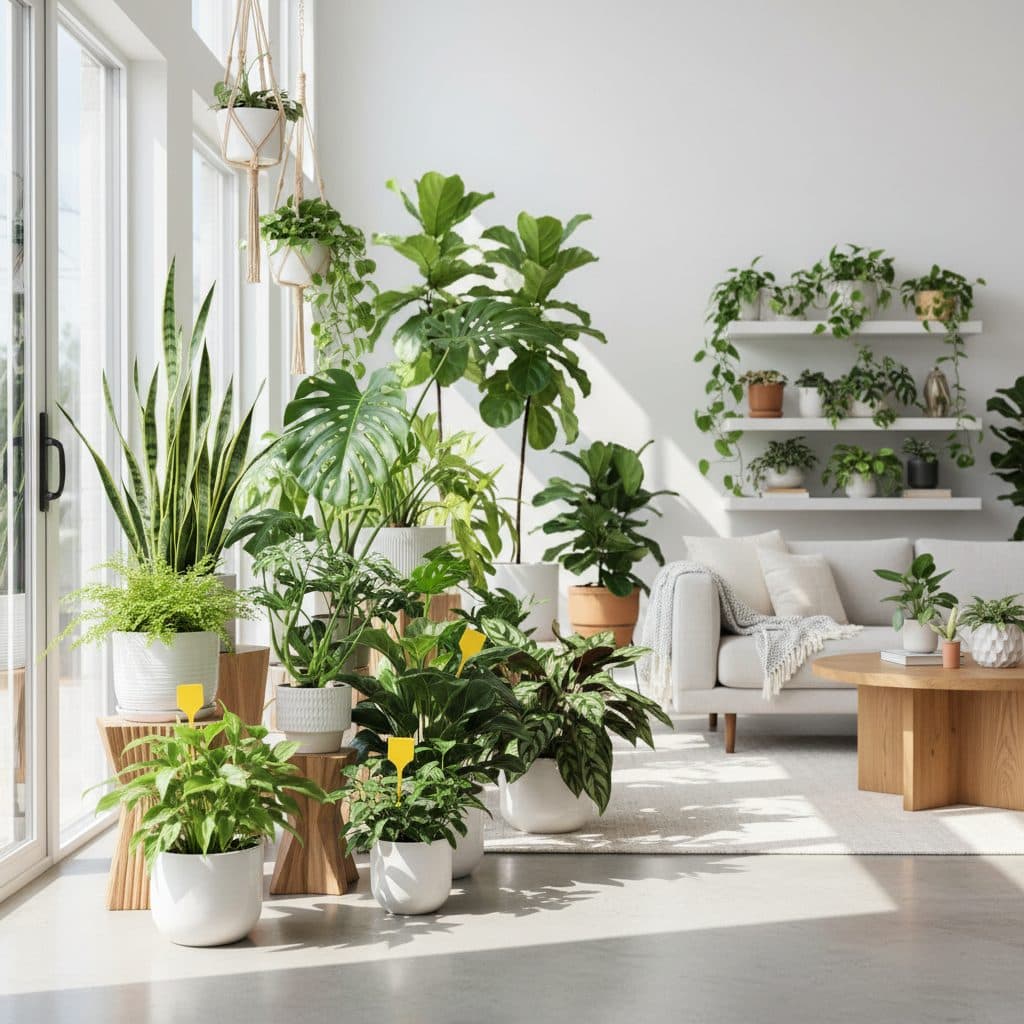
Key takeaways
- Implement a 14-day quarantine for all new plants to prevent pest introduction into your home.
- Address fungus gnats by managing soil moisture, as they thrive in the top one to two inches of consistently wet soil.
- Treat mealybugs directly with a cotton swab dipped in 70% isopropyl alcohol, repeating every 5-7 days.
- Increase humidity around spider mite-infested plants, as these pests prefer dry conditions, and use insecticidal soap solutions.
- Regularly inspect plants, at least once a week, to catch pest infestations early when they are easier to manage.
- Utilize beneficial insects like predatory mites for persistent pest issues, especially in larger indoor growing setups.
Quick answer: Managing common houseplant pests like fungus gnats, mealybugs, and spider mites involves implementing quarantines for new plants, managing soil moisture, using targeted treatments like isopropyl alcohol for mealybugs, and increasing humidity for spider mites.
In many US homes, particularly those in warmer, humid climates like USDA zone 9 in Florida, houseplant owners tend to face more pest pressure than those in drier regions. The challenge is to manage these common invaders — fungus gnats, mealybugs, and spider mites — without resorting to harsh chemical sprays that can affect indoor air quality or harm beneficial insects. Effective pest control indoors relies on consistent observation and targeted, non-chemical interventions.
Repeated broad-spectrum spraying is not suitable for an indoor environment where people and pets live. Instead, a thoughtful approach focusing on plant health, environmental adjustments, and specific natural treatments can keep your indoor garden thriving. This guide provides practical, proven strategies to protect your plants from the three most common houseplant pests, ensuring your collection stays healthy with steady, low-effort attention.
Preventing pests: the first line of defense for indoor plants
Preventing pests from establishing themselves is far easier than eradicating an existing infestation, saving growers considerable time and effort. A critical first step for any new plant joining your collection, whether from a nursery or a friend, is a mandatory 14-day quarantine period. During this time, keep the new plant isolated at least 6 feet from other plants and inspect it daily for any signs of pests, such as webbing, sticky residue, or tiny insects. This one habit is what keeps a single infested plant from spreading through the whole collection.
Consistent inspection and good cultural practices
Regular, thorough inspection of your existing plants, ideally once a week, allows for early detection of potential problems. Pay close attention to the undersides of leaves, along stems, and in the soil surface. Good cultural practices, including proper watering and adequate light, contribute significantly to plant vigor, making plants less susceptible to pest attacks. For example, a plant receiving 12-14 hours of appropriate light daily is generally more resilient than one struggling in low light conditions. You might consider an indoor grow tent for sensitive plants, which helps control environmental factors and isolate new additions, as discussed in articles like Reflective Indoor Grow Tent.
- Inspect new plants for 14 days before introducing them to your main collection.
- Wipe down plant leaves regularly with a damp cloth to remove dust and potential pest eggs.
- Ensure proper air circulation to deter fungal issues and some pests, aiming for a gentle breeze.
- Avoid over-fertilizing, as excessive nitrogen can lead to soft, succulent growth that attracts pests.
- Use sterile potting mix to prevent soil-borne pests and diseases from the outset.
Controlling fungus gnats: managing moisture and larvae
Fungus gnats (Sciaridae) are small, dark, mosquito-like insects that are more of a nuisance than a direct threat to mature plants, though their larvae can damage delicate roots of seedlings. These pests thrive in consistently moist soil, especially in the top one to two inches. Overwatering is the primary cause of fungus gnat infestations, because the eggs and larvae need soil that stays damp. Reducing watering frequency and allowing the top layer of soil to dry out completely between waterings is the most effective cultural control method.
Targeting larvae with biological controls
For an active infestation, particularly in plants that require more consistent moisture, like ferns or peace lilies, targeting the larvae in the soil is key. Yellow sticky traps placed near the soil surface will catch adult gnats, reducing their ability to lay more eggs. However, for true control, consider applying a biological insecticide containing Bacillus thuringiensis israelensis (BTI), a naturally occurring bacterium that specifically targets gnat larvae. Mix BTI granules or liquid concentrate strictly according to the package directions — rates differ a lot between products — and apply it as a soil drench every 7-10 days for three applications. Repeat applications are what break the larval cycle; a single drench will not clear an infestation.
- Allow the top 1-2 inches of soil to dry out completely between waterings.
- Place yellow sticky traps near plants to capture adult fungus gnats.
- Apply a BTI drench to the soil, following a 7-10 day schedule for three applications.
- Cover the soil surface with a half-inch layer of sand or diatomaceous earth to deter egg-laying.
- Ensure pots have adequate drainage holes to prevent waterlogging.
Eradicating mealybugs: alcohol swabs and neem oil
Mealybugs are soft-bodied, cottony insects that feed on plant sap, weakening plants and leaving behind sticky honeydew. They often hide in leaf axils and on the undersides of leaves, making them difficult to spot until an infestation is significant. A single female mealybug can lay up to 600 eggs in a cottony sac, leading to rapid population growth if not addressed promptly. My preferred method for small infestations is direct application of 70% isopropyl alcohol.
Targeted treatment with alcohol and neem oil
To treat mealybugs, dip a cotton swab in 70% isopropyl alcohol and gently wipe each visible pest from the plant. This dissolves their waxy coating and kills them on contact. Repeat this process every 5-7 days for at least three weeks to catch newly hatched nymphs. For larger infestations or hard-to-reach areas, a spray solution of 1 teaspoon of neem oil concentrate mixed with 1 quart of water and a few drops of mild dish soap can be effective. Neem oil acts as an antifeedant and growth disruptor, and regular application every 7-10 days will steadily bring the population down. For edible plants like celery or cilantro grown indoors, gentle methods matter even more.
- Dab individual mealybugs with a cotton swab dipped in 70% isopropyl alcohol.
- Spray plants thoroughly with a solution of neem oil and mild soap every 7-10 days.
- Inspect new plant purchases carefully, as mealybugs are notorious hitchhikers.
- Prune heavily infested leaves or stems and bag them before carrying them through the house.
- Consider introducing beneficial insects, such as mealybug destroyers (Cryptolaemus montrouzieri), for persistent problems in larger collections.
Battling spider mites: humidity, washing, and insecticidal soap
Spider mites are tiny arachnids, often less than 0.02 inches long, that can cause significant damage by piercing plant cells and sucking out chlorophyll, leading to stippling and yellowing leaves. They thrive in hot, dry conditions and can reproduce incredibly quickly; a single female can lay up to 100 eggs in her 20-day lifespan. Infestations are often identified by fine webbing on leaves and stems. Increasing humidity around affected plants can significantly deter these pests, as they prefer environments with less than 50% relative humidity. For more detailed guidance, see How to get rid of spider mites (and keep them from coming back).
Physical removal and insecticidal soap solutions
For small plants, a strong spray of water dislodges a large share of the mites. Take the plant to a sink or shower and thoroughly rinse all leaf surfaces, especially the undersides, every 3-5 days. For a more persistent approach, an insecticidal soap solution is highly effective. Mix 1-2 tablespoons of mild liquid soap per gallon of water and spray all parts of the plant, ensuring complete coverage. The soap works by breaking down the mites’ protective outer layer, leading to dehydration. Apply this solution every 5-7 days for at least three weeks. In regions like the arid Southwest, raising humidity around the plants themselves — with trays, grouping or an enclosure — makes conditions less favorable for mites.
- Mist plants daily or use a pebble tray to increase local humidity above 60%.
- Rinse plants thoroughly with a strong stream of water every 3-5 days to dislodge mites.
- Apply an insecticidal soap solution (1-2 tbsp soap per gallon of water) every 5-7 days for three weeks.
- Introduce predatory mites (e.g., Phytoseiulus persimilis) for severe or recurring infestations.
- Remove and dispose of heavily infested leaves to knock the population back before you spray.
Common houseplant pests: a quick comparison
Pest | Appearance | Preferred Conditions | Primary Damage | Key Control Method |
|---|---|---|---|---|
Fungus Gnats | Small, dark, 0.125 in long, mosquito-like flies | Moist, consistently wet soil | Larvae feed on roots, especially seedlings | Dry out soil, BTI drench |
Mealybugs | White, cottony, segmented insects, 0.04-0.2 in long | Warm, humid, sheltered areas on plants | Sap feeding, sticky honeydew, stunted growth | Alcohol swabs, neem oil |
Spider Mites | Tiny (0.02 in), red/brown/green, often with webbing | Hot, dry, low humidity (<50%) | Stippling, yellowing leaves, fine webbing | Increase humidity, insecticidal soap |
Gnat egg-laying: A single adult fungus gnat can lay up to 200 eggs in moist soil over a 7-day period.
Mite reproduction: Spider mites can complete their lifecycle from egg to adult in as little as five days at 80°F, leading to rapid population growth.
Frequently asked questions
How often should I inspect my houseplants for pests?
You should inspect your houseplants at least once a week, paying close attention to the undersides of leaves and stem joints. This regular check, taking only 5-10 minutes per plant, helps catch infestations early when they are much easier to manage.
Can I use dish soap for insecticidal soap?
Yes, you can use a mild liquid dish soap, but avoid those with degreasers or harsh chemicals. Mix 1-2 tablespoons of soap per gallon of water. Test on a small leaf first, as some plants, especially those with delicate foliage, might be sensitive to the soap, showing signs of damage within 24 hours.
What is the best way to prevent fungus gnats from returning?
The most effective way to prevent fungus gnats from returning is to consistently allow the top 1-2 inches of your potting soil to dry out completely between waterings. This eliminates the moist environment where they lay their eggs, so the next generation never hatches.
Are beneficial insects safe for indoor use?
Yes, beneficial insects like predatory mites for spider mites or mealybug destroyers are generally safe for indoor use and pose no threat to humans or pets. They are highly specialized and will die off once their food source (the pests) is depleted, offering a natural control method without chemical residues.
How long does it take to get rid of a pest infestation without chemicals?
Eradicating a pest infestation without chemicals typically requires consistent effort over several weeks, usually 3-4 weeks for complete control. This duration accounts for the pest’s life cycle, ensuring you treat newly hatched individuals and break the reproductive cycle.
References
- USDA Natural Resources Conservation Service (2024). USDA Natural Resources Conservation Service.