Key takeaways
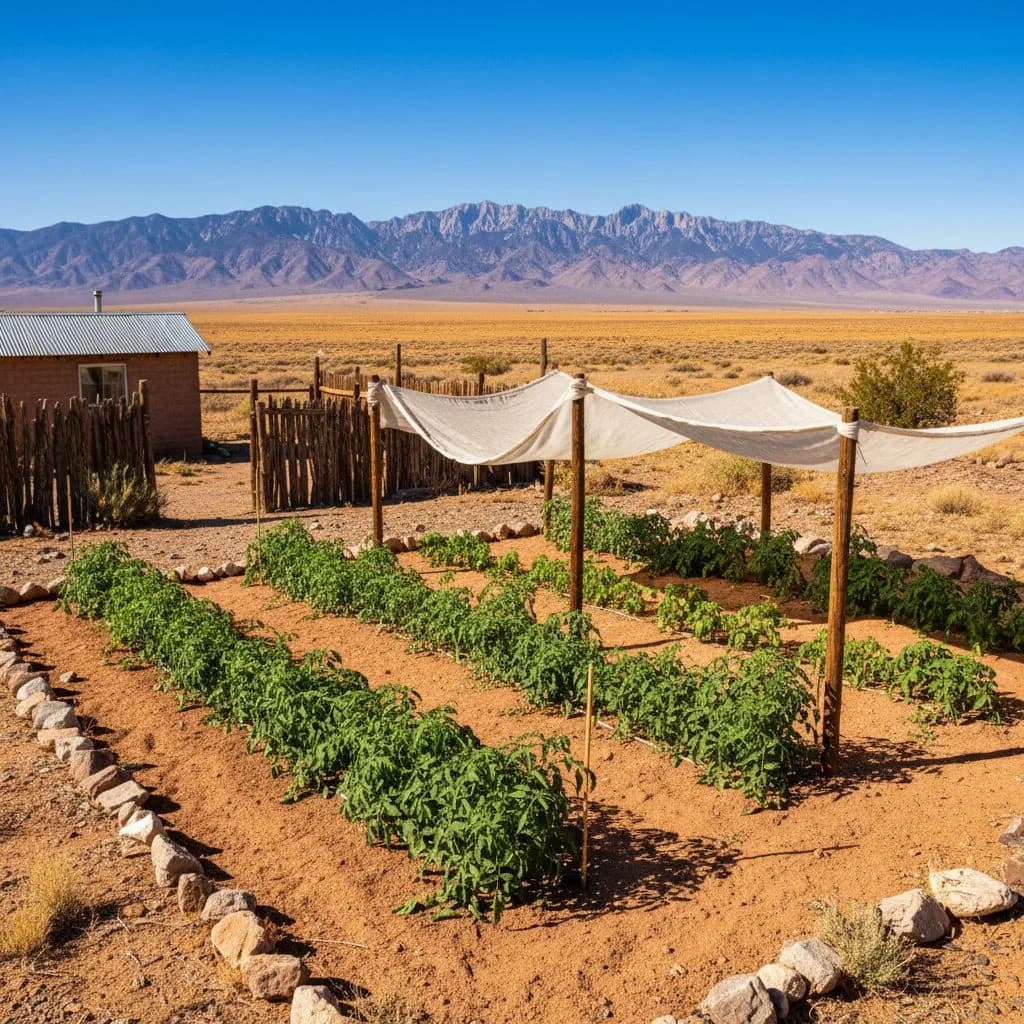
- Implement physical shade structures like 30-50% shade cloth or trellises to reduce direct sun exposure.
- Utilize companion planting with taller crops such as corn or sunflowers to provide living shade for heat-sensitive plants.
- Practice efficient water management, including deep watering and mulching, to maintain consistent soil moisture and reduce soil temperatures.
- Select heat-tolerant tomato and pepper varieties known to set fruit in temperatures above 90°F, such as ‘Homestead’ tomatoes or ‘Anaheim’ peppers.
- Optimize planting times to avoid the most intense summer heat, aiming for early spring or late summer plantings in USDA zones 8-10.
- Integrate shade strategies with broader off-grid homesteading efforts, considering water and energy efficiency.
Quick answer: To protect tomatoes and peppers from sunscald in the hot Southwest, implement physical shade structures like 30-50% shade cloth, utilize companion planting with taller crops, and practice efficient water management. Selecting heat-tolerant varieties and optimizing planting times also helps mitigate extreme heat.
Growing tomatoes and peppers in the US Southwest, especially in regions like Arizona, Nevada, or Southern California, presents unique challenges. The intense summer sun can push temperatures above 100°F for days or weeks, leading to a common issue called sunscald. This damage can reduce yields, turning promising harvests into a struggle for survival. Protecting these crops requires practical shade strategies, particularly for those managing an off-grid homestead where resources are limited.
Successfully cultivating these plants in USDA zones 8-10 means understanding how to mitigate extreme heat and direct sunlight. From passive structures to living shade and careful water management, there are several methods to keep your plants productive. We’ll explore these strategies, aiming to maintain fruit quality and quantity even when ambient temperatures reach 110°F or higher.
Understanding sunscald and its impact on Southwest gardens
Sunscald is a physiological disorder that affects fruits and sometimes leaves of plants exposed to excessive direct sunlight and high temperatures. In the arid Southwest, where summer days often exceed 95°F for eight or more hours, fruits like tomatoes and peppers are particularly vulnerable. The damage typically appears as a white or yellowish patch on the side of the fruit facing the sun, which can later turn papery, sunken, and allow secondary fungal or bacterial infections to take hold, ruining a significant portion of an unprotected crop.
Recognizing sunscald symptoms
Identifying sunscald early can help you adjust your shade strategy. Affected areas on fruits often begin as a light-colored, bleached spot, usually on the shoulder or side directly exposed to the afternoon sun. As the damage progresses, this spot becomes thin and leathery, eventually drying out and collapsing. This creates an entry point for pathogens, leading to rot and complete loss of the fruit. In some cases, leaves can also show signs of scorching, turning brown and crispy along the edges, which reduces the plant’s photosynthetic capacity.
- Initial bleaching or yellowing on fruit skin.
- Leathery, sunken patches developing over time.
- Increased susceptibility to secondary infections and rot.
- Reduced overall yield and fruit quality.
- Leaf scorching, especially on exposed foliage.
Passive shade structures for homestead protection
One of the most effective ways to combat sunscald is through passive shade structures. These range from temporary shades to permanent frames, shielding crops from intense summer sun. For many off-grid homesteads, these structures are simple to build and require minimal ongoing maintenance, offering a significant return on investment in terms of crop protection. A well-placed structure can reduce ambient temperatures around plants, according to general observations in arid regions.
Choosing and installing shade cloth
Shade cloth is a widely used material, available in various densities, typically ranging from 30% to 50% shade. For tomatoes and peppers in the Southwest, a 30% to 40% shade cloth is often ideal, blocking enough sun to prevent scalding without significantly hindering photosynthesis. Installing it usually involves creating a simple frame from PVC pipe or lumber, approximately 6 to 7 feet tall, to allow for good air circulation. The cloth can be secured with clips or zip ties so it can be easily removed or adjusted as needed. Consider anchoring your frame securely, as summer monsoon winds in areas like southern Arizona can be strong.
- Use 30-40% shade cloth for optimal balance.
- Construct a frame 6-7 feet high for air circulation.
- Securely anchor structures against high winds.
- Consider roll-up sides for adjustable shade.
- Ensure easy removal for seasonal changes.
Companion planting and living shade solutions
Using other plants to create living shade is an effective strategy on an off-grid homestead. This method protects sun-sensitive crops, improves soil health, and attracts beneficial insects. The principle of shade tolerance, where some plants thrive in less direct light, is well-documented, even if specific to rainforest seedlings in Sri Lanka, as noted by research in 2023 [1]. For instance, taller, sun-loving plants can act as natural umbrellas, reducing the direct solar radiation on their shorter neighbors.
Selecting shade-providing companions
When choosing companion plants for shade, look for species that grow tall and dense without competing too aggressively for nutrients or water. Corn varieties that reach 8 to 10 feet tall are excellent choices, planted on the south or west side of your tomato and pepper rows. Sunflowers are another good option, with some varieties growing over 10 feet high, providing substantial afternoon shade. Be aware that some sunflower varieties can inhibit the growth of nearby plants (allelopathy), so choose your variety carefully and provide adequate spacing. Planting these approximately 18 to 24 inches apart will create a protective barrier. Ensure adequate spacing, perhaps 2 to 3 feet from your main crop, to prevent root competition.
- Plant tall crops like corn or sunflowers.
- Position shade providers to the south or west.
- Maintain 18-24 inch spacing between shade plants.
- Ensure adequate distance from main crops (2-3 feet).
- Choose non-competitive varieties.
Water management and soil health under shade
Effective water management maintains plant health in the Southwest and becomes even more important under shade. Shade reduces evaporation from the soil surface and transpiration from plant leaves, potentially cutting water needs on hot days. This means less stress on your off-grid water system and more efficient use of every gallon. Maintaining consistent soil moisture also helps regulate soil temperature, which can drop by 10-15°F under effective shade, preventing root stress.
Mulching and deep watering techniques
Applying a thick layer of organic mulch (3 to 6 inches deep) around your plants is one of the best practices. Materials like straw, wood chips, or shredded leaves will conserve moisture, suppress weeds, and slowly add organic matter to the soil. This reduces the need for frequent watering. Water deeply and infrequently instead of giving shallow daily sprinkles. This encourages roots to grow deeper, making plants more resilient to dry spells. For example, a tomato plant might need significant water every two to three days during peak summer heat in USDA zone 9. Understanding efficient water use is a cornerstone of off-grid living.
- Apply 3-6 inches of organic mulch.
- Practice deep, infrequent watering.
- Water early in the morning to minimize evaporation.
- Monitor soil moisture regularly with a finger test.
- Consider drip irrigation for targeted water delivery.
Selecting resilient varieties and timing plantings
Along with shade structures and water management, selecting the right plant varieties and timing plantings reduces the risk of sunscald and maintains yields in the hot Southwest. Certain tomato and pepper varieties handle intense sun and heat better because they still set fruit at high temperatures. For instance, many heirloom tomatoes struggle to set fruit when daytime temperatures consistently exceed 90°F, while specific heat-tolerant varieties continue to produce.
Heat-tolerant varieties and planting windows
Look for ”heat-set” tomato varieties like ‘Homestead’, ‘Arkansas Traveler’, or ‘Florida 91′, which are known to produce fruit even when temperatures are consistently above 90°F. For peppers, ’Anaheim’, ‘Jalapeño’, and ‘Habanero’ varieties generally tolerate heat well, though even they benefit from afternoon shade. Planting times also matter: aim to get plants established in early spring, typically March or April in USDA zone 8, so they mature before summer heat arrives in July and August. A second planting in late summer, around August, can yield a fall crop once temperatures begin to moderate, offering a harvest window of several weeks. The USDA Natural Resources Conservation Service notes that selecting appropriate species for local conditions supports sustainable agriculture [6].
- Choose “heat-set” tomato varieties.
- Select heat-tolerant pepper varieties.
- Plant early in spring (March-April in zone 8).
- Consider a second planting in late summer (August).
- Aim for varieties with 60-80 day maturity windows.
Comparison of shade structure materials
Material | Pros | Cons | Typical Cost (per 100 sq ft) |
|---|---|---|---|
Shade Cloth (30-40%) | Effective sun blockage, good air circulation, lightweight | Requires frame, can tear in high winds | $50 – $100 |
Trellises with Vining Plants | Living shade, adds beauty, can produce additional crops | Slower to establish, requires plant care, less dense shade | $30 – $80 (for trellis) |
Row Covers (lightweight) | Pest protection, some heat reduction, easy to deploy | Less durable, can trap heat if too dense, limited height | $20 – $50 |
Lath or Wood Slats | Durable, natural appearance, good ventilation | Heavier, more labor-intensive to build, fixed shade level | $100 – $200 |
Shade cloth density: For tomatoes and peppers in the Southwest, a 30% to 40% shade cloth is generally recommended to prevent sunscald while allowing sufficient light for photosynthesis.
Soil temperature reduction: Effective mulching and shade can reduce soil temperatures around plant roots by 10-15°F, protecting them from extreme heat damage.
References
- SHADE TOLERANCE RANKINGS OF RAIN FOREST TREE SEEDLINGS, SOUTHWEST OF SRILANKA (2023).
- Time and Ordered Richness (2011).
- On the Relationship between Shade Tolerance and Shade Avoidance Strategies in Woodland Plants (1997).
- Selecting Trees for Shade in the Southwest (1989).
- EFFECTIVE STRATEGIES IN COUNSELLING FOR CONFLICT RESOLUTION AND MEDIATION IN SOUTHWEST NIGERIA (2025).
- USDA Natural Resources Conservation Service (2024).