Key takeaways
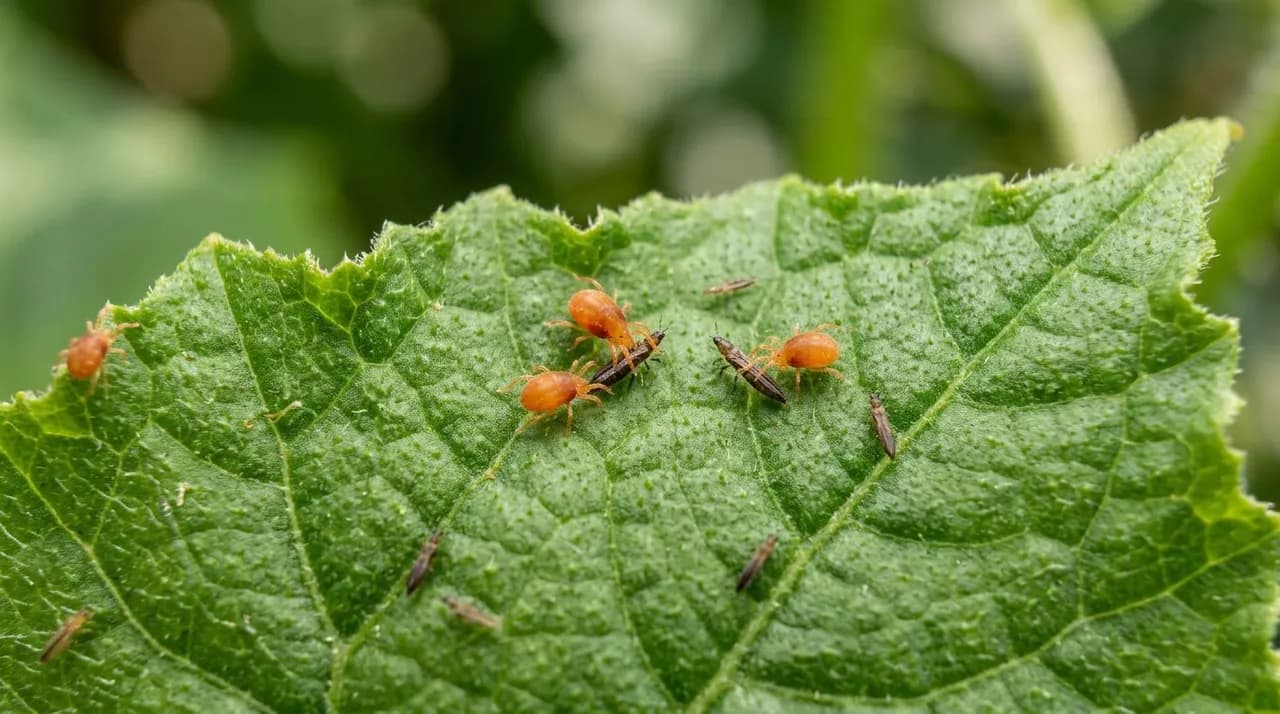
- Thrips are slender insects barely 1 to 2 mm long that scrape plant cells, leaving silvery stippling and black tar-like frass droplets.
- Blue sticky traps provide the most effective early monitoring and adult trapping, as thrips are strongly attracted to blue light.
- Release natural biological predators, including predatory mites (Amblyseius swirskii) and minute pirate bugs (Orius insidiosus).
- Apply OMRI-listed spinosad or insecticidal soap sprays in the evening every 5 to 7 days to disrupt the multi-stage lifecycle.
- Treat the soil beneath infested plants with beneficial nematodes (Steinernema feltiae) to target pupating soil-dwelling stages.
Quick answer: To get rid of thrips organically, rinse foliage with strong water sprays, deploy blue sticky traps, and apply insecticidal soap, neem oil, or spinosad every 5 to 7 days. Release biological predators like Orius bugs and predatory mites to eliminate nymphs and adults without toxic chemicals.
Controlling thrips is a practical skill for organic vegetable growers, greenhouse managers, and indoor houseplant enthusiasts alike. Belonging to the insect order Thysanoptera, thrips are among the most pervasive and frustrating sap-feeding garden pests in North America.
Measuring barely 1/20 to 1/16 of an inch (1 to 2 mm) long, these slender, minute insects are easily overlooked until substantial damage appears. Thrips feed using unique asymmetrical rasping-sucking mouthparts: they puncture the outer epidermal cells of leaves and flower petals, suck out the internal cellular sap and chlorophyll, and leave behind unsightly silvery or bleached patches speckled with tiny black dots of fecal frass. Left unchecked, thrips distort emerging growth, abort flower buds, and transmit destructive viral pathogens like Tomato Spotted Wilt Virus (TSWV).
Because female thrips insert their microscopic eggs directly inside living plant tissue (and mature larvae drop into the soil to pupate), a single spray application will never eliminate an infestation. Eradicating thrips requires a comprehensive Integrated Pest Management (IPM) strategy that attacks the pest across all stages of its lifecycle.
Identifying thrips and recognizing damage symptoms
Because thrips are exceptionally small and hide within tightly rolled leaves, bud scales, and flower petals, diagnosing an infestation relies on recognizing signature symptoms:
- Foliage Stippling and Silvery Sheen: As thrips drain cellular fluids, empty cell pockets fill with air, giving the upper leaf surface a bleached, papery, or silvery-bronze appearance.
- Black Frass Droplets: The most definitive visual diagnostic is the presence of tiny, tar-like black fecal specks scattered across the bleached feeding zones.
- Distorted Terminal Growth: Feeding on young, unfolding leaves causes crinkled, cupped, curled, or stunted foliage that mimics viral infection or herbicide drift.
- Flower Bud Balling and Browning: Thrips love pollen and nectar. They colonize unopened flower buds on roses, peppers, and tomatoes, causing petals to turn brown around the edges or fail to open entirely.
- The White Paper Tap Test: Hold a sheet of white printer paper beneath a suspect branch or flower cluster and shake the plant firmly. Thrips will fall onto the paper as tiny, yellowish, brown, or black moving slivers.
To differentiate thrips from other common sap-feeding pests in your garden, compare these symptoms with our diagnostic guides on how to get rid of spider mites and how to get rid of aphids.
The multi-stage lifecycle: why repeated treatments are essential
Understanding the thrips lifecycle explains why a single pesticide spray inevitably fails:
- Egg Stage (2 to 4 Days): Adult females use a serrated ovipositor to insert 150 to 300 microscopic eggs directly into the soft flesh of leaves, stems, or petals. Shielded inside the leaf cuticle, eggs are completely immune to contact sprays.
- Larval / Nymph Stages (5 to 8 Days): Wingless nymphs hatch and feed voraciously on foliage, undergoing two developmental instars.
- Pupal Stages (3 to 5 Days): Mature second-instar larvae stop feeding and drop to the ground, burrowing into topsoil, leaf litter, or potting soil crevices to pupate through prepupal and pupal stages. Soil-dwelling pupae are protected from foliar spray applications.
- Adult Stage (30 to 45 Days): Winged adults emerge from the soil, fly up into the plant canopy, and begin laying eggs.
In warm summer weather (above 80°F / 27°C), a complete generation develops in just 14 to 18 days. To break this cycle, any foliar treatment must be repeated every 5 to 7 days for at least three consecutive cycles to eliminate newly emerging nymphs before they can lay new eggs.
Biological control: using natural predators
Deploying beneficial predatory insects is the most sustainable, non-toxic method for controlling thrips in greenhouses, grow rooms, and outdoor gardens:
1. Predatory mites (Amblyseius swirskii and Neoseiulus cucumeris)
These microscopic predatory arachnids actively search leaf undersides and flowers, consuming up to 5 to 10 thrips larvae per day.
- Application: Purchased in slow-release paper breeding sachets hung directly on plant branches, or applied as loose vermiculite carrier over the foliage.
- Ideal Conditions: Thrives in warm temperatures (68°F to 85°F / 20°C to 30°C) with moderate humidity.
2. Minute pirate bugs (Orius insidiosus)
Orius is the most useful generalist predator for thrips: both adults and nymphs attack every stage, including fast-moving adults.
- Efficiency: A single Orius bug can devour up to about 20 thrips daily, aggressively hunting them inside closed flower blossoms.
3. Beneficial nematodes (Steinernema feltiae)
To eliminate the subterranean pupal stage of thrips, apply beneficial entomopathogenic nematodes to the soil:
- Mix nematodes in water and drench the potting mix or garden soil around the base of infested plants.
- The microscopic nematodes enter thrips pupae in the soil, releasing symbiotic bacteria that kill the pest within 48 hours.
Organic sprays and contact treatments
When thrips populations surge out of control, targeted organic sprays provide rapid knockdown without leaving persistent toxic synthetic residues.
1. Spinosad (OMRI-listed)
Spinosad is a natural bio-insecticide derived from the soil bacterium Saccharopolyspora spinosa. It is widely recognized as the most effective organic active ingredient against thrips:
- Mode of Action: Absorbed into the outer leaf layers (translaminar activity), poisoning thrips both on contact and through ingestion as they feed.
- Pollinator Safety: Spinosad is toxic to bees when wet. Always spray late in the evening after honeybees and native pollinators have returned to their hives. Once the spray dries overnight (within 3 to 4 hours), it poses minimal hazard to foraging pollinators. Learn proper application protocols in our detailed guide on spinosad pest control and pollinators.
2. Insecticidal soaps and horticultural oils
Pure potassium salts of fatty acids (insecticidal soap) and highly refined horticultural oils dissolve the waxy protective cuticle of thrips, causing rapid desiccation.
- Coverage: Must make direct physical contact with the insect to be effective. Spray thoroughly to cover leaf undersides, stem crotches, and flower bases.
- Frequency: Reapply every 5 to 7 days for three weeks.
3. Cold-pressed neem oil and azadirachtin
Pure neem oil acts as an anti-feedant and natural insect growth regulator (IGR), preventing thrips nymphs from successfully molting into reproductive adults.
For guidelines on integrating organic treatments alongside broader pest control routines, see how to get rid of scale on plants.
Cultural and physical control tactics
Supplementing biological and spray treatments with cultural modifications reduces thrips pressure substantially:
- Deploy Blue Sticky Traps: While yellow sticky cards trap fungus gnats and whiteflies, thrips are specifically attracted to bright blue wavelengths. Hang blue sticky cards just above the plant canopy to trap adult fliers and monitor population spikes.
- Use Reflective Silver Mulch: Laying metallic silver or aluminum-coated mulch over garden beds reflects ultraviolet light upward. The glare disorients flying thrips and cuts the number that settle on young plants, though the effect fades as the crop canopy grows over and covers the mulch.
- Strong Water Rinsing: Blast sturdy outdoor plants and houseplants with a firm jet of clean water in the morning to mechanically dislodge nymphs and wash off sticky frass.
- Prune Infested Blooms: If flower buds are heavily infested, snip them off and seal them in plastic bags for disposal. Removing the blooms removes thousands of eggs and adults in a single step.
Managing thrips on indoor houseplants
Thrips are notorious terrors on indoor collections of Monstera, Philodendron, Anthurium, and Ficus:
- Immediate Quarantine: Move the affected plant into a separate room away from other houseplants immediately upon noticing damage.
- Shower the Plant: Place the houseplant in a shower or tub and wash every leaf thoroughly with lukewarm water.
- Systematic Spray Routine: Spray all stems and leaf surfaces with insecticidal soap or neem oil spray every 5 days for four weeks.
- Soil Refresh: Scrape away the top 1 inch (2.5 cm) of potting mix to remove pupating insects, replace with fresh sterile potting soil, and treat with beneficial nematodes.
By combining early monitoring on blue sticky traps, introducing predatory mites, and rotating organic contact sprays on a strict 5-to-7 day schedule, you can knock thrips back below damaging levels and keep them there, restoring healthy growth to your garden and houseplants.