Key takeaways
- Dragon fruit (Kamalam) is a climbing tropical cactus that thrives in pots and HDPE grow bags on sunny Indian terraces.
- Propagate from 30 cm to 40 cm mature stem cuttings cured in shade for 5 to 7 days before planting into sandy potting mix.
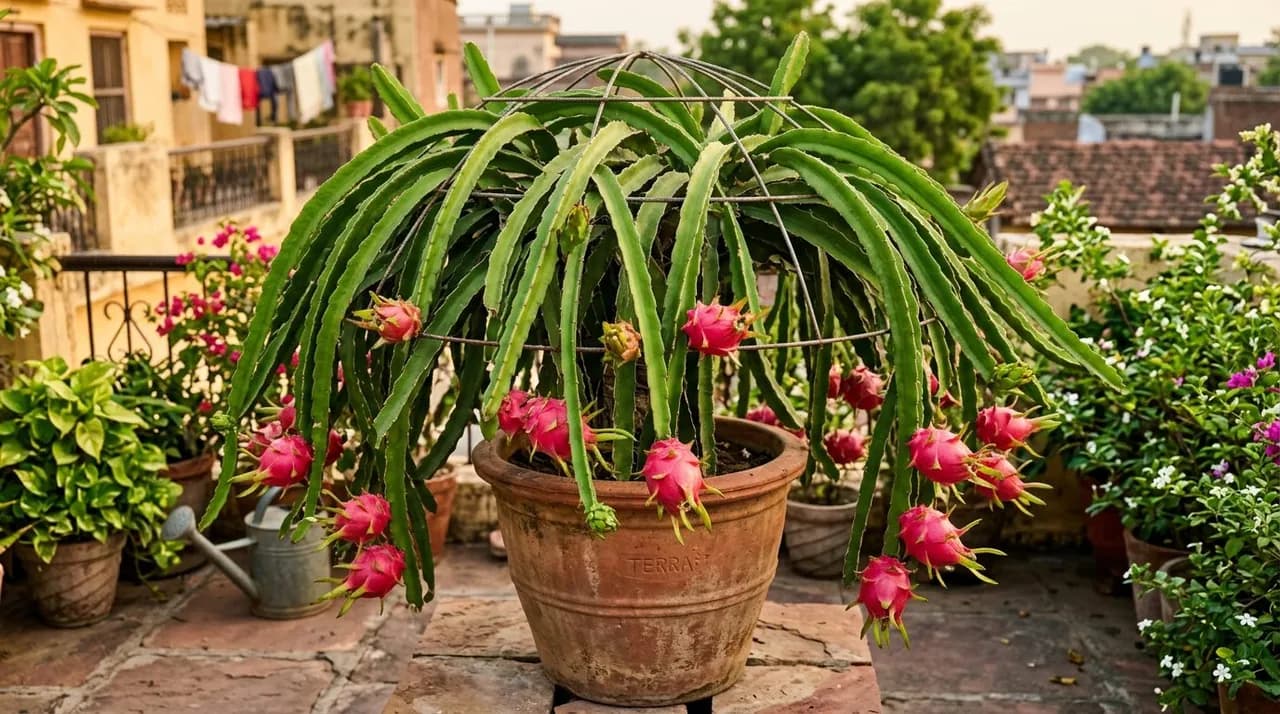
- Erect a sturdy central trellis (1.2 to 1.5 metres high) topped with a circular ring so cascading stems can initiate flower buds.
- Use a highly porous, gritty potting mix combining 40% garden soil, 30% organic compost, 20% coarse sand, and 10% cocopeat with neem cake.
- Hand-pollinate the nocturnal, fragrant white blossoms at dusk or early morning to improve fruit set and larger fruit size.
Quick answer: To grow dragon fruit at home in India, plant cured stem cuttings in a 50-litre container with free-draining sandy loam soil in full sun. Train 3 to 4 vertical stems up a 1.5-metre central post topped with a round tyre ring, and provide moderate watering and organic compost during the summer and monsoon fruiting flushes.
Learning how to grow dragon fruit at home has quickly become one of the most popular gardening projects across Indian cities. Known botanically as Selenicereus undatus (formerly Hylocereus) and also sold as kamalam in parts of western India, this exotic, nutrient-packed fruit has transitioned from high-value commercial orchards in Gujarat and Maharashtra straight to urban rooftop terrace gardens.
Dragon fruit is an epiphytic climbing cactus native to the tropical Americas, perfectly adapted to the hot, sun-drenched climate of the Indian subcontinent. It withstands searing summer temperatures up to 40°C, demands minimal irrigation compared to traditional fruit trees, and produces large night-blooming flowers followed by pink-skinned fruit.
When grown in containers on concrete rooftops, dragon fruit requires specific structural and cultural care. As a heavy climbing succulent rather than a self-supporting shrub, success depends on building a sturdy umbrella trellis, providing reliable monsoon drainage, and understanding how flower buds develop on weeping canopy branches.
Varieties suitable for Indian home gardens
Choosing the right cultivar dictates fruit flavour, sweetness, and self-fertility:
- White Dragon Fruit (Selenicereus undatus): Has bright pinkish-red outer skin with green scales and sweet, mild, refreshing white pulp speckled with tiny black edible seeds. Highly vigorous and widely available in Indian retail nurseries.
- Red/Pink Dragon Fruit (Selenicereus costaricensis): Has magenta-purple skin and deep red or purple flesh. It is usually sweeter than the white-fleshed types, and the red pigment (betacyanin) stains hands and chopping boards.
- Yellow Dragon Fruit (Selenicereus megalanthus): Characterized by bright yellow, spiny skin and translucent, exceptionally sweet white pulp. It grows slightly slower than red and white varieties but commands high culinary value.
For gardeners planning diverse edible rooftop plantings, combine cactus crops alongside container citrus by reviewing our guide on how to grow a lemon tree in a pot in India.
Container sizing and potting mix preparation
Dragon fruit roots are shallow and fibrous, spreading horizontally rather than penetrating deeply. However, because a mature trellis and top canopy can weigh 30 to 50 kg, the container must provide stability and substantial soil volume.
Container sizing
- Minimum volume: Use a 50 to 100 litre container (such as a 45 cm to 60 cm diameter HDPE grow bag of 250+ GSM, a cut-down 200-litre plastic drum, or a large masonry pot).
- Multiple stems: A single 50-litre container comfortably supports 3 to 4 individual climbing cuttings planted around the perimeter of a central support post.
- Drainage holes: Drill 6 to 8 drainage holes (1.5 cm diameter) around the bottom and lower sides. Elevate the container on terracotta risers or concrete blocks so monsoon rainwater drains away immediately.
Formulating the cactus potting mix
Heavy clay garden soil will suffocate succulent roots and cause fatal basal stem rot during heavy monsoon rains. Blend a porous, aerated medium:
- 40% Sandy Garden Soil: Provides mineral anchorage and weight.
- 30% Well-Rotted Cow Dung Manure or Vermicompost: Delivers continuous organic nutrition.
- 20% Coarse River Sand, Fine Gravel, or Perlite: Ensures rapid water percolation.
- 10% Washed Cocopeat: Retains just enough moisture buffer to prevent complete root desiccation in hot dry spells. Learn how to prepare clean coir in our guide on how to use cocopeat for plants.
- Nutrient Boost: Mix in two cups of neem cake powder (neem khali) and 100 grams of steamed bone meal to deter soil grubs and promote strong root growth.
Building the essential umbrella trellis
Flower buds form on mature stems that have finished extending: in practice, the hanging branches draped over the top of the post. Training stems over a ring gets them to that stage sooner and keeps the fruit within reach; an upright stem will flower too once it matures, but it takes longer and the fruit is harder to pick.
Constructing the support frame
- Central Post: Install a sturdy 1.2 to 1.5 metre tall post in the exact centre of the container before adding soil. Suitable materials include a 75 mm reinforced cement concrete (RCC) pole, a treated hardwood timber post, or a thick PVC pipe filled with concrete and gravel.
- Top Umbrella Ring: Secure a horizontal circular frame to the top of the post. An old scooter tyre, motorcycle tyre, bicycle rim, or custom-welded round iron ring supported by cross-brackets works well as a trellis head.
- Training the Stems: Plant 3 or 4 cuttings around the base. As vertical leader stems grow, loosely secure them to the central post using soft cloth strips or garden twine every 20 cm.
- Forming the Canopy: Prune away all side shoots along the main stem until the vine reaches the top ring. Once stems grow 15 cm above the tyre ring, tip-prune the leaders. This forces multiple lateral branches to emerge, drape over the outer edge of the tyre, and cascade downwards toward the ground.
Propagation from stem cuttings
While dragon fruit can be grown from seed, seedlings take four to six years to fruit. Stem cuttings root effortlessly and produce fruit within 12 to 18 months.
Step-by-step cutting protocol
- Take a 30 cm to 40 cm long cutting from a healthy, mature, dark green stem (preferably one that has previously fruited). Make a clean diagonal cut at the joint.
- Carefully shave 2 cm of the green outer flesh away from the base, exposing the hard, woody central vascular core.
- Curing: Place the cutting in a dry, shaded, well-ventilated spot for 5 to 7 days. This allows the cut flesh to form a thick, dry callus that prevents bacterial infection.
- Planting: Insert the calloused base 5 cm to 7 cm deep into moist, sandy potting mix.
- Rooting: Keep the medium lightly moist in bright indirect light. Vigorous roots establish within 2 to 3 weeks, followed by fresh light-green growth buds along the stem ribs.
For additional propagation principles across succulent crops, explore our practical guide on propagating succulents and houseplants.
Sunlight, watering, and seasonal Indian care
Balancing environmental exposure across India's seasonal shifts maintains strong vegetative growth and prolific flowering:
- Sunlight: Dragon fruit demands full sun (at least 6 to 8 hours daily). During intense May heatwaves with temperatures exceeding 42°C in northern and central plains, slight yellowing of stem ribs may occur. Providing 30% green shade net protection during peak zaid heat prevents sunscald.
- Irrigation (Summer vs Monsoon): Water container plants once or twice a week in summer when the top 3 cm of potting mix feels dry. During the kharif monsoon, rely entirely on rainfall and verify that drainage holes remain unobstructed. Waterlogged roots rot within 48 hours.
- Winter Care (Rabi): Plants enter semi-dormancy from December to February. Reduce watering to once every 10 to 14 days and withhold heavy fertilisers.
Hand pollination and flower care
Dragon fruit flowers are very large, up to about 25 cm across. The creamy-white blossoms open around 8:00 PM and close permanently by 9:00 AM the following morning.
Pollination and fruit set
While many white-fleshed varieties are self-fertile, self-incompatible red varieties and rooftop plants with few nocturnal insect visitors benefit from hand pollination:
- Walk your terrace between 8:30 PM and 10:00 PM on the night flowers open, or early in the morning before 7:30 AM.
- Use a soft artist brush or clean fingers to sweep golden pollen from the numerous yellow anthers surrounding the blossom centre.
- Dab the collected pollen generously onto the multi-lobed, star-shaped female stigma extending outward from the centre of the bloom.
- Cross-pollinating between flowers from two different varieties substantially increases fruit size and pulp weight.
To draw beneficial daytime pollinators to your garden beds, consult our recommendations on plants for pollinators and techniques in hand pollinating balcony vegetables.
Organic feeding schedule and harvesting
To sustain multiple fruiting flushes between June and November, follow a targeted feeding regimen:
- Pre-Monsoon Feeding (May/June): Top-dress each container with 2 kg vermicompost, 100 grams neem cake, 50 grams bone meal, and 50 grams wood ash (potash source).
- Mid-Season Boost (August): Apply fermented mustard cake liquid (sarson ki khali) tea or seaweed extract every 3 weeks to swell developing fruit.
- Post-Harvest Rest (November): Add a light top-dressing of well-rotted cow dung manure to nourish stems before winter dormancy.
Harvesting dragon fruit
Fruit is ready for picking 30 to 35 days after flowering. The green outer skin turns pinkish-red, and the tips of the green leaf scales begin to wither slightly. Twist the fruit gently or snip the stem flush with the fruit shoulder using sharp pruners. Store at room temperature for several days or refrigerate for up to two weeks.
By constructing a sturdy umbrella support, providing rapid soil drainage, and practising nocturnal hand pollination, you can get a reliable dragon fruit crop off a terrace pot season after season.