Key takeaways
- Select grafted or air-layered Indian varieties such as Kagzi Nimbu or Baramasi lemon for heavy fruiting in containers.
- Use a large pot or HDPE grow bag (minimum 40 to 50 litres) with unobstructed drainage holes elevated on pot feet.
- Prepare a well-draining potting blend of 40% garden soil, 30% vermicompost or aged cow dung manure, 20% cocopeat, and 10% sand with neem cake.
- Prevent flower drop by maintaining consistent, moderate moisture and avoiding waterlogged soil during the flowering window.
- Feed heavily twice a year (in February before spring flowering and in October post-monsoon) with mustard cake liquid and vermicompost.
Quick answer: To grow a productive lemon tree in a pot in India, choose an air-layered Kagzi or Baramasi variety, plant in a 40-litre container with fertile, well-draining soil, and provide at least 6 hours of full sunlight. Regulate watering during flowering to prevent blossom drop, and feed with organic manure before each seasonal flush.
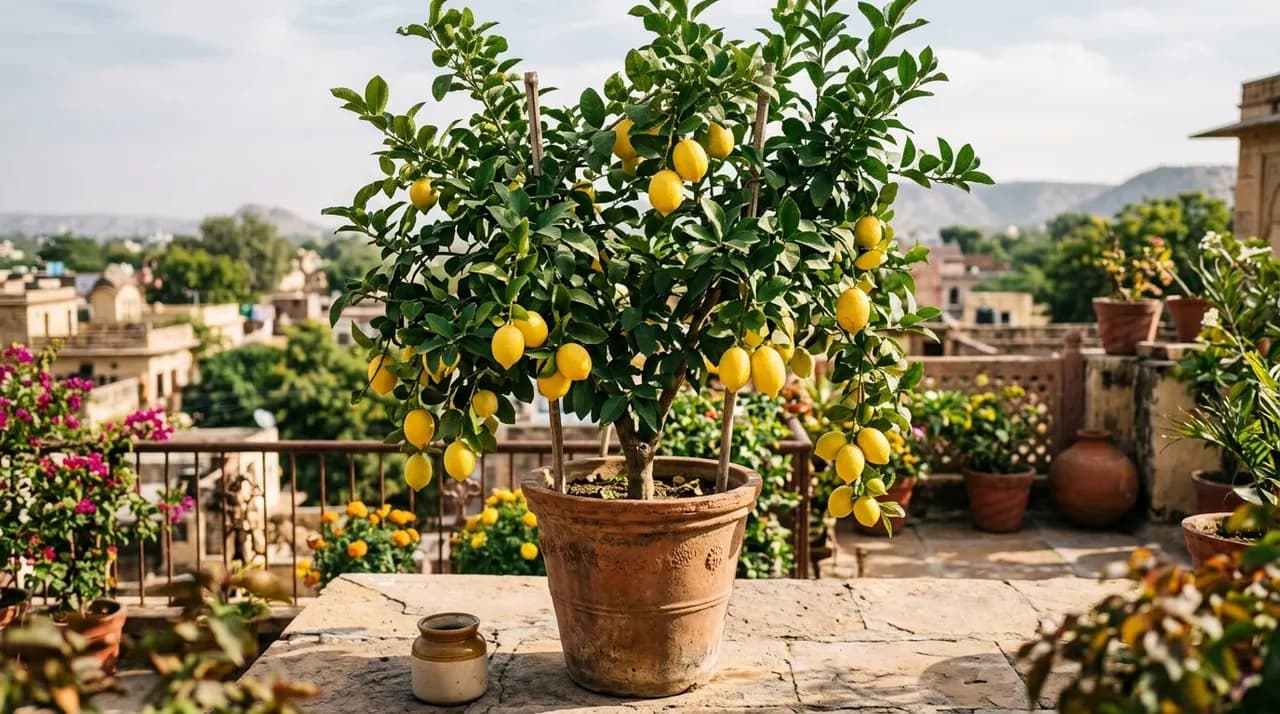
Learning how to grow a lemon tree in a pot in India gives terrace and balcony gardeners a steady supply of fresh citrus from a container. Known universally across India as the nimbu plant, a flourishing lemon tree is a prized possession in home kitchen gardens from Delhi and Lucknow to Bengaluru and Chennai.
Growing citrus in containers on concrete rooftops or balconies presents distinct environmental challenges. Indian urban terraces endure intense heat exceeding 40°C during peak summer (zaid), followed by torrential monsoon downpours (kharif) that can saturate container root zones and cause fungal root rot. Furthermore, many urban growers face the frustrating problem of a tree that flowers profusely, only to drop all its blossoms before setting a single fruit.
By selecting the right dwarfing or air-layered cultivars, formulating an airy, moisture-buffering potting mix, and mastering the seasonal feeding and watering rhythms of the Indian climate, you can cultivate a healthy, compact lemon tree that yields juicy fruit throughout the year.
Best lemon varieties for containers in India
Container success depends on starting with the right plant material. Avoid growing trees from seed, as seedling lemons take five to eight years to bear fruit and often produce thorny, unpredictable trees. Always purchase a healthy, air-layered (gootee) or grafted sapling from a reputable nursery.
- Kagzi Nimbu (Citrus aurantiifolia): The most popular and beloved acid lime in India. Produces thin-skinned, round, intensely aromatic, and juicy fruit. Adapts exceptionally well to pot culture and flowers multiple times a year.
- Baramasi Lemon: Literally translating to "twelve-month lemon," this cultivar produces flowers and fruit in continuous flushes across all three Indian growing seasons (kharif, rabi, and zaid).
- Eureka (Citrus x limon): A true lemon with thin-skinned, oval, acidic fruit; flowers and fruits through much of the year. **Meyer lemon:** A lemon x mandarin hybrid with thin, smooth, deep-yellow skin, round fruit and lower acidity; purple-tinged buds. Both are less common in Indian nurseries than Kagzi.
- Seedless Lemon: A high-yielding commercial selection increasingly popular for urban terrace gardens due to its heavy clustering habit.
For gardeners designing multi-layered rooftop spaces alongside other tropical edibles, explore complementary species in our guide to terrace garden plants.
Choosing the right pot and preparing the potting mix
A mature lemon tree requires ample root volume and flawless drainage to sustain heavy fruit loads without becoming root-bound.
Container selection
- Size: Start young nursery saplings in a 30 cm pot, and step up mature trees (2+ years old) to a 40 cm to 50 cm container holding 40 to 60 litres of soil volume.
- Material: High-density polyethylene (HDPE) grow bags (250+ GSM) are lightweight and ideal for terrace slabs with structural weight limits. Terracotta and unglazed clay pots provide natural evaporative cooling during scorching summers.
- Drainage: Ensure the container has 4 to 6 open drainage holes at the base. Always elevate pots on terracotta feet or concrete bricks so excess monsoon water escapes freely away from the concrete slab.
The ideal Indian potting soil formula
Garden clay alone will turn rock-hard in summer heat and waterlog during monsoon rains. Prepare a balanced, porous potting medium:
- 40% Quality Garden Loam: Forms the structural mineral base.
- 30% Well-Rotted Cow Dung Manure (Gobar ki Khaad) or Vermicompost: Delivers humic acids and steady biological nutrients.
- 20% Washed Cocopeat: Retains essential moisture without compaction. Learn how to expand and prepare this medium properly in our guide on how to use cocopeat for plants.
- 10% Coarse River Sand or Perlite: Ensures rapid drainage.
- Organic Additions: Mix in two cups of neem cake powder (neem khali) to protect tender roots from soil grubs and fungal pathogens, plus half a cup of steamed bone meal or rock phosphate for phosphorus root support.
Sunlight and watering across Indian seasons
Citrus trees are sun worshippers that require direct, unfiltered sunlight to manufacture sugars for blossom set.
- Sunlight Requirements: Position your container where it receives a minimum of 6 to 8 hours of direct sunlight daily. North-facing balconies or deeply shaded courtyards produce weak, leggy branches with minimal fruiting.
- Summer Management (April to June): When rooftop temperatures surge past 40°C to 44°C, intense heat can scorch young fruit and dry out pots within hours. Install 50% green agro-shade netting over your terrace garden and apply a 5 cm layer of dry sugarcane bagasse or straw mulch over the soil surface. Water thoroughly in early morning or late evening.
- Monsoon Care (July to September): Heavy rains provide natural nitrogen, but waterlogged pots rot roots quickly. Check drainage holes weekly, remove saucers from beneath pots, and avoid additional watering unless the top 5 cm of potting mix feels dry during prolonged dry spells.
- Winter Care (October to February): In the northern plains where winter temperatures drop below 8°C, scale back watering frequency, allowing the topsoil to dry slightly between irrigations.
For diagnostic steps when container citrus shows leaf stress or nutritional imbalance, explore our guide on citrus tree diagnostics for home orchards.
Solving flower drop: why your lemon plant loses blossoms
The most common complaint among Indian container growers is lemon tree flowers but no fruit. Blossom drop occurs when the tree experiences physiological shock during the delicate flowering window.
1. Inconsistent moisture during budding
When flower buds appear, many gardeners make the mistake of overwatering or letting the pot dry out completely.
- The Fix: Keep the mix evenly moist through budding and fruit set: water when the top 3 cm is dry, and do not let the pot swing between soggy and bone-dry. Both extremes shed blossoms. Maintain steady, moderate moisture until small marble-sized green lemons have firmly set on the branches.
2. Micronutrient deficiencies
Citrus trees are heavy consumers of zinc, iron, magnesium, and boron. Deficiencies in these micro-elements cause flower abscission (shedding).
- The Fix: Spray the foliage every three weeks with a mild organic micronutrient spray, or apply a foliar drench of Epsom salt (magnesium sulphate) at 5 grams per litre of water.
- Traditional practice: Some growers pour diluted sour buttermilk (1 part curd to 10 parts water) around the root zone monthly. It adds a little organic matter and microbial activity; it is not a micronutrient source and we have seen no trial evidence it corrects a deficiency.
3. Lack of pollinators on high terraces
Upper-floor urban rooftops often lack sufficient bees to pollinate blossoms during the brief window they remain receptive.
- The Fix: Plant companion flowering herbs such as basil (tulsi), marigolds, and coriander nearby to attract honeybees and native solitary bees. On enclosed balconies, gently tap flowering branches in the morning or use a soft artist brush to transfer pollen across blossoms. Learn how companion flowers boost yields in plants for pollinators.
Organic fertilization schedule for heavy fruiting
Container-grown lemon trees deplete their soil nutrients rapidly and require regular organic feeding to support multiple annual flushes.
The two major annual feedings
- Spring Awakening (February): Before the main spring flush (Ambe Bahar), gently scrape away the top 5 cm of soil around the edge of the pot, working outward from the trunk so you do not tear the shallow feeder roots (an air-layered tree has no taproot; its roots are fibrous and close to the surface). Add a rich blend of 2 kg aged vermicompost, 100 grams neem cake, and 50 grams bone meal, then cover with fresh soil and water deeply.
- Post-Monsoon Boost (October): Repeat this compost top-dressing in October, either to support the Hasth bahar flush that flowers now, or to swell the Mrig bahar crop that set in June–July and matures over winter.
Monthly liquid feeds
During active growing periods, apply fermented mustard cake liquid (sarson ki khali tea):
- Soak 100 grams of mustard cake powder in 2 litres of water inside a lidded container for 4 to 5 days to ferment.
- Dilute the dark liquid with clean water at a 1:10 ratio until it resembles light tea.
- Pour 500 ml around the root zone of the potted tree every 3 to 4 weeks. This provides a rich supply of slow-release nitrogen, potassium, and micronutrients.
Pruning and pest management
Proper pruning and non-toxic pest control maintain tree vigour and prevent disease outbreaks.
- Pruning Dead Wood and Suckers: Prune the tree in late winter (January or early February). Cut away any dead, diseased, or crossing branches to open the canopy to sunlight. Always prune out vigorous vertical water sprouts and any shoots emerging from below the graft union. For proper structural shaping techniques, review our guide on how to prune fruit trees.
- Citrus Butterfly Caterpillar (Papilio demoleus): Also known as the lemon caterpillar, this large green-and-brown larva chews tender young leaves voraciously. Inspect your tree weekly and handpick caterpillars, dropping them into soapy water. Spraying cold-pressed neem oil (5 ml per litre of water with a few drops of mild soap) every 15 days deters egg-laying adult butterflies.
- Citrus Leaf Miner: Manifests as silvery, serpentine winding trails across young leaves, causing foliage to curl and distort. Spray neem oil solution during the emergence of new spring and monsoon leaf flushes in early morning.
- Aphids and Scale Insects: Spray infested stems with a firm jet of water, followed by a thorough application of neem oil or horticultural soap.
To expand your home orchard into exotic subtropical container fruits, explore our step-by-step instructions on how to grow dragon fruit at home.
By providing adequate container volume, regulating moisture during flowering, and following an organic feeding schedule, your potted nimbu plant will thrive on your Indian terrace, rewarding you with fresh, fragrant lemons throughout the seasons.