Key takeaways
- Propagate fresh lemongrass easily from grocery store stalks by rooting the basal bulb in clean water or moist potting mix.
- Provide full sunlight (at least 6 to 8 hours daily) and rich, freely draining soil high in organic matter and nitrogen.
- Grow in large 30 to 45 cm (12 to 18 in) containers holding 20 to 40 litres (5 to 10 gallons) in cold winter regions for easy indoor transport.
- Overwinter container plants indoors before the first autumn frost; plants drop foliage and stall growth below 10°C (50°F).
- Harvest mature stalks measuring at least 1.5 cm (0.5 in) thick by slicing cleanly at soil level with a sharp knife instead of pulling.
Quick answer: To grow lemongrass, root fresh stalks with intact basal root plates in water for one to two weeks, then plant in rich, well-draining soil in full sun. In cold regions, grow in large containers and bring indoors before the first frost; in warm regions, grow outdoors year-round as a clumping perennial.
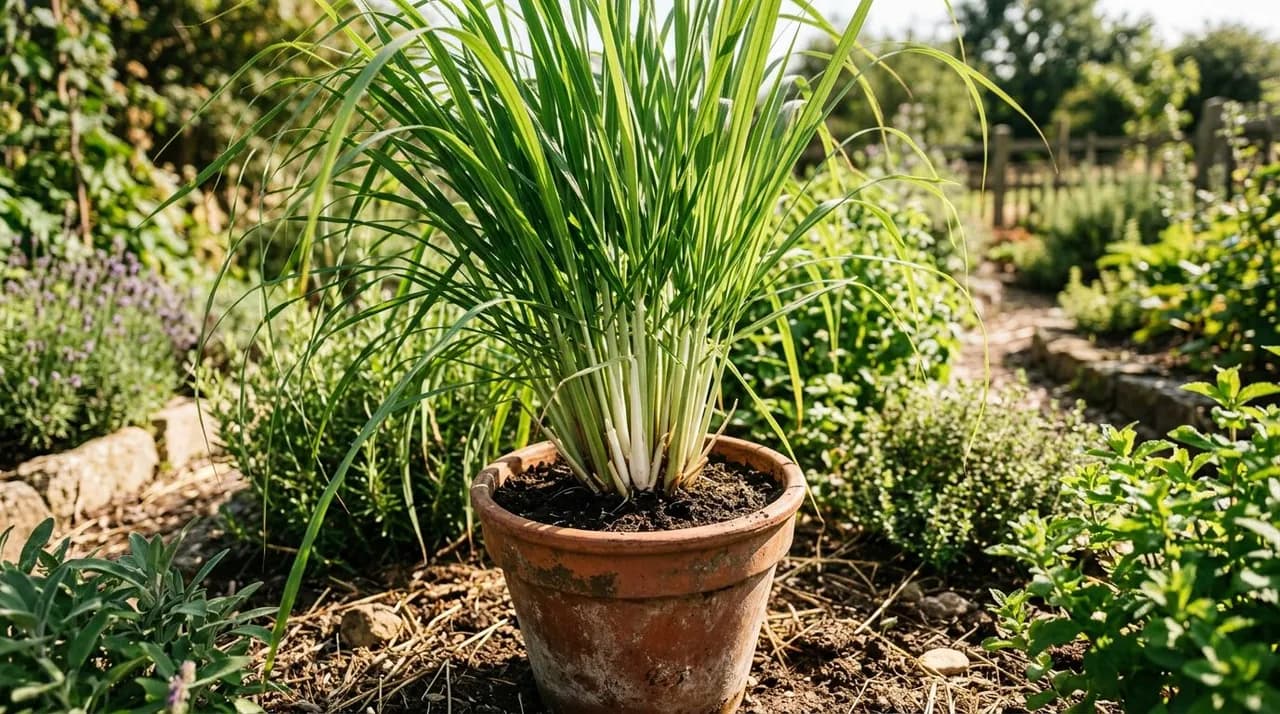
Valued for its crisp, citrusy fragrance and clean culinary flavor, lemongrass (Cymbopogon citratus) is widely used in traditional Southeast Asian, South Asian, and tropical cuisines. This vigorous, perennial clumping grass produces arching, strap-like blue-green leaves atop thick, fleshy, aromatic basal stalks.
While native to the tropical and subtropical regions of Asia, lemongrass adapts remarkably well to garden and container cultivation across temperate and cooler zones worldwide. When grown in warm summer conditions with generous sunlight and moisture, a few rooted stalks quickly develop into a lush, ornamental fountain of scented foliage.
Lemongrass grows in warm garden borders, permaculture guilds, or patio planters brought indoors for winter, provided you supply adequate warmth, nutrition, and cold protection.
Botanical profile and propagating from store-bought stalks
Understanding the natural growth habit of Cymbopogon citratus simplifies propagation:
+--------------------------------------------------------------------------------------------------------------------------------------+
|                                                    LEMONGRASS BOTANICAL OVERVIEW                                                     |
+-------------------+------------------------------------------------------------------------------------------------------------------+
| BOTANICAL NAME    | *Cymbopogon citratus* (Poaceae family)                                                                           |
| GROWTH HABIT      | Dense, clumping perennial grass (non-running)                                                                    |
| MATURE DIMENSIONS | 1.0 to 1.5 m (3 to 5 ft) tall and wide                                                                           |
| PROPAGATION       | Basal stalk cuttings or clump division (*C. citratus* rarely sets viable seed; packeted "lemongrass seed" is usually *C. flexuosus*) |
| HARDINESS         | Frost-tender; hardy outdoors only in warm zones                                                                  |
+-------------------+------------------------------------------------------------------------------------------------------------------+
To explore detailed botanical classifications, consult our plant profile on Cymbopogon citratus.
Step-by-step stalk propagation
You do not need specialized nursery plants or commercial seed packets to begin. Fresh lemongrass stalks purchased from grocery stores or Asian markets root easily:
[ Step 1: Select Stalk ]  --> [ Step 2: Trim Top Leaves ] --> [ Step 3: Root in Water ] --> [ Step 4: Pot Up ]
Firm base with root plate Cut top to 15-20 cm length 2.5-5 cm clean water (7-14 d) Plant in rich mix- Select Viable Stalks: Choose fresh, firm, green stalks that have an intact, fleshy basal bulb (the woody base where roots emerge). Avoid stalks where the bottom root plate has been sliced off or feels dry and hollow.
- Trim Upper Foliage: Trim off dry outer papery sheaths and cut the top leaves back, leaving a firm stalk measuring 15 to 20 cm (6 to 8 in) in length.
- Water Rooting Method: Place stalks upright in a glass jar filled with 2.5 to 5 cm (1 to 2 in) of clean, room-temperature water. Position the jar on a bright, warm windowsill away from direct scorching sun.
- Water Maintenance: Change the water every two to three days to maintain oxygen levels and prevent bacterial slime. Tiny, white adventitious roots will emerge from the basal plate within 7 to 14 days.
- Potting On: Once roots reach 2.5 to 5 cm (1 to 2 in) in length and green shoots emerge from the center, transplant each rooted stalk into a 15 to 20 cm (6 to 8 in) nursery pot filled with moist, well-draining potting soil.
Soil preparation and container sizing for potted plants
Lemongrass is a fast-growing, heavy-feeding grass that requires rich, aerated soil and ample root room:
1. Soil texture and chemistry
Lemongrass thrives in rich, loamy soil with a slightly acidic to neutral pH of 6.0 to 7.0. It requires steady moisture but cannot tolerate waterlogged, anaerobic mud:
- In-Ground Soil Prep: Incorporate 5 to 7 cm (2 to 3 in) of aged compost, well-rotted manure, or leaf mold into the top 20 cm (8 in) of garden soil to improve water retention and fertility.
- Container Potting Formula: Blend 50% high-quality organic potting soil, 30% aged compost or coco peat, and 20% coarse perlite or horticultural pumice to ensure rapid drainage.
2. Container selection
Because a single stalk can multiply into a dense clump of 15 to 30 shoots over a long warm season (and fewer where the warm season is short), container size determines overall harvest yield:
- Starter Pots: 15 to 20 cm (6 to 8 in) pots for early spring rooting.
- Final Container Sizing: Shift into a large, sturdy container measuring 30 to 45 cm (12 to 18 in) in diameter and holding 20 to 40 litres (5 to 10 gallons) of soil with open drainage holes at the base.
- Material Choice: Heavy unglazed terracotta or thick resin planters prevent tall, top-heavy grassy clumps from toppling over in strong winds. For urban container ideas, see rooftop and patio container gardening.
Sunlight, watering, and feeding requirements
Maximizing essential oil synthesis and stalk thickness requires attentive warm-season care:
+-----------------------------------------------------------------------+
|                    LEMONGRASS CARE REQUIREMENTS                       |
+-------------------+-----------------------+---------------------------+
| FACTOR            | OPTIMAL REQUIREMENT   | MANAGEMENT PRACTICE       |
+-------------------+-----------------------+---------------------------+
| Sunlight          | 6 to 8+ Hours Daily   | Full sun; warm exposure   |
| Watering          | Consistently Moist    | Water when top 2.5 cm dry |
| Nutrition         | High Nitrogen Demand  | Monthly organic liquid feed|
| Mulching          | 5 cm Organic Layer    | Conserves root moisture   |
+-------------------+-----------------------+---------------------------+- Sunlight: Position lemongrass in the brightest, sunniest location available. In cooler climates, position containers near a sun-facing thermal wall (south-facing in the Northern Hemisphere, north-facing in the Southern Hemisphere) that absorbs and radiates daytime heat.
- Watering Protocol: During the active warm growing season, water thoroughly whenever the top 2.5 cm (1 in) of soil feels dry. Lemongrass produces massive leaf surface area and transpires moisture rapidly on hot, windy summer afternoons.
- Nutritional Feeding: As a true grass, lemongrass has high nitrogen demands. Apply a balanced organic liquid fertilizer (such as fish emulsion, comfrey tea, or liquid seaweed) every three to four weeks from spring through late summer. For heat-loving herb advice, see heat-tolerant herbs for full sun.
Seasonal management and winterizing across climate zones
How you manage lemongrass through the changing seasons depends directly on your regional climate:
In subtropical and tropical climates:
Lemongrass thrives outdoors year-round as a permanent perennial clump in the ground or in large decorative containers. It requires minimal winter care other than clearing away dry outer thatch in early spring. Divide mature clumps every three to four years to maintain vigorous stalk production.
In cool temperate climates:
Lemongrass is frost-tender; foliage is damaged at 0°C (32°F), and root crowns perish if the soil freezes. Gardeners in cold regions must protect plants before autumn chills arrive:
- Timing: Move container plants indoors when nighttime temperatures consistently drop below 10°C (50°F), well before the first expected frost.
- Indoor Placement: Position the pot in your brightest equator-facing window (south-facing in the North, north-facing in the South) or provide full-spectrum LED grow lights for 10 to 12 hours daily.
- Winter Care: Scale back watering significantly, allowing the top half of the potting soil to dry between waterings. Withhold all fertilizers during winter dormancy.
- Alternative Dormancy Method: If indoor window space is limited, cut the foliage back to 15 cm (6 in) tall, water lightly, and store the container in a cool, dark basement or frost-free garage at 5°C to 10°C (41°F to 50°F), watering just enough once a month to prevent the root ball from completely desiccating.
Harvesting and culinary preparation
Harvesting correctly preserves the vitality of the clump while providing tender stalks for cooking:
[ Step 1: Identify Stalk ] --> [ Step 2: Cut at Ground ] --> [ Step 3: Strip Tough Husk ] --> [ Step 4: Use or Freeze ]
Thick base (>= 1.5 cm)         Slice with sharp knife        Peel dry outer leaves          Finely mince core
1. Harvesting technique
- Select mature outer stalks that are at least 1.5 cm (0.5 in) thick at the base.
- Use a sharp, sanitized paring knife or garden knife to slice the stalk cleanly at the soil surface, cutting through the outer base of the shoot.
- Avoid pulling stalks aggressively by hand, which can tear the root crown or dislodge neighboring immature shoots.
2. Culinary preparation and storage
- Trimming: Slice off the upper green, fibrous leaves (which can be dried for brewing herbal tea) and trim the woody root base.
- Peeling: Strip away the outer two or three tough, papery layers until you reach the pale, tender, ivory-white inner core.
- Storage: Wrap fresh stalks tightly in plastic or beeswax wraps and store in the refrigerator crisper drawer for two to three weeks. For long-term storage, slice stalks into rings or freeze whole peeled stalks in airtight freezer bags for up to six months. They stay usable, though the aroma softens the longer they are held.