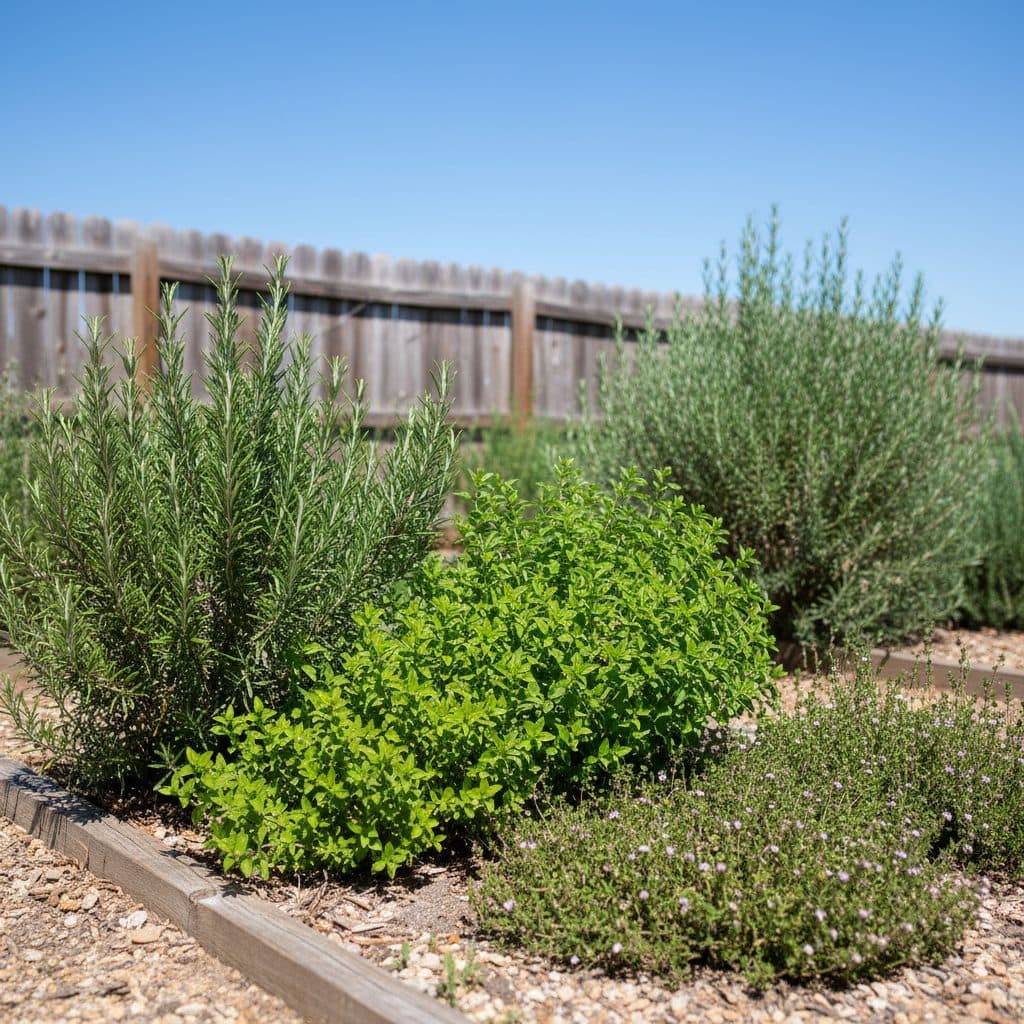
Key takeaways
- Rosemary, oregano, and thyme are Mediterranean natives that thrive in full sun and well-drained, poor soil, requiring minimal water once established.
- Lemongrass (Cymbopogon citratus) is a heat-loving tropical herb that can be grown as an annual in USDA zones 4-8 or perennial in zones 9-11.
- Selecting heat-tolerant basil varieties like ‘Genovese’ or ‘Sweet Thai’ and providing afternoon shade can extend their growing season in hot US regions.
- Proper soil preparation with good drainage, such as adding 2-3 inches of sand or grit, is crucial for preventing root rot in drought-tolerant herbs.
- Deep, infrequent watering encourages strong root systems, helping herbs like rosemary and thyme withstand extended dry periods, often needing water only every 2-3 weeks.
- Mulching with 2-4 inches of gravel or pine bark can conserve soil moisture and regulate soil temperature, benefiting heat-stressed plants.
Quick answer: To grow heat and drought-tolerant herbs like rosemary, oregano, thyme, lemongrass, and basil in US full sun gardens, select appropriate varieties, ensure excellent soil drainage, and practice deep, infrequent watering. Mulching and providing afternoon shade for some varieties can further enhance resilience.
Across the US, from the sweltering summers of USDA zone 9 in Arizona to the humid heat of zone 8 in the Southeast, gardeners are facing increasingly challenging conditions. High temperatures, prolonged drought, and often depleted soils demand a shift towards more resilient plant choices. For those looking to cultivate a productive herb garden that can withstand these stressors, selecting the right species is the first step toward success.
This guide focuses on five herbs (rosemary, oregano, thyme, lemongrass, and basil) known for their ability to grow in full sun and tolerate heat. We will explore specific cultivation strategies, including soil preparation, watering techniques, and variety selection, to help your herb garden flourish even when temperatures climb above 90°F for weeks on end.
Rosemary: a Mediterranean survivor for arid conditions
Rosemary (Rosmarinus officinalis) is a prime example of a heat-tolerant herb, perfectly suited for many US gardens, particularly in USDA zones 7-10. This woody perennial, native to the Mediterranean region, thrives in full sun, needing at least six hours of direct sunlight daily, and prefers well-drained, somewhat poor soil [1]. In areas like Southern California or the Texas Hill Country, established rosemary plants can withstand temperatures exceeding 100°F with minimal supplemental irrigation. Its deep root system, which can extend several feet into the soil, allows it to access deeper moisture reserves during dry spells, often requiring watering only once every two to three weeks during peak summer heat once mature.
Cultivating robust rosemary
To ensure your rosemary plant establishes strongly, consider planting it in a location with excellent drainage. Amending heavy clay soils with 20-30% sand or fine gravel improves drainage to help prevent root rot in wetter climates or poorly prepared beds. Varieties like ‘Arp’ are particularly cold-hardy, surviving down to USDA zone 6, while ‘Tuscan Blue’ is known for its upright growth and vigorous habit. Regular pruning, about 25% of the plant’s growth annually, encourages bushier growth and prevents it from becoming too woody, ensuring a continuous supply of aromatic leaves for culinary use [2].
- Choose a site with at least six hours of direct sunlight daily for optimal growth.
- Ensure soil has excellent drainage; amend with 20-30% sand or grit if necessary.
- Plant ‘Arp’ rosemary for cold hardiness in USDA zone 6, or ‘Tuscan Blue’ for vigorous growth.
- Water deeply but infrequently, allowing the top 2-3 inches of soil to dry out between waterings.
- Prune about 25% of the plant each year to maintain shape and encourage new growth.
Oregano and thyme: hardy groundcovers for dry spots
Oregano (Origanum vulgare) and thyme (Thymus vulgaris) are two more Mediterranean stalwarts that excel in hot, dry conditions, making them ideal for gardens across USDA zones 5-9. Both herbs prefer full sun exposure (at least six to eight hours daily) and thrive in lean, well-drained soils, much like rosemary. In regions experiencing drought, such as the Southwestern US or parts of the Great Plains, these herbs demonstrate remarkable resilience, often requiring watering only every three to four weeks once established. Their low-growing, spreading habits also make them excellent choices for groundcover, helping to suppress weeds and conserve soil moisture under intense sun.
Selecting and caring for resilient varieties
For oregano, Greek oregano (Origanum heracleoticum) is particularly prized for its strong flavor and heat tolerance. For thyme, common thyme (Thymus vulgaris) and creeping thyme varieties are robust choices. Planting these herbs on slopes or in raised beds can improve drainage, which is important for their survival in areas with occasional heavy rainfall. A thin layer of gravel mulch, about one to two inches deep, can help reflect heat and prevent soil compaction, benefiting these shallow-rooted plants. Consider exploring drought tolerant plants for more options that thrive in similar conditions.
- Plant in full sun, providing at least six to eight hours of direct light daily.
- Choose well-drained, lean soil; avoid rich, moist conditions which can cause root rot.
- Consider Greek oregano for strong flavor and heat tolerance, and common thyme for versatility.
- Water sparingly once established, typically every three to four weeks during dry periods.
- Apply a 1-2 inch layer of gravel mulch to help conserve moisture and deter weeds.
Lemongrass: tropical toughness for warm zones
Lemongrass (Cymbopogon citratus) offers a different kind of heat tolerance, thriving in truly hot and humid conditions, making it an excellent choice for USDA zones 9-11 as a perennial. In cooler zones (4-8), it can be grown as an annual or brought indoors for winter. This tall, clumping grass requires full sun (eight or more hours daily) and consistently warm temperatures, performing best when daytime temperatures are regularly above 80°F. Unlike the Mediterranean herbs, lemongrass appreciates more moisture, especially in its first growing season, but it is remarkably resilient to intense summer heat and can tolerate brief dry spells once established. Its aromatic stalks are a staple in Southeast Asian cuisine and deter certain garden pests.
Growing and harvesting vigorous lemongrass
Planting lemongrass in a location that receives ample sunlight and has rich, well-drained soil is key. Amending the soil with 2-3 inches of compost before planting will provide the necessary nutrients and improve water retention without causing waterlogging. In regions like Florida or the Gulf Coast, lemongrass can grow to heights of 3-5 feet in a single season. Harvesting involves cutting the stalks at the base, which encourages the plant to produce more shoots. For cooler climates, starting lemongrass indoors 6-8 weeks before the last frost date, when soil temperatures reach 60°F, can give it a head start for summer growth. You can learn more about specific varieties like Jwarancusa Lemongrass for diverse applications.
- Provide at least eight hours of full sun daily for optimal growth.
- Ensure rich, well-drained soil; amend with 2-3 inches of compost.
- Water regularly, especially during the first growing season, to support vigorous growth.
- Harvest by cutting stalks at the base to encourage new shoot development.
- In USDA zones 4-8, grow as an annual or overwinter indoors when temperatures drop below 45°F.
Basil: adapting a classic to heat
Basil (Ocimum basilicum) is a beloved herb, but many common varieties struggle in the intense, sustained heat of US summers, particularly when temperatures consistently exceed 90°F. However, certain heat-tolerant varieties and strategic planting techniques can allow basil to thrive even in challenging full sun conditions. Unlike its Mediterranean counterparts, basil generally prefers consistently moist soil and can bolt (go to seed) quickly under stress from high temperatures and dry conditions. For gardeners in USDA zones 7-10, selecting the right variety and providing afternoon protection are important for a successful harvest.
Heat-tolerant varieties and strategic care
When selecting basil, look for varieties specifically bred for heat tolerance. ‘Genovese’ basil, while popular, can be prone to bolting in extreme heat. Consider ‘Sweet Thai’ basil, ‘African Blue’ basil, or ‘Holy Basil’ (Tulsi), which are more resistant to high temperatures and have distinct, often spicier, flavors. Planting basil in a spot that receives morning sun but is shaded from the harsh afternoon sun, especially between 1 PM and 5 PM, can significantly extend its productive life. Consistent watering, ensuring the soil remains evenly moist but not waterlogged, is essential. Applying a 2-inch layer of organic mulch, such as straw or shredded leaves, can help maintain soil moisture and keep root temperatures cooler during peak summer heat in places like the Central Valley of California.
- Choose heat-tolerant varieties like ‘Sweet Thai’, ‘African Blue’, or ‘Holy Basil’ for better performance.
- Provide morning sun and afternoon shade, especially during peak heat hours (1 PM to 5 PM).
- Maintain consistently moist soil; water deeply when the top inch of soil feels dry.
- Apply a 2-inch layer of organic mulch to conserve moisture and regulate soil temperature.
- Pinch off flower buds as they appear to prevent bolting and encourage leaf production.
General tips: soil, water, and placement for heat resilience
Beyond individual herb requirements, several overarching strategies can significantly boost the heat and drought resilience of your entire herb garden. For most heat-tolerant herbs, especially those from Mediterranean climates, the adage “lean and mean” applies to soil conditions. Rich, heavy soils that retain too much moisture can lead to root rot, particularly when combined with high summer temperatures. Aim for a soil pH between 6.0 and 7.0, which suits most herbs. In US regions with clay-heavy soils, incorporating 30-40% coarse sand, perlite, or small gravel can dramatically improve drainage and aeration, preventing waterlogging after heavy rains or during infrequent deep watering.
Optimizing your garden for climate resilience
Watering practices are important for drought-tolerant plants. Instead of frequent, shallow watering, which encourages surface roots, practice deep, infrequent watering. This means applying enough water to penetrate 6-8 inches into the soil, then allowing the soil to dry out significantly before watering again. This encourages roots to grow deeper, making them more capable of finding moisture during dry periods. For new plantings, a consistent watering schedule for the first 4-6 weeks is essential for establishment. Strategic placement also helps: planting taller, heat-loving plants on the south or west side of your garden provides dappled afternoon shade for sensitive herbs. Explore plants for full sun for a broader selection that can handle intense light. For structural elements, drought tolerant shrubs can provide natural shade.
- Ensure soil pH is between 6.0 and 7.0 for most herb varieties.
- Improve drainage in heavy soils by adding 30-40% coarse sand or perlite.
- Practice deep, infrequent watering to encourage strong, deep root systems.
- Mulch with 2-4 inches of gravel or pine bark to conserve moisture and regulate soil temperature.
- Consider strategic plant placement to provide natural afternoon shade for sensitive herbs.
Heat-tolerant herbs: a quick comparison
Herb | USDA zones (perennial) | Sun exposure | Water needs (established) | Soil preference | Heat tolerance (F) |
|---|---|---|---|---|---|
Rosemary | 7-10 (some to 6) | Full sun (6+ hours) | Low (every 2-3 weeks) | Lean, well-drained | Up to 100°F+ |
Oregano | 5-9 | Full sun (6-8 hours) | Low (every 3-4 weeks) | Lean, well-drained | Up to 95°F+ |
Thyme | 5-9 | Full sun (6-8 hours) | Low (every 3-4 weeks) | Lean, well-drained | Up to 95°F+ |
Lemongrass | 9-11 (annual 4-8) | Full sun (8+ hours) | Moderate (weekly in dry heat) | Rich, well-drained | Up to 105°F+ |
Basil (heat-tolerant vars.) | Annual (can overwinter in 10-11) | Full sun with afternoon shade | Moderate (daily in extreme heat) | Rich, consistently moist | Up to 90°F (with shade) |
Rosemary Resilience: Established rosemary plants in USDA zones 7-10 can withstand temperatures exceeding 100°F with watering only every two to three weeks.
Soil drainage: Amending heavy clay soils with 20-30% sand or fine gravel improves drainage, helping prevent root rot in heat-tolerant herbs.
Lemongrass Growth: Lemongrass can grow to heights of 3-5 feet in a single season in warm regions like Florida, performing best above 80°F.
Frequently asked questions
How much sun do heat-tolerant herbs really need?
Most heat-tolerant herbs, like rosemary and oregano, require at least six to eight hours of direct sunlight daily to grow vigorously and develop their full aromatic potential. Lemongrass, a tropical herb, often performs best with eight or more hours of full sun.
Can I grow these herbs in heavy clay soil?
While some herbs tolerate various soils, most heat-tolerant varieties prefer well-drained conditions. For heavy clay soil, amend it with 20-40% coarse sand, perlite, or fine gravel to improve drainage and prevent root rot, especially for Mediterranean herbs.
How often should I water established heat-tolerant herbs?
Established heat-tolerant herbs like rosemary, oregano, and thyme require infrequent, deep watering, typically every two to four weeks during dry periods. Allow the top 2-3 inches of soil to dry out completely between waterings to encourage deep root growth.
Which basil varieties are best for hot US climates?
For hot US climates, consider heat-tolerant basil varieties such as ‘Sweet Thai’, ‘African Blue’, or ‘Holy Basil’ (Tulsi). These varieties are more resistant to bolting and scorching when temperatures consistently exceed 90°F, especially with some afternoon shade.
What is the best way to prepare my garden soil for these herbs?
To prepare your garden soil, ensure it has good drainage and a pH between 6.0 and 7.0. For heavy soils, incorporate 20-40% coarse amendments like sand or gravel. For lemongrass, enrich the soil with 2-3 inches of compost for better nutrient content and moisture retention.
Can I grow lemongrass as a perennial in colder zones?
In USDA zones 4-8, lemongrass is typically grown as an annual because it is not hardy below 45°F. However, you can overwinter it indoors by digging up the plant before the first frost and bringing it inside to a sunny window, replanting it outdoors the following spring.
References
- Rosemary (2004). Rosemary.
- Rosemary (2012). Rosemary.
- Herbs and spices ready for food use (2023). Herbs and spices ready for food use.
- Herbs and spices ready for food use (2023). Herbs and spices ready for food use.
- Rosemary (2004). Rosemary.
- USDA Natural Resources Conservation Service (2024). USDA Natural Resources Conservation Service.