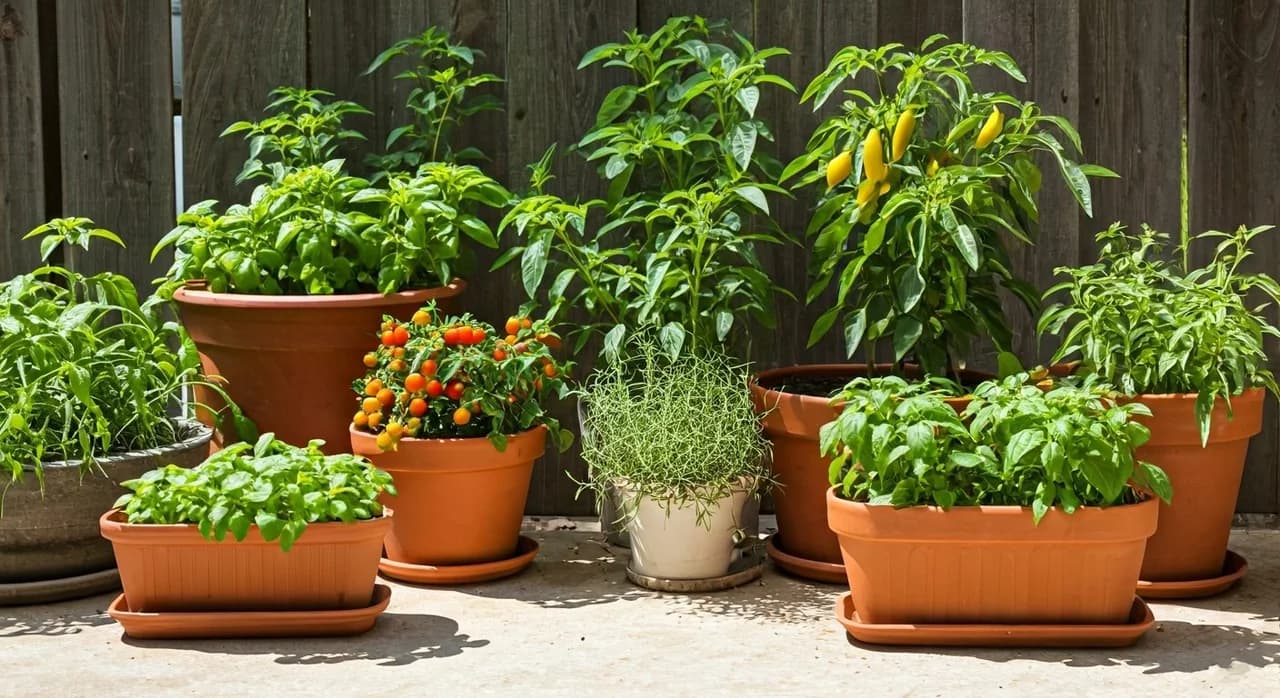
Key takeaways
- Choose compact, disease-resistant varieties of herbs, peppers, and cherry tomatoes for container success.
- Select containers with adequate drainage holes and a minimum volume of 2 gallons for herbs, 5 gallons for peppers, and 10 gallons for cherry tomatoes.
- Utilize self-watering planters or add a layer of mulch to reduce watering frequency, especially in hot climates like USDA zone 9.
- Provide at least 6 hours of direct sunlight daily for optimal growth and fruit production.
- Use a high-quality potting mix and consider slow-release organic fertilizers to minimize feeding needs.
- Monitor soil moisture regularly with a soil moisture meter to prevent over or under-watering.
Quick answer: To grow resilient herbs, peppers, and cherry tomatoes in containers, select compact, disease-resistant varieties and appropriate container sizes (2-10 gallons). Provide at least 6 hours of daily sunlight, use quality potting mix, and monitor soil moisture to ensure success across various US climate zones.
Across the United States, from the humid summers of Florida to the arid landscapes of Arizona, container gardening gives a practical way to grow fresh edibles, even in limited spaces. For many growers, the challenge isn’t just starting a garden, but keeping it productive when life gets busy. This article focuses on selecting and growing edible plants that can withstand a bit of neglect, providing a harvest even if you miss a watering or two.
We’ll explore resilient varieties of herbs, peppers, and cherry tomatoes that thrive in containers, requiring less fuss than their garden-bed counterparts. Our recommendations are grounded in practical experience and data, whether you’re in a cooler USDA zone 5 or a warmer zone 10. The right plant in the right container, with a few strategic care choices, can become a reliable source of fresh produce, yielding a good harvest of cherry tomatoes from a single plant in a good season.
Resilient herbs for container success
Herbs are often the most forgiving plants for container growing, many of them native to Mediterranean climates where they endure dry spells. For neglect-proof container gardening, focus on varieties known for their hardiness and ability to bounce back. Basil, for instance, thrives in containers as small as 6 inches in diameter, but a 2-gallon pot provides more soil volume, allowing for longer intervals between watering. Mint is another excellent choice, though its vigorous spreading habit makes containerization a necessity; a 3-gallon pot will keep it contained and productive for several seasons. In warmer regions like USDA zone 8, these herbs can often be harvested for an extended season.
Choosing the best herb varieties
When selecting herbs, look for varieties that hold up well. Rosemary, for example, prefers well-drained soil and can tolerate drying out between waterings better than many other herbs. A 5-gallon container is ideal for a mature rosemary plant, which can grow to 3 feet tall and wide. Thyme and oregano are similarly drought-tolerant once established, thriving in pots as small as 8 inches. These plants benefit from consistent sunlight, ideally 6 to 8 hours daily, and can withstand temperatures up to 90°F without significant stress. For optimal growth, consider using a slow-release organic fertilizer at planting, which can feed your plants for an extended period.
- Basil ‘Genovese’: A classic, productive choice for 2-gallon containers.
- Mint ‘Peppermint’: Vigorous, best in a dedicated 3-gallon pot to prevent spread.
- Rosemary ‘Arp’: Cold-hardy and drought-tolerant, ideal for 5-gallon pots.
- Thyme ‘English’: Low-growing, thrives in 8-inch containers with good drainage.
- Oregano ‘Greek’: A hardy variety, tolerates drier conditions in 8-inch pots.
Hardy peppers for patio pots
Peppers are surprisingly resilient in containers, especially if you select compact varieties that don’t require extensive staking. Bell peppers like ‘California Wonder’ can produce well in 5-gallon containers, yielding a good number of fruits per plant over a season in USDA zone 7. For those who prefer a little heat, jalapeños are excellent choices, often producing many peppers from a single plant in a 3-gallon pot. The key to their neglect-proof nature lies in their ability to tolerate slight drying between waterings, though consistent moisture is always preferred for maximum yield. Companion planting with basil can also deter some common pests.
Container size and sun requirements for peppers
A minimum 5-gallon container is recommended for most pepper varieties to ensure adequate root space and moisture retention. For larger plants or extended harvests, a 7-gallon container can provide even better results, especially in hotter climates where soil dries out quickly. Peppers demand abundant sunlight, requiring at least 6 to 8 hours of direct sun each day. In regions like the Southwest (USDA zone 9 and 10), afternoon shade during peak summer heat (above 95°F) can prevent sunscald. Regular monitoring of soil moisture, perhaps with a soil moisture meter, helps prevent the stress that can lead to blossom drop. Selecting appropriate containers matters for long-term success and cuts down on frequent interventions.
- Bell Pepper ‘California Wonder’: Produces 8-10 large fruits in a 5-gallon pot.
- Jalapeño ‘Early’: High yield of 20-30 peppers from a 3-gallon container.
- Shishito Pepper: Prolific, often yielding over 40 peppers in a 5-gallon pot.
- Poblano Pepper: Good for larger containers, 7 gallons or more, for 15-20 peppers.
- Banana Pepper: Sweet and mild, 15-25 peppers from a 5-gallon container.
Compact cherry tomatoes for easy harvests
Cherry tomatoes are a fantastic choice for container gardening, especially compact or ‘dwarf’ varieties bred specifically for pots. Varieties like ‘Sungold’ or ‘Tiny Tim’ can produce many sweet, bite-sized fruits from a single plant in a 10-gallon container. While tomatoes are generally thirsty, choosing a larger container significantly increases the soil volume, which in turn extends the time between waterings. In a hot USDA zone 8 summer, a 5-gallon pot might need watering daily, but a 10-gallon pot can go 2 to 3 days between waterings, reducing the ‘neglect’ factor. Many edible plants thrive in containers when given adequate space.
Selecting the right tomato variety and support
For neglect-proof container growing, look for ‘determinate’ or ‘dwarf’ indeterminate varieties. Determinate tomatoes grow to a specific size and produce their crop all at once, making them ideal for smaller spaces and less intensive staking. ‘Patio Princess’ is a determinate variety that can yield a good amount of fruit per plant in a 7-gallon container. Indeterminate varieties like ‘Sungold’ will continue to grow and produce until frost, but require more substantial support, such as a sturdy cage or trellis that is at least 4 feet tall. Ensure your containers have excellent drainage, as tomatoes are susceptible to root rot if left in standing water. Monitoring internal container conditions, such as soil moisture, is a best practice for healthy plants.
- ‘Sungold’: Indeterminate, but manageable in a 10-gallon pot with support, yields hundreds of fruits.
- ‘Tiny Tim’: Dwarf determinate, perfect for 5-gallon pots, produces 3-5 pounds of cherry tomatoes.
- ‘Patio Princess’: Determinate, yields 5-8 pounds in a 7-gallon container.
- ‘Bush Early Girl’: Determinate, good for 10-gallon pots, produces larger cherry tomatoes.
- ‘Sweet Million’: Indeterminate, high yield in 10-gallon pots with strong staking.
General container care for resilient edibles
Beyond selecting the right plants and containers, a few general practices can significantly boost the resilience of your container garden. Starting with a high-quality potting mix is paramount; it should be light, well-draining, and rich in organic matter. Avoid using garden soil, which compacts easily in pots and can harbor pests or diseases. For best results, replenish or refresh the top 2 inches of soil annually. The USDA Natural Resources Conservation Service provides extensive guidance on soil health practices applicable even to container setups [1].
Watering and feeding strategies for less fuss
One of the biggest challenges in container gardening is watering. To make your edibles more neglect-proof, consider self-watering planters or add a 1-inch layer of organic mulch (like straw or shredded leaves) to the soil surface. This helps retain moisture, reducing watering frequency in hot climates like USDA zone 9. For feeding, a slow-release granular fertilizer mixed into the potting soil at planting can provide nutrients for an extended period, minimizing the need for frequent liquid feeds. Container size impacts plant health, with larger containers generally offering more buffer against missed waterings. For larger setups, a garden PE irrigation hose with drip emitters can automate watering for multiple pots.
- Use quality potting mix: Ensures good drainage and aeration, important for root health.
- Mulch container surfaces: Reduces water evaporation by 15-30%, keeping soil moist longer.
- Implement slow-release fertilizers: Feeds plants for up to 4 months with minimal effort.
- Check drainage holes: Essential to prevent waterlogging; ensure at least 3-4 holes per container.
- Consider self-watering pots: Can extend watering intervals by several days, especially in arid regions.
Neglect-Proof Edibles: Container Size and Sunlight Needs
Plant Type | Minimum Container Size | Daily Sunlight (hours) |
|---|---|---|
Basil | 2 gallons (8 in diameter) | 6-8 |
Mint | 3 gallons (10 in diameter) | 6-8 |
Jalapeño Pepper | 3 gallons (10 in diameter) | 6-8 |
Bell Pepper | 5 gallons (12 in diameter) | 6-8 |
Dwarf Cherry Tomato | 5 gallons (12 in diameter) | 6-8 |
Indeterminate Cherry Tomato | 10 gallons (16 in diameter) | 6-8 |
Watering Reduction: Mulching container soil can reduce watering frequency in hot climates like USDA zone 9, saving significant effort.
Yield Potential: A single neglect-proof cherry tomato plant in a 10-gallon container can yield a good amount of fruit in a productive season.
Herb Container Size: Most herbs thrive in containers as small as 2 gallons, but a 3-gallon pot offers more soil volume, extending watering intervals.