Key takeaways
- Pawpaws are America’s largest native fruit, growing primarily in USDA Hardiness Zones 5 through 9.
- Ripe pawpaws have a soft texture, yellowish-green skin, and a distinct tropical aroma.
- Foraging sustainably involves leaving some fruit for wildlife and avoiding damage to the pawpaw trees.
- Pawpaw trees thrive in moist, well-drained soils, often found along riverbanks and forest edges.
- The fruit’s flavor profile ranges from mango-banana to custard-like, best consumed fresh or processed.
- Proper identification matters; look for large, oblong leaves and purple-brown flowers in spring.
Quick answer: Pawpaws are America’s largest native fruit, found in the eastern US. Foraging involves identifying their distinct leaves and flowers, locating them in moist, shaded habitats, and recognizing ripe fruit by its soft texture and yellowish-green skin.
Across 26 states in the eastern and central United States, from Florida to the Great Lakes region and west to Nebraska, a unique native fruit ripens each late summer and early fall.Asimina triloba, America’s largest native fruit, often weighing between 5 and 16 ounces per individual fruit [0, 2]. Pawpaws sustained indigenous peoples and early settlers for centuries, and foraging them today taps into that history.
Finding ripe pawpaws requires patience, keen observation, and an understanding of their preferred habitats. These understory trees, typically growing to 15 to 30 ft tall, offer a sweet, custard-like treat that many describe as a blend of banana, mango, and pineapple [2]. This guide will walk you through identifying pawpaw trees, recognizing ripe fruit, and practicing sustainable foraging to ensure these native plants continue to thrive for future generations.
The pawpaw’s native range and preferred habitat
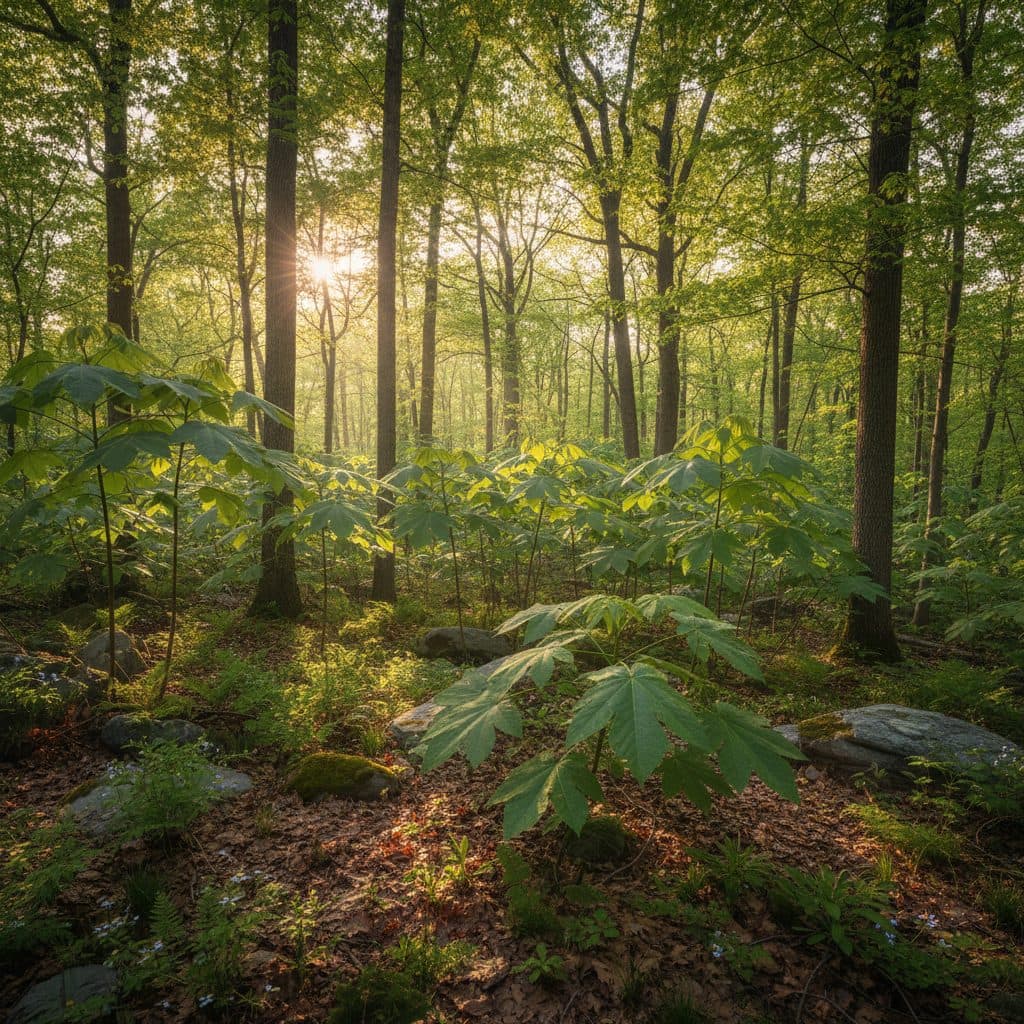
Pawpaw trees are deciduous understory trees primarily found in USDA Hardiness Zones 5 through 9, spanning a broad geographic area from the Great Lakes region down to the Gulf Coast [5]. They prefer moist, well-drained soils, often found along riverbanks, creek bottoms, and in the understory of larger deciduous forests. You’ll typically spot them in areas with partial shade, though they can tolerate full sun if soil moisture is consistently high, especially in states like Ohio or Kentucky where they are particularly abundant.
These trees often form dense patches or “pawpaw patches” through root suckering, indicating a healthy, established colony. When searching for pawpaws, focus on forest edges, clearings, and areas adjacent to water sources. A mature pawpaw patch can cover a significant area, with individual trees typically spaced several feet apart. Remember, successful foraging begins with understanding the plant’s environment. For more on general foraging safety, consider reviewing our Foraging for beginners: identifying common wild edibles safely guide.
Key habitat indicators
- Moist, well-drained soil: Often loamy or sandy clay, never waterlogged.
- Partial shade to full sun: Especially when mature, they can tolerate more sun.
- Forest understory: Commonly found beneath taller oaks, maples, or hickories.
- Near water sources: Riverbanks, floodplains, and creek beds are prime locations.
- USDA Zones 5-9: Their primary range covers 26 states in the eastern US.
Identifying pawpaw trees and their unique features
Accurate identification is paramount when foraging. Pawpaw trees (Asimina triloba) are relatively easy to distinguish once you know what to look for. Their leaves are large, simple, and oblong, typically 6 to 12 in long and several inches wide, with smooth margins. They grow alternately on the stem and have a distinct, slightly drooping appearance. In the fall, these leaves turn yellow, adding a splash of color to the forest understory.
The bark of a mature pawpaw tree is smooth and gray-brown, often with small, wart-like lenticels. In early spring, before the leaves fully emerge, pawpaw trees produce unique, bell-shaped flowers that are a deep maroon or purple-brown, an inch or two across. These flowers hang singly from the leaf axils and have a faint, yeasty scent that attracts their primary pollinators: flies and beetles. The overall tree structure is often slender, growing up to 30 ft tall, though some specimens can reach 40 ft in optimal conditions [5].
Distinctive pawpaw characteristics
- Large, oblong leaves: 6 to 12 in long, smooth margins, alternate arrangement.
- Smooth, gray-brown bark: Often with small, raised lenticels.
- Maroon, bell-shaped flowers: Appear in early spring, 1 to 2 in wide.
- Slender, often multi-stemmed growth: Forming clonal patches from root suckers.
- No thorns or milky sap: Important for distinguishing from other plants.
The anatomy of a pawpaw fruit and its development
The pawpaw fruit itself is truly unique among native North American edibles. It is a large, fleshy berry, typically oblong or kidney-shaped, ranging from 2 to 6 in long and several inches wide. A single fruit can weigh anywhere from 5 to 16 ounces, making it America’s largest native fruit [1]. The skin is initially green and firm, gradually transitioning to a yellowish-green or mottled brown as it ripens [4].
Inside, the fruit contains a creamy, custard-like pulp that is pale yellow to bright orange, depending on ripeness and variety. Embedded within this pulp are several large, flat, dark brown or black seeds, about half an inch to an inch long. These seeds are toxic if ingested and should always be discarded. The fruit hangs in clusters of several fruits on the branches, often hidden beneath the large leaves. Understanding these characteristics helps in identifying the fruit at various stages of development, critical for determining optimal harvest time.
Pawpaw fruit features
- Large, oblong berry: 2 to 6 in long, 1 to 3 in wide, weighing 5 to 16 ounces.
- Green skin ripening to yellow/brown: Color change is a key ripeness indicator.
- Creamy, custard-like pulp: Pale yellow to orange, highly aromatic.
- Large, flat, dark seeds: Several per fruit, toxic and must not be eaten.
- Grows in clusters: Often two to nine fruits per cluster, hanging from branches.
When and how to find ripe pawpaws
The pawpaw ripening season typically runs from late August through October, varying by latitude and local climate [2]. In southern states like Georgia or Alabama, fruits may ripen in late August, while in northern regions such as Michigan or New York, the season can extend into late October. The key to finding ripe pawpaws is understanding their sensory cues.
Look for a change in skin color. Ripe pawpaws transition from a firm green to a softer yellowish-green, often developing mottled brown or black spots [4]. Second, use your sense of touch. A ripe pawpaw will feel soft to the squeeze, similar to a ripe avocado or peach. If it’s rock hard, it’s not ready. Third, and perhaps most tellingly, is the aroma. Ripe pawpaws emit a strong, sweet, tropical fragrance, a blend of banana, mango, and pineapple [2]. If you shake a small tree gently and a fruit falls easily, it’s likely perfectly ripe. Avoid picking green, hard fruit, as they rarely ripen properly off the tree and will lack the characteristic flavor.
Signs of a ripe pawpaw
- Skin color change: From green to yellowish-green, often with brown mottling.
- Soft to the touch: Yields to gentle pressure, similar to a ripe avocado.
- Strong tropical aroma: A sweet, fruity scent, noticeable from a few feet away.
- Detaches easily from tree: A gentle shake can cause ripe fruit to fall.
- Found on the ground: Freshly fallen fruit is often perfectly ripe, but inspect for damage.
Sustainable foraging practices and ethical considerations
Sustainable foraging ensures that pawpaw patches remain productive for years to come. When harvesting, always follow the “one-third” rule: never take more than one-third of the available fruit from a single patch. This leaves ample fruit for wildlife, such as raccoons, opossums, and birds, which play an important role in seed dispersal. Pawpaws are an important food source for many animals, especially in late summer when other food sources may be dwindling.
Harvesting method is also important. Gently twist or pull ripe fruit from the branch; if it doesn’t come off easily, it’s not ready. Avoid breaking branches or damaging the tree, as this can reduce future yields. If collecting fallen fruit, ensure it’s fresh and undamaged by insects or rot. Always ask permission before foraging on private land, and check local regulations for public lands, as some parks or preserves may prohibit wild harvesting. By adhering to these practices, we contribute to the long-term health and abundance of pawpaw populations, which are part of the eastern US ecosystem.
Sustainable foraging guidelines
- Follow the one-third rule: Take no more than one-third of the fruit from a patch.
- Harvest gently: Twist ripe fruit; do not break branches or damage the tree.
- Respect land ownership: Always obtain permission before foraging on private property.
- Check local regulations: Some public lands may have restrictions on foraging.
- Leave some for wildlife: Animals rely on pawpaws as a food source, aiding seed dispersal.
Post-harvest care, storage, and culinary potential
Once harvested, pawpaws are highly perishable. Ripe fruit can last only a few days at room temperature and about one week in the refrigerator. For longer storage, the pulp can be easily removed from the seeds and skin, then frozen. Frozen pawpaw pulp can retain its flavor and quality for an extended period., making it available for use throughout the year. To process, simply slice the fruit in half, scoop out the pulp, and discard the large seeds and skin.
The culinary potential of pawpaws is vast, ranging from simple fresh consumption to complex desserts and savory dishes. The flavor, often described as a blend of banana, mango, and pineapple with notes of vanilla and citrus, makes it a versatile ingredient [2]. It excels in custards, puddings, ice creams, and breads. Some chefs have even incorporated pawpaw into savory sauces or fermented beverages. The Ohio Pawpaw Festival, for example, features numerous culinary applications, including pawpaw beer, pawpaw salsa, and pawpaw cheesecakes, demonstrating its adaptability in various recipes [2].
Pawpaw culinary uses
- Fresh eating: Best when perfectly ripe, chilled for optimal flavor.
- Frozen pulp: Excellent for long-term storage, lasting up to six months.
- Desserts: Ideal for ice cream, puddings, custards, and pies.
- Baked goods: Adds a unique tropical flavor to breads, muffins, and cakes.
- Beverages: Can be used in smoothies, milkshakes, and even fermented into beer or wine.
Comparing Pawpaw to Other Native US Fruits
Fruit | Typical Size | Primary Range | Ripening Season |
|---|---|---|---|
Pawpaw (Asimina triloba) | 5-16 oz, 2-6 in long | Eastern US (USDA Zones 5-9) | Late August – October |
American Persimmon (Diospyros virginiana) | 1-2 in diameter | Eastern/Central US (USDA Zones 4-9) | September – November (after frost) |
Elderberry (Sambucus canadensis) | 0.25 in diameter (berries) | Eastern/Central US (USDA Zones 3-9) | July – September |
Wild Grape (Vitis riparia) | 0.25-0.5 in diameter (berries) | Throughout US (USDA Zones 2-9) | August – October |
Tree Height: Pawpaw trees can grow up to 30 ft tall, with some reaching 40 ft in ideal conditions in the eastern US [5].
Fruit Weight: A single pawpaw fruit can weigh between 5 and 16 ounces, making it America’s largest native fruit [1].
References
- Pawpaw Dog & Other Dog (2022).
- An Exploration of the Gastronomic Potential of the North American Pawpaw—A Case Study from the Pawpaw Cookoff at the Ohio Pawpaw Festival (2024).
- Pawpaw Elegy (2022).
- An Investigation Into Organoleptic Evaluation and Phytochemical Screening of Dried Powdered Peel, Pulp of Ripped Pawpaw, Production Fresh Pawpaw Juice and Senso (2023).
- USDA Natural Resources Conservation Service (2024).