Key takeaways
- Silverbeet (Beta vulgaris subsp. vulgaris) is one of the hardiest, most productive leafy greens for Australian gardens.
- Plants produce continuously for nine to twelve months when harvested using the cut-and-come-again method.
- Sowing can occur almost year-round in temperate and subtropical climates, avoiding peak midsummer heat.
- Plants thrive in fertile, moisture-retentive soil enriched with well-aged compost and nitrogen-rich manures.
- Snapping outer stalks at the base encourages steady new leaf production from the central crown.
Quick answer: To grow silverbeet in Australia, sow seeds 1 to 2 cm deep in fertile, compost-rich soil in full sun or light afternoon shade. Space plants 30 to 40 cm apart, keep the soil consistently moist, and apply a high-nitrogen organic feed fortnightly. Harvest outer stalks regularly by snapping them downward at the base to ensure months of continuous production.
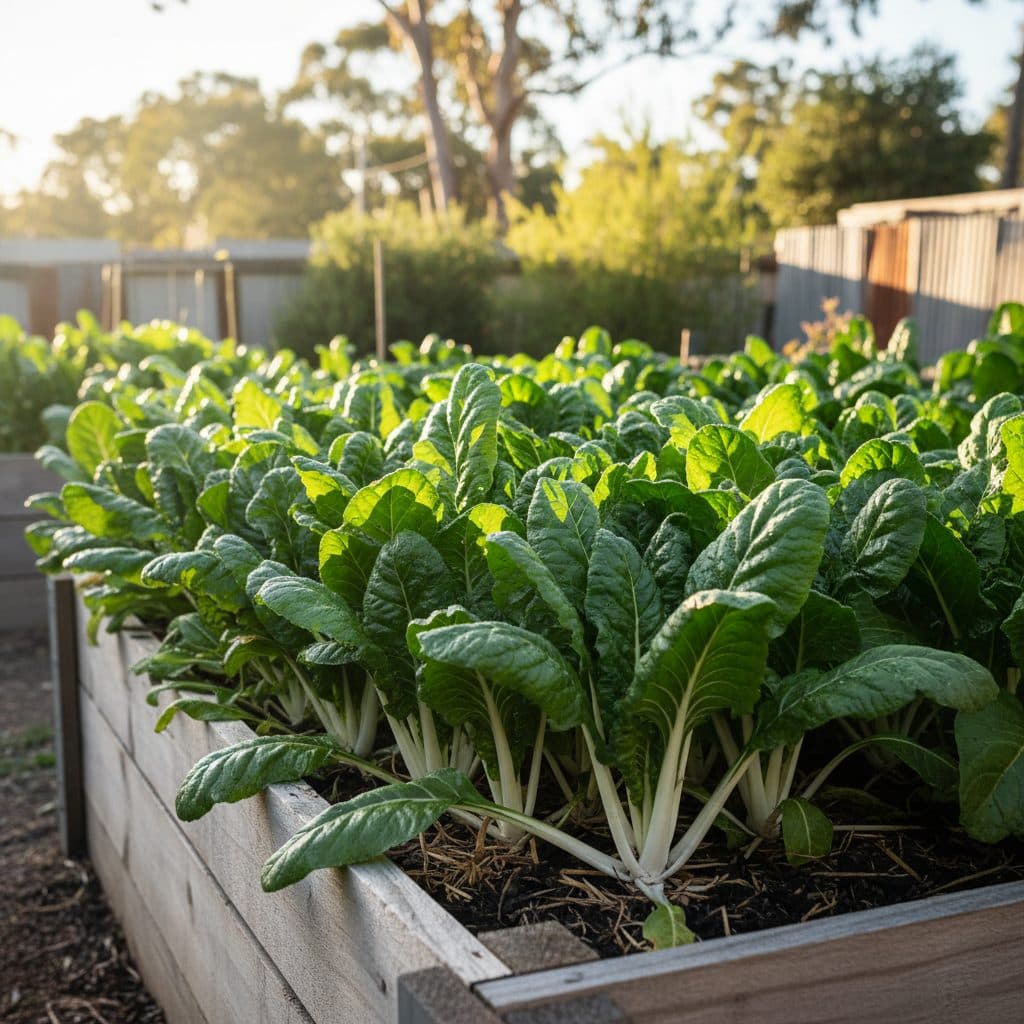
Silverbeet is a staple in Australian backyards. While international gardeners often refer to this biennial vegetable as chard, Australian home growers know it as silverbeet, the reliable, heavy-yielding leafy green that keeps kitchen crispers full through summer heat and winter frosts alike. Learning how to grow silverbeet gives you an abundant supply of tender greens for pies, stir-fries, and side dishes.
Unlike true English spinach (Spinacia oleracea), which runs to seed as the days lengthen in spring, with warm weather hurrying it along, silverbeet tolerates dry spells, coastal breezes, and summer heat. Whether planted in a suburban raised bed, a large balcony pot, or a layered vegetable patch, silverbeet delivers steady nutrition with minimal fuss.
Silverbeet vs spinach: understanding the difference
Australian gardeners often confuse silverbeet with English spinach, yet the two crops are different genera in the same family, Amaranthaceae, and they behave very differently in the garden.
+---------------------+-----------------------+---------------------------------------+
| Feature             | Silverbeet (Chard)    | English Spinach                       |
+---------------------+-----------------------+---------------------------------------+
| Botanical Name      | Beta vulgaris         | Spinacia oleracea                     |
| Stalk Structure     | Broad, fleshy, crisp  | Thin, tender, solid green petioles    |
| Heat Tolerance      | High (tolerates 35°C+)| Low (bolts as daylength increases)    |
| Production Window   | 9 to 12 months        | 6 to 8 weeks (short flush)            |
| Harvest Style       | Cut-and-come-again    | Whole plant cut or light leaf harvest |
+---------------------+-----------------------+---------------------------------------+
Silverbeet is closely related to beetroot. Its broad, succulent white or coloured stems and crinkled, deep green leaves hold up exceptionally well during cooking, retaining texture and rich mineral content.
When to plant silverbeet in Australian climates
Because Australia experiences varied climatic conditions, sowing times should be aligned with your local temperatures:
+---------------------+-----------------------+---------------------------------------+
| Climate Region      | Main Sowing Windows   | Notes                                 |
+---------------------+-----------------------+---------------------------------------+
| Temperate           | Spring through Autumn | Year-round in sheltered coastal spots |
| Subtropical         | March to September    | Autumn to early spring avoids wet heat|
| Tropical            | April to August       | Cool dry winter season only           |
| Cool / Cold         | September to February | Spring and summer after hard frosts   |
| Arid / Inland       | Autumn and Spring     | Avoid peak summer extreme heat        |
+---------------------+-----------------------+---------------------------------------+- Temperate regions (Sydney, Melbourne, Adelaide, Perth): Sow seeds directly or plant seedlings from August through to May. In mild coastal areas, planting can continue virtually all year.
- Subtropical regions (Brisbane, Northern NSW, Sunshine Coast): Sow from March through to September. Planting in autumn avoids the intense humidity and fungal pressure of subtropical summers.
- Tropical north (Cairns, Darwin, Townsville): Grow silverbeet as a dry-season winter crop between April and August. High summer rainfall and night heat cause root rot.
- Cool and cold regions (Tasmania, Canberra, highlands): Sow from September to February. Plants easily withstand winter frosts once established, but germination requires soil temperatures above 10°C.
For integrated bed planning and companion alliums, explore when to plant garlic in australia.
Best silverbeet varieties to grow
Australian seed suppliers offer several distinct silverbeet cultivars:
- Fordhook Giant: The traditional Australian classic with broad, thick white stems and heavily savoyed dark green leaves. Exceptionally vigorous and frost hardy.
- Rainbow Chard: A mix of ruby red, bright yellow, orange, and magenta stems. While slightly less vigorous than Fordhook Giant, it provides colourful stems and tender salad leaves.
- Ruby Chard (Rhubarb Chard): Crimson stalks with glossy green-bronze leaves. Best picked young for tender culinary use.
- Lucullus: Pale green-white ribbed variety known for sweeter, milder flavour and excellent heat tolerance.
Soil preparation and planting steps
Silverbeet is a hungry crop that produces heavy leafy growth over many months. It demands deep, loose soil rich in organic matter and nitrogen with a pH between 6.2 and 7.0.
Preparing the soil
Prepare the planting bed by digging in generous quantities of aged cow or sheep manure, mature garden compost, and a handful of blood and bone per square metre. If your soil is sandy or compacted clay, building a layered no dig garden in Australia provides ideal conditions for vigorous silverbeet taproots.
To enrich soil biology, incorporate biological nutrients; see the benefits of vermicompost vs regular compost.
Sowing and spacing
- Seed soaking: Silverbeet seeds are multi-germ seed clusters containing two to four individual seeds inside a rough corky husk. Soak seeds in tepid water for two hours before sowing to soften the husk and speed germination.
- Sowing depth: Sow seeds 1 to 2 cm deep directly into moist soil, or raise them in seedling trays for transplanting.
- Spacing: Space seeds 15 cm apart initially. Once seedlings emerge and reach 8 cm high, thin them to a final spacing of 30 to 40 cm apart. The thinned baby greens can be eaten immediately in fresh salads.
- Mulching: Spread a 5 cm layer of lucerne hay or sugarcane mulch around the plants to conserve moisture, suppress weeds, and keep soil from splashing onto the lower stems during watering.
Care, watering, and feeding
To maintain crisp, succulent stems and avoid bitterness, silverbeet requires steady care:
- Watering: Provide deep, regular watering two to three times per week, increasing during hot, windy weather. Irregular watering causes the stems to become fibrous and tough. Learn how to recognise moisture stress in our guide on watering vegetables signs.
- Feeding: Every two to three weeks, drench the root area with a liquid organic fertiliser such as fish emulsion, seaweed extract, or diluted worm tea. This high-nitrogen boost sustains vigorous leaf generation.
- Sunlight: Silverbeet produces best in full sun (at least six hours of direct sunlight daily). However, during scorching Australian summers, plants benefit greatly from dappled afternoon shade or 30 percent shade cloth to prevent wilting.
Pests, diseases, and troubleshooting
Silverbeet is remarkably pest resistant compared to brassicas, but gardeners should watch for a few common issues:
- Snails and slugs: Young seedlings are vulnerable to snails and slugs during damp weather. Protect seedlings with beer traps, copper tape around raised beds, or nightly hand-collection.
- Caterpillars and leafminers: Cluster caterpillars can chew ragged holes in leaves, while leafminer larvae leave winding white trails inside the foliage. Hand-pick caterpillars and snip off leaves showing severe leafminer trails.
- Cercospora leaf spot (Cercospora beticola): Appears as small circular brown spots with reddish margins during warm, humid weather. Avoid overhead watering, thin plants to improve air circulation, and remove affected lower leaves promptly.
- Early bolting (running to seed): Silverbeet is a biennial, so a prolonged cold snap can trigger it to run to seed early. Once a central flower stalk appears the leaves turn bitter and it is time to pull the plant and resow.
How to harvest silverbeet for maximum yield
Never harvest silverbeet by cutting the entire plant off at the base with a knife, as this kills the growing point or drastically slows regeneration.
Instead, employ the cut-and-come-again technique:
- Select four to six mature outer stalks from each plant.
- Grip each stalk near the base and snap it firmly downwards and outwards. The stalk will cleanly pull away from the main crown without tearing vascular tissues.
- Leave the inner four to five immature leaves and the central growing heart untouched.
- Water and feed the plant after a heavy harvest to stimulate the next flush of green leaves.
By harvesting the outer stalks weekly, three or four healthy silverbeet plants will provide a continuous harvest for a family throughout the year.