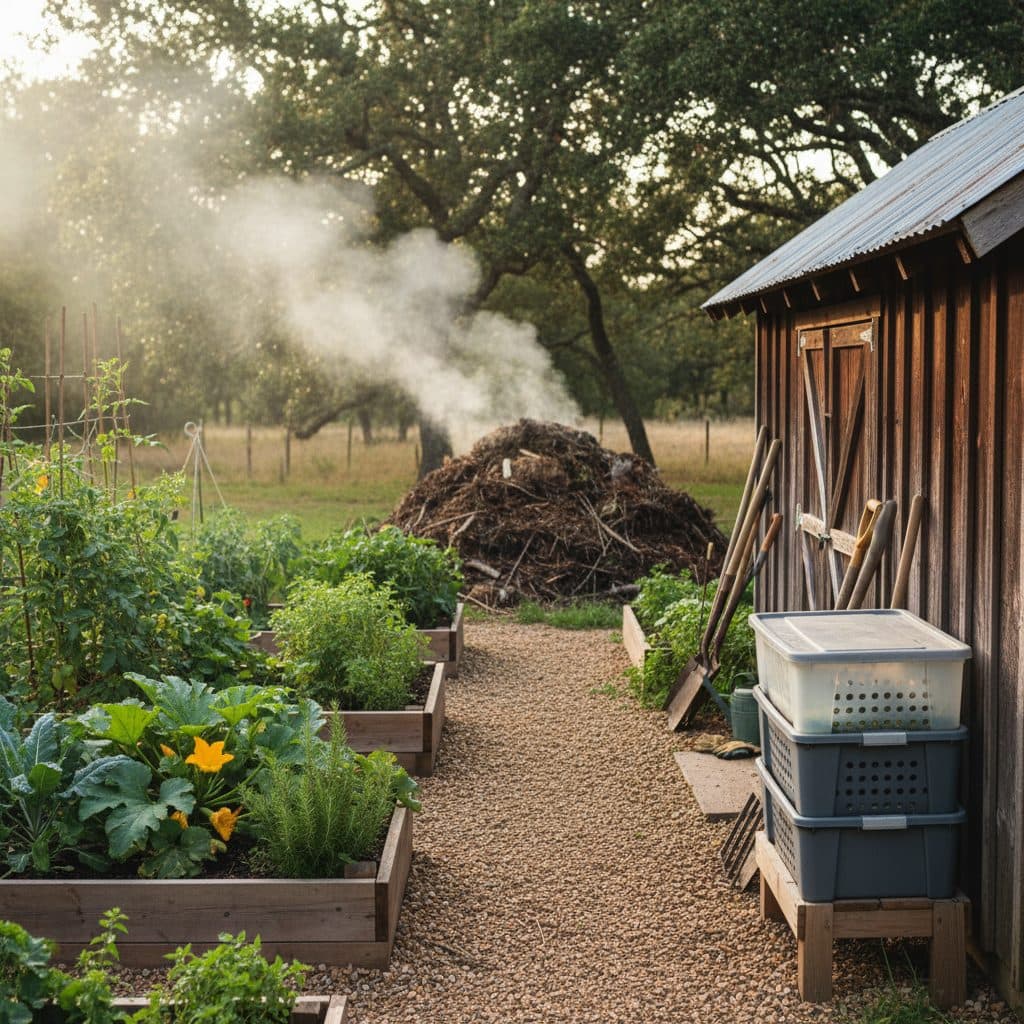
Key takeaways
- Vermicompost generally has higher nutrient availability, including 50% more nitrogen and 75% more phosphorus, compared to traditional compost.
- Worm castings introduce a more diverse microbial community, with specific fungal groups that can suppress plant pathogens.
- Vermicompost improves soil structure and water retention, potentially reducing irrigation needs by up to 30% in sandy soils.
- While slower to produce in large volumes, vermicompost is ideal for high-value crops, seed starting, and container gardening.
- Regular compost is better for large-scale soil amendment and building bulk organic matter over broad acres.
- Successful vermicomposting requires maintaining a consistent moisture level, around 80%, and a carbon-to-nitrogen ratio near 25:1.
Quick answer: Vermicompost offers higher nutrient availability and microbial diversity, ideal for high-value crops and container gardening. Traditional compost is better for large-scale soil amendment and building bulk organic matter over broad acres.
In the fertile valleys of California, where growers manage soil health for high-value crops like grapes and almonds, the choice between compost and vermicompost directly affects yield and plant vigor. While both are valuable soil amendments, they are not interchangeable. Understanding their distinct properties helps growers make informed decisions for their specific needs, whether that is a 10-acre field or a small raised bed in a USDA zone 7 backyard.
For many years, I’ve seen firsthand how different organic inputs perform. Traditional compost, often produced in large piles at temperatures reaching 140°F, excels at building bulk soil organic matter and improving overall soil structure over broad areas. Vermicompost, the product of earthworm digestion, offers a concentrated nutrient boost and a richer microbial profile, often leading to a 20% increase in seedling growth rates in controlled studies. Deciding between them depends on whether a planting needs bulk organic matter or concentrated biological activity.
How compost and vermicompost are made, and what they contain
Traditional composting relies on thermophilic bacteria: heat-loving microbes that break down organic materials like wood chips, leaves, and food scraps. This process typically reaches temperatures between 130°F and 160°F for several days, effectively killing most weed seeds and pathogens. A well-managed compost pile in a USDA zone 6 garden can mature in three to six months, transforming raw materials with an ideal carbon-to-nitrogen ratio of 30:1 into a stable, dark amendment. The final product is a rich source of humic substances, providing a slow-release nutrient base and improving soil structure over the long term. This bulk amendment is excellent for building overall soil health across larger areas, such as a 1-acre market garden.
Fine, granular texture
Vermicomposting, on the other hand, uses specific earthworm species, primarily red wigglers (Eisenia fetida) or European nightcrawlers (Lumbricus rubellus), to process organic waste at ambient temperatures, usually between 55°F and 77°F. These worms consume organic matter, digest it, and excrete nutrient-rich castings. This biological process is much faster for small volumes, producing finished vermicompost in as little as 60 to 90 days from kitchen scraps and shredded paper. The resulting castings are characterized by a fine, granular texture and a significantly higher concentration of plant-available nutrients, making them a potent soil conditioner.
The microbial communities also differ significantly. While traditional compost has a diverse bacterial and fungal population, vermicompost contains a more specialized microbial profile, including beneficial fungi that can suppress plant disease. Studies from 2004 found distinct fungal biodiversity in vermicompost compared to compost, with specific groups contributing to plant health benefits [5]. This difference contributes to vermicompost’s ability to enhance plant immunity and nutrient uptake, making it a powerful amendment for specific applications where concentrated microbial activity is desired, such as in seedling trays or container gardens.
- Temperature range: Compost reaches 130-160°F; vermicompost stays at 55-77°F.
- Processing time: Compost takes 3-6 months; vermicompost takes 60-90 days for small batches.
- Primary agents: Compost uses thermophilic microbes; vermicompost uses earthworms.
- Weed seed viability: Compost often kills 90% of weed seeds; vermicompost may not.
- Nutrient concentration: Vermicompost generally has higher plant-available nutrients.
Why worm castings deliver more available nutrients
One of the most compelling arguments for vermicompost lies in its superior nutrient profile. Earthworms, through their digestive process, convert nutrients into forms that are more readily available for plants. For instance, vermicompost can contain up to 50% more available nitrogen, 75% more available phosphorus, and 100% more available potassium than traditional compost, according to a 2006 study comparing the two [1]. This means plants can absorb these essential elements more efficiently, leading to more vigorous growth and potentially 20% higher yields, particularly in nutrient-poor soils found in regions like the sandy plains of Florida or the alkaline soils of Nevada. This immediate nutrient availability speeds plant response.
Microbial diversity and activity
Beyond the raw numbers, the microbial diversity and activity in vermicompost are exceptional. Worm guts are teeming with beneficial microorganisms that are then deposited into the castings. These microbes drive nutrient cycling, converting unavailable minerals into plant-available forms. They also produce plant growth regulators and suppress plant pathogens, offering a natural defense mechanism. For example, specific fungal groups identified in vermicompost have been shown to help control diseases like powdery mildew, a common issue for many growers, especially in humid climates like the Southeast [5]. You can learn more about managing this specific problem at our article on powdery mildew treatment.
The humic acids and fulvic acids present in higher concentrations in vermicompost also contribute significantly to its effectiveness. These organic compounds chelate nutrients, preventing them from leaching away from the root zone and making them accessible to plant roots over a longer period. This sustained nutrient release is particularly beneficial for container plants or those in raised beds where nutrient retention can be a challenge due to frequent watering. A 2018 study on degraded soils in South America showed that vermicompost significantly improved soil recovery and nutrient uptake compared to traditional compost, demonstrating its potent restorative properties [3].
- Nitrogen availability: Up to 50% higher in vermicompost.
- Phosphorus availability: Up to 75% higher in vermicompost.
- Potassium availability: Up to 100% higher in vermicompost.
- Microbial diversity: Vermicompost often has more specialized beneficial microbes.
- Disease suppression: Specific fungi in castings can suppress pathogens.
Improving your soil’s physical properties
Beyond nutrients, vermicompost significantly improves the physical properties of soil. The granular structure of worm castings improves soil aggregation, creating a more porous environment. This improved structure allows for better aeration, which is critical for root respiration, and facilitates water infiltration, reducing surface runoff by up to 25% in some cases. In sandy soils, vermicompost can increase water retention by up to 30%, reducing the frequency of irrigation needed in arid regions like Arizona or parts of Southern California. Conversely, in heavy clay soils common in parts of the Midwest, it helps break up compaction and improves drainage, preventing waterlogging and promoting healthier root development.
Putting it into practice
The mucilage secreted by worms and the gluing action of microbial byproducts bind soil particles together, forming stable aggregates. This stability reduces soil erosion, a significant concern in sloped gardens or areas with heavy rainfall, such as the Pacific Northwest. The increased porosity also supports a healthier soil microbiome, providing ample space for beneficial bacteria and fungi to thrive. Monitoring soil moisture helps optimize these benefits; a moisture meter can verify consistent 60-70% moisture in the root zone.
Plants grown with vermicompost often exhibit stronger root systems, increased resistance to pests, and better overall vigor. This is partly due to the presence of plant growth hormones and enzymes in the castings, which stimulate root development and nutrient uptake. For example, tomatoes grown with a 10% vermicompost amendment in the potting mix have shown a 15% increase in fruit production compared to those grown with traditional compost, demonstrating a tangible benefit. This enhanced resilience can also help plants recover from stress more quickly, whether from drought, nutrient deficiencies, or pest pressure, making it a valuable tool for growers facing environmental challenges.
- Water retention: Up to 30% increase in sandy soils.
- Soil aggregation: Improved structure for better aeration and drainage.
- Erosion control: Reduced soil loss on slopes by up to 25%.
- Root development: Stimulated by growth hormones in castings.
- Pest resistance: Enhanced plant immunity, reducing pest impact.
Matching the compost to your garden’s needs
Knowing when to use vermicompost versus regular compost comes down to scale, cost, and specific plant needs. For large-scale soil amendment, such as preparing a 1-acre vegetable field or building new garden beds for a community garden, traditional compost is often the more practical and cost-effective choice. It’s easier to produce in bulk and provides the necessary volume to significantly increase soil organic matter across a broad area. The USDA Natural Resources Conservation Service (NRCS) recommends applying 0.5 to 1 inch of compost annually to maintain soil health in agricultural settings, a quantity often impractical to achieve with vermicompost alone [6].
Seed starting mixes
Because vermicompost is concentrated and slower to produce in volume, it suits targeted applications. It is ideal for seed starting mixes, where its fine texture and rich nutrient profile give seedlings a strong start. A 10-20% vermicompost blend in seed starting mix can reduce the need for additional fertilizers during the initial growth phase, potentially cutting fertilizer costs by 15%. It’s also excellent for container gardening, providing a sustained nutrient release for plants in confined spaces, ensuring they receive consistent nourishment over several weeks. Top-dressing established plants with a 0.5-inch layer of vermicompost can provide a nutrient boost throughout the growing season, especially for heavy feeders.
For high-value crops, delicate ornamentals, or correcting specific nutrient deficiencies, vermicompost is the clear winner. Its ability to enhance nutrient uptake and suppress pathogens makes it invaluable for plants that require extra care or are prone to disease, such as roses in a humid climate or heirloom tomatoes. If you’re managing a small urban garden in USDA zone 8, or focusing on intensive cultivation in raised beds where every square foot counts, investing in or making your own vermicompost will likely yield superior results compared to using only traditional compost, potentially increasing yields by 10-25% for certain crops.
- Large-scale amendment: Use traditional compost for fields over 0.5 acres.
- Seed starting: Blend 10-20% vermicompost into mixes.
- Container plants: Top-dress with 0.5 inches of vermicompost every 2-3 months.
- High-value crops: Apply vermicompost for concentrated nutrient delivery.
- Soil remediation: Vermicompost can aid recovery of degraded soils [3].
Setting up a successful worm farm at home
Starting your own vermicompost system is a rewarding way to produce this potent amendment right in your backyard or even indoors. You’ll need a suitable bin, which can be as simple as two stacked 10-gallon plastic totes with drainage holes, or a multi-tray worm farm available commercially. The key is to provide a dark, moist environment with good air circulation. For a typical household producing 5 pounds of food scraps per week, about 1,000 to 2,000 red wiggler worms (Eisenia fetida) are a good starting point. These worms can process their body weight in food scraps daily under ideal conditions, usually between 60°F and 75°F, effectively diverting up to 70% of kitchen waste from landfills.
Bedding selection determines how well the bin retains moisture and air.
Maintaining a balanced carbon-to-nitrogen ratio in your worm bin, ideally around 25:1 to 30:1, helps prevent anaerobic conditions and keeps the worms healthy. Too much nitrogen (food scraps) without enough carbon (bedding) can lead to a smelly bin and stressed worms. Harvesting vermicompost can be done every three to six months, depending on the size of your bin and the amount of food scraps added. Simply move finished castings to one side, add fresh bedding and food to the other, and the worms will migrate, leaving you with nutrient-rich castings ready for your garden. This process can reduce household waste by up to 50% for many families and provide a valuable resource.
- Worm species: Red wigglers (Eisenia fetida) are best for bins.
- Bin size: A 10-gallon tote can handle 1-2 pounds of scraps weekly.
- Bedding material: Shredded paper, cardboard, or coconut coir.
- Moisture level: Maintain 70-85% moisture, like a damp sponge.
- Feeding: Avoid meat, dairy, and oily foods to prevent pests.
Key differences between vermicompost and traditional compost
Feature | Vermicompost | Traditional compost |
|---|---|---|
Production agent | Earthworms (e.g., Red Wigglers) | Thermophilic microbes |
Temperature range | 55-77°F (Mesophilic) | 130-160°F (Thermophilic) |
Processing time (small scale) | 60-90 days | 3-6 months |
Nutrient availability | Higher (e.g., 50% more N, 75% more P) | Lower, slow release |
Microbial diversity | Specialized, active beneficial microbes | Broad bacterial and fungal populations |
Weed seed/pathogen kill | Limited | High (due to heat) |
Texture | Fine, granular, uniform | Coarser, varies by feedstock |
Best use case | Seed starting, containers, high-value crops, top-dressing | Large-scale soil amendment, bulk organic matter, new beds |
Odor | Earthy, minimal | Can be strong if not managed well |
Nutrient Boost: Vermicompost can increase available nitrogen by 50%, phosphorus by 75%, and potassium by 100% compared to traditional compost [1].
Water Retention: In sandy soils, vermicompost can improve water retention by up to 30%, reducing irrigation needs.
Seedling Vigor: Incorporating 10-20% vermicompost into seed starting mixes can boost seedling growth rates by 20%.
Frequently asked questions
Can I use vermicompost as a standalone potting mix?
While vermicompost is rich in nutrients, it’s generally too concentrated and dense to be used as 100% potting mix. It’s best blended with other materials like peat moss, coir, or perlite at a ratio of 10-30% for optimal plant growth and drainage.
How much vermicompost should I apply to my garden?
For established garden beds, apply a 0.5 to 1-inch layer as a top-dressing annually. For new plantings, incorporate 1-2 cups per planting hole, ensuring it’s mixed well with the native soil to avoid nutrient burn.
What’s the biggest challenge in starting a worm bin?
The biggest challenge is often maintaining the correct moisture level, which should be around 80%, and avoiding overfeeding, which can lead to anaerobic conditions and odors. Regular monitoring and proper food management are key for success.
Do worms in a vermicompost bin escape?
Healthy red wigglers generally stay in their bin if conditions are favorable, meaning it’s dark, moist, and has enough food. If they try to escape, it often indicates the bin is too wet, too dry, too acidic, or has too much uneaten food.
Can vermicompost help with pest problems?
Vermicompost can enhance plant immunity and vigor, making plants more resistant to pests. While not a direct pesticide, healthier plants are less attractive to many common garden pests, potentially reducing issues by 15-20% in some cases.
Is vermicompost safe for all plants?
Yes, vermicompost is generally safe and beneficial for almost all plants, from vegetables and fruits to ornamentals and herbs. Its gentle, slow-release nutrient profile and microbial benefits make it suitable for delicate seedlings and mature plants alike.
References
- Compost and Vermicompost as Amendments Promoting Soil Health (2006). Compost and Vermicompost as Amendments Promoting Soil Health.
- Use of prosopis as compost/vermicompost (2024). Use of prosopis as compost/vermicompost.
- Compost and vermicompost as amendments in the recovery of a soil degraded by the management of Gypsphila paniculata (2018). Compost and vermicompost as amendments in the recovery of a soil degraded by the management of Gypsphila paniculata.
- Comparación de la técnica de compost y vermicompost mediante el aprovechamiento de lodos de una PTAR (2023). Comparación de la técnica de compost y vermicompost mediante el aprovechamiento de lodos de una PTAR.
- Characterization of Fungal Biodiversity In Compost and Vermicompost (2004). Characterization of Fungal Biodiversity In Compost and Vermicompost.
- USDA Natural Resources Conservation Service (2024). USDA Natural Resources Conservation Service.