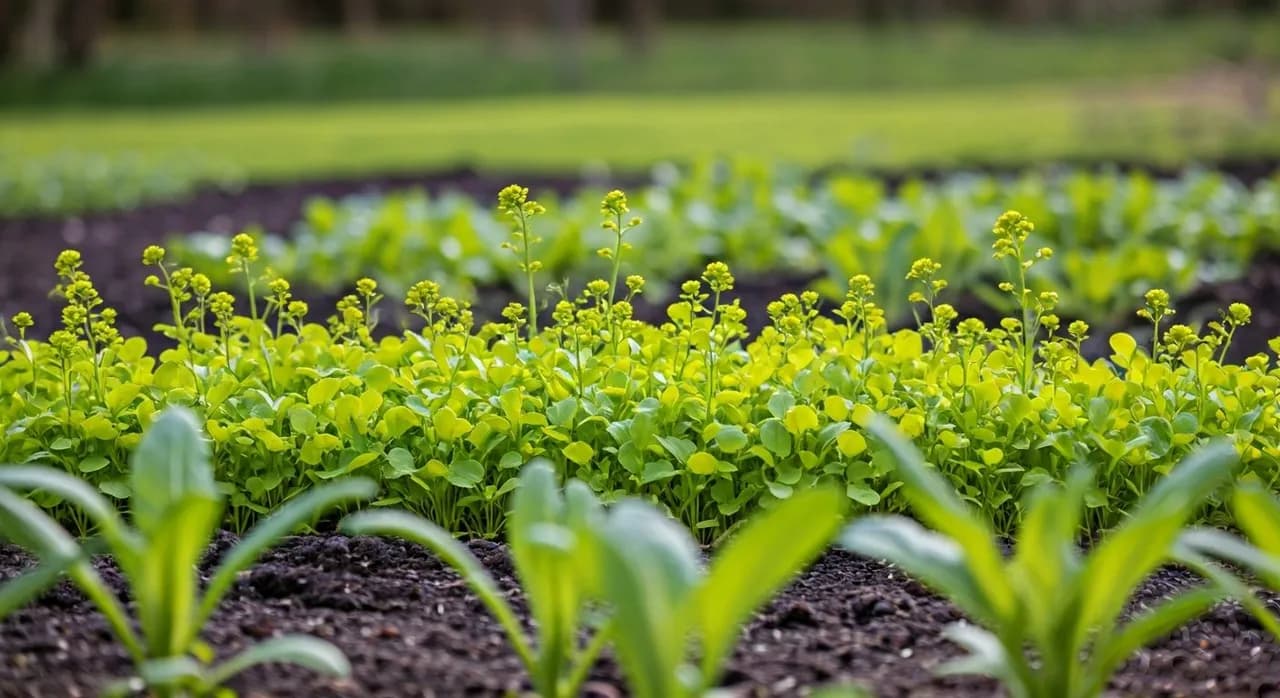
Key takeaways
- Wild mustards and cress, including bittercress species, are abundant, edible early spring greens found across most US regions.
- Identification matters: focus on leaf shape, flower structure, and growth habit to distinguish edible species from look-alikes.
- Responsible foraging practices, such as the one-third rule and avoiding contaminated areas, ensure sustainability and safety.
- These greens offer a peppery, slightly bitter flavor profile, rich in vitamins, and can be used raw in salads or cooked in various dishes.
- Many species, like hairy bittercress, demonstrate significant resilience, thriving in diverse conditions from USDA zone 4 to 9.
- Understanding regional growth patterns and ecological roles helps maximize harvest success and minimize environmental impact.
Quick answer: Wild mustards and cress are abundant, edible early spring greens found across most US regions (USDA Zones 4-9). They offer a peppery, slightly bitter flavor, are rich in vitamins, and can be used raw in salads or cooked.
Across the United States, from the temperate rainforests of the Pacific Northwest to the humid plains of the Southeast, early spring brings a flush of edible greens. Among the first to emerge are various species of wild mustards, cress, and bittercress, offering a welcome peppery bite after winter’s dormancy. In USDA zones 6 and 7, these plants often appear as early as late February, providing a fresh, nutrient-dense addition to the diet when other cultivated crops are still dormant.
Many of these plants, particularly the bittercress species, are often considered weeds in gardens, but their culinary value is substantial. For instance, hairy bittercress (Cardamine hirsuta) has a rapid life cycle and is widespread across nearly all 50 states [3]. Understanding their growth habits and identification markers is key to safely incorporating these resilient plants into your foraging repertoire.
Identifying common wild mustards and cress species
Accurate identification is the cornerstone of safe foraging. Several species of wild mustards and cress are common across US landscapes, each with distinct features. Hairy bittercress (Cardamine hirsuta) is perhaps the most widespread, recognized by its rosettes of pinnately lobed leaves and small white flowers, typically growing to 6 inches in height [3]. Its leaves often have fine hairs, and it produces distinctive seed pods that can eject seeds when ripe. This plant thrives in disturbed soils and moist conditions, often found in gardens, lawns, and along woodland edges in states like Oregon and New York.
Key identification features
Another common variety is wavy bittercress (Cardamine flexuosa), which can reach up to 12 inches tall and often has stems that are noticeably wavy or zig-zagged [4]. Its leaves are similar to hairy bittercress but may be less hairy. In contrast, field pennycress (Thlaspi arvense) stands out with its round, flattened, penny-like seed pods and basal rosette leaves that are spatulate. These plants are generally found in agricultural fields and waste areas across the Midwest and Northeast, often appearing in large patches. Always consult a local field guide or an experienced forager if you are unsure about identification; misidentification can lead to consuming toxic plants, so caution is paramount. For more on safe identification, see our guide on foraging for beginners: identifying common wild edibles safely.
- Hairy bittercress: small white flowers, basal rosette, 4-6 inches tall.
- Wavy bittercress: zig-zag stems, slightly taller, often in shady, damp spots.
- Field pennycress: distinctive round, flat seed pods, strong garlicky scent.
- Shepherd’s purse: heart-shaped seed pods, deeply lobed basal leaves.
- Wild mustard (Brassica rapa): larger leaves, yellow flowers, grows up to 3 feet.
Responsible foraging and harvest techniques
When harvesting wild greens, responsible practices are essential for both your safety and the sustainability of local plant populations. Always forage in areas free from pesticides, herbicides, or heavy foot traffic, such as roadsides. The “one-third rule” is a good guideline: never harvest more than one-third of any plant or patch so enough remains for regeneration. For bittercress, which spreads rapidly, this rule helps manage its population while allowing for continuous harvest.
Tools and tips for a successful harvest
Before harvesting, inspect the plants for signs of disease, insect damage, or contamination. Collect leaves and young stems, as these are typically the most tender and flavorful. Older leaves can become tough and more bitter. A small pair of scissors or a sharp knife works best for a clean cut, minimizing damage to the plant and encouraging regrowth. Always carry a breathable bag or basket to prevent greens from wilting. Remember that some species, like wild mustard, can grow quite large, up to 3 feet, and their leaves are best harvested when young. For more comprehensive advice on sustainable harvesting, refer to our guide on wild edible plants: a beginner’s guide to 6 safe-to-forage greens.
- Sharp scissors or a knife for clean cuts.
- Breathable bag or basket to transport greens.
- Field guide for on-the-spot identification.
- Gloves for handling unfamiliar plants or thorny species.
- Water bottle to stay hydrated during longer foraging trips.
Culinary applications and nutritional value
The peppery, slightly bitter flavor of wild mustards, cress, and bittercress makes them versatile ingredients in the kitchen. Young leaves and stems are best eaten raw in salads, where their pungent kick can replace or complement arugula. For example, a cup of raw bittercress can provide a significant portion of your daily Vitamin C. They can also be lightly sautéed, steamed, or added to soups and stir-fries, similar to spinach or kale. Cooking tends to mellow their bitterness, making them more palatable for some.
Simple preparation ideas
Consider incorporating these greens into pesto, blending them with olive oil, garlic, nuts, and parmesan cheese for a unique flavor. They pair well with eggs, cheese, and root vegetables. A simple preparation involves washing the greens thoroughly in cold water to remove any soil or debris, then patting them dry. For a quick side dish, sauté 2 cups of cleaned bittercress with a tablespoon of olive oil and a pinch of salt for 2-3 minutes. The leaves will wilt down considerably, similar to spinach, yielding a smaller portion of cooked greens. Experiment with different culinary uses to find your favorite way to enjoy these nutritious spring edibles. Their sturdy flavor holds up well in dishes where you might typically use mustard greens or watercress.
- Fresh salads for a peppery kick.
- Lightly sautéed with garlic and olive oil.
- Added to soups or stews in the last 5 minutes of cooking.
- Blended into pestos or green smoothies.
- Topping for sandwiches or wraps.
Regional growth patterns and ecological considerations
The adaptability of wild mustards and cress means they can be found across a broad range of US climates and ecosystems. Hairy bittercress, for instance, is documented in nearly every state, from USDA zone 4 to 9, which shows its resilience [3]. Its ability to tolerate various soil types and moisture levels contributes to its widespread distribution. In regions like the Southeast, it can persist through mild winters, while in the colder Midwest, it emerges reliably with the first thaws of spring, often in March.
Flood tolerance and adaptation
Research indicates that some wild Brassicaceae species, the family to which mustards and cress belong, exhibit significant flood tolerance, an adaptation that allows them to thrive in riparian zones and areas prone to seasonal inundation [1]. This resilience is partly due to their ability to adapt their root systems and metabolic processes to low-oxygen environments. For example, a study in 2000 observed that bittercress size and density significantly impacted control methods. This points to persistent growth even under pressure [5]. Understanding these ecological traits can help foragers locate prime harvesting spots and appreciate the plant’s role in local biodiversity. The USDA Natural Resources Conservation Service provides extensive data on plant distribution and characteristics. This confirms the prevalence of these species across diverse US regions [6].
- Widespread distribution across USDA zones 4-9.
- Thrives in disturbed soils, moist areas, and partial shade.
- Emerges early spring, often March to April, depending on region.
- Rapid growth cycle, with some species producing seeds in 10 days.
- Demonstrates flood tolerance, adapting to wet conditions.
Comparison of Common Wild Mustard and Cress Species
Species | Typical Height | Key Identification | Flavor Profile |
|---|---|---|---|
Hairy Bittercress (Cardamine hirsuta) | 4-6 inches | Small white flowers, basal rosette, fine stem hairs | Peppery, slightly bitter |
Wavy Bittercress (Cardamine flexuosa) | 6-12 inches | Zig-zag stems, less hairy, often in damp shade | Mildly peppery, earthy |
Field Pennycress (Thlaspi arvense) | 12-24 inches | Round, flat, penny-like seed pods, garlicky scent | Pungent, mustardy |
Shepherd’s Purse (Capsella bursa-pastoris) | 6-18 inches | Heart-shaped seed pods, deeply lobed basal leaves | Mildly peppery, cabbage-like |
Rapid Seed Production: Hairy bittercress can produce mature seeds within 10 days of flowering while aiding its rapid spread across US gardens and fields [3].
Flood Tolerance: Certain wild Brassicaceae species, including mustards, show significant flood tolerance, allowing them to thrive in seasonally wet environments [1].
Widespread Distribution: Bittercress species are found across nearly all 50 US states, thriving in USDA zones ranging from 4 to 9 [3].
References
- Floodproof mustards: adaptation strategies in wild Brassicaceae (2026). https://doi.org/10.1093/jxb/erag133
- BITTERCRESS (Cardamine) (2023).
- Hairy Bittercress (2017).
- Cardamine flexuosa (wavy bittercress). (2021).
- Effect of Bittercress Size and Gallery Rate on Postemergence Bittercress Control (2000).
- USDA Natural Resources Conservation Service (2024).