Key takeaways
- LECA (Lightweight Expanded Clay Aggregate) is a durable, porous, and pH-neutral growing medium ideal for hydroponics and aquaponics.
- Proper preparation involves thorough rinsing to remove dust and buffering to stabilize pH, typically soaking for 24 hours.
- LECA’s inert nature provides precise nutrient control, as it does not contribute or bind nutrients from the solution.
- Reusing LECA for 3 to 5 years or more is common with effective cleaning, sterilization, and inspection for plant debris.
- It offers excellent aeration and drainage, preventing root rot and supporting robust plant development in various systems.
- Common issues like algae growth can be managed with light exclusion and maintaining optimal nutrient solution levels.
Quick answer: LECA (Lightweight Expanded Clay Aggregate) clay pebbles are durable, porous, and pH-neutral growing media made from heated clay, ideal for hydroponic and aquaponic systems due to their inert nature, excellent aeration, and reusability.
In the arid landscapes of Arizona, where traditional soil gardening presents significant challenges, hydroponic systems offer a viable alternative for growing everything from leafy greens to tomatoes. For many US growers, choosing the right growing medium is a critical first step, and Lightweight Expanded Clay Aggregate — commonly known as LECA — has proven to be a reliable option. These baked clay pebbles, typically 0.25 to 0.75 inches in diameter, provide a stable, reusable, and inert substrate that supports strong plant growth without the complexities of soil.
Originating from processes that heat natural clay to approximately 2,190°F (1,200°C), LECA pebbles expand and vitrify, creating a hard, porous structure [3]. This unique composition allows LECA to absorb and release water efficiently, making it particularly well-suited for hydroponic and aquaponic setups where precise moisture and nutrient delivery are paramount [1]. Over the past decade, LECA has become a staple in many indoor growing operations, from small home setups in USDA zone 6 to commercial greenhouses producing thousands of pounds of produce annually.
What are LECA clay pebbles?
LECA, or Lightweight Expanded Clay Aggregate, consists of small, rounded pellets made by heating natural clay to high temperatures. This process causes the clay to expand, forming a porous core with a hard outer shell, much like popcorn. The resulting pebbles are typically 0.25 to 0.75 inches in diameter, lightweight, and incredibly durable, hard-shelled and slow to break down, offering a long lifespan in growing systems.
The composition and benefits of LECA
The primary benefit of LECA in hydroponics is its inert nature; it does not break down or release significant nutrients into the growing solution, allowing growers to maintain precise control over nutrient delivery [1]. Its porous structure ensures excellent aeration to plant roots, preventing waterlogging and root rot, which is a common issue in other media. LECA also provides good drainage, yet its internal pores can hold a substantial amount of water, typically around 30% by volume, reducing the frequency of watering cycles. The pH of LECA usually ranges between 6.0 and 7.0, which is generally neutral and suitable for most plants, though initial buffering is often recommended to stabilize it for optimal plant health. For growers setting up an indoor system, pairing LECA with a good Reflective Indoor Grow Tent can create an ideal environment.
- Provides excellent root aeration, reducing the risk of root diseases.
- Offers precise control over nutrient solutions due to its inert composition.
- Durable and reusable for multiple growing cycles, often 3 to 5 years.
- Lightweight, making systems easier to move and manage.
- Resistant to pests and diseases that can harbor in organic media.
Best uses for LECA in hydroponics and aquaponics
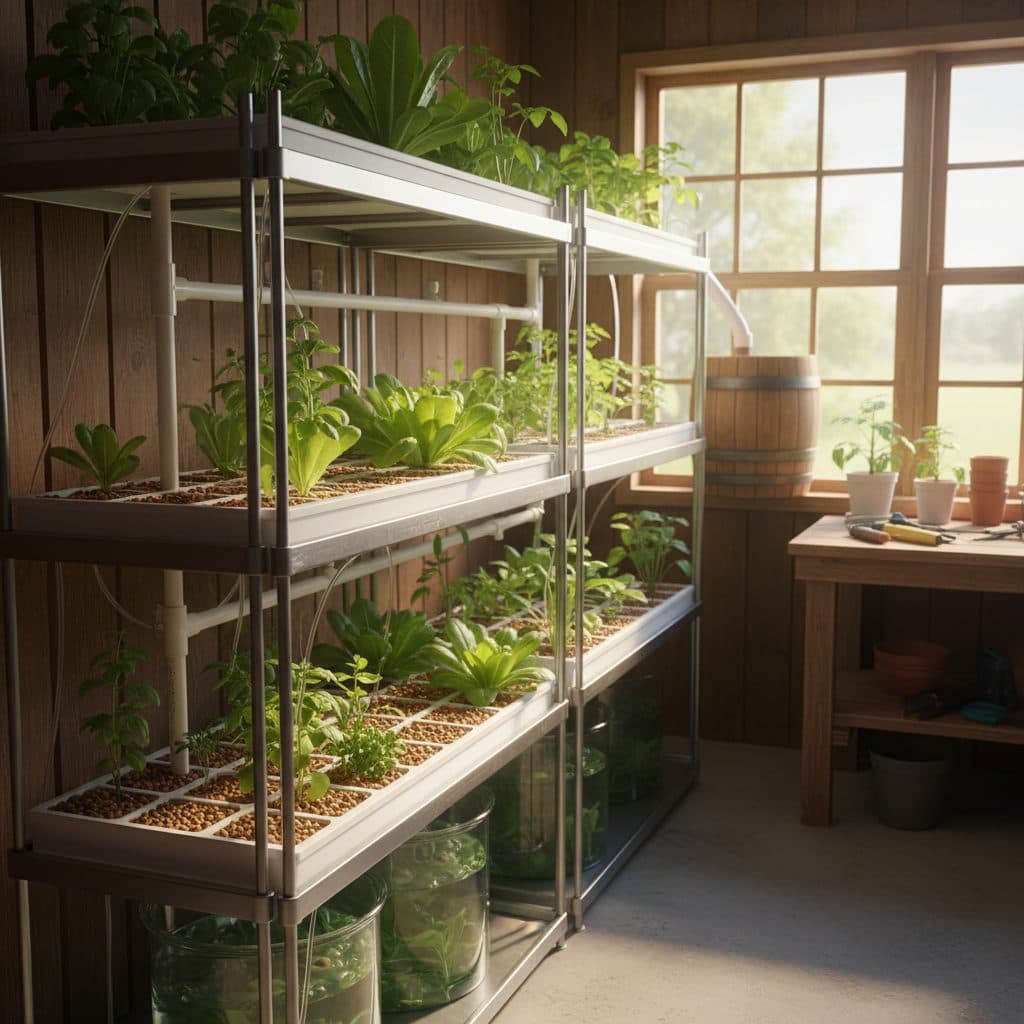
LECA’s unique characteristics make it an excellent choice for various soilless growing methods. In hydroponics, it’s particularly well-suited for deep water culture (DWC), ebb and flow (flood and drain) systems, and wick systems. For DWC, the pebbles provide support for plant roots while allowing them to access the nutrient solution directly. In ebb and flow systems, LECA’s ability to absorb and release water efficiently ensures roots are consistently hydrated and aerated during flood and drain cycles, typically every 2 to 4 hours depending on plant size and environmental conditions. Large tomato plants grow well in 5-gallon buckets of LECA under DWC.
aquaponics and other applications
Aquaponics — combining aquaculture (fish farming) with hydroponics — also benefits greatly from LECA. The pebbles provide a large surface area for beneficial bacteria to colonize, which are crucial for converting fish waste into plant-usable nutrients. This symbiotic relationship thrives in media beds filled with LECA, where the pebbles act as both a biological filter and a plant support. Beyond active hydroponic systems, LECA is also used in passive hydroponics, such as self-watering pots, and as an amendment to traditional potting mixes to improve drainage and aeration, especially for plants like orchids that require excellent root ventilation. Some growers even use LECA for rooting cuttings, as its consistent moisture and air supply promote rapid root development, often seeing roots emerge within 7 to 14 days for many common herbs.
- Deep Water Culture (DWC) for leafy greens and herbs.
- Ebb and Flow systems for a wide range of vegetables.
- Media beds in aquaponics for biological filtration and plant support.
- Passive hydroponic setups, including self-watering planters.
- As a soil amendment to improve aeration and drainage for potted plants.
Preparing LECA for first use
Before using new LECA pebbles, proper preparation matters for optimal plant health and system performance. The manufacturing process and packaging can leave behind fine clay dust and soluble salts that need to be removed. The first step is always a thorough rinse. Place the LECA in a large bucket or mesh bag and rinse it under running water, agitating the pebbles vigorously, until the water runs completely clear. This usually takes 5 to 10 minutes per 10-pound bag of LECA, and you’ll be surprised by how much reddish-brown dust comes off initially.
Buffering and pH adjustment
After rinsing, the next critical step is buffering. While LECA is generally pH neutral, fresh pebbles can sometimes have a slightly higher pH due to residual alkalinity, potentially reaching 7.5 to 8.0. To prevent nutrient lockout and ensure plants can absorb nutrients effectively, soak the LECA in a pH-adjusted water solution for at least 24 hours, or even 48 hours for larger batches. Use water with a pH of around 5.5 to 6.0. Add pH down a little at a time, stirring and re-measuring between additions - the dose depends on the product's concentration and on the alkalinity of your water. Always add acid to water, never water to acid, and wear eye protection. This buffering process helps to stabilize the LECA’s pH, setting your plants up for success from day one. This preparation is similar to what’s needed for other soilless media. This gives a clean slate for growth, whether you’re growing gourmet mushrooms or hydroponic vegetables.
- Rinse thoroughly under running water until all dust is gone.
- Soak LECA in pH-adjusted water (5.5-6.0) for 24-48 hours.
- Monitor the pH of the soaking water and adjust as needed.
- Drain the buffering solution completely before planting.
- Inspect pebbles for any remaining debris or discolored pieces.
Rinsing and reusing LECA between crops
One of the significant advantages of LECA is its reusability, which contributes to its overall value over time. With proper cleaning and sterilization, LECA can be reused across many crop cycles. That significantly reduces material waste in growing operations. After harvesting a crop, the first step is to remove all plant debris, including roots. Pull out large root masses by hand, then shake the pebbles to dislodge smaller pieces. For stubborn roots, a stiff brush or even a pressure washer can be effective, especially for larger volumes of LECA used in commercial setups.
sterilization and storage
Once physically clean, the LECA needs to be sterilized to eliminate any lingering pathogens, algae, or fungal spores that could harm the next crop. A common method is to soak the pebbles in a diluted bleach solution (1 part bleach to 10 parts water) for 30 minutes to 1 hour. Do this with the media out of the system: residual chlorine kills fish and wipes out the nitrifying bacteria an aquaponics system depends on, so bleached media must be rinsed until no chlorine smell remains before it goes anywhere near a stocked tank. Never mix bleach with pH-down acids or with ammonia-based cleaners - the reaction releases toxic gas. Alternatively, a 3% hydrogen peroxide solution can be used, soaking for 2 to 4 hours. After sterilization, it’s crucial to rinse the LECA thoroughly again, multiple times, to remove all traces of the cleaning agent. Any residual bleach or peroxide can be detrimental to new plants. Once rinsed, spread the LECA out on a clean tarp or screen in a sunny spot to dry completely, which can take 1 to 2 days depending on humidity. Storing dry LECA in sealed containers prevents contamination and keeps it ready for the next planting cycle. This careful process ensures a fresh start for each crop, much like preparing a new bed for cover crops in a traditional garden.
- Remove all plant roots and debris by hand or with a brush.
- Soak in a diluted bleach (1:10) or hydrogen peroxide (3%) solution for sterilization.
- Rinse thoroughly with fresh water multiple times to remove cleaning agents.
- Dry completely in the sun or a well-ventilated area for 1 to 2 days.
- Store in clean, sealed containers to prevent recontamination.
Troubleshooting common LECA issues
Even with careful preparation and use, growers occasionally encounter issues with LECA. One of the most common is algae growth, particularly on the surface of the pebbles exposed to light. Algae competes with plants for nutrients and can clog pumps and tubing. To combat this, minimize light exposure to the LECA surface. This can be achieved by using opaque covers, painting system components black, or simply ensuring your system is in a location with controlled light. For instance, black plastic sheeting over a DWC reservoir keeps light off the solution and sharply reduces algae growth.
Nutrient buildup and pH fluctuations
Another issue can be nutrient salt buildup, especially in systems that don’t regularly flush or replenish their nutrient solution. Over time, mineral salts can accumulate on the surface of the pebbles and within their pores, potentially leading to nutrient imbalances or pH shifts. Regular flushing with plain, pH-adjusted water every 2 to 4 weeks can help mitigate this. For example, a hydroponic lettuce system might be flushed every 3 weeks: drain the old solution, run plain water for 12 hours, then refill with fresh nutrients. While LECA is generally inert, meaning it does not break down or release significant nutrients, it can still act as a site for salt deposition [1]. Monitoring your nutrient solution’s electrical conductivity (EC) and pH daily is crucial for early detection of these issues, ensuring your plants receive consistent care.
- Minimize light exposure to LECA surfaces to prevent algae growth.
- Regularly flush systems with plain water to prevent nutrient salt buildup.
- Monitor nutrient solution EC and pH daily for stability.
- Ensure proper drainage to prevent waterlogging and root issues.
- Clean and sterilize LECA thoroughly between crop cycles to avoid pathogen transfer.
LECA vs. Other Common Hydroponic Media
Feature | LECA | Rockwool | Coco Coir |
|---|---|---|---|
Reusability | High (3-5+ years) | Low (typically one crop) | Medium (1-2 years) |
pH Stability | Good (after buffering) | Alkaline (requires buffering) | Neutral (can vary) |
Aeration | Excellent | Good | Good |
Water Retention | Good (30% volume) | Excellent (up to 80% volume) | Excellent (up to 70% volume) |
Inertness | High | High | Low (can release nutrients) |
Weight (dry) | Lightweight | Very Lightweight | Medium Weight |
LECA Lifespan: With proper cleaning and sterilization, LECA can be reused across many crop cycles, offering long-term value in hydroponic systems.
pH Range: The pH of LECA typically falls between 6.0 and 7.0, making it a suitable, near-neutral medium for most hydroponic plants after initial buffering [1].
Water Absorption: LECA’s porous structure allows it to absorb approximately 30% of its volume in water, providing consistent moisture to roots without waterlogging [1].
Frequently asked questions
Can LECA be used for all types of plants?
LECA is highly versatile and suitable for a wide range of plants, including leafy greens, herbs, and fruiting vegetables like tomatoes and peppers. However, plants that prefer extremely acidic conditions (below pH 5.5) or very heavy, moisture-retentive media might not thrive as well, though most common hydroponic crops do excellent with a pH between 5.8 and 6.5.
How often should I flush my LECA system?
To prevent nutrient salt buildup and maintain optimal pH, it’s generally recommended to flush your LECA system with plain, pH-adjusted water every 2 to 4 weeks. This practice helps remove accumulated salts so plants can absorb nutrients efficiently from the fresh solution.
What are the signs that my LECA needs cleaning?
Signs that your LECA needs cleaning include visible algae growth on the surface, a noticeable buildup of white or crystalline nutrient salts, or a decline in plant health despite proper nutrient solution management. If you see green film or white crust, it’s time for a thorough rinse and potential sterilization, especially if it’s been over 6 months since the last deep clean.
Is LECA truly inert, or does it release anything?
LECA is considered highly inert, meaning it does not break down or release significant nutrients or compounds into the growing solution, allowing growers precise control over nutrient delivery [1]. While it can absorb and release water, its chemical composition remains stable, providing a consistent environment for plant roots for many years.
Can I mix LECA with other growing media?
Yes, LECA can be mixed with other growing media like coco coir or perlite to create custom blends. This is often done to improve drainage and aeration in heavier mixes or to provide more structural support. For example, a 50:50 mix of LECA and coco coir can offer a good balance of moisture retention and aeration for certain plants, like orchids or anthuriums.
How does LECA compare to soil in terms of plant growth?
In hydroponic systems, LECA often supports faster plant growth and higher yields compared to traditional soil, primarily due to optimized nutrient and oxygen delivery directly to the roots. Plants in LECA systems often grow faster than their soil-grown counterparts, given ideal conditions and nutrient management.
References
- Characterization of Leca Clay Pebbles as a Growing Medium for Geranium (Pelargonium hortorum) Stock Plant Production (1995). Characterization of Leca Clay Pebbles as a Growing Medium for Geranium (Pelargonium hortorum) Stock Plant Production.
- Study on Compressive Strength of Self-curing Concrete Using Red Clay and Black Cotton Clay Lightweight Expansive Clay Aggregate (LECA) (2022). Study on Compressive Strength of Self-curing Concrete Using Red Clay and Black Cotton Clay Lightweight Expansive Clay Aggregate (LECA).
- Results of analyses of two clay samples used by A/S Norsk Leca in the production of insulation materials (1987). Results of analyses of two clay samples used by A/S Norsk Leca in the production of insulation materials.
- USDA Natural Resources Conservation Service (2024). USDA Natural Resources Conservation Service.