Key takeaways
- Blueberries and azaleas thrive in acidic soil, typically with a pH range of 4.5 to 6.0, which is often lower than average garden soil in many US regions.
- Compost, especially from acidic materials like pine needles or oak leaves, gradually lowers soil pH while improving soil structure and nutrient availability.
- Vermicompost, produced by composting with worms, provides a rich, pH-buffering amendment that supports beneficial soil microbes and can help acidify soil over time.
- Biochar, a stable form of carbon, can help stabilize soil pH and improve nutrient retention, though its immediate acidifying effect is limited and varies by feedstock.
- Regular soil testing, ideally every 12 to 24 months, matters for monitoring pH levels and adjusting amendment strategies to maintain optimal conditions.
- Integrating organic matter through methods like top-dressing or amending planting beds provides a long-term, sustainable approach to managing soil acidity.
Quick answer: To achieve ideal acidic soil pH for blueberries and azaleas, incorporate organic amendments like acidic compost (pine needles, oak leaves), vermicompost, and biochar. These methods gradually lower pH while improving soil health and nutrient availability.
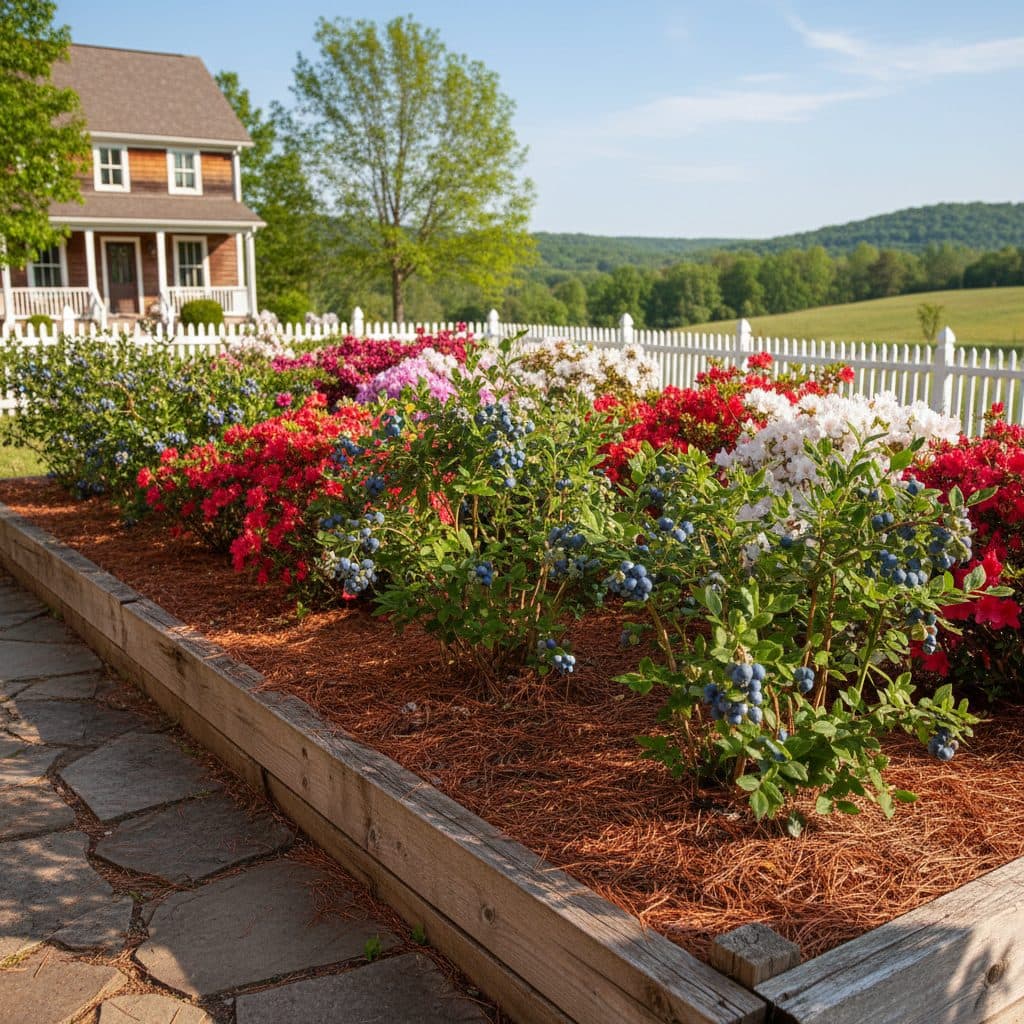
In many parts of the United States, particularly in the Midwest and Southwest where soils tend to be alkaline, growing acid-loving plants like blueberries and azaleas can be a significant challenge. For instance, a typical garden soil in Nebraska might have a pH of 7.0 to 7.5, while blueberries specifically require a pH between 4.5 and 5.5 for optimal nutrient uptake and growth. Azaleas, popular in USDA Zone 7 gardens across the Southeast, prefer a slightly higher range of 5.0 to 6.0 [1].
Achieving and maintaining this lower pH without resorting to synthetic chemicals, which can be harsh on soil biology and require frequent reapplication, is a goal for many growers. This article explores practical, organic strategies using composting, vermicomposting, and biochar to create a thriving environment for your acid-loving plants, focusing on methods that build long-term soil fertility and health over quick fixes.
Understanding soil pH and plant nutrient availability
Soil pH is a measure of its acidity or alkalinity, expressed on a scale from 0 to 14, where 7.0 is neutral. A pH below 7.0 is acidic, and above 7.0 is alkaline. For acid-loving plants, the pH directly impacts their ability to absorb essential nutrients from the soil. For example, iron, manganese, and zinc become less available in alkaline soils, leading to nutrient deficiencies that manifest as yellowing leaves or stunted growth [6].
why pH matters for acid-lovers
Blueberries, for instance, are particularly sensitive to high pH because they struggle to absorb iron when the soil pH rises above 5.5. This can lead to chlorosis, where the leaves turn yellow between the veins while the veins remain green. Azaleas, while somewhat more tolerant than blueberries, still show stress in soils above pH 6.0, often exhibiting similar symptoms [4]. Understanding your starting soil pH is the first critical step, usually measured with a simple soil test kit or a 3-in-1 soil pH, moisture, and light meter. A good quality meter, like the 3-in-1 Soil pH, Moisture & Light Meter, can provide immediate readings, though lab tests offer more detailed nutrient profiles.
- Test your soil pH every one to two years to monitor changes.
- Aim for a pH of 4.5 to 5.5 for blueberries in most regions.
- Target a pH of 5.0 to 6.0 for azaleas and rhododendrons.
- Observe plant leaves for signs of nutrient deficiency, such as yellowing.
- Understand that soil pH can vary even within a small garden plot by 0.5 to 1.0 points.
Composting for gradual pH reduction
Composting is a cornerstone of organic gardening, and specific composting practices can help lower soil pH over time. The key is to incorporate a higher proportion of ‘brown’ materials that are inherently acidic or have a high carbon-to-nitrogen ratio, such as pine needles, oak leaves, coffee grounds, and peat moss. A compost pile with a C:N ratio of around 30:1 will decompose efficiently and contribute to soil acidity. For example, adding a 2-inch layer of well-rotted compost to a blueberry bed in USDA Zone 6 can slowly shift the pH by 0.2 to 0.5 points over a 6-month period.
acidic compost materials
When building your compost pile, aim for a mix that favors these acidic components. Pine needles, for example, have a pH between 3.5 and 4.5, and while they break down slowly, they contribute to a more acidic finished compost. Spent coffee grounds, with a pH of about 6.0, also offer a slight acidic boost along with nitrogen. Avoid adding excessive amounts of wood ash or lime, which are alkaline and will counteract your efforts. Applying 1 to 2 inches of mature, acidic compost annually around your acid-loving plants will provide a steady, gentle pH adjustment and improve overall soil structure, increasing organic carbon levels. You can learn more about managing soil organic carbon in our article Reading soil organic-carbon numbers without losing your nerve.
- Collect pine needles, oak leaves, and coffee grounds for your compost.
- Maintain a carbon-to-nitrogen ratio of approximately 30:1 in your compost pile.
- Turn your compost regularly to ensure even decomposition and aeration.
- Apply 1 to 2 inches of finished compost annually as a top-dressing.
- Expect gradual pH changes over 6 to 12 months.
Vermicomposting: a worm’s touch for soil acidity
Vermicompost, or worm castings, is another excellent organic amendment that can contribute to lowering soil pH while significantly boosting soil fertility. Red wiggler worms (Eisenia fetida) process organic waste, producing castings that are rich in nutrients and beneficial microorganisms. These castings typically have a neutral to slightly acidic pH, often ranging from 6.0 to 7.0, but their true value lies in their ability to buffer soil pH and improve nutrient availability, making existing acidity more effective [6].
benefits of worm castings
While vermicompost itself might not drastically lower a highly alkaline soil from pH 7.5 to 5.0 in one go, its consistent application creates a healthier soil environment where acid-loving plants can thrive. The humic acids present in worm castings help chelate nutrients, making them more accessible to plants even in slightly suboptimal pH conditions. Applying a 0.5-inch layer of vermicompost around your azaleas in early spring can improve their vigor and color throughout the growing season. You can set up a simple worm bin in a garage or basement, maintaining temperatures between 55 and 77°F, and process kitchen scraps, paper, and cardboard into nutrient-rich castings within 3 to 4 months.
- Start a vermicompost bin to produce your own worm castings.
- Apply 0.5 to 1 inch of vermicompost as a top-dressing two to three times per year.
- Worm castings improve soil structure, water retention, and microbial activity.
- The humic acids in castings help plants absorb nutrients more efficiently.
- Expect a gradual, buffering effect on soil pH rather than a sharp drop.
Biochar: carbon for long-term soil health
Biochar is a charcoal-like substance made by heating organic material in the absence of oxygen, a process called pyrolysis. It’s highly porous and stable, meaning it can remain in the soil for hundreds, even thousands, of years. While biochar’s direct impact on lowering pH can vary significantly depending on the feedstock and pyrolysis temperature—some biochars can even be alkaline—it primarily improves soil structure, water retention, and nutrient availability, which indirectly supports acid-loving plants [6]. A biochar derived from softwood or pine, for example, might have a slightly acidic pH of 6.0 to 6.5.
integrating biochar into your garden
To use biochar effectively for acid-loving plants, it’s best to ‘charge’ it first by soaking it in a nutrient-rich liquid, such as compost tea or a diluted organic fertilizer like Fermented Soybean Meal Organic Fertilizer. This fills its pores with beneficial microbes and nutrients, preventing it from initially absorbing nutrients from the soil. Incorporate biochar at a rate of 5% to 10% by volume into the top 6 inches of soil when preparing new beds, or mix it into planting holes for individual plants. In a challenging soil environment in central Texas with a pH of 8.0, incorporating charged biochar can help buffer the soil, making it more hospitable for plants that prefer a pH closer to 6.0 over several years.
- Source biochar made from softwood or pine for a potentially more acidic option.
- ‘Charge’ biochar by soaking it in compost tea or liquid fertilizer for 24 to 48 hours.
- Incorporate biochar at a rate of 5% to 10% by volume into planting beds.
- Mix biochar into the top 6 inches of soil for new plantings.
- Expect long-term soil health benefits and improved nutrient cycling, with gradual pH stabilization.
Other natural amendments and ongoing care
Beyond composting and biochar, several other organic materials can help maintain or gently lower soil pH for your acid-loving plants. Sphagnum peat moss, with a pH of 3.0 to 4.0, is a classic amendment for acidifying soil. When planting a new blueberry bush, mixing peat moss into the planting hole at a 1:1 ratio with existing soil can provide an immediate pH drop of one to two points. However, peat moss is a non-renewable resource, so use it judiciously. Elemental sulfur, while technically a chemical, is a natural mineral that soil bacteria convert into sulfuric acid, gradually lowering pH. Apply it at a rate of 0.5 to 1.0 pounds per 100 square feet to lower pH by about 0.5 points over 6 to 12 months, always following soil test recommendations.
mulching for acidity and moisture
Mulching with acidic organic materials is a simple yet effective strategy. A 2 to 4 inch layer of pine bark, pine needles, or shredded oak leaves around your azaleas not only suppresses weeds and conserves soil moisture but also slowly releases organic acids as it decomposes. This continuous, gentle acidification is particularly beneficial in USDA Zone 8, where high summer temperatures can accelerate organic matter breakdown. Regularly checking soil moisture with a tool like the Soil Moisture Meter also ensures that your plants are receiving adequate water, which matters for nutrient uptake in acidic soils. Remember that these methods are gradual; significant pH changes can take several months to a year, requiring patience and consistent application.
- Incorporate sphagnum peat moss into planting holes at a 1:1 ratio for new plants.
- Apply elemental sulfur at 0.5 to 1.0 pounds per 100 square feet, based on soil test results.
- Mulch with 2 to 4 inches of pine needles, pine bark, or shredded oak leaves.
- Regularly test soil pH every 12 months to track progress and adjust amendments.
- Ensure consistent soil moisture, as dry conditions can hinder nutrient availability.
Comparison of Organic pH-Lowering Amendments
Amendment | Primary pH Effect | Speed of Effect | Additional Benefits |
|---|---|---|---|
Acidic Compost | Gradual reduction | Slow (6-12 months) | Improves soil structure, adds nutrients |
Vermicompost | Buffering, slight reduction | Moderate (3-6 months) | Boosts microbial life, nutrient availability |
Biochar (charged) | Stabilization, indirect reduction | Long-term (years) | Enhances water retention, nutrient cycling |
Sphagnum Peat Moss | Direct reduction | Immediate | Improves water retention, aeration |
Elemental Sulfur | Chemical reduction | Moderate (6-12 months) | Mineral source, requires microbial action |
Blueberry pH: Blueberries require a soil pH between 4.5 and 5.5, which is significantly more acidic than the average garden soil in many US states, often around pH 7.0.
Compost Application: Applying a 2-inch layer of acidic compost annually can gradually reduce soil pH by 0.2 to 0.5 points over a 6-month period, while enriching the soil with organic matter.
Biochar Longevity: Biochar can remain stable in soil for hundreds to thousands of years, providing long-term benefits to soil structure and nutrient retention at an application rate of 5% to 10% by volume.
Frequently asked questions
How quickly can I expect to see pH changes using organic methods?
Organic methods like composting and mulching are gradual. You can expect to see noticeable pH changes of 0.2 to 0.5 points over 6 to 12 months with consistent application. Elemental sulfur can also take 6 to 12 months to show its full effect as soil microbes convert it to sulfuric acid.
Can I use coffee grounds directly in my garden to lower pH?
Yes, spent coffee grounds have a pH of about 6.0 and can be applied directly to the soil, but they are most effective when incorporated into compost. A thin layer, no more than 0.5 inches, can be spread around plants, providing a slight acidic boost and adding organic matter.
What is the best way to monitor my soil pH over time?
The best way to monitor soil pH is by conducting regular soil tests, ideally every 12 to 24 months. You can use a reliable home soil test kit or a 3-in-1 soil pH, moisture, and light meter for quick checks. For more precise data, send a soil sample to your local extension office, which typically costs $15 to $30.
Are there any plants that should not be grown near acid-loving plants?
Yes, avoid planting acid-loving plants like blueberries and azaleas near plants that prefer alkaline soil, such as lavender, lilacs, or clematis. Their differing pH requirements, sometimes varying by 1.5 to 2.0 pH points, can make it difficult to amend the soil effectively for both types of plants in close proximity.
How much elemental sulfur should I apply to lower my soil pH?
The amount of elemental sulfur needed depends on your current soil pH and desired target. To lower pH by about 0.5 points, a general guideline is to apply 0.5 to 1.0 pounds of elemental sulfur per 100 square feet. Always consult a soil test report for precise recommendations, as over-application can harm plants.
References
- Azaleas (2017). Azaleas.
- Loving the alien (2025). Loving the alien.
- Loving the alien (2019). Loving the alien.
- Azaleas and other out of the ordinary plants / (1933). Azaleas and other out of the ordinary plants /.
- Loving salt (2024). Loving salt.
- USDA Natural Resources Conservation Service (2024). USDA Natural Resources Conservation Service.