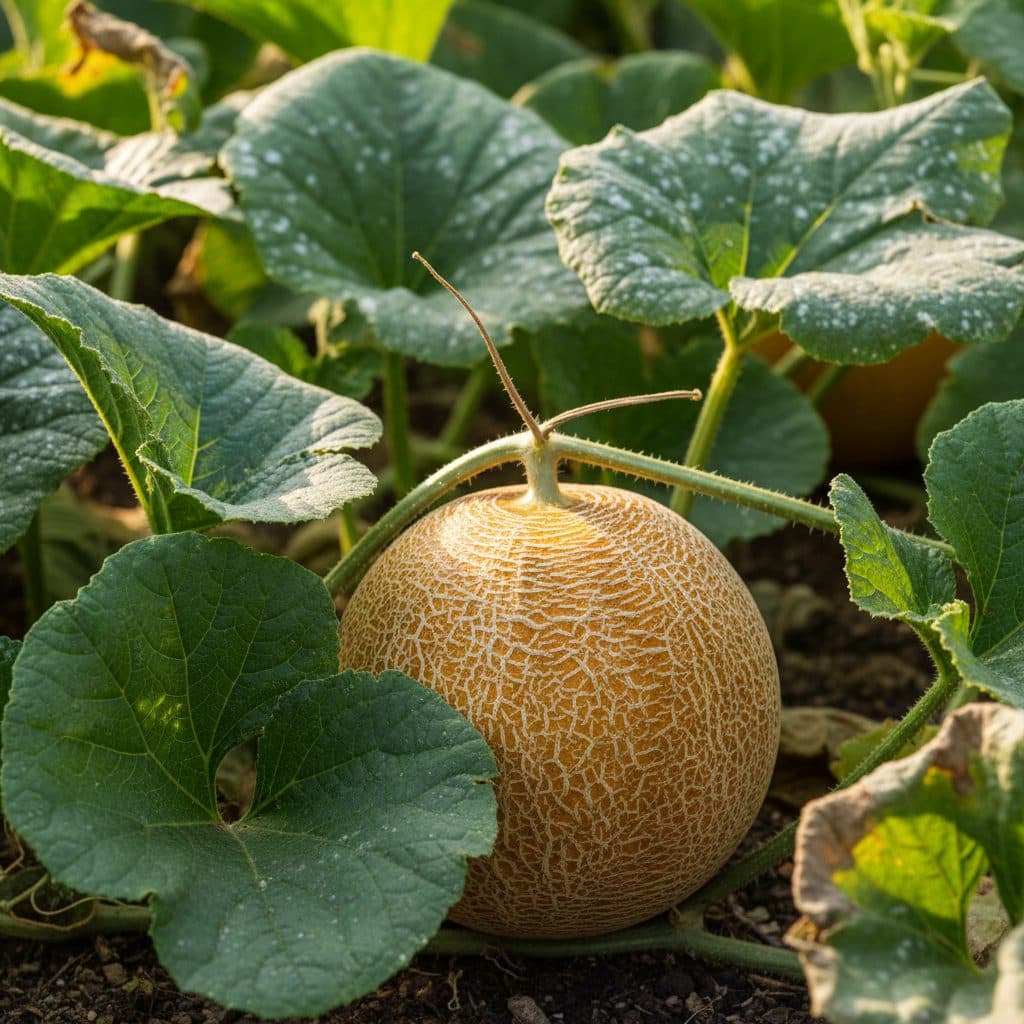
Key takeaways
- Ensure adequate pollination by attracting bees or hand-pollinating, especially when temperatures exceed 90°F.
- Maintain consistent soil moisture, about 1 inch per week, to prevent hollow heart and fruit splitting.
- Address nutrient deficiencies like boron, which can contribute to hollow heart, by soil testing and targeted amendments.
- Improve air circulation and manage humidity to prevent powdery mildew, using resistant varieties where possible.
- Monitor plants regularly for early signs of stress or disease, acting quickly to mitigate issues and save your harvest.
- Adjust irrigation based on local conditions; a sudden surge of water into an already-ripe melon is what splits it.
Quick answer: To troubleshoot melon problems, address poor fruit set with proper pollination, prevent hollow heart and splitting with consistent soil moisture, and manage powdery mildew through air circulation and resistant varieties.
Growing melons, whether it’s a sweet ‘Ambrosia’ cantaloupe in USDA zone 7 or a ‘Crimson Sweet’ watermelon in the hot, dry climate of Arizona, offers a rewarding summer harvest. However, these heat-loving cucurbits can present a few challenges that test even an experienced grower’s patience. From a lack of fruit on vigorous vines to split melons on the vine, understanding the root causes is the first step toward a successful crop.
This guide tackles four common melon problems: poor fruit set, hollow heart, fruit splitting, and powdery mildew. We’ll explore practical, data-driven solutions to help you achieve a bountiful harvest, focusing on specific environmental factors and plant needs that impact melon health across various US growing regions.
Poor fruit set: when flowers don’t become fruit
You’ve got vigorous melon vines, loads of flowers, but no fruit. This is a common frustration for many growers, particularly in areas like the humid Southeast or the arid Southwest. The primary culprit is often inadequate pollination. Melon plants produce separate male and female flowers; only female flowers develop into fruit after successful pollination. Male flowers typically appear first, often for one to two weeks, before female flowers emerge. If you’re seeing only male flowers, wait it out. However, if female flowers are present and still no fruit, consider the conditions.
ensuring effective pollination
Pollination success drops off when daytime temperatures exceed 90°F, as high heat reduces pollen viability and bee activity. In cooler regions, like parts of the Pacific Northwest, consistent temperatures below 60°F can also hinder bee foraging. To encourage natural pollinators, plant diverse flowering plants nearby. If natural pollination is insufficient, particularly in a greenhouse or during periods of low bee activity, hand-pollination is a reliable solution. Use a small paintbrush or cotton swab to transfer pollen from a male flower (which has a straight stem) to the stigma of a female flower (identifiable by the small, swollen ovary at its base). This should be done in the morning, ideally between 8 AM and 10 AM, when pollen is most viable. A well-grown melon plant sets only a handful of fruit (a few for watermelon, more for cantaloupe), and each one needs a properly pollinated female flower.
- Identify male flowers: Look for flowers with a straight, thin stem.
- Identify female flowers: Look for flowers with a small, swollen fruit-like structure at the base.
- Collect pollen: Gently brush pollen from a male flower onto your tool.
- Transfer pollen: Dab the pollen onto the sticky stigma inside a female flower.
- Repeat daily: Hand-pollinate new female flowers each morning for best results.
Hollow heart: a structural issue inside the fruit
Cutting open a beautiful melon only to find a hollow cavity in the center can be disheartening. This condition, known as hollow heart, is more common in watermelons but can affect other melon types too. It’s not a disease but a physiological disorder often linked to rapid growth and inconsistent environmental conditions. Wide swings between dry and saturated soil are what drive the disorder, whatever the region. The fruit grows too quickly, and the internal tissues don’t develop uniformly, creating a void.
managing growth and nutrients
Melons require consistent soil moisture, about 1 inch per week, for optimal growth. Avoid extreme fluctuations between very dry and very wet soil. Using mulch, such as straw or black plastic, helps maintain more stable soil temperatures and moisture levels by cutting evaporation from the soil surface. While not the sole cause, boron deficiency, with soil levels less than 0.5 ppm, can contribute to hollow heart in cucurbits. A soil test every three to five years can identify such deficiencies. If a soil test shows boron is low, correct it with a labeled boron product at the rate printed on the label, and measure it precisely. The margin between enough boron and too much is unusually narrow: over-application stunts and kills cucurbits, and the excess persists in the soil for seasons. Never scale a per-acre rate by eye for a garden bed. Excessive nitrogen fertilization, particularly after fruit set, can also promote overly rapid vegetative growth at the expense of fruit quality, leading to hollow heart. Aim for a balanced fertilizer, such as a 5-10-10, rather than a high-nitrogen blend.
- Consistent watering: Provide 1 to 1.5 inches of water weekly, especially during fruit development.
- Mulching: Apply 2 to 4 inches of organic mulch to stabilize soil moisture and temperature.
- Soil testing: Check for boron deficiency every three years if hollow heart is a recurring problem.
- Balanced fertilization: Use fertilizers with lower nitrogen after flowering to prevent rapid, uneven growth.
- Avoid over-fertilization: Too much nitrogen can cause rapid growth, leading to internal voids.
Fruit splitting: when ripe melons crack open
There’s nothing more frustrating than watching a nearly ripe melon split open on the vine, especially after weeks of careful tending. This issue is most common in mature or nearly mature fruit and almost always comes from inconsistent water availability. For example, a sudden heavy rainfall after a prolonged dry spell can cause a ripe watermelon to absorb water rapidly, expanding its internal tissues faster than the rind can stretch, leading to a crack. This is a frequent problem in areas like the Midwest during late summer thunderstorms.
maintaining even moisture and harvest timing
Melon plants require consistent moisture, about 1 to 1.5 inches of water per week, especially when fruits are developing and ripening. Inconsistent watering is the single biggest driver of splitting. If you anticipate heavy rainfall after a dry period, consider harvesting any melons that are close to maturity. For melons that are not yet ripe, providing some overhead protection, like a temporary tarp, can help mitigate the sudden influx of water. Proper soil drainage is also essential; heavy clay soils that retain too much water can contribute to splitting. Amending heavy soils with 2 to 4 inches of organic matter, such as compost, can improve drainage and reduce waterlogging. Additionally, avoid over-fertilizing with nitrogen late in the season, as this can promote rapid, tender growth that is more prone to splitting. Melons are typically ready for harvest when the tendril closest to the fruit stem turns brown and dries up, and the ground spot turns yellow. Harvesting at the correct ripeness can reduce the risk of splitting.
- Consistent irrigation: Aim for 1 to 1.5 inches of water weekly, evenly distributed.
- Improve drainage: Amend heavy soils with 2 to 4 inches of compost to prevent waterlogging.
- Monitor weather: Harvest mature fruit before anticipated heavy rains to prevent splitting.
- Mulch application: Use a 3-inch layer of straw to help regulate soil moisture.
- Timely harvest: Pick melons when signs of ripeness are clear, such as a yellow ground spot.
Powdery mildew: a common fungal foe
Powdery mildew is a ubiquitous fungal disease that affects a wide range of plants, including melons. It appears as white, powdery spots on leaves and stems, eventually covering entire plant surfaces. This disease thrives in warm, dry days followed by cool, humid nights, a common pattern in many US growing regions during late summer. If left untreated, powdery mildew can reduce melon yields by 20% to 40% by hindering photosynthesis, weakening the plant, and causing premature leaf drop. This exposes developing fruit to sunburn and reduces sugar accumulation.
prevention and treatment strategies
Prevention is the best defense against powdery mildew. Choose melon varieties that are resistant to powdery mildew, which are often labeled with ‘PM’ or ‘PMR’. Ensure good air circulation around plants by providing adequate spacing, typically 3 to 5 feet between plants, and by trellising vines vertically, especially in smaller gardens or humid climates. Overhead watering can exacerbate the problem by creating humid conditions on leaves; instead, use drip irrigation or water at the base of the plant. If powdery mildew appears, act quickly. For mild cases, a homemade spray of 1 tablespoon baking soda and 1 teaspoon of insecticidal soap (or mild dish soap) per gallon of water can be effective. For more persistent issues, consider organic fungicides containing neem oil or sulfur, applied according to package directions every 7 to 10 days. Two cautions matter here: many melon varieties are sulfur-sensitive and will burn, so confirm the label clears the product for cucurbits before you spray, and neither sulfur nor oil should be applied above roughly 90°F, in full midday sun, or within two weeks of each other. Always test any spray on a small portion of the plant first. For a comprehensive guide on specific treatments, you can refer to our article on Powdery mildew treatment: what actually clears it and stops it coming back. Early intervention saves a significant portion of your melon harvest.
- Resistant varieties: Select melon types specifically bred for powdery mildew resistance.
- Air circulation: Space plants 3 to 5 feet apart or trellis them to improve airflow.
- Watering method: Use drip irrigation or water at the base to keep foliage dry.
- Fungicides: Apply neem oil or sulfur-based organic fungicides at first sign of disease, spraying late in the day and avoiding open blossoms so you do not hit foraging bees.
- Sanitation: Remove and destroy infected leaves to reduce the spore load and slow disease spread.
Consistent Moisture: Melons require 1 to 1.5 inches of water per week, especially during fruit development, to prevent issues like hollow heart and splitting.
Pollination Temperature: Pollination falls off when daytime temperatures consistently exceed 90°F, which is when hand-pollination pays off.
Frequently asked questions
Why are my melon flowers falling off without producing fruit?
Melon flowers falling off without setting fruit is often due to poor pollination or extreme temperatures. Male flowers typically appear first and drop naturally. If female flowers (with a small bulge at the base) are dropping, it could be insufficient bee activity, or temperatures consistently above 90°F or below 60°F, which reduce pollen viability.
What causes the inside of my watermelon to be hollow?
Hollow heart in watermelons is a physiological disorder often caused by rapid, inconsistent growth, particularly due to fluctuating soil moisture. It can also be exacerbated by boron deficiency (below 0.5 ppm in soil) or excessive nitrogen fertilization, which promotes uneven internal development of the fruit.
How can I prevent my ripe melons from splitting on the vine?
Prevent melon splitting by maintaining consistent soil moisture, providing 1 to 1.5 inches of water per week, especially during ripening. Avoid sudden changes in water availability, such as heavy rain after a dry spell, which is the most common cause of splitting. Improve soil drainage and harvest melons promptly when ripe.
What is the best way to treat powdery mildew on melon plants?
To treat powdery mildew, first improve air circulation by spacing plants 3 to 5 feet apart and using drip irrigation. For mild cases, a spray of 1 tablespoon baking soda per gallon of water can help. For more severe infections, organic fungicides like neem oil or sulfur applied every 7 to 10 days can be effective — confirm the label clears the product for cucurbits first, since many melons are sulfur-sensitive.
Should I hand-pollinate my melon plants?
Hand-pollination is a good strategy if you observe poor fruit set despite many female flowers, especially in areas with low bee populations or during periods of extreme heat (above 90°F). It significantly increases the chances of successful fruit development on the flowers you treat.
References
- USDA Natural Resources Conservation Service (2024). USDA Natural Resources Conservation Service.