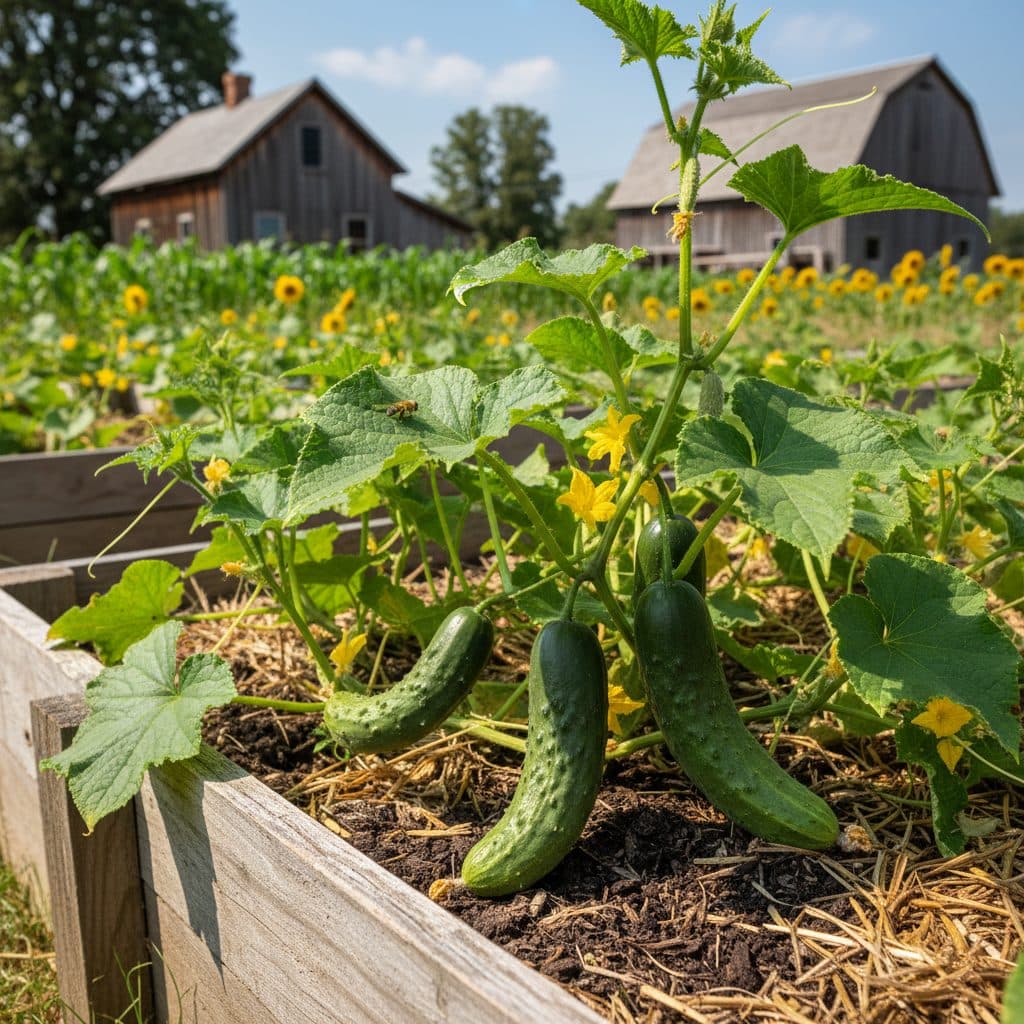
Key takeaways
- Inadequate pollination, often due to low bee activity, causes cucumbers to be small and misshapen.
- Inconsistent watering, especially during fruit development, leads to stunted or oddly shaped fruit.
- Maintaining soil moisture with 1-2 inches of water per week supports healthy cucumber growth.
- Attracting native pollinators by planting diverse flowering species increases fruit set by up to 30%.
- Monitoring soil temperature and nutrient levels ensures optimal conditions for cucumber plants.
- Hand-pollination can be a reliable backup method, especially in areas with fewer natural pollinators.
Quick answer: Misshapen cucumbers are primarily caused by inadequate pollination and inconsistent water availability during fruit development. Addressing these issues can significantly improve fruit quality and yield.
In many parts of the US, from USDA zone 4 in the northern states down to zone 9 in the south, growers sometimes face the puzzle of misshapen cucumbers. Cucumbers sometimes come out curled, stunted, or oddly tapered rather than crisp and straight, often cutting marketable yield by 20%. This can be frustrating, especially after investing weeks into nurturing a crop.
While various factors can contribute to these deformities, two stand out as primary suspects for cucurbits like cucumbers: insufficient pollination and inconsistent water availability. Understanding these mechanisms can help you ensure a harvest of perfectly formed fruit, increasing your yield by 15% or more, and reducing crop loss by up to 25%.
The pollination puzzle: why bees matter for cucumber shape
These takeaways points carry into this section, too.
Cucumbers, like many other cucurbits, rely heavily on insect pollination to develop properly. Each female flower needs to be visited multiple times by a pollinator, typically a bee, to transfer enough pollen for full fruit development. If a female flower is only partially pollinated, the resulting fruit will often be misshapen, typically constricted at one end or curved, as the unpollinated ovules fail to develop, causing uneven growth. Research shows that proper pollination can increase cucumber yield by 40% in some regions, like the Central Valley of California.
signs of poor pollination
You can often spot signs of poor pollination early in the growing season. If you see many small cucumbers that start to yellow and shrivel at the blossom end when they are only one or two inches long, it is a strong indicator. In areas with low bee populations, such as urban gardens in USDA zone 7, this issue can affect up to 50% of the developing fruit. A healthy cucumber plant should produce 10 to 20 fruits per plant over its growing season, with fewer than 5% showing deformities due to pollination issues.
- Stunted growth at the fruit’s tip.
- Curved or C-shaped cucumbers.
- Yellowing and dropping of young fruit.
- Uneven swelling along the fruit body.
To encourage more pollinators, consider planting native flowering species nearby, such as coneflowers or sunflowers, which can attract a wider variety of bees. Studies in the Midwest indicate that increasing pollinator habitat can boost fruit set by 30% within a 50-foot radius. You might also consider Fermented Soybean Meal Organic Fertilizer to boost overall plant health, which can indirectly support healthier flowers and more bee visits.
Water’s critical role: preventing misshapen fruit from stress
That work on pollination puzzle sets up what follows here.
Consistent water supply is paramount for cucumber development. Cucumbers are about 95% water, and any interruption in their water uptake during critical growth stages can lead to significant deformities. Drought stress, even for a few days, can cause cucumbers to become bitter, stunted, and severely misshapen. In arid regions like parts of Arizona (USDA zone 9), maintaining consistent soil moisture is even more challenging, requiring up to 2 inches of water per week, especially during fruit set.
understanding water stress symptoms
When cucumber plants experience water stress, the fruit often develops with a narrow stem end and a plump blossom end, or it might become severely curved. This happens because the plant prioritizes water for its most active growth points, leading to uneven expansion of the fruit cells. For instance, a cucumber plant in a raised bed in Ohio (USDA zone 6) might need watering every two days during a dry spell, compared to once a week during cooler, rainy periods. Insufficient water can reduce overall yield by 25% to 50%.
- Narrow stem end and wide blossom end.
- Curved or hooked fruit.
- Bitter taste in mature fruit.
- Slowed growth and wilting leaves.
To ensure consistent moisture, aim for 1 to 2 inches of water per week, either from rainfall or irrigation, delivered deeply to encourage robust root systems. Drip irrigation or soaker hoses are highly effective, delivering water directly to the root zone and minimizing evaporation by up to 50% compared to overhead sprinklers. Mulching with 2 to 4 inches of straw or wood chips can also help retain soil moisture, reducing the need for frequent watering by 30% and stabilizing soil temperatures, which is beneficial for plants like Tomatoes and cucumbers.
Soil health and nutrient balance for robust plants
Beyond pollination and water, the health of your soil plays a foundational role in preventing misshapen cucumbers. A soil rich in organic matter improves water retention, nutrient availability, and overall plant vigor. For instance, soil with 3% to 5% organic matter can hold significantly more moisture and nutrients than sandy soil with less than 1% organic matter, directly impacting fruit quality. In many agricultural regions of the US, like the Corn Belt, improving soil organic matter is a key goal for sustainable farming [3].
nutrient deficiencies and their impact
Specific nutrient deficiencies can also contribute to misshapen fruit. A lack of boron, for example, can cause cucumbers to be stunted and malformed, particularly at the blossom end. Calcium deficiency, while less common in cucumbers than in Tomatoes, can also affect cell wall development, leading to weakened fruit structure. A soil test, recommended every two to three years, can identify deficiencies and guide amendments. For optimal growth, cucumbers prefer a soil pH between 6.0 and 6.8, which ensures maximum nutrient uptake.
- Boron deficiency: Stunted, malformed fruit.
- Calcium deficiency: Weakened fruit structure.
- Low organic matter: Poor water retention and nutrient availability.
- Imbalanced pH: Reduced nutrient uptake.
Amending your soil with compost or well-rotted manure can increase organic matter content by 1% to 2% per year, improving soil structure and nutrient holding capacity. Consider a slow-release organic fertilizer, like Fermented Soybean Meal Organic Fertilizer, which provides a steady supply of nitrogen and other essential nutrients over several weeks. This approach supports consistent plant growth and fruit development, reducing the likelihood of stress-induced deformities. In USDA zone 5, applying 1 to 2 inches of compost annually can significantly improve soil health within three years [4].
Integrated strategies for perfect cucumbers
Achieving a harvest of perfectly shaped cucumbers requires an integrated approach that addresses both pollination and water management, alongside good soil health. By combining several best practices, growers can significantly reduce the incidence of misshapen fruit. For example, in a small market garden in Vermont (USDA zone 4), combining mulching with pollinator-friendly plantings increased marketable yield by 35% over a single season. This holistic strategy minimizes stress on the plants, allowing them to allocate energy efficiently to fruit development.
proactive management techniques
Consider planting cucumber varieties known for parthenocarpy (fruit set without pollination) if you consistently struggle with low pollinator activity, though these are less common for home growers. For traditional varieties, plant at least two different flowering species known to attract bees, such as borage or calendula, within 10 feet of your cucumber patch. This can increase bee visits by 20% to 40%. Regularly monitor soil moisture using a simple moisture meter, and keep the top 6 inches of soil consistently damp, not waterlogged. In dry spells, a single cucumber plant can transpire up to one gallon of water per day during peak fruiting.
- Plant pollinator attractants within 10 feet.
- Use drip irrigation for consistent moisture.
- Mulch heavily to retain soil water.
- Hand-pollinate if bee activity is low.
Another valuable practice is crop rotation, which helps prevent soil-borne diseases and nutrient depletion. Rotating cucumbers with non-cucurbit crops every one to three years can improve overall soil health and vigor. For instance, following cucumbers with a legume cover crop, like the twelve weeks of sesbania recommended for orchards, can replenish nitrogen and organic matter. This comprehensive strategy not only yields straighter cucumbers but also supports a more resilient and productive garden ecosystem, often increasing overall garden productivity by 10% to 20% [5].
Distinguishing Causes of Misshapen Cucumbers
Symptom | Likely Cause: Pollination Issues | Likely Cause: Water Stress |
|---|---|---|
Fruit Shape | Constricted at blossom end, tapered, or curved at one side. | Narrow at stem end, plump at blossom end, or severely hooked. |
Early Fruit Fate | Young fruit (1-2 in) yellows and shrivels from the tip. | Young fruit may shrivel or become bitter, but often continues to grow misshapen. |
Plant Appearance | Plant generally healthy, flowering well, but fruit set is poor. | Plant may show wilting, yellowing leaves, or stunted growth, especially in hot weather. |
Soil Condition | Soil moisture is adequate and consistent. | Soil is often dry, or fluctuates between very wet and very dry. |
Pollinator Activity | Few bees or other pollinators observed visiting flowers. | Pollinator activity may be normal, but fruit still deforms. |
Pollinator Boost: Planting diverse flowering species within 50 feet of your cucumber patch can increase pollinator visits by up to 30%, leading to better fruit set.
Water Consistency: Cucumbers require 1 to 2 inches of water per week, especially during fruiting, to prevent deformities and maintain a yield of 10-20 fruits per plant.
Frequently asked questions
Why are my cucumbers small and shriveled at the end?
This symptom, especially if the shriveling occurs at the blossom end when the fruit is small (1-2 inches), often indicates insufficient pollination. The female flower did not receive enough pollen for full development, leading to uneven growth and eventual abortion of the fruit. Consider hand-pollinating or attracting more bees to increase successful fruit set by 30%.
Can too much water cause misshapen cucumbers?
While inconsistent watering is a primary culprit, excessively waterlogged soil can also stress cucumber plants, leading to root rot and nutrient uptake issues, which can indirectly contribute to misshapen fruit. Aim for 1-2 inches of water per week, ensuring good drainage to prevent standing water.
What’s the ideal soil pH for cucumbers to prevent deformities?
Cucumbers thrive in slightly acidic to neutral soil, with an ideal pH range of 6.0 to 6.8. This range ensures optimal nutrient availability, including essential micronutrients like boron, which, if deficient, can cause fruit malformations. A soil test every two to three years can help maintain this balance.
How can I attract more pollinators to my cucumber plants?
To attract more pollinators, plant a mix of flowering plants like borage, calendula, or sunflowers within 10-50 feet of your cucumber patch. These plants provide nectar and pollen, encouraging bee visits and potentially increasing cucumber fruit set by 20% to 40%.
Does temperature affect cucumber shape?
Yes, extreme temperatures can impact cucumber shape. Consistent temperatures between 65°F and 85°F are ideal. High heat (above 90°F) can stress plants, reduce pollen viability, and increase water demand, leading to stunted or misshapen fruit if not managed with consistent irrigation. Cold temperatures (below 55°F) can also hinder growth and fruit development.
References
- USDA Natural Resources Conservation Service (2024). USDA Natural Resources Conservation Service.
- EPA — Soak Up the Rain (2024). EPA — Soak Up the Rain.
- SARE — Sustainable Agriculture Research & Education (2023). SARE — Sustainable Agriculture Research & Education.
- ATTRA / NCAT Sustainable Agriculture (2023). ATTRA / NCAT Sustainable Agriculture.
- USDA National Agroforestry Center (2023). USDA National Agroforestry Center.