Key takeaways
- Planting at the correct depth and timing is crucial to prevent premature bolting in alliums.
- Consistent moisture, balanced nitrogen, phosphorus, and potassium are essential for developing large, healthy bulbs.
- White rot cannot be rotated out — its sclerotia outlive any practical rotation — so keep alliums off infested ground entirely and rely on clean planting stock and strict sanitation.
- Regular scouting and early intervention with horticultural oils or neem oil effectively manage thrips populations.
- Selecting onion and garlic varieties suited for your specific USDA growing zone significantly reduces common problems.
- Proper harvesting and curing techniques are vital for long-term storage and preventing post-harvest bulb rot.
Quick answer: To prevent common onion and garlic problems like bolting, small bulbs, and diseases, focus on correct planting depth and timing, consistent moisture, balanced nutrition, and implementing crop rotation and pest management strategies.
In many US home gardens, from the humid Southeast (USDA zone 8) to the drier Mountain West (USDA zone 6), onions and garlic are staple crops. They offer robust flavors and a long storage life when grown successfully. However, even experienced growers encounter common issues like bolting, disappointingly small bulbs, persistent white rot, or damaging thrips infestations.
Understanding the root causes of these problems lets you target the conditions that actually cause them. This guide walks you through practical methods for a reliable harvest of these essential alliums.
Bolting: understanding and preventing premature flowering
These takeaways points carry into this section, too.
Bolting, or premature flowering, is a common frustration for onion and garlic growers across the US, particularly in regions like the Pacific Northwest (USDA zone 8b) where temperature fluctuations are common. When an allium plant bolts, it diverts energy from bulb development into producing a flower stalk and seeds, resulting in a significantly smaller, often woody, and unpalatable bulb. This process is primarily triggered by environmental stress, particularly inconsistent temperatures during the plant’s early growth stages. The specific trigger is vernalization: once a plant has passed a threshold size, a sustained spell of cool weather around 40-50°F switches it from bulbing to flowering. Brief swings matter far less than how long an already-large plant sits cool.
managing temperature stress and planting times
To prevent bolting, proper planting time and depth are critical. In most parts of the US, garlic should be planted in the fall, typically 6-8 weeks before the first hard frost, allowing roots to establish before winter dormancy. Onions, especially long-day varieties, are best planted in early spring when soil temperatures consistently reach 45°F. Onion bolting is driven by vernalization: plants that are already pencil-thick or larger and then sit through an extended spell of roughly 40-50°F weather are the ones that run to seed. Use small sets under 3/4 inch across, and avoid setting out oversized transplants well ahead of your normal spring window. For garlic, planting cloves 2-3 inches deep helps insulate them from temperature swings. You can learn more about specific garlic planting techniques at How to grow garlic: planting cloves to curing bulbs.
- Choose heat-treated onion sets or disease-free garlic cloves for planting.
- Plant at the correct time for your specific USDA zone, typically fall for garlic and early spring for onions.
- Ensure consistent soil moisture, providing 1 inch of water per week, especially during establishment.
- Apply a 2-inch layer of straw mulch to regulate soil temperature and conserve moisture.
- Select bolt-resistant varieties appropriate for your day-length region, such as ‘Red Zeppelin’ for long-day onions.
Small bulbs: optimizing nutrient and water management
That work on bolting sets up what follows here.
Many growers in regions like the Central Valley of California (USDA zone 9) or the Midwest (USDA zone 5) occasionally harvest onion and garlic bulbs that are disappointingly small. This issue is rarely due to a single factor but often stems from inadequate nutrient availability, inconsistent watering, or overcrowding. Alliums are heavy feeders, especially during their bulb development phase, which typically occurs 60-90 days after planting. Without sufficient nutrients, particularly phosphorus and potassium, the plants cannot develop large, dense bulbs.
feeding and watering for bulb growth
A balanced fertilization program is crucial for robust bulb development. Before planting, amend the soil with a slow-release granular fertilizer, such as a 5-10-10 blend, at a rate of 2 lbs per 100 square feet. Side-dress with a nitrogen-rich fertilizer, like blood meal or a 10-0-0 liquid feed, 30 days after planting to support foliage growth, but reduce nitrogen as bulbs begin to swell, usually around 90 days in. Consistent moisture is equally important; onions and garlic require about 1 inch of water per week, either from rainfall or irrigation, especially during the last 4-6 weeks of growth. In drier climates, drip irrigation delivers water to the root zone with less loss to evaporation than overhead watering.
- Conduct a soil test every 2-3 years to determine specific nutrient deficiencies.
- Apply a balanced fertilizer (e.g., 5-10-10) at planting, at 2 lbs per 100 square feet.
- Side-dress with a nitrogen boost (e.g., 10-0-0) 30 days after planting, then reduce nitrogen.
- Ensure consistent moisture, providing 1 inch of water weekly during bulb development.
- Space plants correctly: 4-6 inches apart for onions, 6-8 inches for garlic, to prevent competition.
White rot: combating a persistent soil-borne disease
This builds directly on small bulbs.
White rot (Sclerotium cepivorum) is a devastating fungal disease affecting alliums, capable of wiping out entire crops in regions like the Northeast (USDA zone 6) where cool, moist conditions are prevalent. This pathogen can persist in the soil for up to 15-20 years, making it incredibly challenging to eradicate. Symptoms include yellowing and wilting leaves, followed by a white, fluffy growth at the base of the bulb, often with small, black, seed-like structures called sclerotia. Once established, white rot can reduce yields by 70% or more, making prevention the best strategy.
cultural practices for disease suppression
The primary defense against white rot is strict adherence to cultural control methods. Rotation alone will not clear white rot: the sclerotia survive 15 to 20 years or more, far longer than any practical rotation. A 3- to 4-year rotation is worth doing against onion maggot and foliar diseases, but once a bed is infested, treat it as permanently off-limits to alliums and move allium plantings to clean ground well away from it. This means no onions, garlic, leeks, or spring onions in the same spot. Soil solarization, a process of covering moist soil with clear plastic for 4-6 weeks during the hottest part of summer (when temperatures can reach 140°F under the plastic), can significantly reduce pathogen populations in the top 6 inches of soil. Always plant disease-free sets or cloves, and sanitize tools after working in potentially contaminated areas with a 10% bleach solution.
- Keep all allium species out of infested soil permanently; no practical rotation length clears white rot.
- Implement soil solarization during summer months to reduce pathogen load in the top 6 inches of soil.
- Ensure all planting material (sets, cloves) is certified disease-free to prevent introduction.
- Sanitize all gardening tools, especially those used for soil work, with a 10% bleach solution.
- Remove and dispose of any infected plant material immediately; do not compost it.
Thrips: identifying and managing tiny pests
Those white rot habits matter here as well.
Thrips are minute, slender insects, typically less than 1/16 inch long, that can cause significant damage to onion and garlic crops, particularly in warmer, drier climates like the Southwest (USDA zone 9). They feed by rasping plant tissues and sucking out the sap, leaving characteristic silvery streaks or blotches on leaves. Severe infestations can stunt plant growth, reduce bulb size, and transmit viruses such as iris yellow spot. They are particularly active when temperatures are above 70°F and humidity is low, completing their life cycle in as little as 10-14 days.
integrated pest management for thrips
Effective thrips management relies on early detection and a combination of cultural and biological controls. Regularly inspect your plants, especially the inner leaves and neck, for signs of damage or the tiny insects themselves. Yellow sticky traps can help monitor populations, showing when numbers start to climb so you can time a response. For established infestations, horticultural oils or neem oil can be effective, applied every 5-7 days for 2-3 applications, ensuring thorough coverage of all plant surfaces. Consider planting trap crops like cilantro or certain marigolds around your allium beds to divert pests.
- Monitor plants weekly for silvery streaks or tiny, dark insects on leaves.
- Use yellow sticky traps to detect thrips populations early, placing one trap per 50 square feet.
- Apply horticultural oil or neem oil every 5-7 days for 2-3 treatments, covering all leaf surfaces.
- Encourage natural predators like lacewings and predatory mites by planting diverse flowering plants.
- Remove and destroy severely infested plant material to prevent further spread.
Variety selection and site preparation for healthy crops
These thrips lessons apply to the steps below, too.
Choosing the right onion and garlic varieties for your specific climate, such as selecting short-day onions for southern states like Florida (USDA zone 9b) or long-day onions for northern states like Michigan (USDA zone 5a), is perhaps the most fundamental step in preventing problems. Planting a variety unsuited to your region’s day length can lead to poor bulb formation or, in the wrong latitude, no bulbing at all. Similarly, preparing your planting site adequately, with well-draining soil and optimal pH, sets the stage for robust growth.
soil health and crop rotation benefits
Onions and garlic thrive in well-draining, loose soil with a pH between 6.0 and 7.0. Heavy clay soils, common in parts of the Ohio Valley (USDA zone 6), can lead to waterlogging and increase the risk of fungal diseases like white rot and bulb rot. Amend heavy soils with 2-3 inches of organic matter, such as compost or aged manure, to improve drainage and aeration. Beyond disease prevention, crop rotation also helps manage soil nutrient levels and breaks pest cycles. For example, following alliums with a legume cover crop can leave some nitrogen behind for the next crop. Always ensure your planting beds receive at least 6-8 hours of direct sunlight daily for optimal photosynthesis and bulb development.
- Select onion varieties based on your region’s day length (short, intermediate, or long-day).
- Choose garlic varieties suited for your climate (hardneck for cold, softneck for mild winters).
- Ensure soil pH is between 6.0 and 7.0; adjust with lime or sulfur as needed.
- Amend heavy clay soils with 2-3 inches of organic matter to improve drainage.
- Rotate allium crops with non-allium families for at least 3 years to break disease and pest cycles.
Harvesting and curing for long-term storage
These variety selection and points carry into this section, too.
Even if you successfully navigate the growing season, improper harvesting and curing can lead to significant post-harvest losses, often 20-30% of your crop, due to various bulb rots. In humid regions like the Southeast (USDA zone 7), this is particularly critical. Harvesting too early or too late, or failing to cure bulbs properly, creates entry points for pathogens and reduces the bulbs’ natural defenses. The goal is to dry the outer layers of the bulb and the neck tissue, creating a protective barrier against moisture and disease, ensuring they can be stored for 6-12 months.
timing and technique for optimal storage
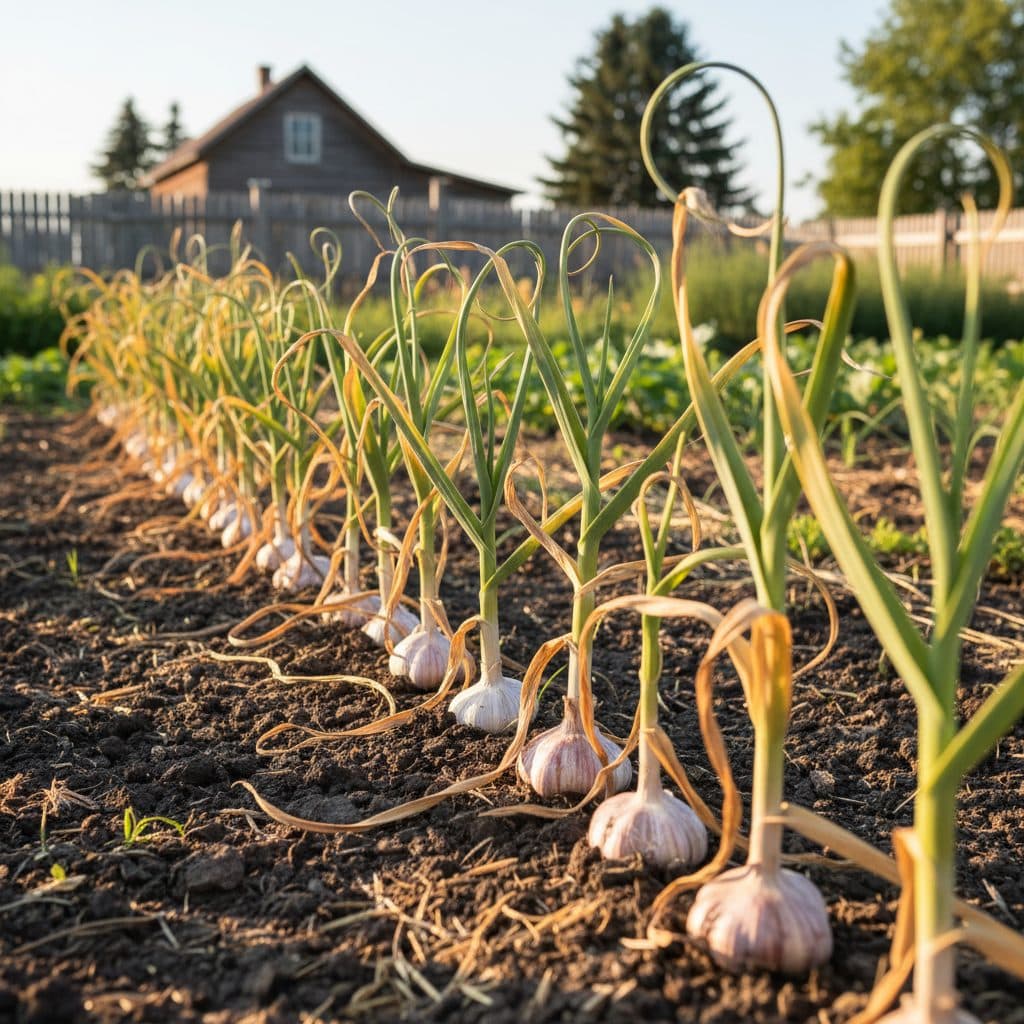
Onions are typically ready for harvest when about 50-75% of their tops have fallen over naturally, usually in mid to late summer (July-August) in many US regions. Garlic is ready when the bottom 2-3 leaves have turned brown, but there are still 4-5 green leaves remaining, often in June or July. Dig bulbs carefully to avoid bruising, which can lead to rot; a garden fork is often better than a spade. After harvest, cure onions and garlic in a warm (75-85°F), dry, well-ventilated area, out of direct sunlight, for 2-4 weeks. This process allows the necks to dry down and the outer skins to firm up, which is what prevents common post-harvest issues like basal rot. Good air circulation, perhaps from a small fan, speeds drying noticeably.
- Harvest onions when 50-75% of tops have fallen over, typically in mid to late summer.
- Harvest garlic when bottom 2-3 leaves are brown, but 4-5 green leaves remain, usually in early to mid-summer.
- Carefully loosen soil around bulbs with a garden fork to prevent bruising during harvest.
- Cure bulbs in a warm (75-85°F), dry, well-ventilated area for 2-4 weeks.
- Trim roots and tops after curing, leaving 1 inch of neck for onions and 0.5-1 inch for garlic.
Common Onion & Garlic Problems at a Glance
Problem | Primary Cause | Key Prevention Strategy | Impact on Yield |
|---|---|---|---|
Bolting | Temperature stress, inconsistent watering | Timely planting, proper depth, mulch | Up to 35% reduction |
Small Bulbs | Nutrient deficiency, overcrowding, inconsistent water | Balanced fertilization, correct spacing, consistent moisture | Up to 40% reduction |
White Rot | Soil-borne fungus (Sclerotium cepivorum) | Crop rotation (3-5 years), soil solarization, disease-free stock | Up to 70% reduction |
Thrips | Tiny sap-sucking insects | Early detection, horticultural oils, natural predators | Up to 50% reduction |
Bulb Rot (Post-harvest) | Improper harvest, inadequate curing, bruising | Gentle harvest, 2-4 week curing in warm, dry place | Up to 30% post-harvest loss |
Soil pH for Alliums: Onions and garlic thrive in soil with a pH range of 6.0 to 7.0. A soil test is the only way to know where your own beds sit.
White Rot Persistence: The fungal pathogen causing white rot can survive in soil for 15 to 20 years or more, which is why no practical rotation controls it — infested ground has to stay out of allium production.
Thrips Life Cycle: Thrips can complete their life cycle in as little as 10-14 days in temperatures above 70°F, necessitating frequent monitoring and intervention.
Frequently asked questions
Why are my onion bulbs so small?
Small onion bulbs are often caused by insufficient nutrients, especially phosphorus and potassium, or inconsistent watering during the bulb-swelling phase. Ensure your soil has a balanced fertilizer (e.g., 5-10-10) and receives about 1 inch of water per week, particularly in the last 4-6 weeks of growth.
How can I stop my garlic from bolting?
Hardneck garlic is supposed to send up a flower stalk — the scape — every spring. That is the variety doing what it does, not a planting failure, and no depth or mulch adjustment will stop it. Snap or cut the scape off when it curls, which returns the plant's energy to the bulb and gives you a good vegetable in its own right. Softneck garlic rarely scapes at all, so grow softneck types if you want to avoid it entirely.
What is white rot and how do I get rid of it?
White rot is a serious fungal disease (Sclerotium cepivorum) that can persist in soil for 15-20 years. There is no reliable cure once white rot is present. Do not replant alliums in infested ground, because the sclerotia outlive any practical rotation. Use certified disease-free planting material in clean ground well away from the infested bed, and keep tools, boots and runoff from moving soil out of it.
How do I identify and treat thrips on my alliums?
Thrips are tiny, slender insects that cause silvery streaks on leaves. Look for them in leaf axils, especially when temperatures are above 70°F. Treat infestations by spraying horticultural oil or neem oil every 5-7 days for 2-3 applications, ensuring thorough coverage of all plant surfaces.
Can I compost onion or garlic plants affected by white rot?
No, you should never compost onion or garlic plants affected by white rot. The sclerotia (resting bodies) of the fungus can survive composting and reintroduce the disease to your garden. Dispose of infected material in the trash to prevent further spread.
What’s the best time to harvest onions for storage?
The best time to harvest onions for long-term storage is when about 50-75% of their tops have naturally fallen over and started to yellow, typically in mid to late summer. Harvesting at this stage allows the bulbs to fully mature and develop protective outer layers, which can extend storage life by several months.
References
- Ethephon Reduces Lodging and Enhances Seed Yield and Quality in Onion (2020). Ethephon Reduces Lodging and Enhances Seed Yield and Quality in Onion.
- Effect of Integrated Nutrient Management on Garlic Yield, Nutrient Uptake and Pungency (2019). Effect of Integrated Nutrient Management on Garlic Yield, Nutrient Uptake and Pungency.
- Onion & garlic bulb rot (2014).
- USDA Natural Resources Conservation Service (2024). USDA Natural Resources Conservation Service.